
Lab Grown Diamond Inclusions Explained: What They Are, How They Form and Which Ones Actually Matter
Almost every diamond carries tiny internal features, and lab grown diamond inclusions are the very reason clarity grades exist. If you have ever looked at a grading report and wondered what “VS1” or a cluster of little red marks really means for the ring you are about to buy, you are asking the right question. The answer is usually calmer than the jargon suggests.
This guide explains what lab grown diamond inclusions are, how clarity grades describe them, the seven types you will meet most often, how growth methods change what you see, and how to choose a clean stone without overpaying. It is written for ring buyers, gift givers, and jewelers who want practical answers rather than fear.
What Are Lab Grown Diamond Inclusions?

An inclusion is a feature inside a diamond. It can be a tiny crystal, a hairline fracture, a faint cloud of specks, or a line left by uneven growth. A blemish, by contrast, sits on the outside surface, such as a small scratch or a polish mark. Gemologists use the word “characteristics” for both, and together they decide the clarity grade.
No crystal grows perfectly, and lab grown diamond inclusions show that diamond follows the same rule. As a diamond grows, whether in the earth or in a reactor, tiny disturbances in the growth process leave marks behind. Lab grown and mined stones share this trait, which is why our guide to lab grown vs natural diamonds treats both as real diamond carrying real internal fingerprints.
The key point is that inclusions are normal. Their presence does not make a diamond fake, weak, or low quality. What matters is how big they are, where they sit, how dark they look, and whether you can see them without magnification.
Lab grown stones have one practical advantage here. Because the growth environment is controlled, producers can steer the process toward cleaner crystals, which is why it is common to find lab grown diamond inclusions graded VS or better in the market. Cleaner does not mean flawless, though, and every stone still needs to be judged on its own report and video.
How Clarity Grades Describe Lab Grown Diamond Inclusions
Laboratories grade clarity by inspecting the stone under 10x magnification and judging the size, number, position, and visibility of its characteristics. The result is a grade on an 11-step scale. The International Gemological Institute grades lab grown diamonds on this same scale, the Gemological Institute of America also grades them, and our explainer on IGI certificates for lab grown diamonds shows how to read a full report.
| Grade | Meaning in plain language | Likely to be seen by eye? |
| FL and IF | Nothing visible internally (FL also has a clean surface) | No |
| VVS1 and VVS2 | Very faint features, hard to find even under a loupe | No |
| VS1 and VS2 | Small features, found with effort under magnification | Almost never |
| SI1 and SI2 | Features that are easy to spot under a loupe | Sometimes, depending on position |
| I1, I2 and I3 | Prominent features that can affect appearance | Usually |
The scale is based on a loupe, not on how a stone looks from arm’s length. That is why two stones with the same grade can look different in real life, and why a clean-looking SI1 can sometimes beat a poorly placed VS2.
Seven Types of Lab Grown Diamond Inclusions You Will Meet
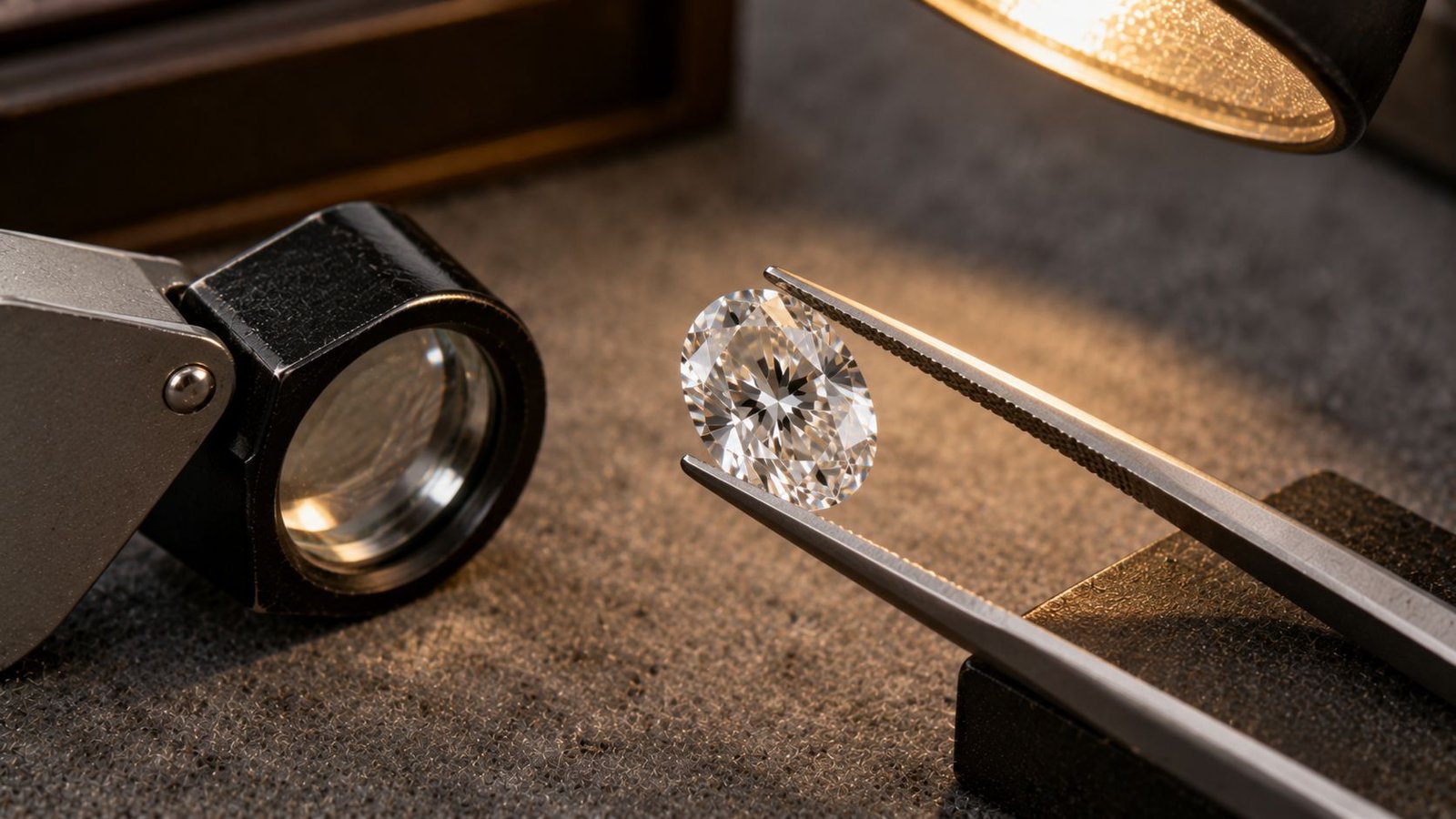
The labels below are the ones gemologists use most often when describing lab grown diamond inclusions. You do not need to memorize them, but knowing the names makes a grading report much easier to read, and it helps you ask sharper questions about any specific stone.
Type 1: Pinpoints
Pinpoints are the most common feature. They are very small dots, often too tiny to separate from each other, and they usually appear white or light gray. A single pinpoint or a few scattered ones rarely affect a stone’s beauty and are the main reason many VS grades are still perfectly eye-clean.
Type 2: Clouds
A cloud is a group of pinpoints packed closely together so they read as a patch of haze. A small cloud off to the side is harmless. A large cloud near the center can soften the stone’s brilliance, which is why position matters as much as size.
Type 3: Feathers
A feather is a small internal fracture that looks like a thin, flat, glassy crack. Most feathers are tiny and invisible face-up. The ones to watch are larger feathers that reach the surface near the edge of the stone, because they can act as a weak point if the stone takes a sharp knock.
Type 4: Internal Graining
Graining looks like faint lines, a soft haze, or a twisting pattern inside the stone, caused by irregular crystal growth. Light graining usually has no effect on appearance. Heavy graining can make a stone look slightly milky, particularly in larger sizes.
Type 5: Growth Lines
Some lab grown stones, especially those made by chemical vapor deposition, show faint growth lines that reflect how the crystal was built up in layers. These are usually only visible under magnification or with special lighting and are rarely an issue in finished jewelry.
Type 6: Metallic Inclusions
Metallic inclusions are tiny pieces of the metal-based material used to grow certain lab diamonds. Expect them to look dark and non-transparent, occasionally with a metallic glint, and a few can be weakly drawn toward a strong magnet. They are most associated with the high pressure high temperature method, and because they are dark, they are easier to see than pale pinpoints.
Type 7: Dark Carbon Specks
Small dark specks of non-diamond carbon can appear in some stones, especially those grown by chemical vapor deposition. A single tiny speck far from the center is usually harmless. Several dark specks near the middle of the stone are worth avoiding, because dark features show up more readily than pale ones.
Two other features, needles and larger mineral crystals, are common in mined diamonds but appear less often in lab grown ones, because the growth environment does not contain the same minerals. That is one more reason the seven types above cover most of what you will actually see.
How Inclusions Differ Between CVD and HPHT Stones
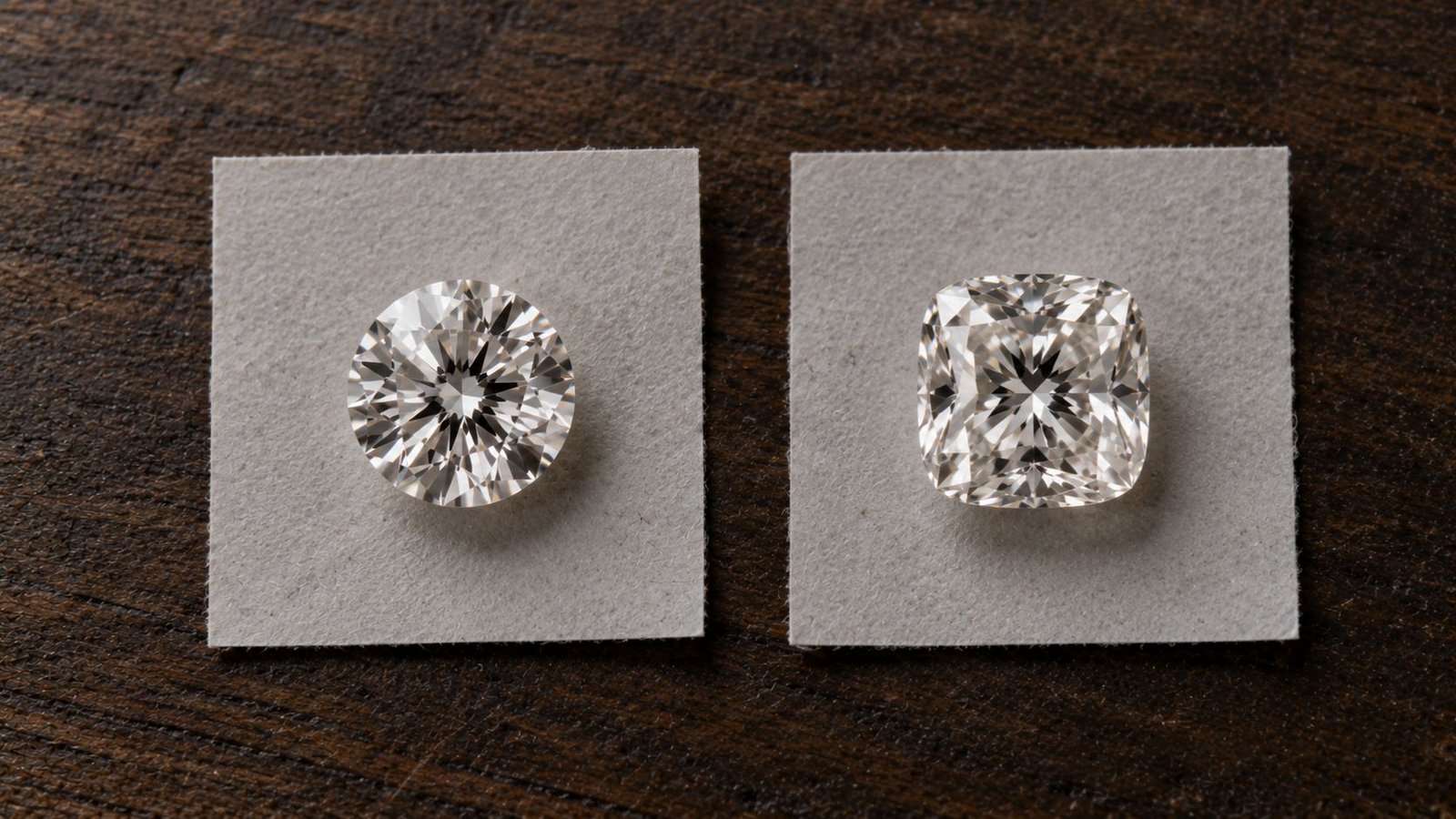
The two main growth methods leave slightly different fingerprints, which is useful knowledge when you read a report or compare stones. Our CVD vs HPHT guide explains the processes in detail. This table summarizes what each method tends to produce.
| Feature | CVD stones | HPHT stones |
| Typical inclusions | Pinpoints, clouds, small dark specks | Metallic inclusions, feathers, pinpoints |
| Growth lines | Common, faint, layer-like | Less typical |
| Magnetic response | Not expected | Occasionally with metallic inclusions |
| Most noticeable if present | Dark carbon specks near the center | Opaque metallic pieces near the center |
These are tendencies, not rules. A well-made stone from either method can reach a high clarity grade, and the report, not the method, tells you what is actually inside a particular diamond.
Treatments and Disclosure: What the Report Should Tell You
Some lab grown stones receive a post-growth treatment, most often a heat and pressure process that improves color. This is a routine, accepted step, and the result is stable in normal wear, but it should be disclosed. A reputable grading report notes any treatment, and a reputable seller will confirm it in writing.
For anyone judging lab grown diamond inclusions, this matters because treatment changes the stone’s color, not its internal features. The inclusions you see on the clarity plot are the ones the stone grew with. If a seller cannot say whether a stone is as-grown or treated, treat that as a reason to ask more questions before you pay.
What Makes an Inclusion Matter: Size, Position, Color and Shape

Not all lab grown diamond inclusions deserve the same attention. Four factors decide whether a feature is a problem for lab grown diamond inclusions in real jewelry.
Size. A feature too small to see without a loupe is a non-issue for most buyers. Larger features are more likely to catch the eye.
Position. An inclusion in the center of the table, directly under your gaze, is far more noticeable than one near the edge, where a prong can cover it. This is why two VS2 stones can look completely different.
Color. Dark inclusions such as carbon specks or metallic pieces stand out more than white pinpoints or clouds, even when they are the same size.
Shape of the diamond. Step cuts such as emerald and Asscher have large open facets that act like windows, so they show inclusions more readily than round brilliants, whose many small facets hide them. Our guide to lab grown diamond shapes explains how each cut behaves.
Do Lab Grown Diamond Inclusions Affect Price?
Yes, clarity is one of the factors that move price, and each step up the scale generally costs more. The step between VS and VVS grades in lab grown stones is often small next to the price gap that cut and carat weight create, and the improvement is usually invisible without a loupe. That is why spending on a better cut or a slightly larger stone often delivers more beauty per dollar than chasing a higher clarity letter.
Compare stones only when the other grades match, so you are isolating clarity rather than mixing it with color and cut. Our price guide in USD, EUR and INR lists wholesale reference prices by shape, which helps you see how much each grade really moves the number.
Do Lab Grown Diamond Inclusions Affect Durability?
Mostly no. The great majority of inclusions are tiny and sit entirely inside the stone, where they have no effect on how it wears. The exception is a larger feather or fracture that reaches the surface near a thin edge or a pointed corner. In that case a hard knock could turn a weak spot into a chip.
If you plan to wear the ring daily, ask the seller whether any feature reaches the surface, and prefer a protective setting for pointed shapes. A clean girdle and a medium edge thickness matter as much as the grade itself.
How to Read the Clarity Plot on a Grading Report
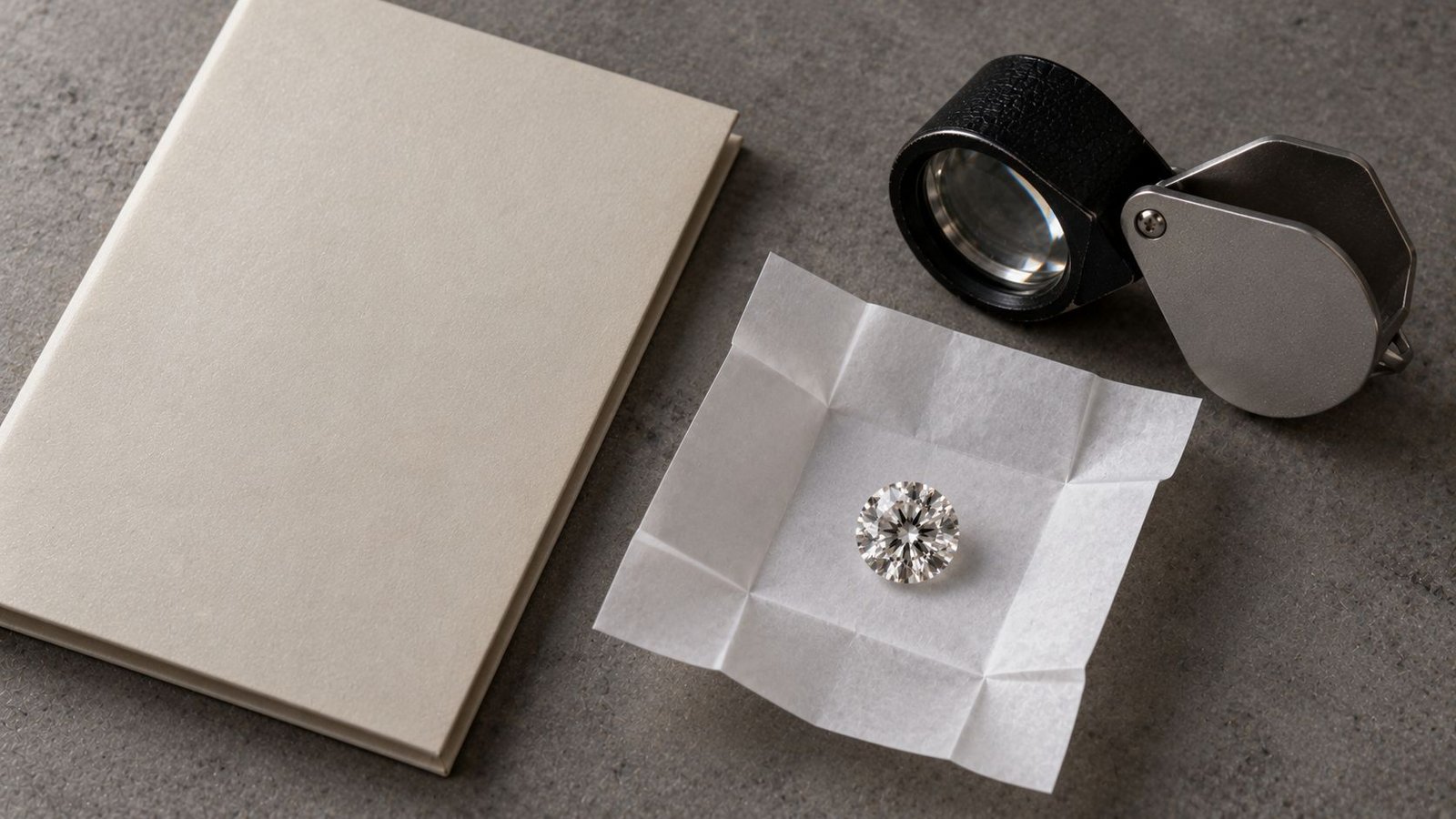
Most grading reports include a small diagram of the stone called a clarity plot. On most reports, internal features are drawn in red and surface characteristics in green, and each mark is positioned where the feature sits in the stone. Look at where the red marks are clustered. If they sit near the edge of the plot, they are likely to be hidden by the setting. If they sit in the center, they are more likely to be seen.
Remember that a plot is a map, not a photograph. It tells you where the features are and how many there are, but it cannot tell you how a stone looks in daylight. Pair the plot with a magnified video of the actual diamond whenever you can, and verify the report number on the issuing laboratory’s website. Our fraud red flags guide covers the verification steps.
How to Choose a Clean Lab Grown Diamond
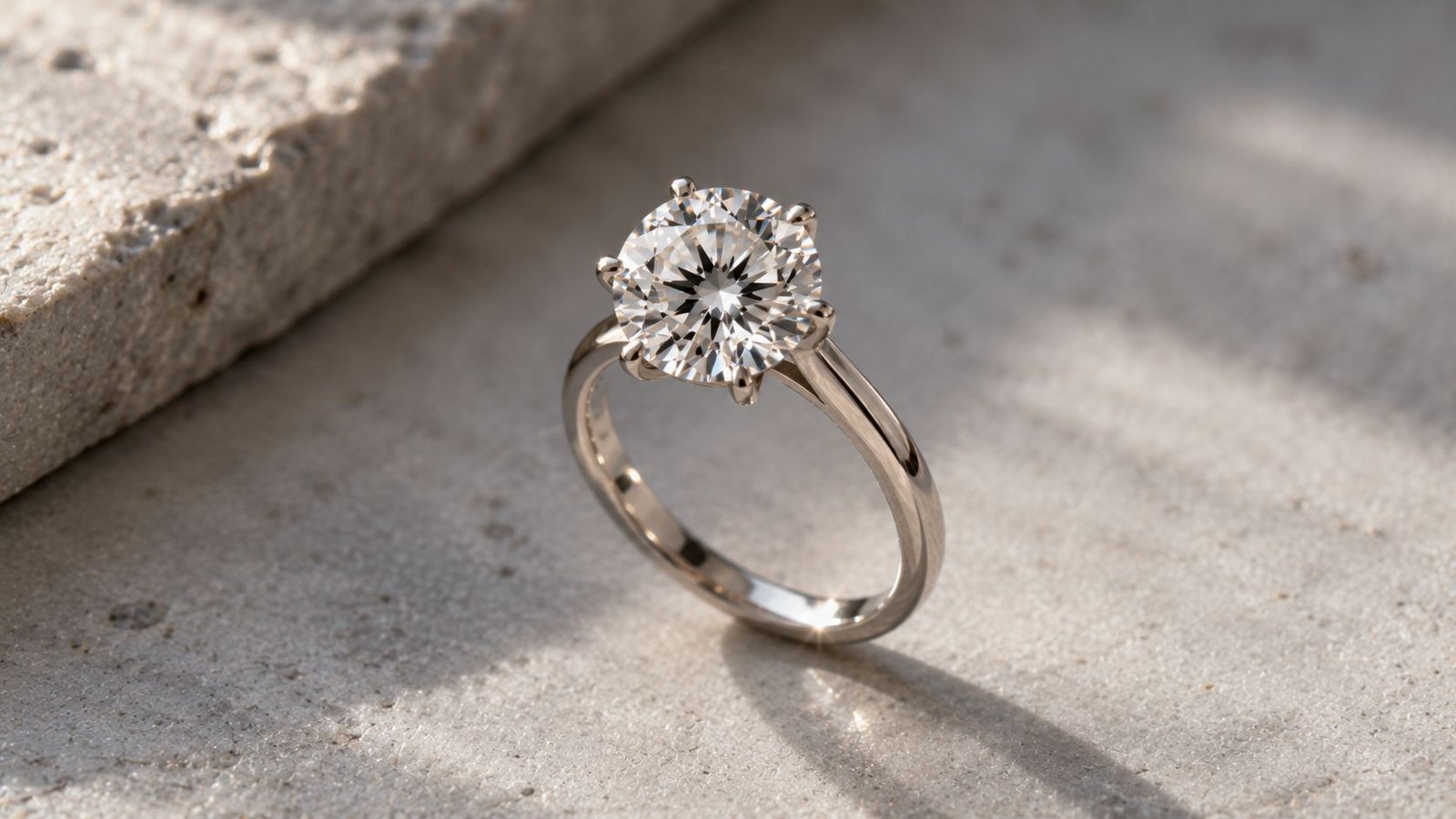
For most buyers, the goal is an eye-clean stone, meaning one with no inclusions visible to the naked eye from a normal viewing distance. Here is how to get there without paying for clarity you cannot see.
Aim for VS1 or VS2. These grades are normally eye-clean and cost less than VVS or flawless stones. For step cuts, lean toward VS1 or better.
Go one grade lower only with proof. An SI1 can be eye-clean if its features are small, pale, and well placed, but it is a gamble without a close-up video. Never buy SI grades from a photo alone.
Check the video, not just the grade. A 360-degree magnified video reveals how the inclusions are positioned and whether a dark feature sits under the table.
Be stricter with larger stones. Inclusions are easier to notice as stones get bigger, so if you are shopping above two carats, our checklist for buying a large lab diamond is worth reading first.
Inspect it yourself if you can. If you are buying in person or have the stone shipped on approval, look at it in daylight and under indoor light, tilt it slowly, and use a 10x loupe on the center and the edges. A stone that looks clean in both lights and under mild magnification is a safe choice.
Balance clarity with the rest of the grade. Clarity is one part of the picture. An excellent cut and a good color often do more for a stone’s beauty than moving from VS1 to VVS1. Our diamond color grading guide shows how to weigh them.
Common Misconceptions About Lab Grown Diamond Inclusions
“Lab grown diamonds are flawless.” They are not automatically flawless. Lab grown stones can and do have inclusions, and their clarity is graded exactly like a mined diamond’s. Many are graded VS or better, but that is a grade, not a guarantee.
“Inclusions mean the diamond is fake or cheap.” Inclusions are proof of a real crystal. A feature inside the stone says nothing about whether the diamond is genuine.
“I need VVS or higher.” For most buyers, a VS1 or VS2 stone looks identical to a VVS stone without a loupe, and the savings can go into a better cut or a larger carat weight.
“All inclusions hurt durability.” Most do not. Only large features that reach the surface near a thin edge create a real weak point.
“A higher grade always looks better.” Placement matters. A VS2 with a tiny, pale feature near the edge can look cleaner than an SI1, and sometimes cleaner than a poorly placed VS1.
Your Lab Grown Diamond Inclusions Checklist Before You Buy
- Choose VS1 or VS2 as your default target, and VS1 or better for step cuts.
- Request a magnified video, not just a still photo.
- Check the clarity plot for red marks near the center.
- Avoid dark specks or metallic pieces under the table.
- Confirm the report number on the laboratory’s website.
- Ask whether any feature reaches the surface near the girdle.
- View the stone in daylight and under indoor light before you commit.
A Note for Jewelers and Custom Designers
Clarity questions come up in nearly every lab grown sale, so it helps to explain inclusions in plain language and to show your customers the video. If you source stones in volume, our guide to wholesale lab created diamonds explains how to select by shape and grade, and you can browse current IGI certified lab grown diamonds directly. For reference pricing across grades, our price guide in USD, EUR and INR lists wholesale benchmarks by shape.
Final Thoughts: Buy the Look, Not Just the Letters
Lab grown diamond inclusions are natural, normal, and mostly invisible in a well-chosen stone. Learn the seven types, read the plot, pay attention to size, position, and color, and use the video to confirm what the report says. Do that, and you can aim for an eye-clean VS stone with confidence, instead of paying a premium for clarity that only a loupe can reveal.
Frequently Asked Questions: Lab Grown Diamond Inclusions
Disclaimer: This article is for informational and educational purposes only. Clarity grades are assessed under 10x magnification and judged by gemological laboratories, and the appearance of any individual stone depends on its cut, size, and the position of its features. Always review the grading report and a magnified video of the specific stone before you buy.