
Are Lab Grown Diamonds Durable? What Hardness, Scratches and Everyday Wear Really Mean for Your Ring
Lab grown diamond durability is one of the first questions buyers ask, and it is a fair one. A ring is worn every day for decades, so you want to know whether the stone will survive the gym, the kitchen, and the occasional knock against a door frame. Good news first: lab grown diamond durability is on par with a mined stone, since the two are equally hard. The longer answer, which is the one that actually protects your ring, is that hardness is only part of the story.
This guide explains what lab grown diamond durability really means, how lab grown diamonds compare with other gems, whether they can scratch or chip, and seven practical habits that keep a stone looking new for life. It is written for ring buyers, gift givers, and jewelers who want accurate answers rather than slogans.
Lab Grown Diamond Durability Starts with the Same Material

Calling it a simulant or a look-alike would be wrong. It is real diamond: pure carbon arranged in the same crystal structure as a mined stone, grown in a controlled environment instead of deep underground. Because the material and the structure are the same, the physical properties are the same too, including hardness, optical behavior, and how the stone reacts to heat and light. If you want the side-by-side picture, our lab grown vs natural diamonds article lays it out.
Both types of stone land at the very top of the Mohs scale, with a perfect 10. It is also why gemological laboratories such as the Gemological Institute of America and the International Gemological Institute grade lab grown diamonds on the same quality factors they use for natural stones. The origin changes the price and the story. Hardness is untouched.
Hardness, Toughness and Stability: Three Different Things
When people ask whether a diamond is durable, they usually mean three separate questions, and mixing them up is the source of most myths.
Hardness is resistance to scratching. Diamond is at the top of the Mohs scale, which means nothing except another diamond can scratch it.
Toughness is resistance to chipping or breaking. This is different from hardness. Diamond is very hard but not unbreakable, because its crystal structure has directions along which it can split if it takes a sharp, well-aimed blow.
Stability is how the stone responds to heat, chemicals, and light. Diamond handles ordinary household conditions without any trouble, although a jeweler’s torch can damage it if used carelessly.
A useful comparison for lab grown diamond durability is glass and a steel hammer. Hard materials can still shatter, and tough materials can still scratch. Diamond wins on hardness, does well on stability, and sits in the middle on toughness. Good habits cover the rest.
| Gem | Mohs hardness (approx.) | What it means for daily wear |
| Lab grown or natural diamond | 10 | Resists scratching from everything except another diamond |
| Moissanite | 9.25 | Very hard, slightly below diamond |
| Sapphire and ruby | 9 | Hard enough for daily rings, but noticeably softer than diamond |
| Cubic zirconia | 8 to 8.5 | Scratches and clouds with wear over time |
| Quartz | 7 | Scratches easily from everyday grit |
The Mohs scale is not evenly spaced. The gap between 9 and 10 is far larger than the gap between 8 and 9, so diamond’s lead over sapphire is much bigger than the numbers suggest. The metals in a ring sit lower still, at roughly 2.5 to 4.5, which is why the setting wears long before the stone does.
Can a Lab Grown Diamond Scratch?

For everyday purposes the answer is no, and that scratch resistance is central to lab grown diamond durability. The things that surround you every day, such as keys, countertops, steel tools, sand, and concrete, are all softer than diamond. Dust and grit may dull the surface shine temporarily by coating it, but they do not scratch the stone itself. A quick clean restores the sparkle.
The one exception is another diamond. Only another diamond can leave a mark on a diamond, lab grown stones included. This matters most with pavé bands and stacked rings, where several diamonds can rub against each other over years of wear, and when diamond jewelry is tossed together in a drawer. Wearing two diamond rings on one finger will not show any effect for years, yet it is still a reason to keep pieces apart when stored.
When a ring looks scratched, the damage is almost always in the metal rather than the stone. Rings are made of gold or platinum, metals that sit well below diamond in hardness, so everyday contact leaves faint marks on the band and prongs over time. Those marks can be polished away by a jeweler, and they say nothing about the diamond itself.
Is Chipping Possible with a Lab Grown Diamond?

Yes, rarely, and it is worth understanding why. Diamond can split along certain planes in its crystal structure, called cleavage planes. A hard, sharp impact at the wrong spot, especially on a thin edge or a pointed corner, can chip a stone. No diamond is exempt, whatever its origin.
In practice, three factors decide the risk:
The shape. Pointed and sharp-cornered shapes, such as marquise, pear, and princess cuts, have corners that take more stress. Round, oval, and cushion shapes have no such weak points.
The girdle. The girdle is the thin edge of the stone where it meets the setting. A very thin girdle is more vulnerable to chipping than a medium one.
The inclusions. A large feather, which is a small internal fracture, that reaches the surface near the edge of the stone can act as a weak spot. Most VS1 and VS2 stones do not have this problem, but it is worth asking.
Our guide to lab grown diamond shapes shows how each shape looks and wears, and the princess vs cushion comparison is especially useful if you are deciding between a sharp-cornered shape and a softer one.
Shape-by-Shape Lab Grown Diamond Durability
Every diamond shape has the same hardness, but each one carries risk in a different place. This table shows where the vulnerable spots are and what protects them.
| Shape | Most vulnerable area | Best protection |
| Round brilliant | Thin girdle edge | Medium girdle and any secure setting |
| Oval | Girdle along the long sides | Prongs at the ends or a bezel |
| Cushion | Rounded corners (low risk) | Four or six prongs |
| Emerald and Asscher | Trimmed corners and step edges | Corner-protecting prongs or a bezel |
| Radiant | Trimmed corners | Prongs that cover each corner |
| Princess | Four sharp corners | V-shaped prongs on every corner |
| Marquise | Two sharp points | V-shaped prongs on both points |
| Pear | One sharp point | A V-shaped prong on the point |
| Heart | The point and the cleft | V-shaped prongs at both spots |
The pattern is simple. Shapes with no corners need the least protection, and shapes with points or sharp corners need metal over those points. That single choice does more for the long-term durability of a lab grown stone than anything else you can control.
What Heat and Chemicals Do to Lab Grown Diamond Durability
Diamond is remarkably stable. Hot water, steam, cooking heat, saunas, and ordinary sunlight do not affect it, and neither do soaps, lotions, or hand sanitizer. These products can leave a film on the surface that makes the stone look dull, but the diamond underneath is unchanged.
Two things deserve caution. First, a jeweler’s torch used during repairs or resizing can damage a diamond if it is heated carelessly, so always tell the repairer that the stone is in place. Second, some chemicals affect the metal rather than the stone. Chlorine bleach can damage certain gold alloys, and prolonged exposure to pool or hot tub chemicals may discolor or weaken white gold and its plating. Removing the ring before swimming or deep cleaning protects the setting that holds your diamond.
Lab Grown vs Natural: Is There Any Durability Difference?
There is no difference in durability that comes from origin. A lab grown diamond and a mined diamond of the same cut, clarity, and setting will take wear in the same way. What does vary from stone to stone is the cut quality, the girdle thickness, and the type and position of any inclusions, and those factors affect both lab grown and natural stones equally.
Some buyers wonder whether the growth method matters. Lab grown diamonds are made by chemical vapor deposition (CVD) or high pressure high temperature (HPHT) processes, and both produce diamond with the same hardness. Our CVD vs HPHT guide explains the two methods. Some stones receive a post-growth treatment to improve color, and the result is stable under normal wear. What you should look for is not the method but the grading report, which shows the quality factors that actually affect how a particular stone behaves. Our explainer on IGI certificates for lab grown diamonds shows how to read one.
Seven Everyday Wear Tips for Better Lab Grown Diamond Durability
Tip 1: Choose a Protective Setting
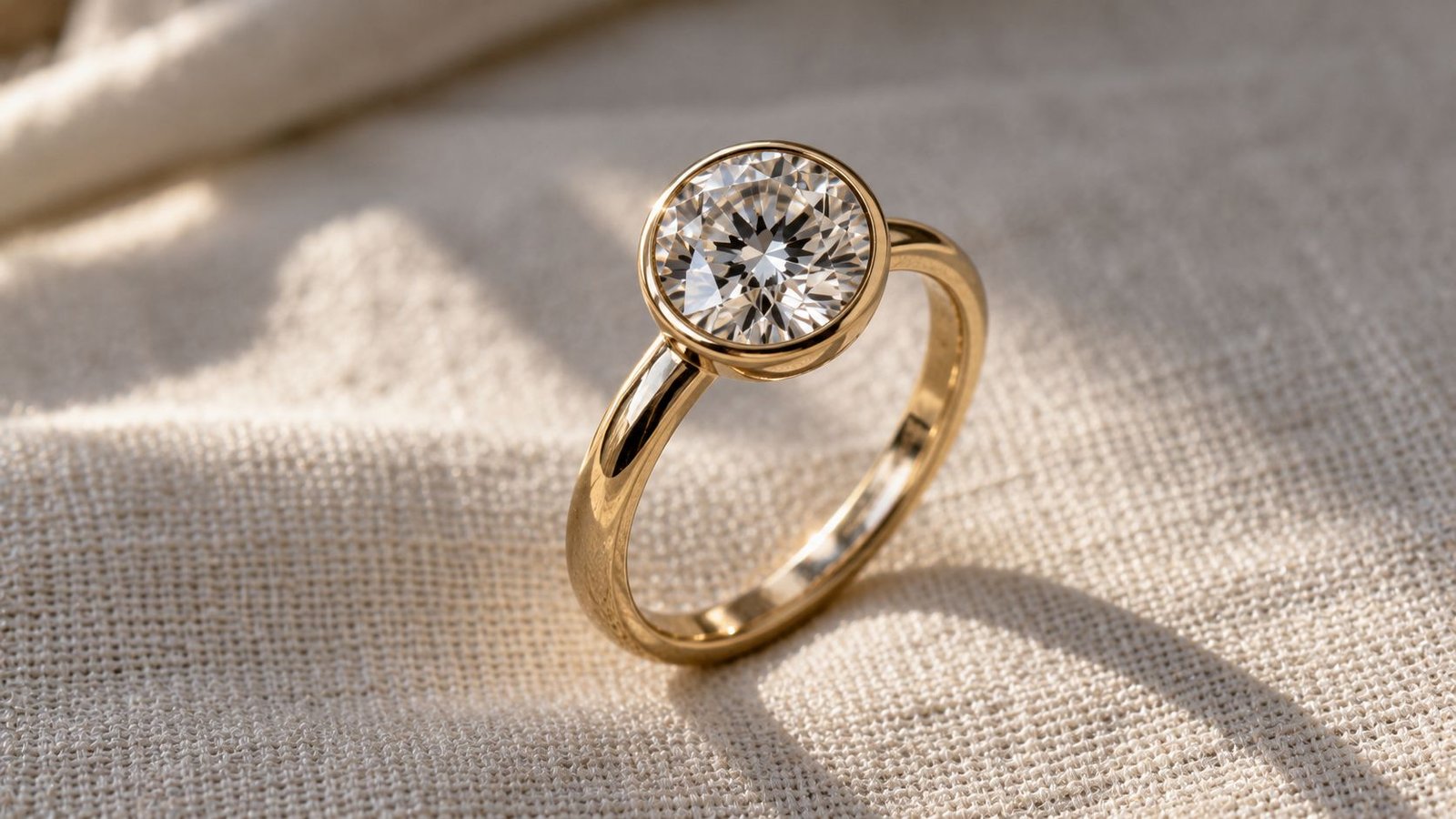
The setting is the first line of defense for lab grown diamond durability. A bezel setting wraps the stone’s edge in metal, which makes it the most protective choice for active lifestyles. A halo or a low-profile prong setting keeps the stone close to the finger and reduces the chance of knocking it. If you choose a pointed shape, ask for V-shaped prongs that cover the corners, because the corner is the part most likely to chip.
Tip 2: Match the Shape to Your Lifestyle
If you work with your hands, play sports, or are simply hard on jewelry, a round, oval, or cushion cut is the lowest-risk choice. These shapes have no sharp corners to catch on things. Sharp-cornered shapes are completely wearable, but they ask for a slightly more careful routine and a protective setting.
Tip 3: Check the Clarity and the Girdle Before You Buy
Look at the details that affect lab grown diamond durability. Ask for a stone with a medium girdle rather than a very thin or extremely thick one, and check the report and any available video for large inclusions near the edge. For most buyers, an eye-clean VS1 or VS2 stone with no surface-reaching feather is a sensible, durable choice. Our checklist for buying a large lab diamond goes further if you are shopping above two carats.
Tip 4: Take It Off for Heavy Tasks
Diamonds are tough enough for daily wear, but they do not need to take every hit. Remove the ring for weightlifting, gardening, heavy cleaning, and DIY work. Strong chemicals, including chlorine bleach, can damage some gold alloys in the setting, and a hard knock against a metal bar is exactly the kind of impact that can chip an edge.
Tip 5: Clean It the Right Way

Oils from skin, lotion, and soap build up on diamond and make it look dull, which is often mistaken for damage. Soak the ring in warm water with a drop of mild dish soap, brush gently with a soft toothbrush, rinse, and dry with a lint-free cloth. Ultrasonic cleaners are fine for most diamonds in secure settings, but avoid them if a prong looks loose or the stone has a large inclusion near the surface. Our lab grown diamond care guide covers the full routine.
Tip 6: Store It Separately
Keep diamond jewelry in its own soft pouch or a lined compartment, away from other diamonds and hard metal pieces. Because diamond is the one material that can scratch another diamond, loose storage in a drawer or a shared box is the most common way a polished stone picks up avoidable abrasion on the facet edges.
Tip 7: Check the Setting Every Year

The most common way to lose a diamond is not a chip. It is a worn prong that lets the stone fall out. Because gold and platinum are far softer than diamond, lab grown diamond durability depends on the prongs, and prongs thin gradually with wear. Have a jeweler inspect the setting once a year, tighten anything loose, and re-tip worn prongs before they fail. Keep the grading report and an invoice together, and consider insurance, which makes any future repair or replacement straightforward.
Choosing the Metal: The Setting Matters as Much as the Stone
Because the metal wears faster than the diamond, lab grown diamond durability in daily life depends as much on the setting as on the stone. Platinum is dense and strong and holds a stone securely, but it develops a soft, brushed patina with wear. Gold is available in 14K and 18K, and 14K is harder and more durable for daily use because it contains more alloy metal. White gold is usually plated with rhodium, which wears off over time and needs reapplying every few years, while yellow and rose gold show their natural color all the way through.
None of these choices change the diamond’s durability. They change how often the ring needs maintenance. Our platinum vs white gold guide walks through the practical differences, so you can pick the metal that suits your lifestyle and budget.
How Long Does a Lab Grown Diamond Last?
The diamond itself does not wear out. With a sound stone and a well-maintained setting, a lab grown diamond ring can be worn for a lifetime and passed on to the next generation. Over decades, the realistic maintenance is on the metal side: prongs thin gradually, plating wears off, and the band may need resizing or polishing. A jeweler can handle all of that without touching the stone.
Think of it the way you would think of a house. The foundation is permanent, and the upkeep is ordinary and predictable. Buyers who plan for that routine from day one rarely run into surprises, and they tend to be the ones whose rings still look new after many years.
Common Misconceptions About Lab Grown Diamond Durability
“Lab grown diamonds are softer than natural ones.” They are not. They score a 10 on the Mohs scale, exactly like a mined diamond, because they are the same material.
“Diamonds cannot break.” Hardness is not the same as toughness. A diamond resists scratching better than any other gem, but a sharp blow on a thin edge or a pointed corner can still chip it.
“Lab grown stones lose their sparkle over time.” Diamond does not fade or dull by itself. A stone that looks cloudy is almost always coated with oil, soap, or lotion, and a proper cleaning brings the brilliance back.
“A scratched ring means the diamond is scratched.” The marks on a ring are nearly always in the metal. The diamond itself is far harder than the band that holds it.
“Lab grown means a weaker stone.” Origin does not affect lab grown diamond durability. Cut quality, girdle thickness, inclusions, and the setting do.
Your Lab Grown Diamond Durability Checklist Before You Buy
- Confirm the stone has a grading report, and read the clarity and cut details.
- Choose round, oval, or cushion for the most active lifestyles.
- For pointed shapes, ask for protective prongs or a bezel.
- Prefer a medium girdle and no large inclusion reaching the surface.
- Pick a setting and metal that match your daily routine.
- Ask how prong re-tipping and resizing are handled.
- Plan an annual setting inspection and arrange insurance.
A Note for Jewelers and Custom Designers
If you sell lab grown stones, lab grown diamond durability is the question your customers will ask most often, so it pays to answer it clearly and honestly. Explain that hardness is the same as a natural diamond, be open about the difference between hardness and toughness, and recommend a protective setting for pointed shapes. Customers who understand how to care for their ring are happier, and they come back. If you source stones for custom work, our guide to wholesale lab created diamonds explains how to select by shape and grade, and you can browse current IGI certified lab grown diamonds directly.
Final Thoughts: As Durable as Any Diamond, Rewarded by Good Habits
Lab grown diamond durability is excellent, and it is identical to that of a mined stone because the material is identical. The diamond itself will resist scratching for a lifetime. What needs your attention is the part you can control: a sensible shape, a protective setting, careful storage, gentle cleaning, and a yearly check of the prongs. Do that, and a lab grown diamond ring will look as good in thirty years as it does on the day you receive it.
Frequently Asked Questions: Lab Grown Diamond Durability
Disclaimer: This article is for informational and educational purposes only. Durability depends on the individual stone, its cut and inclusions, and how it is set and worn, and no diamond is guaranteed to be free from chipping or damage. For advice on a specific stone or setting, consult a qualified jeweler or gemologist.