Choosing a Lab Grown Diamond Shape for Your Engagement Ring: A 2026 US Buyer’s Guide
Lab grown diamonds now account for 61% of US engagement ring centre stones, according to The Knot’s 2026 Real Weddings Study — up sharply from a small fraction of the market just five years ago, and that shift has put lab grown diamond shapes for engagement rings squarely at the centre of how modern buyers are actually shopping. That shift has changed more than just where the diamond comes from. With lab grown pricing freeing up a meaningfully larger share of most buyers’ budgets, shape has become a genuinely bigger decision than it used to be, since the same money now stretches across more carat weight, more setting options, and more shapes than a comparable natural-diamond budget ever allowed.
At the same time, GIA overhauled how it grades lab grown diamonds in October 2025, retiring the familiar D-to-Z colour scale in favour of a simplified Premium and Standard system — a change that directly affects how buyers should evaluate certain shapes, particularly round brilliants. This guide walks through the lab grown diamond shapes for engagement rings that are actually winning in the US market right now, what’s genuinely driving those preferences, and how the GIA grading change should factor into your decision, shape by shape.
Why Shape Matters More With Lab Grown Diamonds Specifically
Shape has always mattered when choosing lab grown diamond shapes for engagement rings, but lab grown pricing has changed the calculation behind it. When a centre stone costs meaningfully less per carat than its natural equivalent, buyers aren’t just choosing a shape they like — they’re often choosing between a larger stone in one shape or a smaller, better-graded stone in another, a trade-off that barely existed at natural-diamond price points for most budgets.
This is also why lab grown diamond shapes for engagement rings have started to skew differently than natural-diamond shape preferences historically did. Elongated shapes that appear larger per carat — oval, pear, and marquise among them — have grown especially quickly in the lab grown segment specifically, because buyers who’ve freed up budget on price-per-carat are actively optimising for face-up size in a way that wasn’t as financially realistic before.
The Most Popular Lab Grown Diamond Shapes for Engagement Rings Right Now
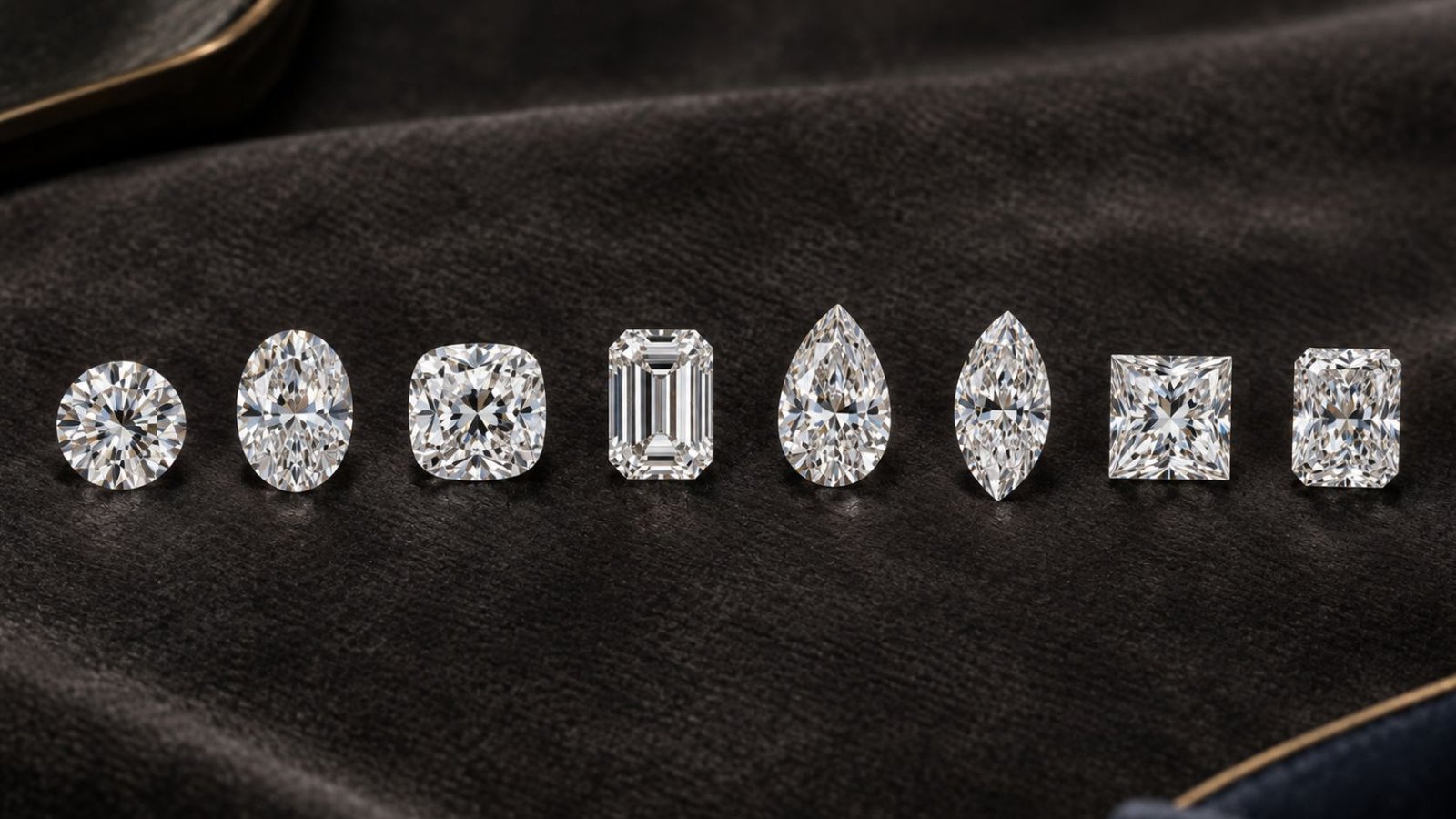
According to The Knot’s 2026 study of lab grown diamond shapes for engagement rings — based on responses from over 10,000 US couples — round brilliant remains the single most chosen shape at 26%, with oval close behind at 25%. No other shape reaches double digits individually, though emerald, pear, marquise, and princess each sit around 8%. Here’s how the leading shapes actually perform and why buyers are choosing them.
Round Brilliant
Among all lab grown diamond shapes for engagement rings, round brilliant remains the classic, safest choice, and its 58-facet design is engineered specifically to maximise light return, which is why it consistently outperforms every other shape for raw sparkle. It suits virtually any setting and hand shape, which is a large part of why it still narrowly leads the market despite oval’s rapid rise.
Oval
Oval is one of the fastest-rising lab grown diamond shapes for engagement rings, having grown from roughly 2% of engagement rings a decade ago to 25% today, and the reason is straightforward: its elongated shape faces up noticeably larger than a round diamond of the same carat weight, while still delivering strong brilliance. It also has a flattering, finger-lengthening effect that’s become a major selling point as buyers optimise for visual size.
Cushion
Cushion cuts, with their softly rounded corners, have remained a consistent favourite for their romantic, slightly vintage character. They pair especially well with halo settings and warmer metal tones, and elongated cushion variations have picked up renewed attention recently as a fresher take on the classic shape.
Emerald
Among lab grown diamond shapes for engagement rings, the step-cut emerald shape trades brilliance for clarity — its open facets create a striking hall-of-mirrors effect rather than the scattered sparkle of a brilliant cut, but this also means any inclusions are more visible to the naked eye. Emerald shapes reward buyers willing to prioritise clarity grade over carat weight.
Pear
Often called the teardrop, pear is a genuine standout for buyers wanting something distinctive without straying too far from familiar territory. Worn point-outward, it elongates the finger dramatically, and it delivers real visual presence relative to its actual carat weight.
Marquise
Marquise is the fastest-growing of all fancy lab grown diamond shapes for engagement rings by percentage in 2026, with some retailers reporting sales up nearly 94% year over year. Its elongated, pointed silhouette maximises apparent size more aggressively than almost any other shape, making it a strong pick for buyers focused on face-up impact.
Princess
Princess cut offers a modern, geometric alternative to round brilliant while retaining strong brilliance, thanks to its faceting style. It’s a practical choice for buyers who want clean, contemporary lines without moving into step-cut territory.
Radiant
Radiant combines the brilliance-focused faceting of a round or princess cut with the elongated silhouette of an emerald or oval outline, making it a genuine hybrid option. It’s a strong pick for buyers who want emerald’s shape with more forgiveness around visible inclusions.
How GIA’s New Grading System Changes Shape Selection
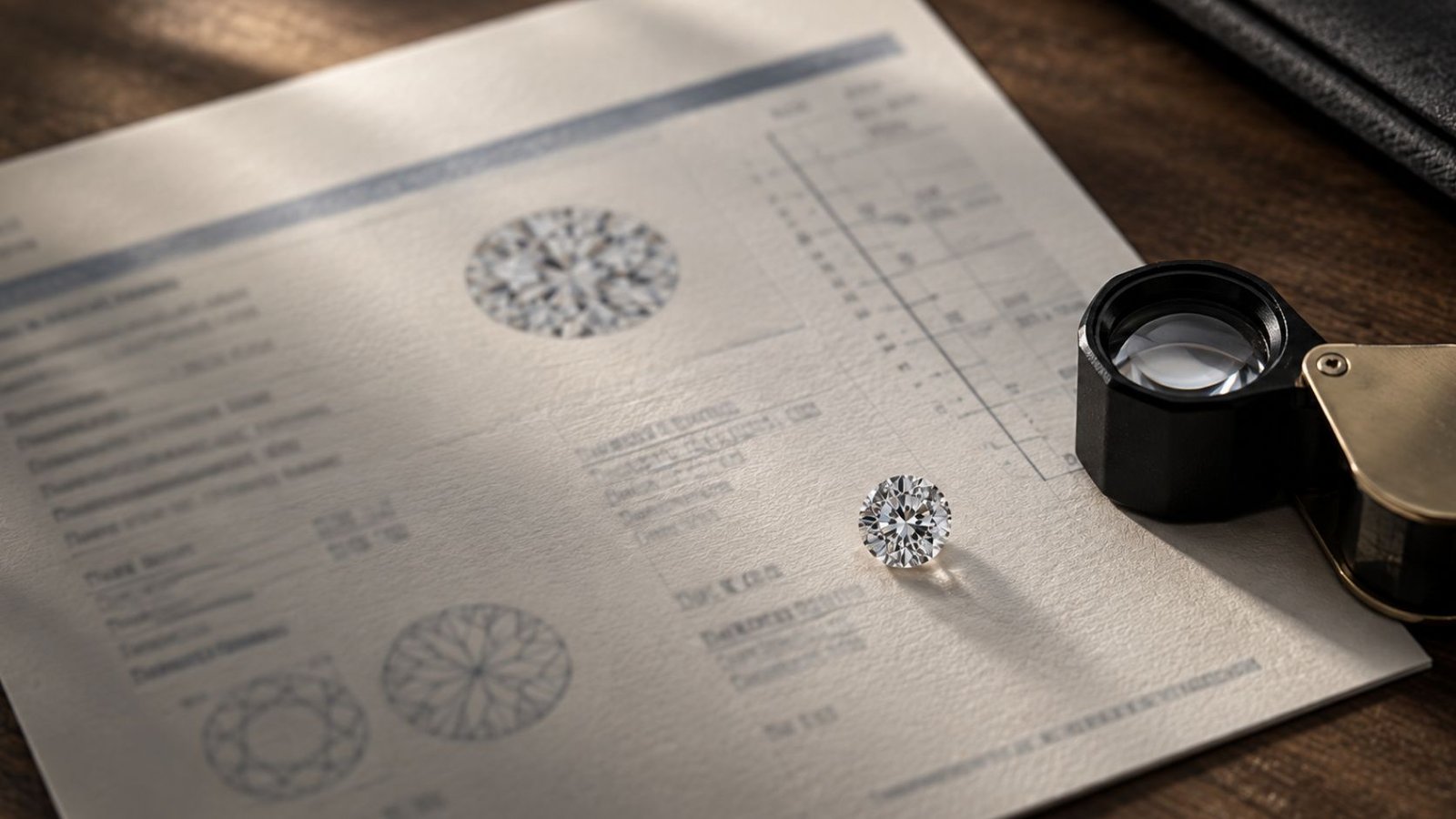
This is a detail that’s genuinely new for 2026 and directly affects how you should shop for lab grown diamond shapes for engagement rings: as of October 1, 2025, GIA retired its detailed 4Cs-style colour and clarity grading for lab grown diamonds, replacing it with a simplified Premium or Standard classification. A Premium grade requires D colour, VVS clarity or better, excellent polish and symmetry — and for round brilliants specifically, an excellent cut grade as well. Standard covers a broader band, from E to J colour and VS clarity with very good finish grades.
The round-specific cut requirement matters more than it might first appear: because round brilliants are the only shape with a universally standardised cut grading system, GIA’s Premium tier holds them to a stricter, more explicit cut standard than fancy shapes, which don’t have an equivalent industry-wide cut grade. For fancy shapes like oval, pear, cushion, and marquise, proportions and face-up appearance still need to be judged more by eye and by a knowledgeable supplier’s assessment, since there’s no single agreed cut grade covering all fancy shapes the way there is for round brilliants.
Shape and Price Efficiency: Getting More Size for Your Budget
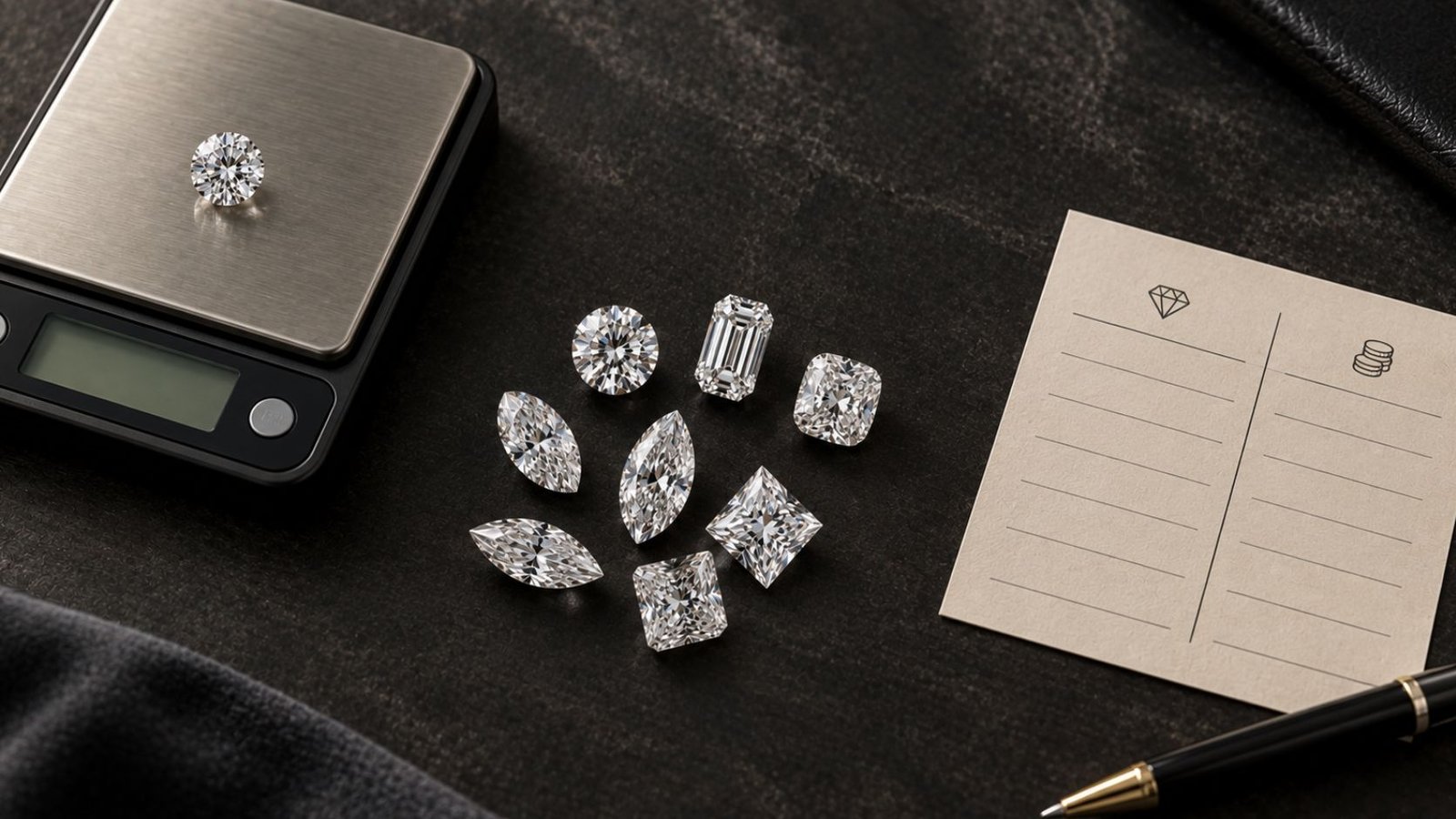
Because lab grown pricing has made carat weight more flexible for most buyers, understanding which lab grown diamond shapes for engagement rings deliver more visual size per carat has become a genuinely useful piece of shopping knowledge. Elongated shapes — oval, pear, and marquise — consistently face up larger than a round or cushion of the same carat weight, since more of their surface area is visible from above rather than concentrated in a compact, symmetrical outline.
If you’re weighing carat weight against budget directly, our shape-by-shape price guide breaks down current wholesale reference pricing across all the shapes covered here, which makes it much easier to see where a shape switch might free up meaningful budget for a larger stone or a better grade.
Matching Shape to Hand, Finger, and Personal Style
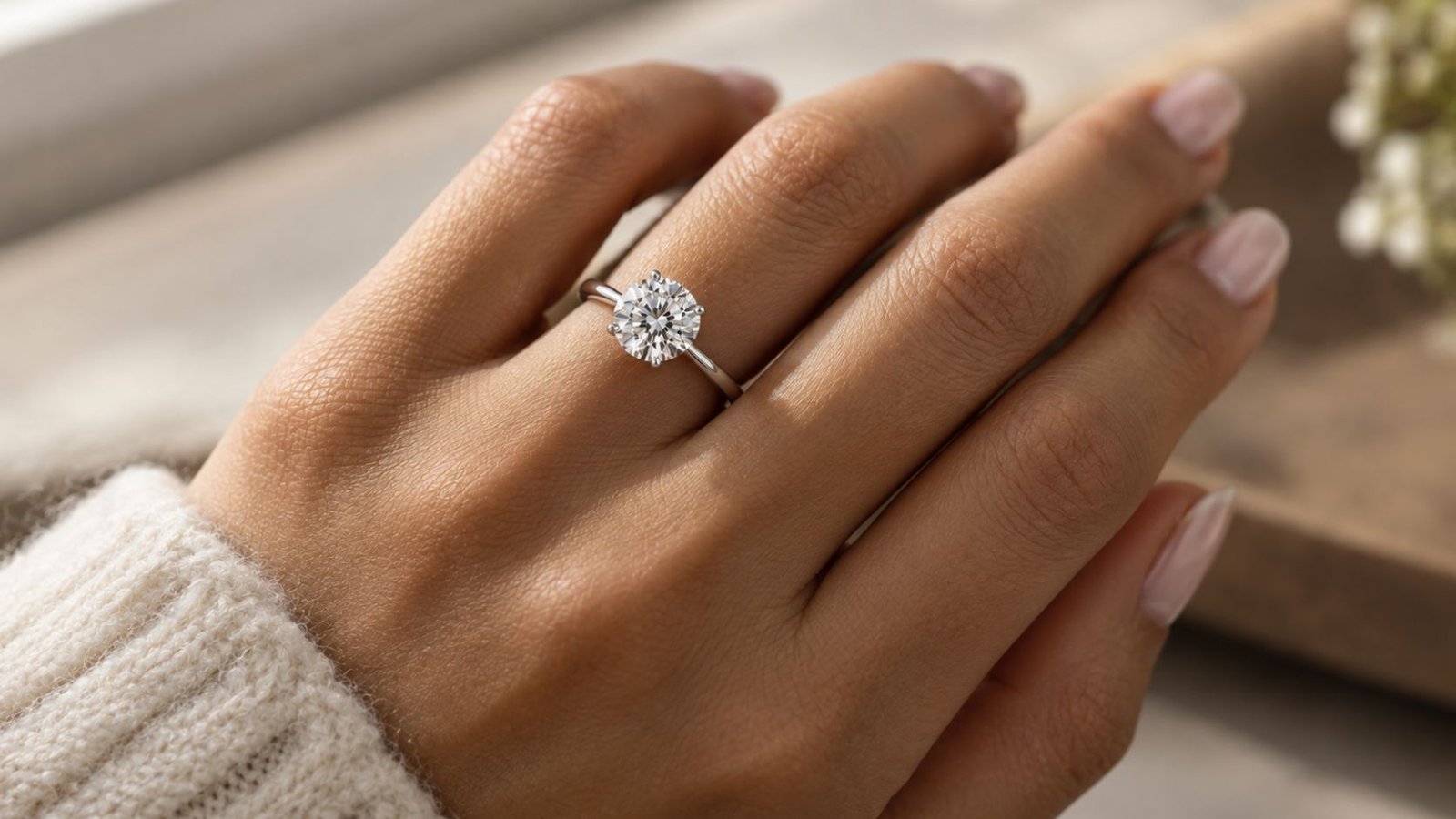
Shape isn’t purely a visual preference in isolation when it comes to lab grown diamond shapes for engagement rings — it interacts directly with hand and finger proportions.
Shorter or wider fingers generally look most balanced with elongated shapes like oval, pear, or marquise, since the shape’s length creates a visual lengthening effect.
Longer, slender fingers can comfortably carry almost any shape, including round, cushion, and princess, without a strong need for the finger-lengthening effect elongated shapes provide.
Active lifestyles often favour round, cushion, or princess shapes, since their compact outlines and rounded or protected corners are somewhat more resistant to everyday snagging than a pointed shape like marquise or pear.
Beyond proportion, shape also carries genuine personality signals — round and cushion read as classic and timeless, while marquise, pear, and emerald tend to signal a more distinctive, individual style preference.
Pairing Shape With Setting Style
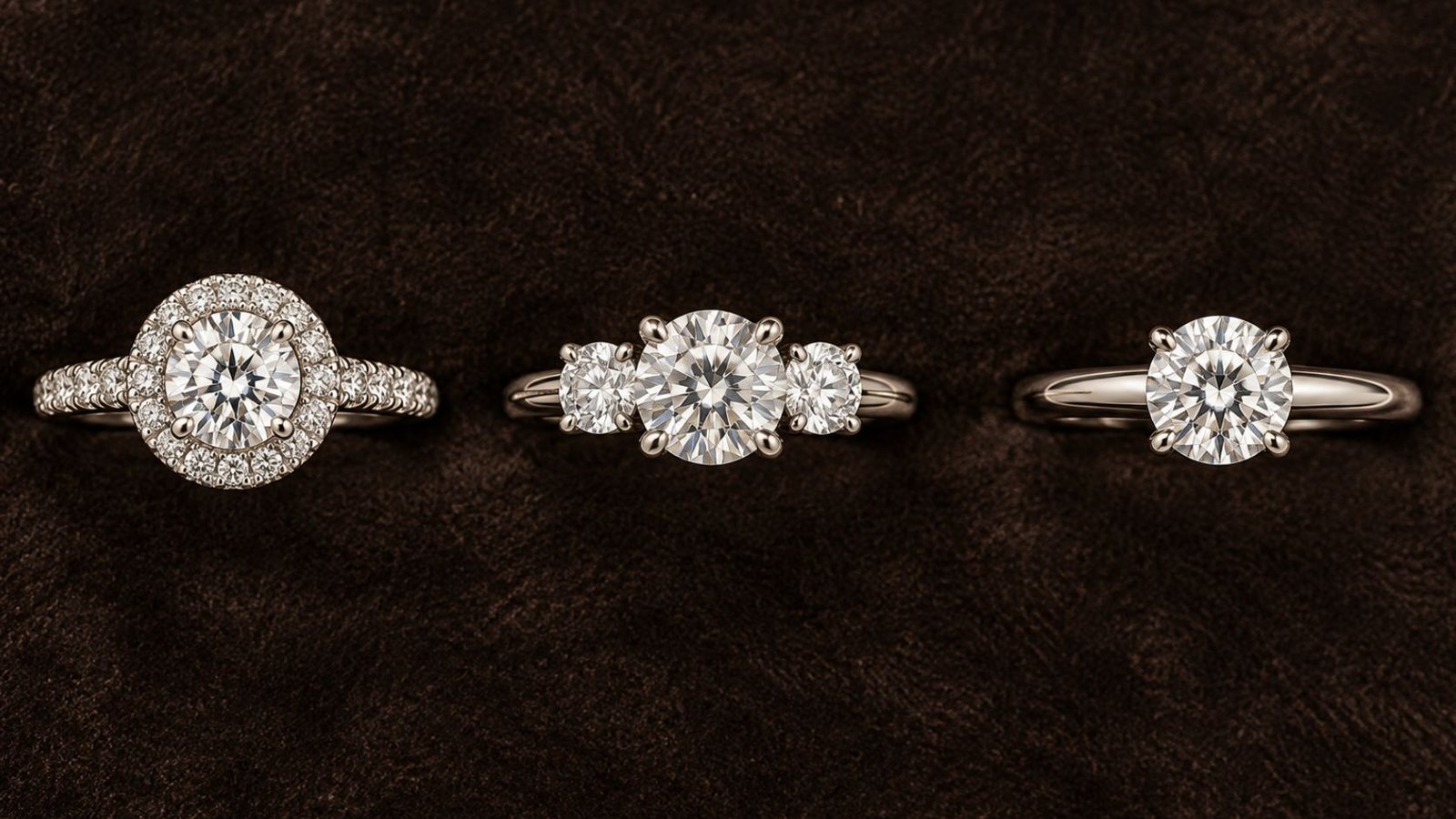
The right setting can meaningfully change how any of these lab grown diamond shapes for engagement rings performs visually, and this is where design choices around the centre stone start to matter as much as the shape decision itself.
Among lab grown diamond shapes for engagement rings, halo settings work exceptionally well with round, oval, and cushion centre stones, using a ring of smaller diamonds to visually increase apparent size — a popular way to maximise face-up impact without increasing the centre stone’s actual carat weight.
Three-stone and trilogy settings pair beautifully with fancy shapes like pear, marquise, and oval, and have seen a genuine resurgence in 2026 as buyers look for more meaningful, story-driven designs incorporating mixed side-stone shapes.
East-west settings, where the stone is set horizontally rather than vertically, are an emerging trend particularly suited to elongated shapes like marquise and oval, offering a distinctly modern, asymmetrical look.
If you’re exploring how a coloured side stone or accent might work alongside your chosen shape, our guide to pairing lab grown diamonds with coloured gemstones covers exactly this kind of design decision in depth.
Quality Factors That Matter More for Certain Shapes
Not every quality factor carries equal weight across every one of these lab grown diamond shapes for engagement rings. Step-cut shapes like emerald show inclusions far more readily than brilliant-cut shapes like round or cushion, since their open facets don’t scatter light the way a brilliant cut does — which means clarity grade deserves more attention when shopping emerald or Asscher shapes specifically than it might for a round or princess stone of similar overall quality.
Fluorescence is another factor that interacts differently with different shapes and colour grades, and it’s worth understanding properly before finalising any centre stone regardless of shape — our complete guide to diamond fluorescence covers exactly when it matters and when it doesn’t.
Regional Style Differences Within the US Market
Even within the US, preferences for lab grown diamond shapes for engagement rings aren’t perfectly uniform across every region, and a few consistent patterns are worth knowing if you’re trying to gauge what will feel current where you live.
Coastal metro markets — particularly the Northeast and West Coast — have generally led the adoption curve for fancy and elongated lab grown diamond shapes for engagement rings like oval, pear, and marquise, often reflecting broader fashion trends before they reach wider national popularity.
More traditional and suburban markets tend to favour round brilliant and princess cuts at a somewhat higher rate than the national average, with classic solitaire and simple halo settings remaining the dominant styles.
Younger buyers nationally are driving much of the growth in fancy shapes and non-traditional settings, a pattern that lines up closely with the broader generational shift toward personalised, story-driven ring design that industry data has tracked across the past several years.
None of this means a regional trend should override personal taste, but it’s useful context if you’re a retailer or designer trying to stock or design ahead of demand in a specific market, rather than assuming national averages apply uniformly everywhere.
How Lab Grown Availability Differs by Shape
One practical factor that doesn’t get discussed enough about lab grown diamond shapes for engagement rings: not every shape is equally easy to source at every carat weight and quality combination, even with lab grown production having expanded supply dramatically compared to natural diamonds.
Round brilliants remain the most consistently available of all lab grown diamond shapes for engagement rings across every price point and carat range, since production processes are most standardised for this shape.
Elongated fancy shapes like oval, pear, and marquise can see tighter availability at very specific carat weights or exact length-to-width ratios, particularly for buyers with a precise proportion preference, simply because cutting a rough stone into these shapes yields fewer perfectly matched options than cutting for round.
Step-cut shapes like emerald and Asscher are generally available across a solid range but reward working with a supplier who can show you actual stone photos or video rather than relying purely on a certificate, since visual character varies more meaningfully within this category than within brilliant-cut shapes.
Understanding these availability patterns ahead of time helps set realistic expectations when comparing lab grown diamond shapes for engagement rings, particularly for buyers with a specific carat weight and shape combination already in mind before they start shopping.
Common Mistakes When Choosing a Shape
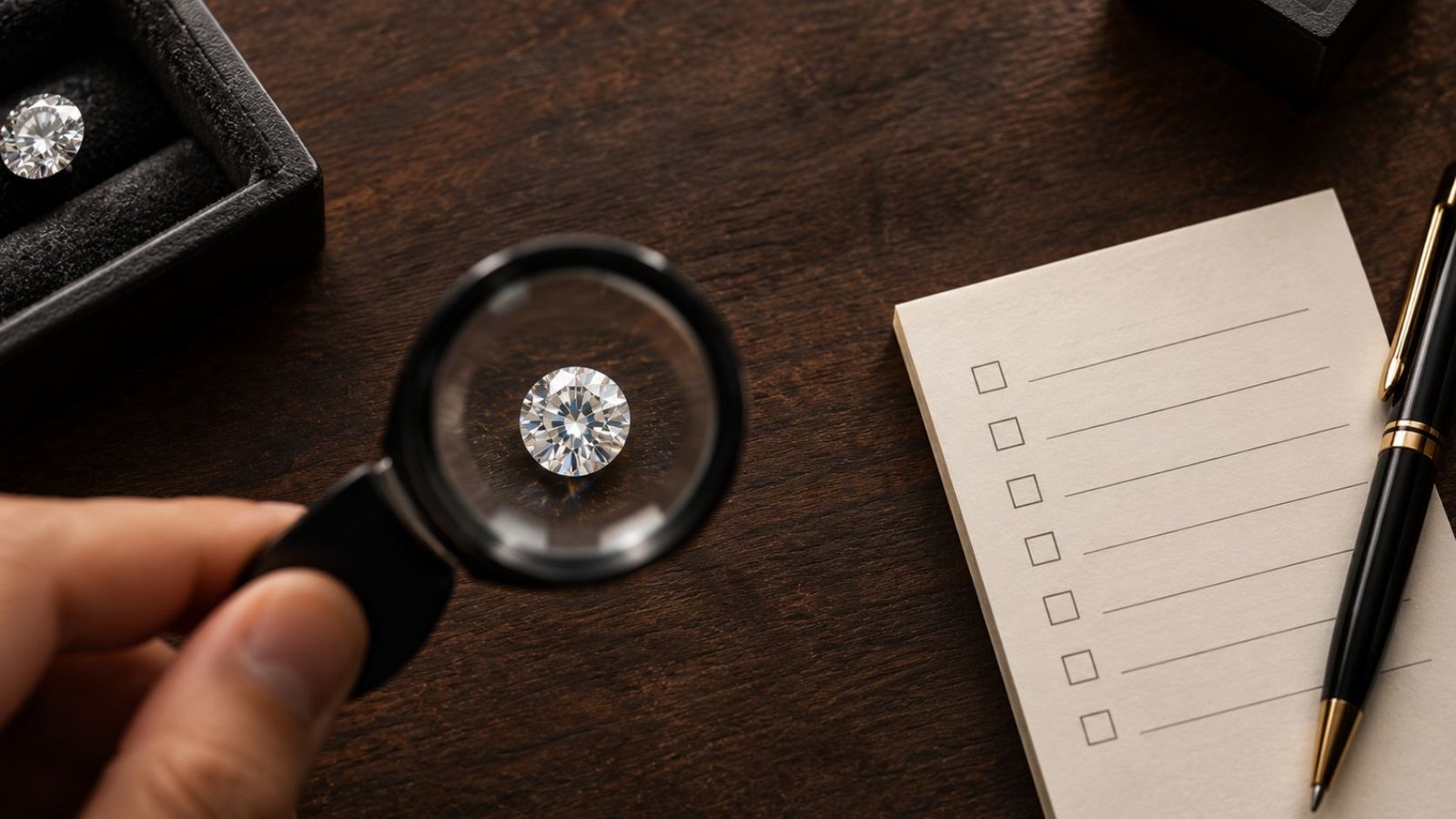
Choosing one of these lab grown diamond shapes for engagement rings purely from a photo. Shapes photograph differently than they wear in person, and lighting in a product photo can flatter a shape’s brilliance or clarity in ways that don’t fully translate to everyday wear.
Ignoring finger proportion entirely. A shape that looks stunning on a friend’s hand can read completely differently on a different hand shape and size — trying a shape on, even in a similar substitute stone, is worth the extra step.
Assuming every shape needs the same clarity priority. Step-cut shapes like emerald genuinely need higher clarity attention than brilliant cuts of similar overall grade, and applying a uniform clarity standard across shape types can mean overpaying for one shape and underbuying for another.
Overlooking the GIA grading change entirely. Buyers still shopping by memory of the old D-to-Z system for lab grown stones may misread a Premium or Standard designation, particularly for round brilliants where the new cut-grade requirement is stricter than many buyers expect.
Final Thoughts: Choosing With Both Data and Personal Taste
The data is clear on which lab grown diamond shapes for engagement rings are popular right now — round and oval together account for roughly half of all US engagement rings, with emerald, pear, marquise, and princess rounding out the next tier — but popularity data is a starting point, not a final answer. Understanding how GIA’s new grading system affects your specific shape choice, how much visual size a given shape actually delivers per carat, and how a shape suits your hand and personal style will always matter more than following the trend line alone. Use the numbers to narrow the field, then let fit and personal preference make the final call.
Frequently Asked Questions: Lab Grown Diamond Shapes for Engagement Rings
Round brilliant remains the most popular shape overall at 26% of US engagement rings, according to The Knot’s 2026 Real Weddings Study, with oval close behind at 25%. Together, the two account for roughly half of all rings sold.
Not quite, though the gap is narrower than it’s ever been. The Knot’s verified 2026 data puts round at 26% and oval at 25% — a one-point difference. Some circulating figures claiming oval has already overtaken round don’t trace back to any named, credible survey.
As of October 1, 2025, GIA replaced its detailed colour and clarity scale for lab grown diamonds with a simplified Premium or Standard system. Round brilliants specifically now require an excellent cut grade to reach Premium status, a stricter standard than fancy shapes currently have, since there’s no single universal cut grade covering all fancy shapes.
Elongated shapes generally face up largest per carat, with marquise, pear, and oval consistently outperforming round or cushion of the same carat weight in apparent visual size.
Elongated shapes — oval, pear, and marquise — tend to create the most flattering finger-lengthening effect for shorter or wider fingers, though this comes down to personal preference as much as proportion.
No. Step-cut shapes like emerald show inclusions more readily than brilliant-cut shapes like round or cushion, since their open facet structure doesn’t scatter light the way a brilliant cut does, so clarity deserves more weight when shopping emerald or Asscher shapes specifically.
Marquise is currently the fastest-growing fancy shape by percentage, but its pointed tips are somewhat more exposed to everyday snagging than rounder shapes like round, cushion, or princess, which is worth factoring in for an active daily-wear lifestyle.
Oval pairs well with halo settings for added visual size, and it’s also a strong fit for the emerging east-west setting trend, where the stone is set horizontally for a more contemporary look.
Pricing varies meaningfully by shape — round brilliant typically commands the highest per-carat price of any mainstream shape due to cutting yield and demand, while fancy shapes like oval, cushion, and pear generally offer more carat weight for the same budget.
Trend data is useful for narrowing realistic options and understanding resale and setting compatibility, but personal preference, hand proportion, and lifestyle should ultimately decide the final choice, since an engagement ring is worn daily for years regardless of what’s currently trending.
Disclaimer: This article is intended for informational and educational purposes only. Market data, grading standards, and trend information referenced here reflect information available as of 2026, including GIA’s laboratory-grown diamond grading changes effective October 1, 2025, and The Knot’s 2026 Real Weddings Study. Always confirm current grading and pricing details directly with your supplier or grading laboratory.
Round
1.07 ct Round D VS1 IGI Certified Lab Grown Diamond
🎥 View 360° Video
Round
1.07 ct Round D VS1 IGI Certified Lab Grown Diamond
🎥 View 360° Video
Round
1.08 ct Round D VS1 IGI Certified Lab Grown Diamond
🎥 View 360° Video
Round
1.09 ct Round D VS1 IGI Certified Lab Grown Diamond
🎥 View 360° Video