

What Makes a Floating Solitaire Lab Grown Diamond Necklace the Quiet Luxury Choice?
A floating solitaire lab grown diamond necklace is the kind of jewelry people notice only when they lean in. One stone, one fine chain, almost no metal in the way: the diamond seems to hover at the collarbone and catches the light with every movement. That restraint is why it has become the signature piece of quiet luxury, a style that favors craftsmanship and proportion over logos and volume.
This guide explains what a floating solitaire is, why lab grown diamonds suit it so well, and the seven choices that decide whether your necklace looks refined or ordinary: carat, shape, setting, metal, chain, grades, and certification. Whether you are shopping for yourself, choosing a present, or stocking a showcase, the aim is a purchase you feel sure about.
The Short Answer: One Stone, Almost No Metal
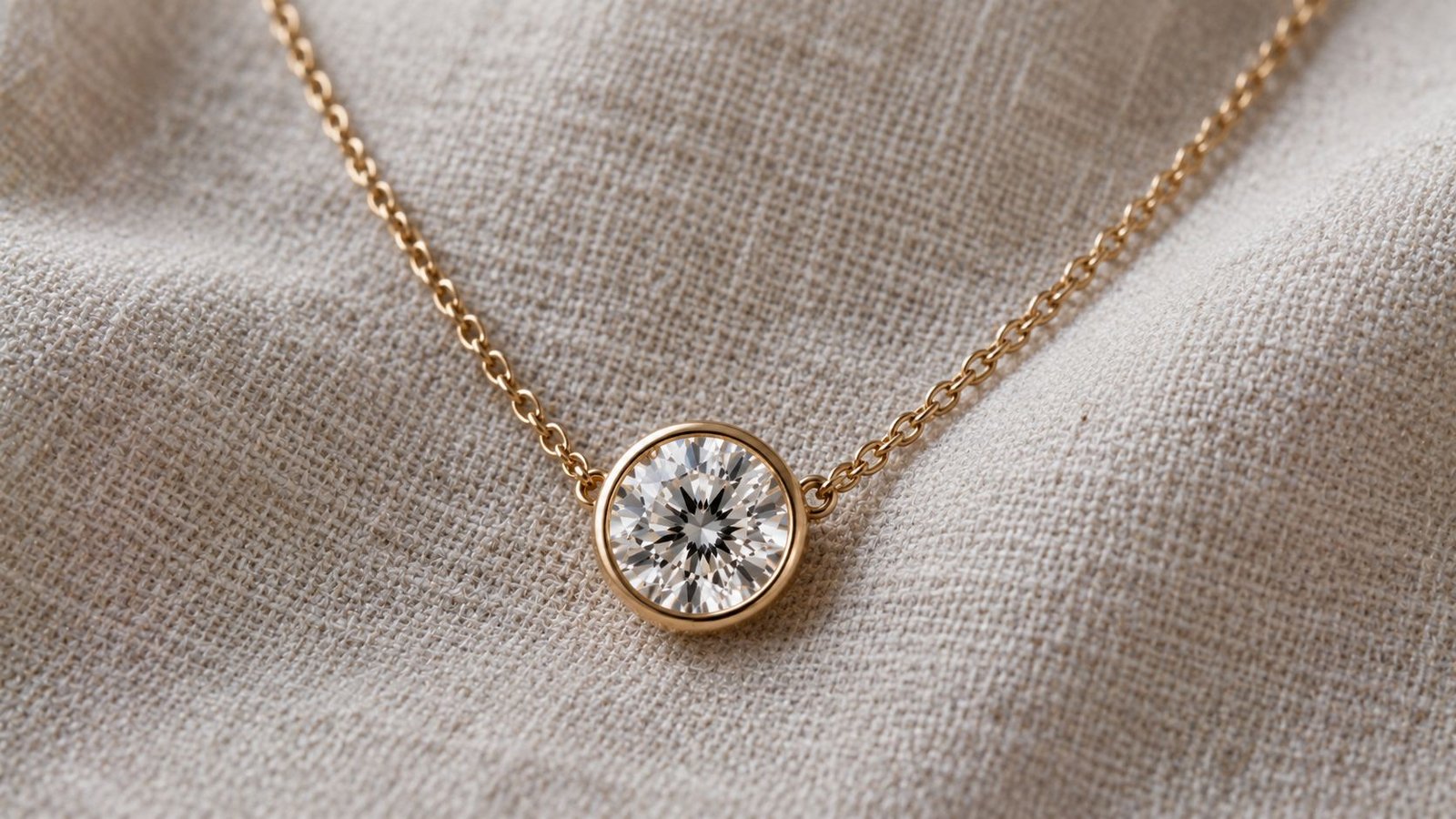
A floating solitaire lab grown diamond necklace is a pendant built around a single lab grown diamond that is set so lightly on its chain that the stone looks suspended rather than hung. There is no heavy bale, no halo, and no decorative frame competing for attention. The chain either runs through a slim bezel or the stone sits in a minimal prong setting at the center of the strand, and the diamond does all the work.
Lab grown diamonds suit this design for practical reasons. They are real diamond, so brilliance and hardness match a mined stone, and they typically cost less for the same size and grade, which lets you choose a larger or cleaner center stone for your budget. Our guide to lab grown vs natural diamonds covers that comparison in depth. In a necklace where the stone is the whole design, that value shows up directly at the neckline.
What Quiet Luxury Means in Jewelry
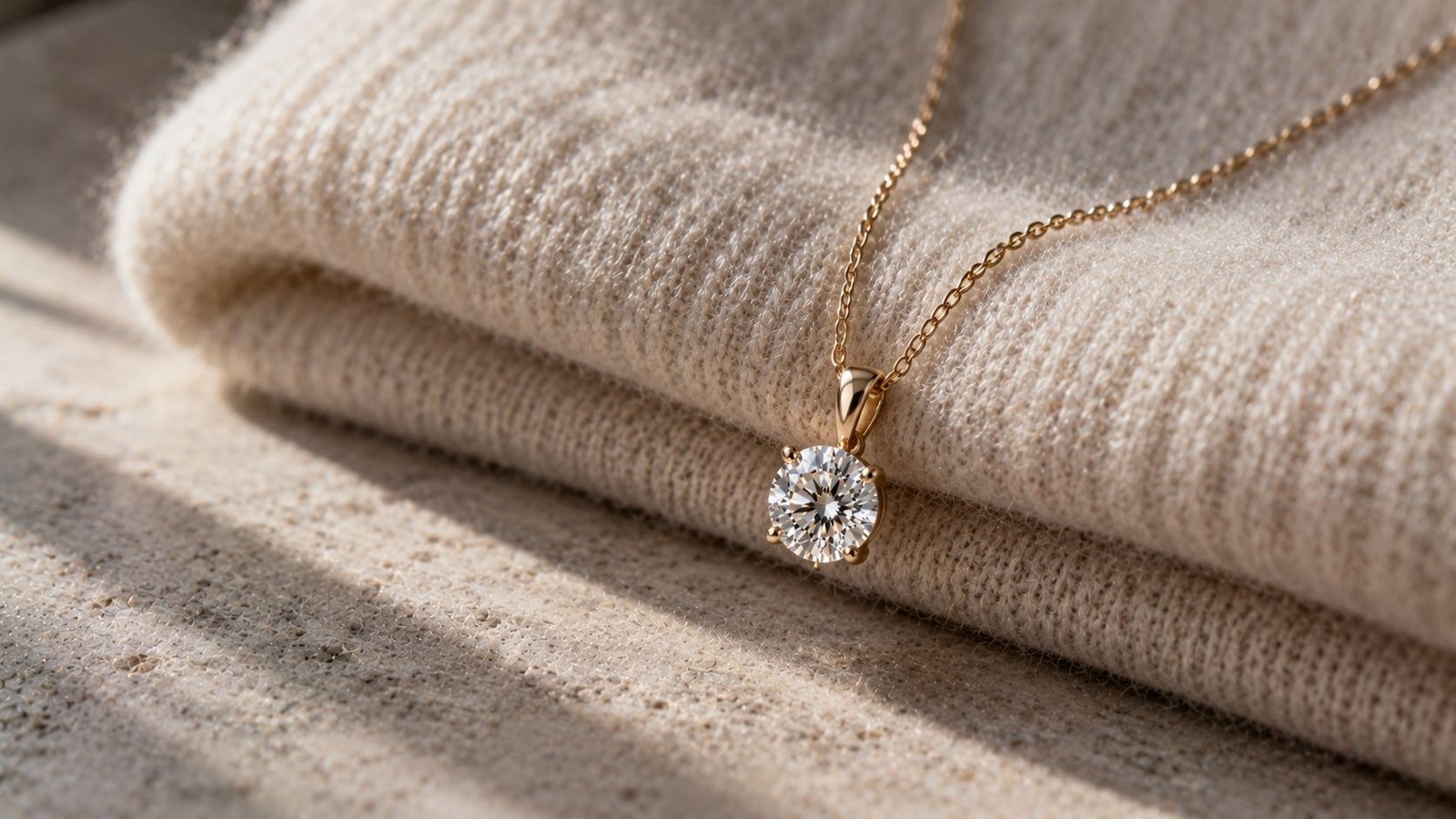
Quiet luxury is a way of dressing and styling that signals quality through fit, material, and finish instead of branding. In jewelry, it means fine proportions, clean lines, and pieces that look equally right on a weekday morning and at dinner. Nothing is oversized, and nothing is there for show.
A floating solitaire lab grown diamond necklace fits that idea for three reasons:
- One focal point. A single stone gives the eye somewhere to rest, so the piece never feels busy.
- Light, not weight. The sparkle comes from the cut of the stone, not from the amount of metal or the number of diamonds.
- Easy to wear. It sits under a collar, over knitwear, or alone against bare skin, and it layers with other jewelry without clashing.
The style also rewards careful buying. Because there is nowhere to hide, the cut quality, setting finish, and chain all show. That is why the choices below matter more for a floating solitaire than for a busier design.
How a Floating Solitaire Is Built
Every floating solitaire necklace has three parts, and a weakness in any one of them shows. Below is a quick look at the role each part plays and the points worth inspecting prior to purchase.
| Part | What it does | What to check |
|---|---|---|
| The stone | Creates the sparkle | Cut quality, size, eye-clean appearance, grading report |
| The setting | Holds the stone with minimal metal | Secure edges, smooth finish, no sharp or uneven prongs |
| The chain | Carries the stone and sets the proportion | Link strength, clasp quality, length |
The stone gets most of the attention, but the setting and chain decide whether the necklace stays secure for years of wear. A beautiful diamond on a flimsy chain is a poor purchase.
Seven Choices That Decide How a Floating Solitaire Lab Grown Diamond Necklace Looks
Way 1: Choose the Carat Weight for Your Neckline, Not the Number
A pendant stone reads smaller against the neck than a ring stone does on a finger, so buyers often go slightly larger than they first expect. For reference, a round diamond of about 0.50 carat measures roughly 5.1 mm across, about 0.75 carat measures roughly 5.8 mm, and 1.00 carat measures roughly 6.5 mm. Many buyers who want a discreet everyday piece choose between 0.30 and 0.75 carat. A stone of 1.00 carat or more makes a clear statement while still looking restrained on a fine chain. For current price benchmarks, see our 1 carat lab grown diamond price in India breakdown.
Way 2: Pick a Shape That Matches Your Style
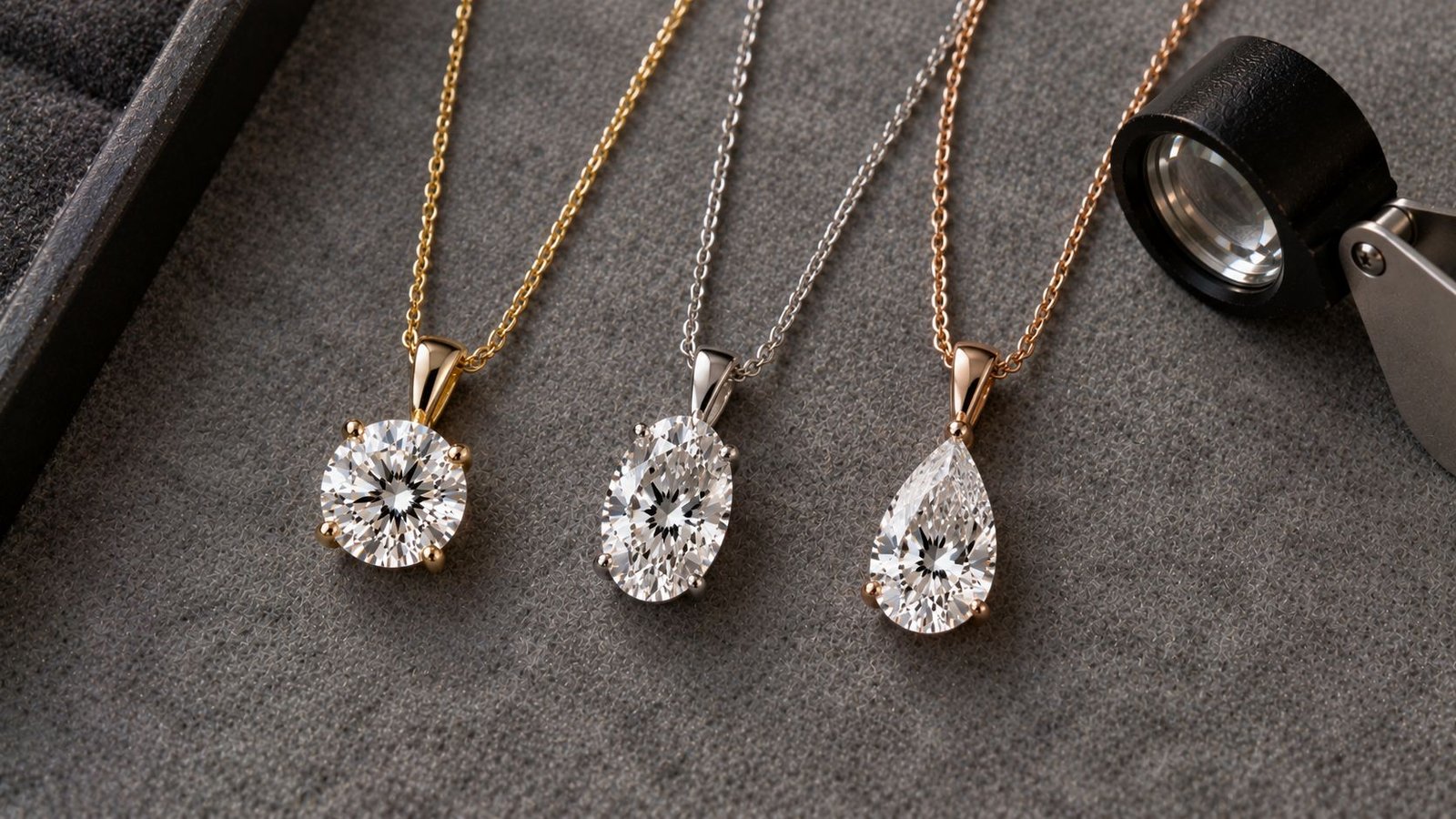
Round stones give the most brilliance and the most classic look. Ovals and pears look slightly larger for their carat weight and add an elongated line that flatters the neck. An emerald cut gives a calm, glassy flash instead of sparkle, which suits the quiet luxury mood well, and our lab grown emerald cut diamonds guide explains why. One caution: elongated shapes such as ovals and pears can show a darker bow-tie across the center, so ask for a video of the actual stone before you buy.
Way 3: Compare Bezel and Prong Settings
The setting controls how “floating” the stone looks and how well it is protected.
| Setting | Look | Strengths | Trade-off |
|---|---|---|---|
| Bezel | A thin metal rim around the stone | Clean, modern, and protects the edge of the diamond | Slightly less light enters from the sides |
| Prong | Small claws holding the stone | More light and a more traditional look | Periodic claw inspection is wise, and each claw should be rounded and uniform |
For everyday wear, many buyers prefer a bezel because it covers the girdle, the thin edge where a diamond is most likely to chip if it takes a hard knock.
Way 4: Match the Metal to Your Skin Tone and Wardrobe
Yellow gold warms the stone and suits deeper skin tones and neutral wardrobes. White gold or platinum gives a cooler, silvery look that lets the diamond appear whiter. Rose gold is softer and works well with warm colors. Karat matters too: 18k gold has a richer color, while 14k is harder and generally more durable for daily wear. Our yellow gold vs white gold guide shows how each metal changes the look of a diamond.
Way 5: Get the Chain Length and Thickness Right
Chain length changes the whole character of the necklace. A 16-inch chain sits at the base of the neck, an 18-inch chain falls just below the collarbone and is the most popular choice, and a 20-inch chain hangs lower and suits open necklines. An adjustable chain with several loops lets you change the length with your outfit. Choose a fine cable or box chain that looks delicate but is strong enough for the stone, and prefer a lobster clasp over a thin spring ring because it holds more securely.
Way 6: Aim for Eye-Clean and Well-Cut, Not Perfect on Paper
In a pendant, the diamond is seen face-up from a conversational distance, so cut quality matters most. A well-cut stone of modest grades will look livelier than a poorly cut stone with top grades. For color and clarity, many buyers find a sensible zone around G to H color and VS2 to SI1 clarity, as long as the stone is eye-clean when you look at it closely. Because lab grown stones in higher grades cost less than natural equivalents, you can step up a grade without a large jump in price. Our guides to the diamond color grading scale and lab grown diamond inclusions explain what each grade means in practice.
Way 7: Insist on a Grading Report and Check the Clasp, Not Just the Diamond
A center stone of meaningful size should come with a grading report from a recognized laboratory, and the report number should match the laser inscription on the girdle. Then check the parts that people forget: the hallmark on the metal, the strength of the clasp, and the finish on the setting. A floating solitaire lab grown diamond necklace is only as secure as its weakest component.
Why a Pendant Is a Gentle Home for a Diamond
Diamonds are extremely hard, but a ring takes daily knocks from doors, keys, and countertops. A pendant rests on the chest and is far less exposed. This table shows how the two compare for everyday wear.
| Factor | Ring | Pendant |
|---|---|---|
| Daily knocks | Frequent | Rare |
| Exposure to soap and lotion | High | Lower |
| Sizing | Needed | Not needed |
| Easy to gift | Needs a size | Fits everyone |
The lack of sizing is a big advantage for gifts. Our lab grown diamond durability guide explains what hardness does and does not protect against.
How to Style a Floating Solitaire the Quiet Way

The simplest approach is the best one: wear it alone. A single floating solitaire on an 18-inch chain works with a crew neck, a shirt collar, and a V-neck without any adjustment. If you like layering, add a second plain chain in a different length so the two never overlap, and keep the metals consistent. Avoid stacking several pendants with strong shapes, because that works against the calm look you bought it for.
For evening, a slightly larger stone or a shorter chain makes the same piece feel more formal. For work, a smaller stone in a bezel setting stays discreet and secure.
Where to Spend and Where to Save
Because you are buying one stone and one chain, a small budget goes a long way if you spend in the right places.
| Spend here | Save here |
|---|---|
| Cut quality of the diamond | Extra decoration or a halo |
| A solid clasp and sturdy chain | Grades beyond eye-clean |
| A recognized grading report | Brand markup on the box |
Prices change, so use a current benchmark rather than a number from memory. Our price guide in USD, EUR and INR is a good starting point for judging whether a quote is fair.
Certification: What to Ask For and How to Verify It

The grading report is your proof of what the stone is. Reports from the International Gemological Institute and the Gemological Institute of America state that a stone is laboratory grown and list its carat weight, color, clarity, and cut. Our explainer on IGI certificates for lab grown diamonds shows how to read one.
Three habits protect you:
- Match the inscription. Ask to see the girdle inscription under a loupe and compare it with the report number.
- Verify online. Enter the report number on the laboratory’s own website, not on a link the seller sends.
- Get it in writing. The invoice should say the stone is lab grown and note any treatment.
Very small stones are often sold without an individual report, so confirm what is included before you pay. Our guides to lab grown diamond identification and lab grown diamond fraud cover the checks in more detail.
Giving a Floating Solitaire as a Gift
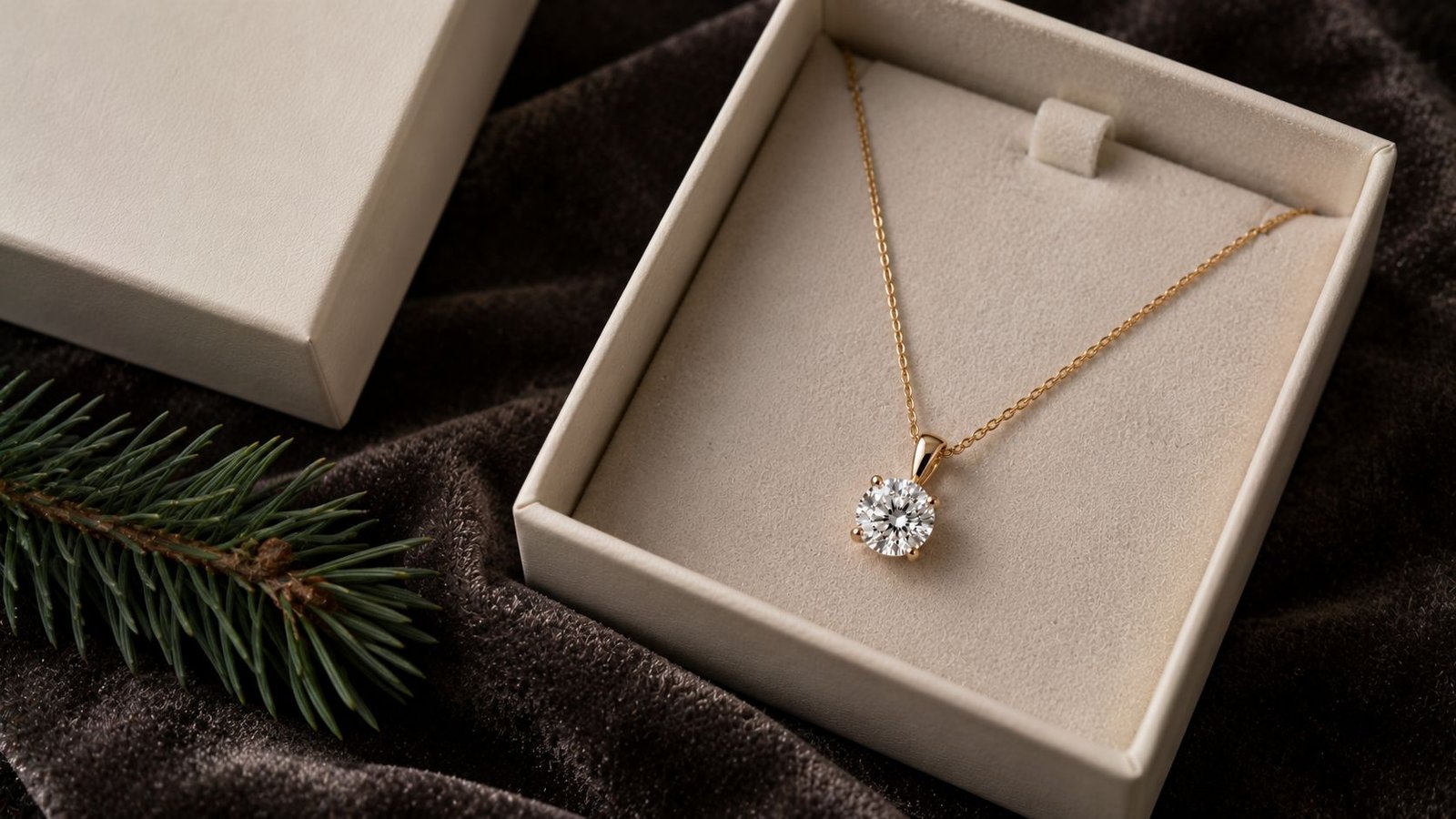
A floating solitaire lab grown diamond necklace works for anniversaries, birthdays, graduations, and holidays because it needs no sizing and suits almost any style. It also works as a thoughtful gift for a mother, as our look at diamond gifts for Mother’s Day and Father’s Day shows.
If you are buying for a holiday, order early. Allow time for delivery, and if you want engraving or a custom chain length, add more time still. Ask for the grading report and the invoice to be included, and check the return window before you buy.
How to Care for the Necklace
Cleaning is simple: soak the piece in warm water with a drop of mild dish soap, brush gently behind the stone with a soft brush, rinse, and dry with a lint-free cloth. Store it flat or hung so the chain does not tangle, and take it off for swimming, heavy workouts, and cleaning with chemicals. Our lab grown diamond care guide has the full routine.
Common Misconceptions About Floating Solitaire Necklaces
“A floating solitaire is too plain to be special.” The simplicity is the design. With no decoration to distract, the quality of the cut shows more clearly.
“A bigger stone is always better.” A well-proportioned 0.50 carat stone on the right chain often looks more elegant than an oversized stone that overwhelms the neckline.
“Lab grown means lower quality.” Lab grown diamonds are real diamond and receive the same grades as mined stones. The difference is origin and price, not appearance.
“The stone is what matters, the chain does not.” A weak chain or clasp is the most common way a pendant is lost. Check both.
“A certificate means I can skip checking.” A report is only reliable if you verify it with the issuing laboratory.
Your Floating Solitaire Buying Checklist
- Choose the carat weight with the neckline in mind, not just the number.
- Pick a shape, and ask for a video of the actual stone.
- Decide between bezel and prong for how you will wear it.
- Match the metal and karat to your skin tone and daily use.
- Select an 18-inch chain, or an adjustable one, with a secure clasp.
- Confirm the stone is eye-clean and well cut.
- Get a grading report, match the inscription, and verify it online.
- Keep the invoice and report together with your insurance records.
A Note for Jewelers and Wholesale Buyers
Floating solitaires are a reliable repeat seller because one design carries many carat weights and metals. Stock a ladder of round and oval stones from 0.30 to 1.00 carat, keep reports with every certified center stone, and offer both bezel and prong versions. Our guide to wholesale lab created diamonds explains how to select by shape and grade, and you can browse current IGI certified lab grown diamonds directly. If you sell online without holding stock, our diamond dropship program is worth a look.
Final Thoughts: Let the Stone Do the Talking
A floating solitaire lab grown diamond necklace shows that quiet luxury is about good decisions rather than loud ones. Choose a well-cut stone, a setting that protects it, a chain that suits your neckline, and a verified grading report. Do that, and you will own a piece that looks effortless today and stays in rotation for years.
Frequently Asked Questions: Floating Solitaire Lab Grown Diamond Necklace
Disclaimer: This article is for informational and educational purposes only. Prices, grades, and laboratory practices change, and no general guidance replaces a verified grading report. Confirm the origin, grades, and any treatment of a stone with a recognized laboratory and a reputable seller before purchasing.