

Buying a Lab Grown Engagement Ring This Black Friday and Christmas: The Timing, Budget and Quality Playbook
A lab grown engagement ring is now one of the smartest ways to get a bigger, better-cut stone for the same budget, and the weeks around Black Friday and Christmas are when many shoppers finally commit. Proposals get planned around the holidays, retailers compete on promotions, and a deadline turns a months-long browse into a decision that has to be made in a matter of weeks.
That combination is exactly when mistakes happen. A discount that looks generous can hide an unspecified grade, a missing certificate, or a delivery date that lands after the proposal. This guide walks through the timing, the budget, and seven practical checks, so a lab grown engagement ring bought in the holiday rush looks as good on the day as it did on the screen.
Why Black Friday and Christmas Matter for a Lab Grown Engagement Ring
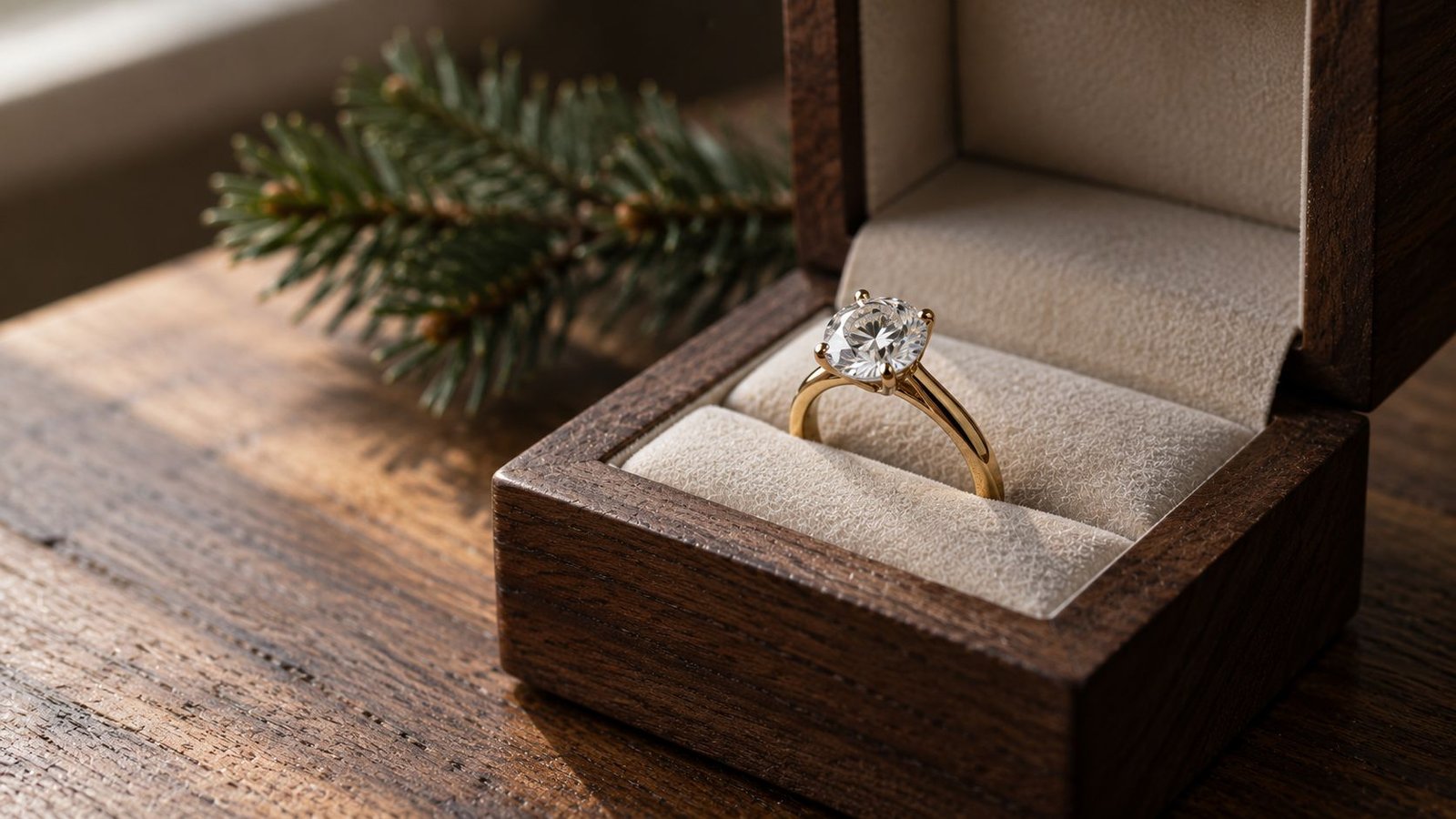
The market has shifted faster than most buyers realize. According to BriteCo’s 2026 Jewelry, Diamond & Watch Price Index, lab grown stones appeared in 51% of newly appraised engagement rings between January and June 2026, up from 6% in 2019. The same index reports that the median engagement ring center stone grew from 1.01 carats in 2019 to 2.0 carats in 2025, and that a median lab grown ring sold for about $4,557 in 2025 against roughly $12,961 for a natural one.
Two things follow from those numbers. First, a lab grown diamond is no longer the unusual choice, so you are not taking a risk by choosing one. Second, buyers are spending the savings on size and quality rather than simply paying less, which is why a two-carat center stone has become a realistic target for an ordinary budget.
Holiday sales amplify both effects. Promotions bring more stones, more settings, and more competition between sellers, which is good for you if you arrive prepared. If you arrive unprepared, the same promotions make it easy to chase a headline percentage instead of the stone you actually want. Our guide to lab grown vs natural diamonds covers the fundamentals if you are still deciding between the two.
It also helps to remember that a lab grown engagement ring is a gift people keep for decades, so the cost of a rushed mistake is much larger than the saving from any single sale. Holiday pricing is a bonus, not the reason to buy. The stone, the certificate, and the fit should justify the purchase even at full price.
Black Friday vs Christmas: Which Window Suits You?
In 2026, Black Friday falls on November 27 and Cyber Monday on November 30, with Christmas on Friday, December 25. Those dates create three distinct buying windows for a lab grown engagement ring, and each one suits a different kind of buyer.
| Buying window | Best for | Main advantage | Main risk |
| Black Friday to Cyber Monday | Planned proposals and custom rings | Widest selection and the strongest promotions | Rushed decisions and unverified deals |
| Early to mid December | Buyers who want time to compare | Calmer inventory and more attention from sellers | Fewer promotions, and some popular stones already sold |
| Final week before Christmas | Last-minute proposals | Ready-to-ship stones and pre-set rings | Shipping delays, no time for resizing or returns |
If the proposal is on Christmas Eve or Christmas Day, the Black Friday window is usually the sensible one. It leaves roughly four weeks for shipping, setting, and any adjustments. Buyers who wait until the final week often end up paying for rush handling or choosing from whatever is left, which defeats the purpose of shopping the sales.
What a Lab Grown Engagement Ring Really Costs During the Holiday Sales
Before you compare offers, it helps to know what you are actually comparing. The sticker price on a holiday banner usually covers only one layer of the final bill, and each layer behaves differently.
| Cost layer | What it covers | How to keep it under control |
| Center stone | Carat weight, shape, color, clarity, cut, and the grading report | Hold the grades steady across sellers and compare like with like |
| Setting | Metal (14K, 18K, or platinum), design complexity, and labor | Choose a simple solitaire or a lighter band to free up budget for the stone |
| Extras | Shipping, insurance, resizing, and duties on international orders | Ask for an all-in quote before you pay |
Where you buy also changes what a deal means. A branded retailer bundles design, service, and presentation into the price. A loose-stone specialist or wholesaler prices the diamond far closer to its source, and you add the setting separately. Neither is automatically better, but the two cannot be compared on a headline figure alone. Our shape-by-shape price guide in USD, EUR and INR shows how widely wholesale reference prices sit below retail, so you know which layer a quote represents.
Seven Tips for Buying a Lab Grown Engagement Ring in the Holiday Rush
Tip 1: Set the Total Budget Before the Deals Appear
Decide your ceiling for the finished ring, not just the diamond. A lab grown engagement ring has three cost layers: the center stone, the setting (metal and labor), and extras such as shipping, insurance, and resizing. If you fix the total first, you can work backward and avoid spending the entire budget on the stone and then discovering the band costs more than expected.
A useful split for many buyers is to let the stone take the largest share, with the setting and extras covering the rest, then adjust based on the design. A simple solitaire in 14K gold leaves more room for the diamond than a halo or three-stone design. Our comparison of platinum vs white gold shows how metal choice moves the setting cost.
Tip 2: Protect the Cut First
Cut controls how a diamond handles light, and no discount makes up for a dull stone. For round brilliants, insist on an Excellent cut grade. For fancy shapes such as oval, pear, and emerald, ask for Excellent polish and symmetry and request a face-up video, because proportions vary more from stone to stone.

Holiday listings often lead with carat weight and price, and they bury cut details. If a seller will not state the cut, polish, and symmetry clearly, treat that as a reason to look elsewhere rather than a detail to sort out later.
Tip 3: Choose Color and Clarity for What You Can See
Color and clarity are where smart shoppers save the most. For most settings, G–H color looks colorless once the diamond is mounted, while D–F costs noticeably more for a difference few people can detect. If you plan a platinum or white gold setting and you are sensitive to tint, stepping up to D–F is reasonable. Our diamond color grading guide explains what each grade looks like in practice.
For clarity, VS1 and VS2 stones are typically eye-clean. Step cuts like emerald cuts show inclusions more readily, so aim for VS1 there. Paying for VVS clarity usually buys a difference that only a loupe can reveal, and that money often works harder as extra carat weight or a better cut.
Watch the carat thresholds. Prices step up at round numbers, so a 0.95 carat stone costs less than a 1.00 carat stone that looks almost identical face-up. The same applies just below 1.50 and 2.00 carats. If size is the goal, a stone a few points under the threshold can free up budget for a better cut or a stronger setting.
Tip 4: Pick the Shape That Suits the Hand and the Setting
Shape changes both the price and the look. Round brilliants cost the most per carat, while oval, pear, emerald, and cushion shapes often deliver more visible size for the same weight and grade. Elongated shapes tend to flatter the finger and face up larger, though oval and pear stones can show a darker bow-tie area across the middle, so check the video before buying.

Our shape guide for engagement rings compares how each one looks and wears, and the princess vs cushion comparison is useful if you are torn between two square-leaning options. Pick the shape based on the person who will wear it, not on whatever happens to be discounted.
Tip 5: Verify the Certificate Before You Pay
Whether you buy a loose stone or a finished lab grown engagement ring, a grading report turns a seller’s description into an independently verified specification. Most lab grown stones in this market are graded by IGI, and GIA also grades lab grown diamonds. You can read more about GIA’s approach on its lab grown diamond services page and about IGI’s reports at the International Gemological Institute. Our own explainer on whether an IGI certificate is good enough covers the trade-offs.
Whichever lab you choose, do not rely on a certificate image alone. Enter the report number on the issuing laboratory’s website and confirm that the shape, carat weight, color, clarity, and cut match the listing exactly. Our fraud red flags guide walks through the checks step by step.
Tip 6: Read Every Deal Like a Grader

A holiday promotion on a lab grown engagement ring is only a deal if you can compare it with something real. Before you act on a Black Friday offer, run through these questions:
Is the full specification listed? Shape, carat, color, clarity, cut, polish, symmetry, and lab must all be visible. A price attached to vague grades cannot be compared.
What is the “original” price? An inflated starting price makes any discount look large. Compare the final price with similar certified stones from other sellers instead.
Is it the stone or the finished ring? A price for a loose diamond and a price for a set ring are not the same number.
What are the return and resizing terms? Some holiday sales are final sale, and some exclude custom pieces. Read the policy before checkout, not after.
Are shipping and insurance included? A low headline price with expensive shipping can cost more than a slightly higher all-in quote.
The best deal is the one where the specification is verified, the policy is clear, and the total fits your budget. A smaller discount on the right stone beats a bigger one on the wrong one.
Tip 7: Work Backward from the Delivery Deadline
Start with the date of the proposal and count backward. You need time for the stone to ship, for the ring to be set, for insurance paperwork, and for at least one chance to fix a sizing problem. For a Christmas proposal, treat the first half of December as your effective deadline, and finish the decision during the Black Friday window if you can.
If you are buying a loose stone from an international supplier, factor in customs. Import duties and tariff treatment for diamonds and jewelry can change, so confirm with the seller who pays what, and whether the quoted price includes duties, before you commit. Mira Art Collection ships certified stones internationally, and our standard shipping rate is listed on the site. For a ring on a deadline, a ready-to-ship stone is safer than a made-to-order design, and an adjustable setting is safer than a guessed ring size.
Insurance deserves a line of its own. Arrange coverage from the day the ring ships, keep the grading report and invoice together, and photograph the finished ring. If anything is damaged or lost in transit, that paperwork makes the claim straightforward.
Loose Stone, Ready-Made Ring, or Custom Design?
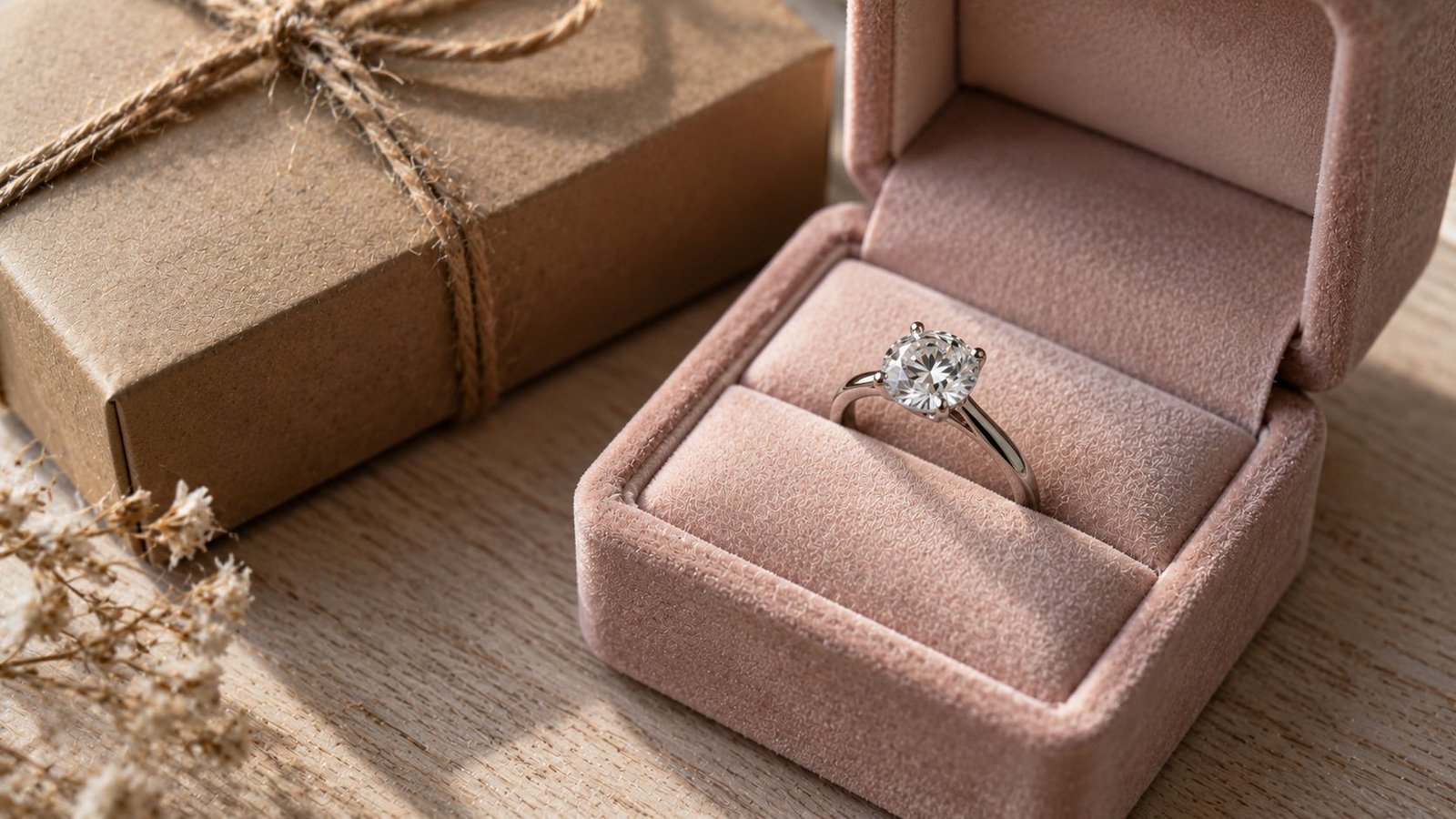
The format you choose changes the timeline as much as the price. A loose stone gives you the most control over quality, a ready-made ring is the fastest, and a custom design gives you the most personal result but needs the longest runway.
| Option | Speed | Control over quality | Best for |
| Loose stone plus setting | Moderate | Highest | Buyers who want to choose every grade |
| Ready-made ring | Fastest | Moderate | Last-minute proposals |
| Fully custom design | Slowest | High, with design freedom | Buyers who start in November |
Larger stones need extra care at any speed. If you are considering two carats or more, our checklist of questions to ask before buying a large lab diamond is worth reading first.
Settings, Metals and Ring Sizing for a Holiday Deadline
The setting you choose affects both the timeline and the risk. A classic solitaire is the easiest design to make, adjust, and resize, which makes it the safest choice when time is short. Designs with stones set around the band, such as eternity-style or channel-set shanks, are harder to resize, so they suit buyers who already know the exact ring size.
If you are unsure of the size, choose a plain band and plan to resize after the proposal. Many people also pick a lab grown engagement ring in 14K gold for the balance of durability and cost, while others prefer 18K or platinum for the look and feel. Ask the seller how resizing is handled, whether it is free, and how long it takes, because that answer matters more in December than in July. A beautiful stone in a setting that cannot be adjusted can turn a perfect proposal into an awkward return trip.
Common Misconceptions About Buying a Lab Grown Engagement Ring
“A bigger discount means a better deal.” Discounts are measured against whatever starting price the seller chose. The only reliable test is the total cost of a verified stone with the grades you want.
“Lab grown means lower quality.” A lab grown diamond is chemically, physically, and optically the same material as a mined one. Quality is determined by the grades on the report, not by origin.
“I need the highest color and clarity.” Most people cannot see the difference between D and G color once a stone is set, or between VS1 and VVS clarity at normal distance. Cut and carat weight matter far more to the eye.
“I can wait until the last week.” Waiting limits your choices on a lab grown engagement ring and removes the time for sizing, returns, and shipping delays. Holiday proposals reward early decisions.
“A certificate image proves everything.” An image can be copied. Only the report number checked on the laboratory’s own website confirms the stone.
A Note for Jewelers and Custom Designers
If you sell rings rather than buy one, the holiday season is also your biggest sourcing window. Stocking certified stones early protects you from shortages when customers arrive asking for a lab grown engagement ring with a deadline attached. Our guide to wholesale lab created diamonds for custom jewelry explains how to source by shape and grade, and our dropship program lets you offer certified stones without holding inventory. You can also browse current IGI certified lab grown diamonds directly.
Your Holiday Checklist for a Lab Grown Engagement Ring
Print this list or save it to your phone before the sales begin:
- Set the total budget for the finished ring, including shipping and insurance.
- Decide the shape and the setting style before browsing deals.
- Shortlist stones with full specifications: carat, color, clarity, cut, polish, and symmetry.
- Verify each report number on the issuing laboratory’s website.
- Request a face-up video for any fancy shape.
- Confirm return, resizing, and exchange terms in writing.
- Ask for an all-in price that includes shipping and any duties.
- Order during the Black Friday window and keep the first half of December as your buffer.
Final Thoughts: Buy Early, Verify Everything, Pay for What You Can See
The holiday rush rewards preparation. Set the full budget first, protect the cut, choose color and clarity for what the eye can see, verify the certificate yourself, read every deal like a grader, and count backward from the proposal date. Do that and a lab grown engagement ring becomes a confident purchase rather than a rushed one, with money left over for the things that actually show: a better cut, a larger stone, or a setting that suits the person wearing it. Once the ring arrives, our lab grown diamond care guide will help it keep its sparkle for life.
Frequently Asked Questions: Lab Grown Engagement Ring Black Friday and Christmas Buying
Disclaimer: This article is for informational and educational purposes only. Market statistics are drawn from published 2026 industry reports, and dates, prices, duties, and seller policies change. Confirm current pricing, grades, certification, return terms, and applicable taxes or duties directly with your seller before purchasing.