US Jewelry Trends 2026: Where Lab Grown Diamonds Are Showing Up Most
Lab grown diamonds have moved well past engagement rings, and that shift is exactly what’s driving today’s biggest lab grown diamond jewelry trends. With centre stones now making up the majority of US engagement ring purchases, according to The Knot Worldwide’s 2026 Real Weddings Study, the affordability that reshaped bridal jewellery has spread into everyday fine jewellery categories just as fast — tennis bracelets, stacked rings, statement earrings, and pieces that would have been priced out of reach for most buyers a decade ago.
This piece looks at the lab grown diamond jewelry trends genuinely driving demand in the US right now, based on what retailers and industry data are actually reporting rather than speculative style forecasting, and what each trend means for buyers, designers, and manufacturers stocking ahead of them.
Tennis Jewelry Has Become a Daily-Wear Staple
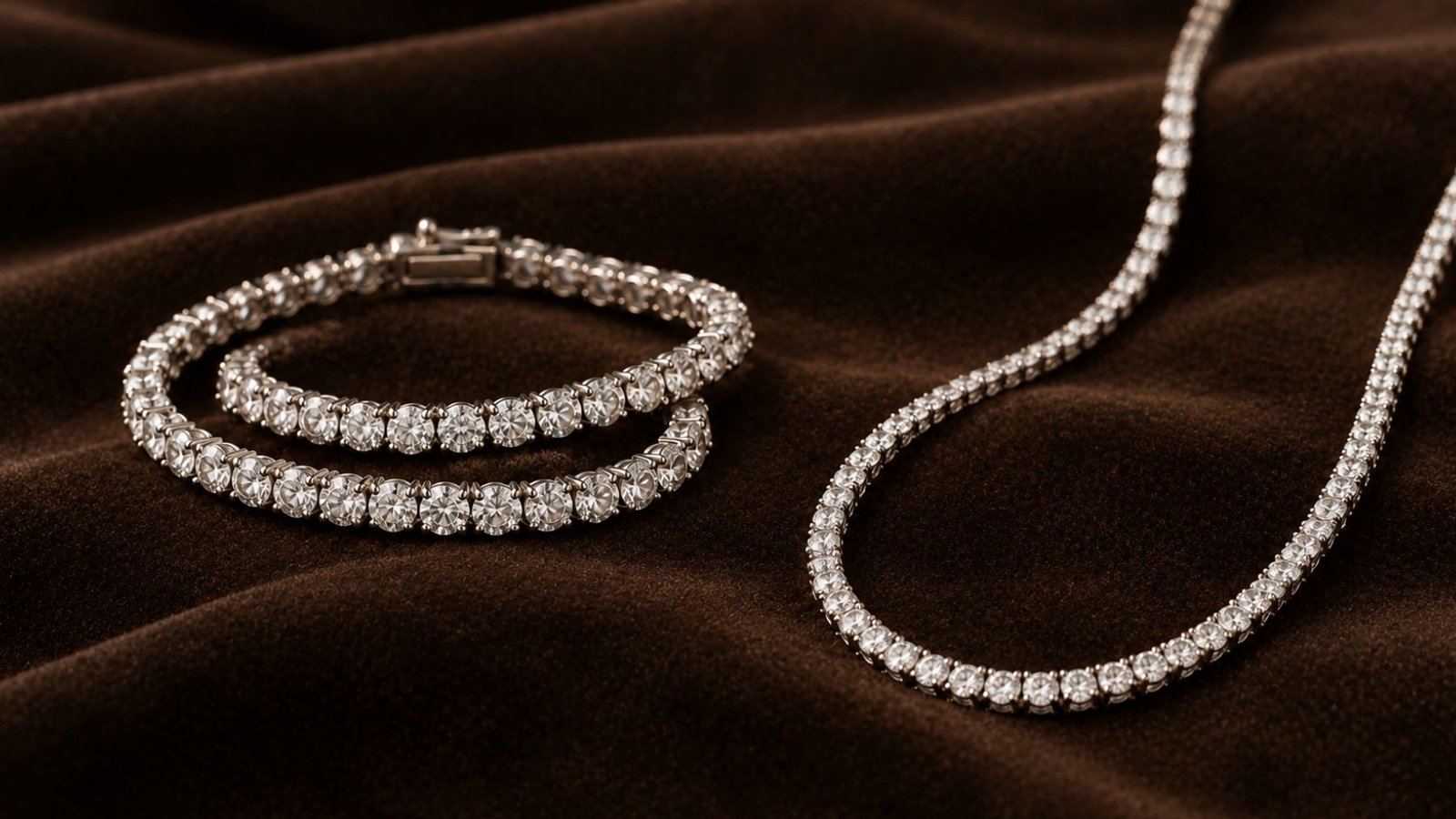
The single biggest shift in lab grown diamond jewelry trends this year isn’t a shape or a metal — it’s a category. Tennis bracelets, once reserved for evening wear, have become an “always-on” everyday staple, and the category has expanded well beyond the bracelet itself into tennis necklaces and even tennis-style ear climbers. Lab grown pricing is a big part of why: a continuous line of diamonds that once required a significant natural-diamond budget is now achievable at price points that support genuine everyday wear rather than special-occasion-only ownership.
As one of the more visually distinctive lab grown diamond jewelry trends, graduated designs — where stones grow larger toward the centre of the piece — and mixed-shape layouts, alternating round and pear or emerald and oval along a single line, have become a popular way to make a classic tennis silhouette feel more current without abandoning the format entirely.
Stacking Culture Keeps Growing
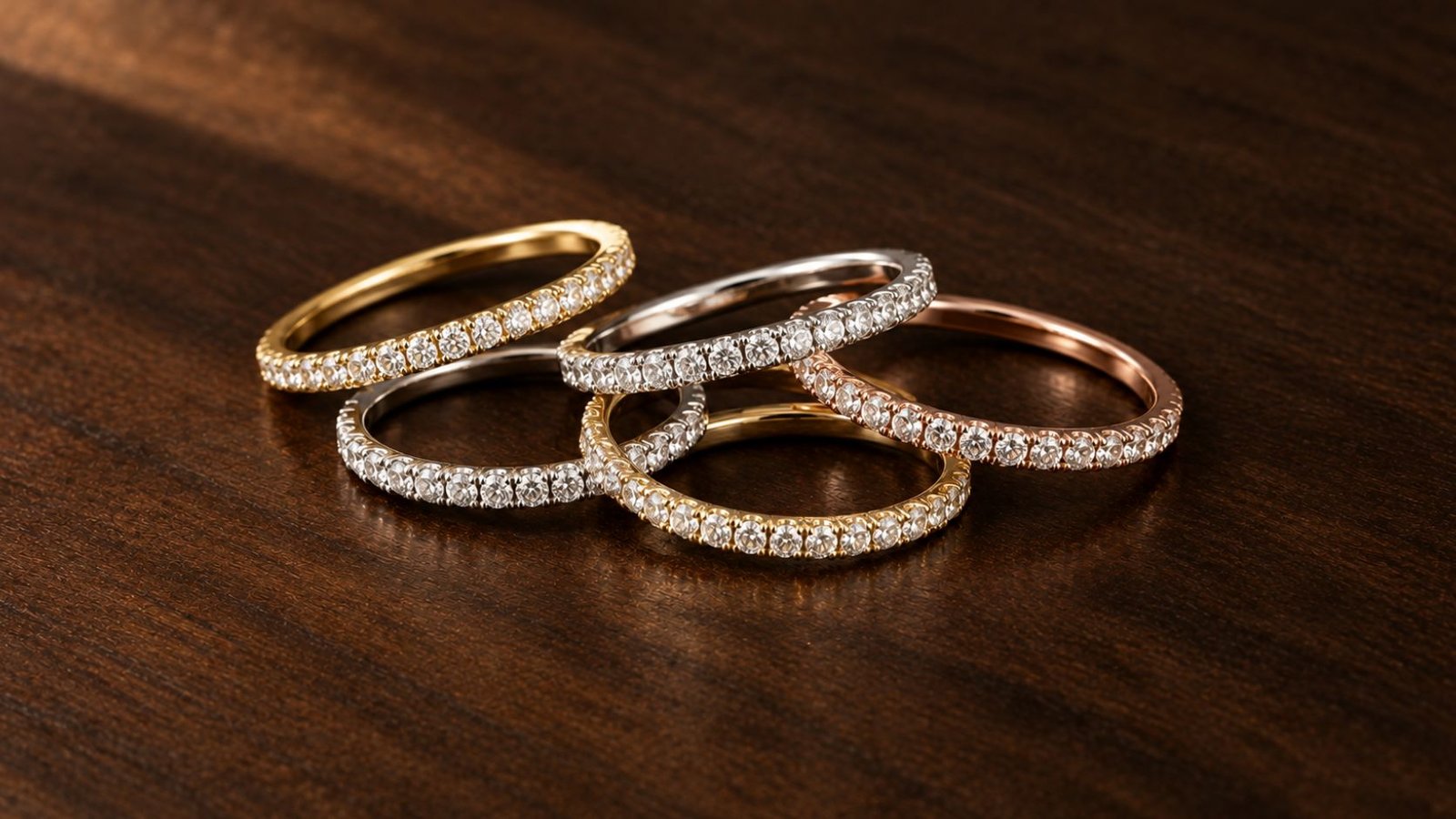
Stacking has moved from a passing trend to a default way many buyers now shop for rings and bands, and it’s quickly become one of the most talked-about lab grown diamond jewelry trends among designers. Ultra-thin pavé bands, contour bands designed to nest against an engagement ring, and mixed-shape diamond bands worn together are all part of this shift within broader lab grown diamond jewelry trends, and lab grown pricing is directly responsible for making it financially realistic — building a stack of three or four bands is a very different budget conversation with lab grown diamonds than with natural stones of comparable quality.
Two-tone and mixed-metal designs are following the same logic seen across other lab grown diamond jewelry trends. Rather than committing to a single metal tone across an entire jewellery collection, buyers are increasingly mixing yellow, white, and rose gold within a single stack or even a single piece, using lab grown diamonds as a consistent visual thread that ties mismatched metals together.
Micro-Pavé and the Rise of the Ear Stack
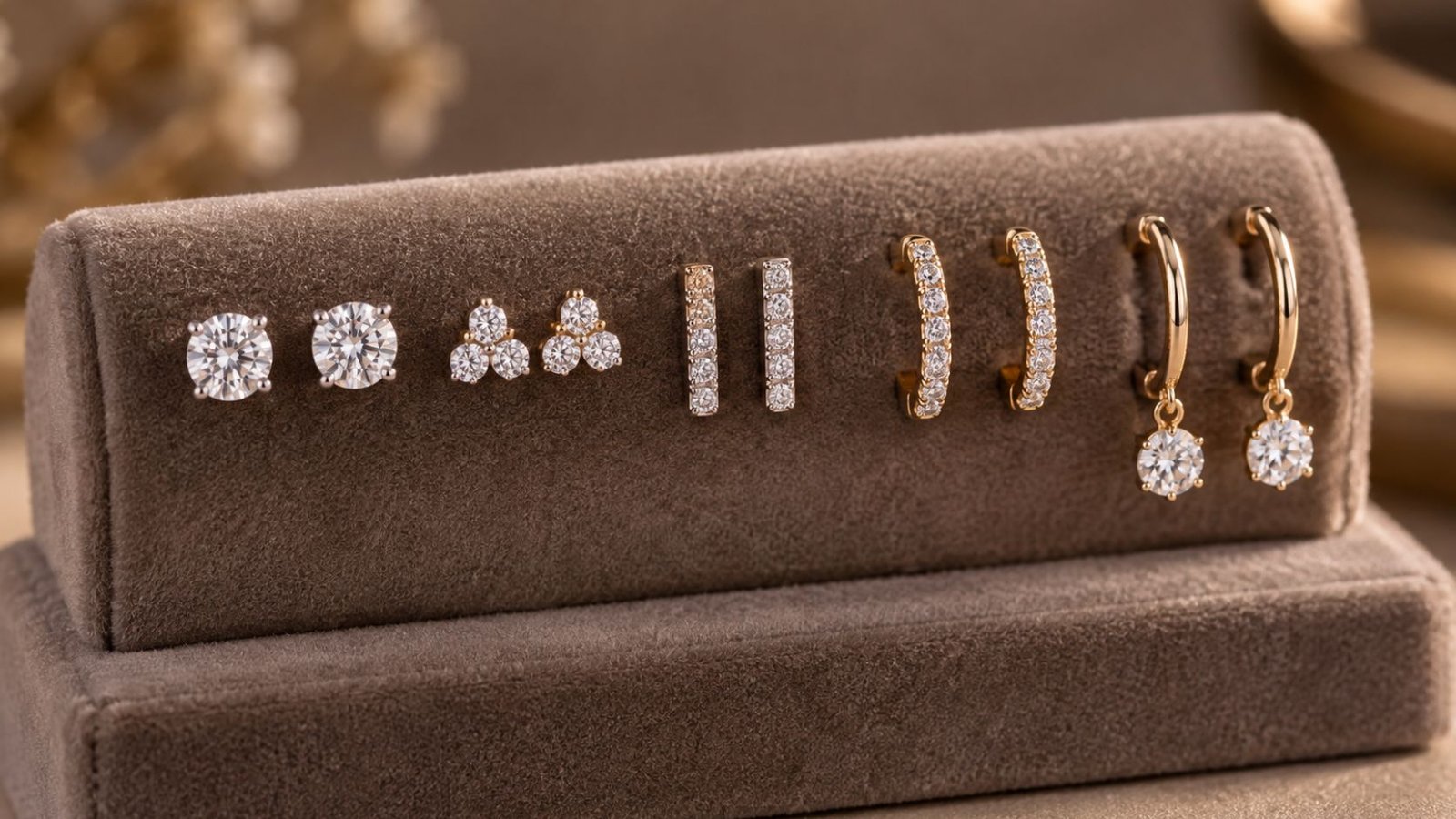
Earrings have quietly become one of the fastest-growing categories in lab grown diamond jewelry trends, led largely by micro-pavé studs — tightly clustered settings of very small stones that deliver outsized sparkle for their size. These have become a genuine everyday-wear staple rather than an occasional-wear item, largely because they’re lightweight, versatile, and affordable enough to buy in multiples.
That affordability has fed directly into the broader “ear stack” trend, now one of the more talked-about lab grown diamond jewelry trends among younger buyers, where buyers combine several different stud and hoop styles across multiple piercings rather than committing to one matched pair. Mismatched studs, in particular, have become a genuine style statement rather than an oversight, reflecting a broader shift toward personalised, individual style over matched, traditional sets.
Statement and Maximalist Pieces Are Back
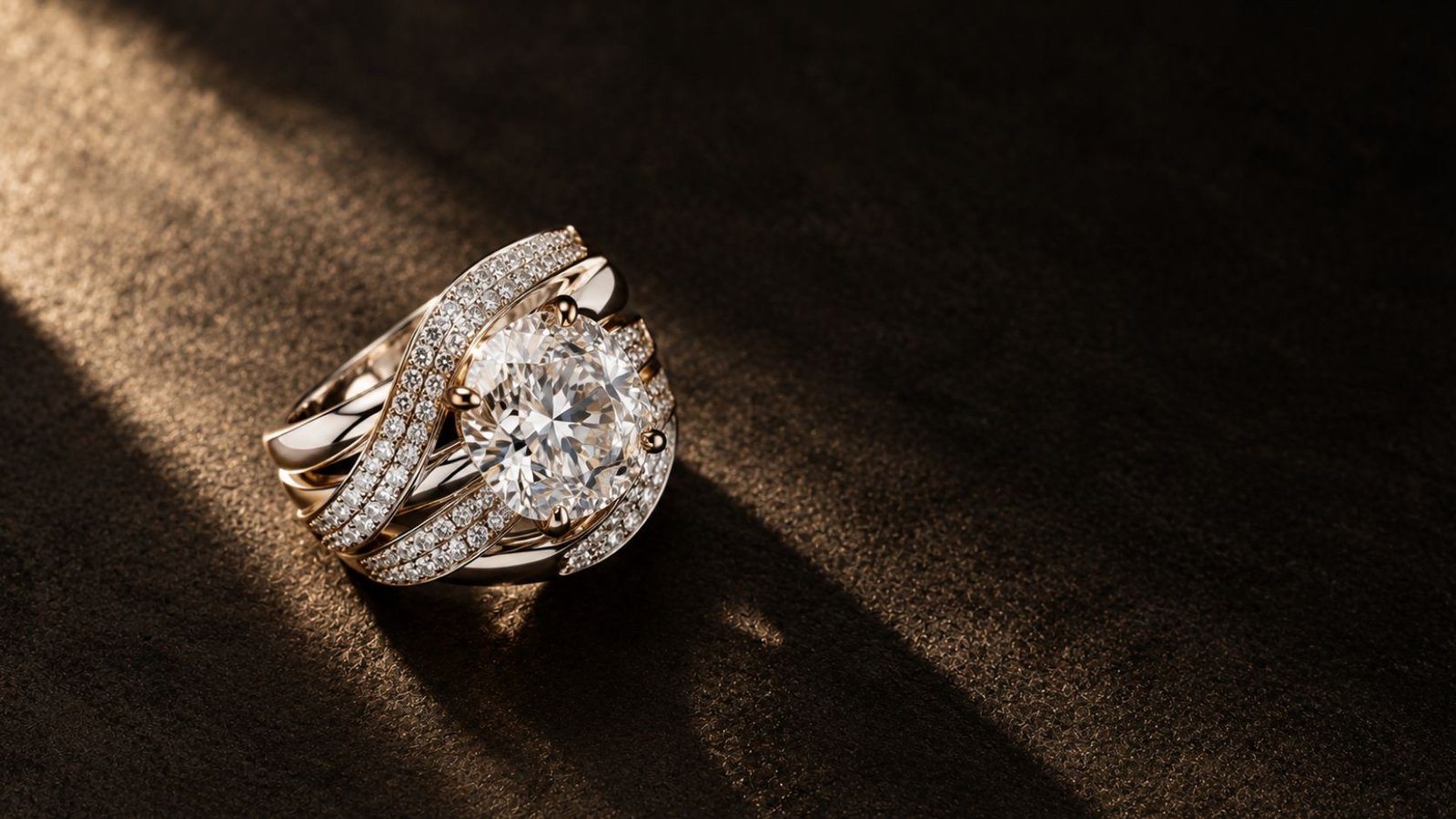
After several years of minimalist “quiet luxury” dominating fine jewellery, one of the more surprising lab grown diamond jewelry trends of 2026 has been a genuine swing back toward statement pieces — wide diamond bands, sculptural cocktail rings, and oversized solitaires that would have been prohibitively expensive in natural diamonds at comparable size. Lab grown pricing is again the enabling factor: buyers can access significantly more visual presence per dollar than they could with mined stones, which has made bold, maximalist design commercially viable at a much wider range of price points than before.
This shift shows up most clearly in ring design, where wide bands and dramatic settings — among the more visible lab grown diamond jewelry trends this year — have displaced some of the delicate, minimal styles that dominated the previous several years, but it’s visible across bracelets and necklaces too, where bolder chain links and larger stone clusters are increasingly common.
Men’s Lab Grown Diamond Jewelry Is a Real Growth Category
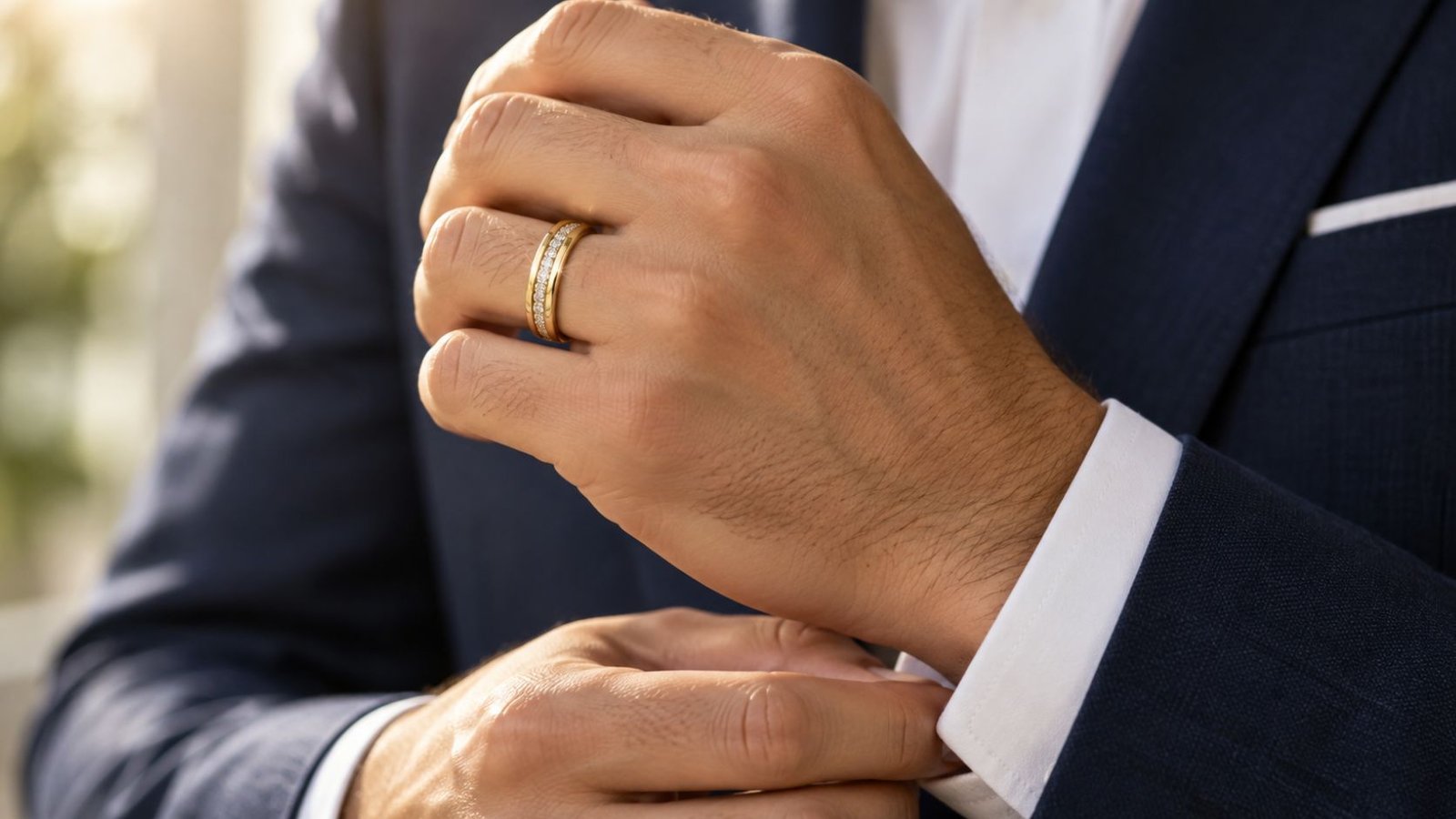
Men’s fine jewellery has moved from a niche afterthought to a genuine growth category within lab grown diamond jewelry trends, spanning wedding bands, signet-style rings, and increasingly, diamond-set bracelets and pendants marketed specifically at male buyers. Wide, substantial band styles and understated pavé detailing tend to perform particularly well in this category, favouring subtlety and durability over the more decorative styling common in women’s fine jewellery.
This growth is closely tied to the same affordability story running through every other one of these lab grown diamond jewelry trends — lab grown pricing has made diamond-set men’s jewellery a realistic category for mainstream retailers to stock and promote, rather than a boutique specialty.
Fancy Coloured Lab Grown Diamonds Are Gaining Ground
As one of the more distinctive lab grown diamond jewelry trends, fancy coloured lab grown diamonds — pinks, yellows, and blues among them — have picked up genuine momentum as buyers look for pieces with more individual character. These stones work particularly well in statement rings and pendants, where a single coloured centre stone can anchor an entire design, and pairing them thoughtfully with complementary coloured gemstones has become a design approach in its own right rather than a niche specialty.
If you’re exploring how fancy coloured stones or complementary gemstones fit into current design thinking, our guide to pairing lab grown diamonds with coloured gemstones covers the colour theory and setting choices behind combinations that actually work.
Setting Styles: Bezel, Hidden Halo, and East-West
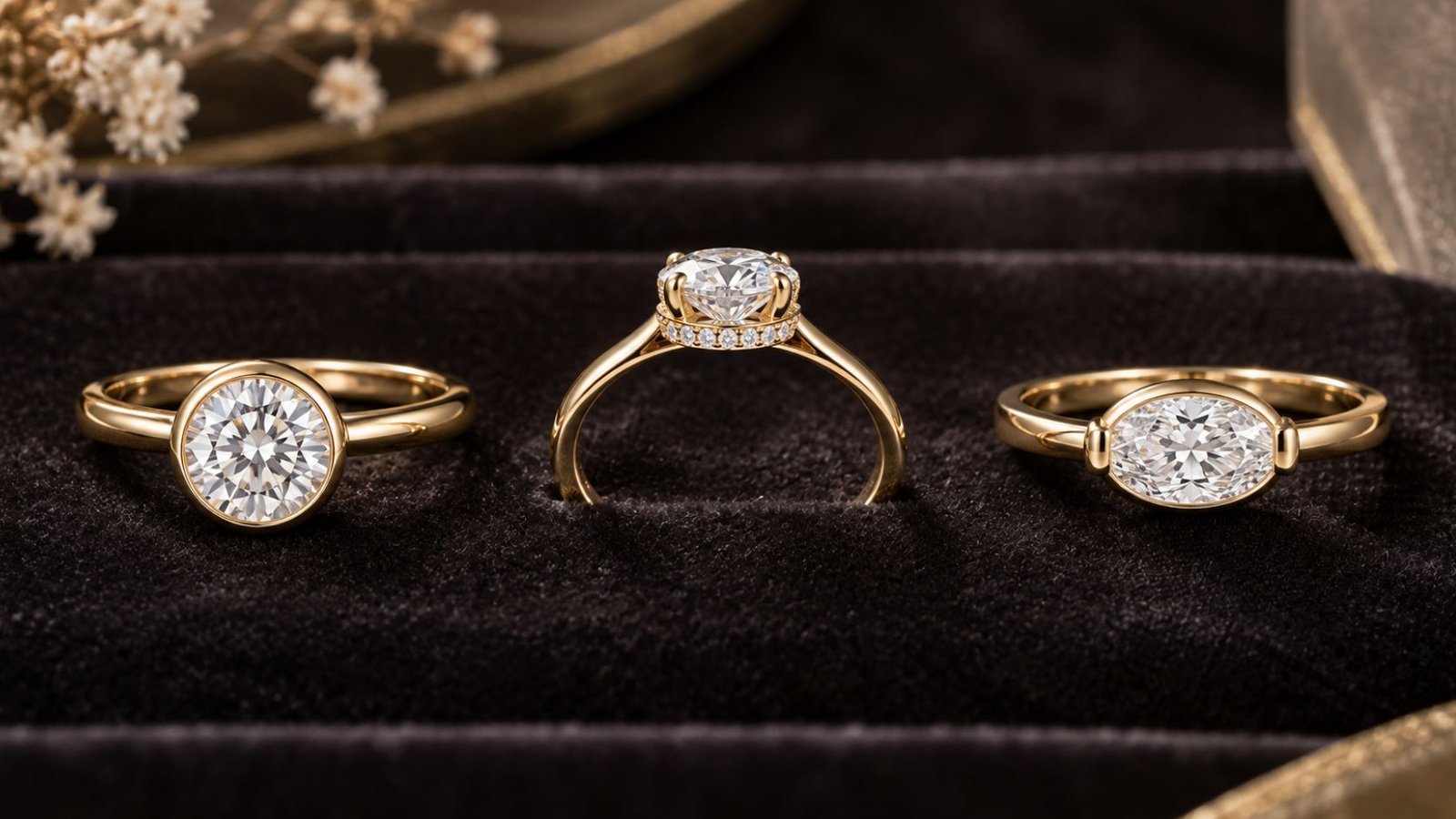
Setting trends are shifting alongside the broader lab grown diamond jewelry trends covered above. Bezel settings — where a rim of metal fully surrounds the stone — have grown significantly, valued for both their modern, streamlined look and the added security they offer for daily-wear pieces. Hidden halo settings, where a ring of smaller diamonds sits beneath the centre stone rather than fully visible around it, have also climbed in popularity as a way to add extra sparkle without changing a ring’s overall silhouette.
East-west settings, part of the broader shift in lab grown diamond jewelry trends toward less traditional silhouettes, orient the centre stone horizontally rather than vertically, remain a distinctly modern choice best suited to elongated shapes, and continue to gain traction among buyers looking for a clear departure from traditional vertical-set solitaires.
Layering and Personalisation Are Reshaping How Jewellery Gets Worn
Beyond specific categories, one broader shift cuts across nearly every lab grown diamond jewelry trend covered here: buyers are increasingly building personal, layered collections rather than buying single statement pieces meant to be worn alone. Necklaces are layered at multiple lengths, rings are stacked across several fingers, and earrings are mixed across multiple piercings rather than matched in pairs — the overall look is curated by the wearer over time rather than purchased as one complete set.
This shift, like several other lab grown diamond jewelry trends covered here, matters for how pieces get designed and marketed, not just how they get worn. A single ring or necklace increasingly needs to work as part of a layered collection rather than as a standalone statement, which has pushed designers toward more versatile, mix-and-match pieces rather than one-size-fits-all statement designs. Symbolic and personalised details — initial pendants, birthstone accents, constellation-inspired designs — have grown alongside this shift, as buyers look for pieces that feel individually meaningful within a broader, personally curated collection.
Custom and Made-to-Order Pieces Are Growing Faster Than Off-the-Shelf
Alongside ready-to-wear trends, demand for fully custom and made-to-order lab grown diamond jewellery has grown noticeably, driven by buyers who want a specific combination of shape, colour, and setting that off-the-shelf collections don’t quite offer. Lab grown pricing plays a direct role here too — a custom piece that would have required a substantial natural-diamond budget is now achievable at a price point that makes bespoke design realistic for a much broader range of buyers than before.
This has practical implications for anyone designing or manufacturing within these lab grown diamond jewelry trends: a growing share of demand isn’t for a fixed catalogue piece at all, but for a starting design that gets adjusted — a different stone shape, a mixed-metal band, an added coloured accent — to fit an individual buyer’s specific vision.
Sourcing for These Trends: What Manufacturers Need to Know
Several of these lab grown diamond jewelry trends put real pressure on sourcing, not just design. Mixed-shape tennis bracelets and graduated layouts need carefully matched stones across multiple shapes and sizes in a single piece, which is a meaningfully harder sourcing task than a uniform round-brilliant line.
If you’re building or stocking pieces in this category, our complete tennis bracelet buying guide covers exactly how carat weight, mm size, and setting style interact in this specific product category. For the melee and calibrated parcels driving stacking rings, pavé earrings, and micro-pavé studs, our guide to why calibrated lab grown diamonds matter for professional manufacturing explains why matched-batch consistency is the real differentiator behind a well-executed piece in any of these currently trending categories.
What This Means Differently for Buyers and for Retailers
For individual buyers, these lab grown diamond jewelry trends mostly translate into more accessible entry points — a tennis bracelet, a stack of bands, or a statement cocktail ring that would have been a stretch purchase in natural diamonds is now a realistic option across a wider range of budgets.
For retailers and manufacturers, the same trends translate into a sourcing and inventory challenge rather than just a design opportunity. Stocking ahead of demand for mixed-shape tennis pieces, matched melee for stacking bands, and micro-pavé earring components requires planning further ahead than a single centre-stone purchase ever did, since consistency across a full piece — not just one stone — is what actually determines whether a finished design meets current buyer expectations.
Regional Variation Across the US Market
Not every one of these lab grown diamond jewelry trends is gaining traction at the same pace everywhere in the country, and understanding regional variation matters more for retailers and designers than for individual buyers chasing a single piece.
Major coastal metros — New York, Los Angeles, and similar fashion-forward markets — tend to adopt statement and maximalist pieces, mixed-metal stacking, and fancy coloured lab grown diamonds earlier than the rest of the country, often serving as the leading indicator for where broader national demand is headed next.
Suburban and mid-market regions generally show stronger, more consistent demand for tennis jewellery and classic stacking bands, with statement and coloured-stone pieces following at a slower adoption curve rather than leading it.
Southern and Midwestern markets have shown particularly strong growth in men’s lab grown diamond jewellery specifically, often outpacing coastal markets in this one category even where other trends move more slowly.
For retailers stocking across multiple US regions, this means a single national trend list doesn’t translate into identical purchasing priorities everywhere — regional buying patterns are worth tracking alongside the broader lab grown diamond jewelry trends covered throughout this guide.
Common Mistakes When Chasing a Trend
Treating every one of these lab grown diamond jewelry trends as equally durable. Some of what’s covered here — tennis jewellery, stacking, micro-pavé earrings — reflects a genuine multi-year shift in buying behaviour tied directly to lab grown affordability. Others are closer to seasonal styling choices that may not hold the same relevance in a year or two. Distinguishing between the two matters more for inventory planning than for a single personal purchase.
Underestimating the sourcing complexity behind mixed-shape and graduated pieces. A single well-matched shape is far easier to source consistently than a graduated or mixed-shape line, and underestimating this can lead to visibly inconsistent finished pieces.
Assuming men’s jewellery can simply be scaled-down women’s design. The category’s growth is tied specifically to styling choices — wider bands, more restrained detailing — that don’t translate directly from existing women’s jewellery lines.
Final Thoughts: Trends Built on Genuine Affordability, Not Just Style
What ties every one of these lab grown diamond jewelry trends together is the same underlying shift: lab grown diamond pricing has made categories, quantities, and combinations of jewellery financially realistic that simply weren’t a few years ago. Tennis jewellery, stacking, statement pieces, and men’s fine jewellery aren’t isolated style moments — they’re downstream effects of a genuine structural change in what a diamond costs. Understanding that distinction is what separates a trend worth building inventory and design strategy around from one that’s likely to fade as quickly as it arrived.
Lorem ipsum dolor sit amet...
Tennis jewellery — bracelets, necklaces, and even ear climbers — has become the single most significant category shift, moving from occasional evening wear to genuine everyday-wear staple status, largely enabled by lab grown pricing.
Building a stack of multiple thin bands or contour rings requires a meaningfully larger total diamond budget than a single ring, which lab grown pricing has made realistic for a much wider range of buyers than natural diamonds ever allowed at the same price point.
Yes, and it’s a genuine growth category rather than a niche one — wedding bands, signet-style rings, and diamond-set bracelets and pendants marketed toward men have expanded significantly, favouring wider, more understated designs over decorative styling.
Their combination of lightweight, everyday wearability and strong visual sparkle relative to cost has made them a genuine daily-wear staple, feeding directly into the broader trend of buyers building an “ear stack” across multiple piercings rather than wearing a single matched pair.
Largely, yes. Lab grown pricing gives buyers significantly more visual size and presence per dollar than natural diamonds at the same budget, which has made wide bands, sculptural rings, and oversized centre stones commercially realistic across a much broader price range than before.
Yes, particularly in statement rings and pendants where a single coloured centre stone anchors the design. Pairing them with complementary coloured gemstones has become a recognised design approach rather than a niche specialty.
Bezel settings and hidden halos have both grown in popularity, valued for their modern look and, in the case of bezels, added durability for daily wear. East-west settings continue to gain ground as a distinctly modern alternative to traditional vertical solitaires.
Some — tennis jewellery, stacking, and micro-pavé earrings in particular — reflect a genuine multi-year shift tied to lab grown affordability rather than a passing style moment. Others may prove more seasonal, which matters more for retailers planning inventory than for an individual buyer.
Often, yes. Mixed-shape tennis bracelets, graduated designs, and matched melee for stacking bands all require consistent batch sourcing across multiple stones, which is a meaningfully more complex task than sourcing one well-matched centre stone.
Tennis jewellery and stacking pieces currently show the strongest, most sustained demand signal of everything covered here, making them a reasonable priority for retailers with limited inventory budget to allocate across multiple emerging categories.
Disclaimer: This article is intended for informational and educational purposes only. Trend information and market data referenced here reflect information available as of 2026, including findings from The Knot Worldwide’s 2026 Real Weddings Study. Styles and consumer preferences continue to evolve; always confirm current demand directly with your own customer base before making significant inventory decisions.
Round
1.07 ct Round D VS1 IGI Certified Lab Grown Diamond
🎥 View 360° Video
Round
1.07 ct Round D VS1 IGI Certified Lab Grown Diamond
🎥 View 360° Video
Round
1.08 ct Round D VS1 IGI Certified Lab Grown Diamond
🎥 View 360° Video
Round
1.09 ct Round D VS1 IGI Certified Lab Grown Diamond
🎥 View 360° Video