
Can Anyone Tell a Lab Grown Diamond from a Natural One? What Experts, Instruments and Everyday Buyers Can Really See
Lab grown diamond identification is the question hiding behind a lot of ring-shopping anxiety: if two stones look the same, how would anyone know which one came from a reactor and which one came from the earth? The honest answer surprises many buyers. You cannot tell by looking, a jeweler with a loupe usually cannot tell either, and only a properly equipped laboratory can do it with confidence.
This guide explains why lab grown diamond identification is so difficult, why the two look alike, which popular tests fail, the seven ways professionals actually separate them, and what you can do as a buyer to be certain of what you are paying for. It is written for ring buyers, gift givers, and jewelers who want facts rather than folklore.
The Short Answer: Lab Grown Diamond Identification Needs a Laboratory

Put a lab grown diamond and a mined diamond of the same size and grade side by side, and you will not see a difference. Magnifying it with a jeweler’s loupe does not change the outcome. Both sparkle the same way, both feel equally hard, and both pass the quick checks that shops run on the counter. A trained eye cannot manage lab grown diamond identification reliably without equipment, because the features that distinguish them are microscopic or sit outside the range of visible light.
For that reason, dependable lab grown diamond identification takes place in a gemological laboratory, where instruments examine how the crystal was formed instead of how it appears. For ordinary buyers, the practical answer is simpler: rely on a grading report and the inscription on the stone, not on appearance.
A skilled jeweler can still do several useful things at the counter. They can read the inscription under a loupe, compare it with the report number, run a diamond tester to confirm the stone is real diamond, and look for obvious clues such as dark metallic specks. That is a sensible first screen, but for final lab grown diamond identification a careful jeweler sends the stone to a laboratory instead of guessing. If a seller claims they can tell by eye, treat the claim as a warning sign rather than a skill.
Why Mined and Lab Grown Stones Look the Same

Both stones are diamond: carbon atoms locked into the same crystal arrangement. One formed over an enormous stretch of geological time deep underground. The other grew over days or weeks in a controlled chamber. The route is different, but the finished crystal behaves the same way, so brilliance, fire, and hardness do not give the game away. Our guide to lab grown vs natural diamonds covers this comparison in depth.
Even the two lab methods leave no obvious visual signature. Stones grown by chemical vapor deposition or by high pressure high temperature processes both end up polished into the same shapes and graded on the same scales. If you want to understand how those methods differ, read our CVD vs HPHT guide. The differences that exist are tiny, and they show up in growth patterns and trace chemistry rather than in how the stone catches the light.
Common Home Tests That Do Not Work
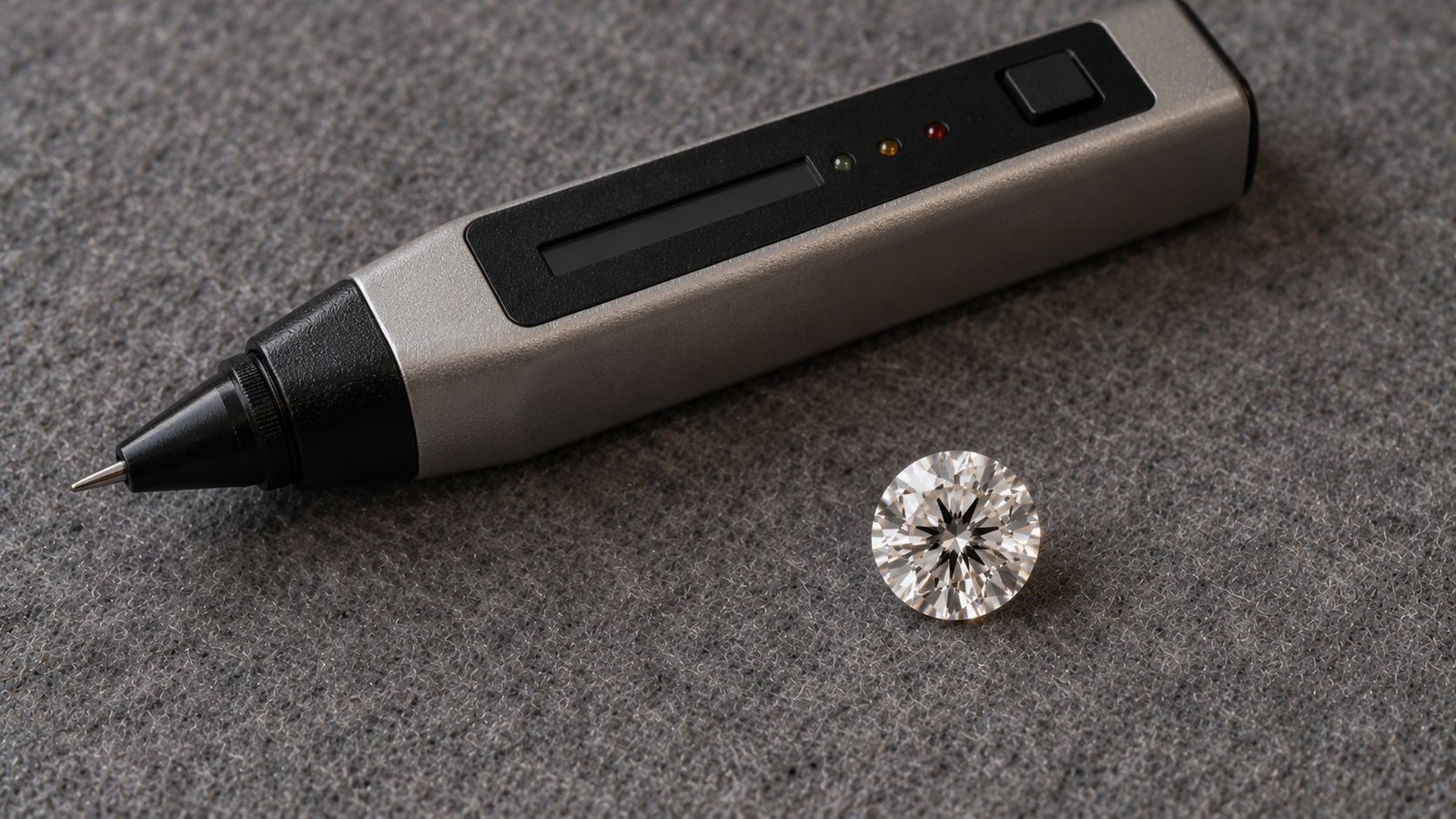
Search the internet and you will find plenty of tricks promising to expose a lab grown stone. Almost none of them work for lab grown diamond identification, because they test for diamond in general rather than for origin. This table shows why.
| Test | What people hope it shows | Why it fails |
| Looking with the naked eye | Obvious sparkle difference | The optical behavior is the same |
| Using a jeweler’s loupe | A clear “lab” look | Features overlap, and no single feature is proof |
| Handheld diamond tester | A lab grown stone fails the test | It measures heat conduction, and both stone types pass |
| Fogging the stone with your breath | Natural clears faster | Surface condition, not origin, controls fogging |
| Shining a UV lamp | Different glow equals lab grown | Glow varies widely within both groups |
| Scratch or hardness test | Lab grown is softer | Both are equally hard, and the test can damage the stone |
| Judging by price alone | A cheap stone must be lab grown | Price reflects grade, size, and seller, and cannot prove origin |
One caution is worth adding. The handheld testers sold to the public are very good at separating diamond from imitations such as moissanite or cubic zirconia. That is a different problem. A positive reading tells you the stone is real diamond, not whether it is mined or grown.
Lab Grown, Natural or Imitation: Three Different Questions
Many buyers blur three separate questions into one. Is the stone a real diamond? Was it grown in a lab or mined? Is it an imitation? Each question has its own tools, and mixing them up leads to wrong conclusions about lab grown diamond identification.
| Question | Best tool | Can a buyer check it? |
| Is it real diamond, or an imitation like moissanite or cubic zirconia? | Handheld diamond tester or a jeweler’s check | Yes, quickly and cheaply |
| Is it lab grown or mined? | Laboratory instruments and the grading report | Only through the report and inscription |
| Is it treated after growth or polishing? | Laboratory analysis and the report | Only through the report |
The first question is the easy one, and it is the one most home gadgets answer. The second is the hard one, and it is the subject of this guide.
Seven Methods Used in Professional Lab Grown Diamond Identification
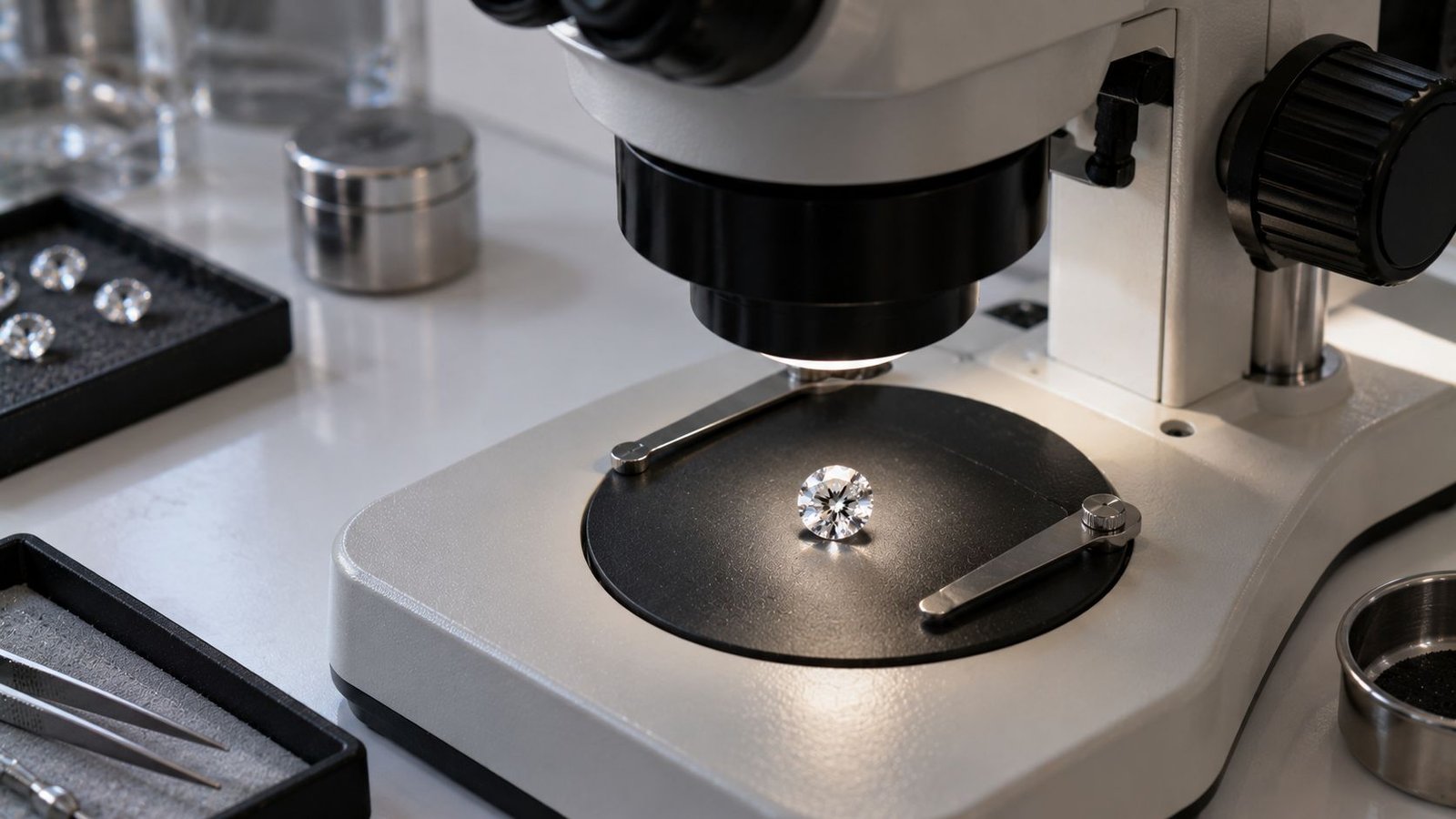
Way 1: The Laser Inscription on the Girdle
Reputable grading laboratories engrave a tiny serial number on the girdle of the stone, and lab grown diamonds carry wording that indicates they are laboratory grown. You need a loupe to read it, but it is the simplest and most direct identifier you can check yourself. A stone with a matching inscription and report number is traceable to a specific record.
Way 2: The Grading Report
A report from a recognized laboratory states plainly whether a stone is laboratory grown, and it usually names the growth method and notes any treatment. The International Gemological Institute and the Gemological Institute of America both issue reports for lab grown stones. Our explainer on IGI certificates for lab grown diamonds shows how to read one line by line.
Way 3: Spectroscopy
Spectroscopy shines specific kinds of light through a diamond and records how the stone absorbs or emits it. Each diamond has a pattern of tiny defects and trace elements, and those patterns tend to differ between mined and lab grown crystals. This is one of the core tools that laboratories use for confirmation.
Way 4: Fluorescence Imaging of Growth Patterns
Special instruments excite a diamond with deep ultraviolet light and photograph the glow it gives back. Because a crystal records how it grew, the image reveals layered or geometric growth patterns that are characteristic of different origins. Gemologists can read those patterns the way a forester reads tree rings.
Way 5: Microscopic Internal Features
Under strong magnification, some stones show features that point toward their origin, such as metallic inclusions from certain growth methods or particular strain patterns. These clues are helpful, but they are never decisive alone, because many stones show nothing telling at all. Our guide to lab grown diamond inclusions explains the common ones.
Way 6: Screening Devices for Parcels
Trade buyers use fast screening instruments to sort large quantities of small stones. These devices flag any stone that might be lab grown so that it can be checked more closely. They are quick and practical, but a flagged or passed result is a screening step, not a certificate.
Way 7: Seller Documentation and Disclosure
The final layer is the paperwork trail. A trustworthy seller provides the grading report, confirms the stone’s origin in writing on the invoice, and is willing to answer questions about growth method and treatment. The documentation does not replace laboratory testing for lab grown diamond identification, but it is how most buyers get certainty in practice.
No single method is proof on its own. A reliable conclusion usually comes from combining the inscription, the report, instrument data, and a trustworthy seller, and when all four agree, the chance of error becomes very small.
Can Experts Ever Be Fooled?
Laboratories are very good at lab grown diamond identification, but the task is not trivial. Small stones are harder to test one at a time, post-growth treatments can change how a stone responds to certain instruments, and equipment has to keep up as growth technology improves. Because of this, laboratories rarely rely on a single test. They combine several measurements, and when a result is unclear, they refer the stone for deeper analysis rather than guess.
For you as a buyer, this is reassuring rather than alarming. It means the grading report from a recognized laboratory represents the combined judgment of several instruments, which is far more reliable than any single quick test you could run yourself.
What a Lab Grown Diamond Report Actually Tells You
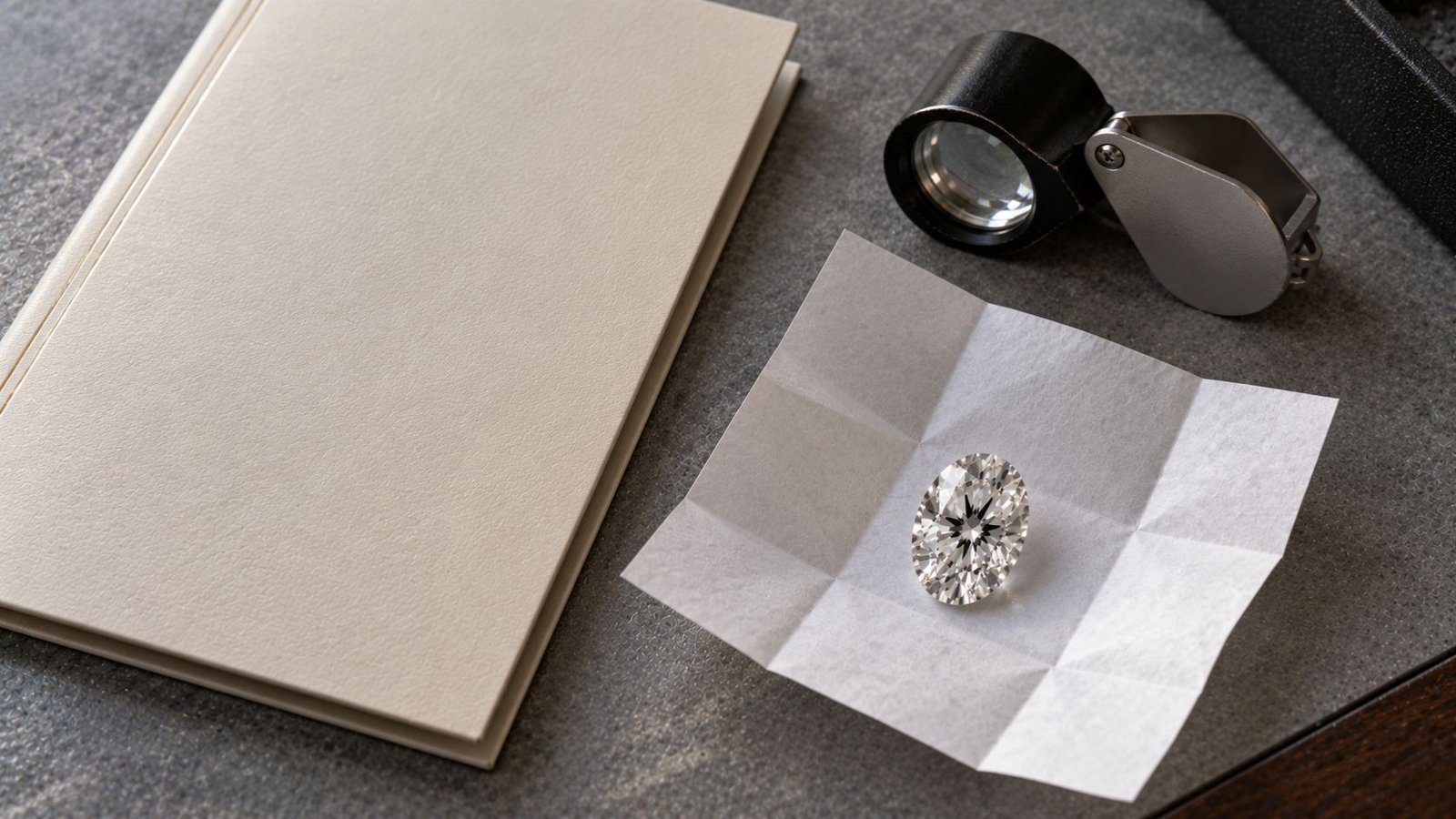
The report is the buyer’s best tool, so it helps to know what to look for. A genuine lab grown report is titled and worded to make the origin clear. It lists the shape, carat weight, color, clarity, cut, and finish grades, and it records the growth process and any post-growth treatment. It carries a unique report number that matches the inscription on the stone.
Do not stop at the paper in your hand. Enter the report number on the issuing laboratory’s website and confirm that every detail matches the stone and the listing. A report that cannot be verified online should be treated as unverified. Our fraud red flags guide walks through the checks step by step.
If a stone arrives with no report at all, do not guess. Ask the seller for laboratory testing before you pay, or have the stone sent to a recognized laboratory yourself. A stone without documentation is a stone with no reliable answer to the identification question, and it should be priced and treated that way.
How Misrepresentation Happens and How to Protect Yourself
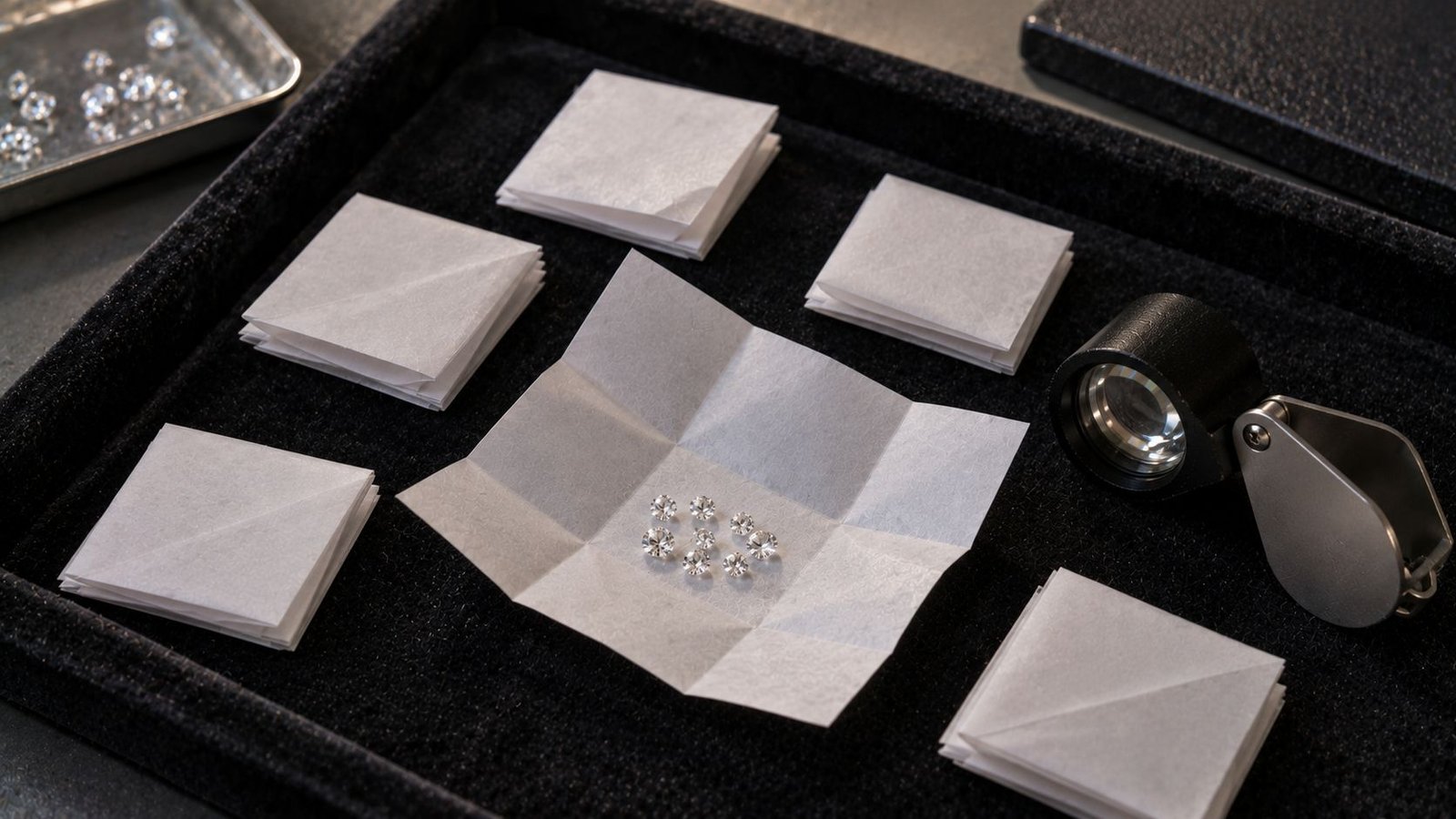
Because the two stones look alike, the real risk in lab grown diamond identification is not that you will mistake one for the other by eye. It is that a seller might describe a stone inaccurately, or that undisclosed lab grown stones might be mixed into a parcel of mined ones, or the reverse. The trade takes this seriously, which is why laboratories and dealers invest in testing equipment.
For a buyer, protection in lab grown diamond identification comes down to documentation and reputation:
Buy certified stones. Insist on a report from a recognized laboratory for any center stone.
Check the inscription. Ask the jeweler to show you the girdle inscription under a loupe and compare it with the report number.
Verify online. Confirm the report on the laboratory’s own website, not on a link the seller sends you.
Get disclosure in writing. Make sure the invoice states whether the stone is lab grown or natural and notes any treatment.
Choose reputable sellers. A seller who welcomes questions and offers a return window on a certified stone is a better bet than one who rushes you.
If you are buying lab grown stones, you should expect clear disclosure. In the United States, jewelers are expected to state when a stone is laboratory grown and to avoid wording that suggests it is natural, though you should confirm current rules with your attorney or trade association.
Does Origin Change How a Diamond Looks, Wears or Lasts?
No. Brilliance, hardness, and everyday durability are the same for both kinds of stone, so you will not notice a difference when you wear the ring. That is exactly why lab grown diamond identification relies on laboratory data and paperwork rather than on anything you can see or feel on the finger. What changes is the price, the story, and the information on the report.
Why the Difference Still Matters
If the two look the same, why care? Because origin changes what you pay and what you are told. A lab grown stone typically costs far less than a mined stone of the same grade, so being sure which one you are buying is a matter of value and honesty, not appearance. Resale and trade-in treatment also differs between the two categories. Our price guide in USD, EUR and INR shows how wholesale benchmarks look for lab grown stones, so you can tell when a quote makes sense.
There is also a values question. Some buyers choose lab grown for the price, others for sustainability or traceability, and others still prefer the story of a mined stone. All of those are legitimate choices, and all of them depend on knowing exactly what is in the setting.
Common Misconceptions About Lab Grown Diamond Identification
“A good jeweler can always tell by looking.” Experienced jewelers know what to check, but they cannot separate the two by eye alone. They rely on the same reports and instruments everyone else does.
“A diamond tester will reveal a lab grown stone.” Standard testers confirm that a stone is diamond. Both lab grown and mined diamonds pass.
“Lab grown diamonds are fake.” They are real diamond. A fake is an imitation such as cubic zirconia or moissanite, and those are separated from diamond far more easily.
“Lab grown stones always glow differently under UV light.” Fluorescence varies a lot within both groups, so a lamp at home proves nothing.
“If it has a certificate, I do not need to check anything.” A certificate is only reliable if it is verified. Always confirm the report number with the issuing laboratory.
Your Lab Grown Diamond Identification Checklist
- Ask for a grading report from a recognized laboratory.
- Look at the girdle inscription under a loupe and match it to the report number.
- Verify the report on the laboratory’s own website.
- Confirm in writing whether the stone is lab grown or natural, and whether it was treated.
- Be cautious of sellers who discourage questions or verification.
- For parcels of small stones, ask how the seller screens for mixing.
- Keep the report and invoice together with your insurance records.
A Note for Jewelers and Wholesale Buyers
If you buy stones in volume, build identification into your intake routine. Check the report and the inscription on every certified stone, and ask suppliers how they screen parcels of small diamonds. Our guide to wholesale lab created diamonds explains how to select by shape and grade, and you can browse current IGI certified lab grown diamonds directly. Clear disclosure protects your customers and your reputation.
Final Thoughts: Trust the Paper and the Instruments, Not Your Eyes
Lab grown diamond identification is a laboratory job, and it is meant to be. You cannot see the difference, a loupe will not settle it, and home tricks mislead more than they help. What you can do is buy a certified stone, check the girdle inscription, verify the report online, and get the stone’s origin in writing. Do that, and you will know exactly what you own, whichever kind of diamond you choose.
Frequently Asked Questions: Lab Grown Diamond Identification
Disclaimer: This article is for informational and educational purposes only. Identification methods and laboratory practices change, and no single test shown here is a substitute for a verified grading report. Confirm the origin, grades, and treatment of any stone with a recognized laboratory and a reputable seller before purchasing.