

Lost Diamond Certificate: 6 Essential Steps to Protect Your Value
Few moments produce a faster jolt of panic among diamond owners than realising a grading certificate has gone missing. The document that once sat neatly in a jewellery box or a filing folder is suddenly nowhere to be found, and the question that immediately follows is almost always the same: does this mean the diamond has lost its value?
The honest answer is more reassuring than most people expect, but it is also more nuanced than a simple yes or no. A lost diamond certificate does not change anything about the physical diamond itself — its carat weight, cut, colour, and clarity remain exactly what they always were. What a missing certificate does affect is something different but still genuinely important: how easily that value can be proven, verified, and communicated to a future buyer, insurer, or appraiser.
This guide walks through exactly what a lost diamond certificate means in practical terms, what steps to take to recover or replace the documentation, and how to protect yourself against this situation happening again in the future.
What a Diamond Certificate Actually Does
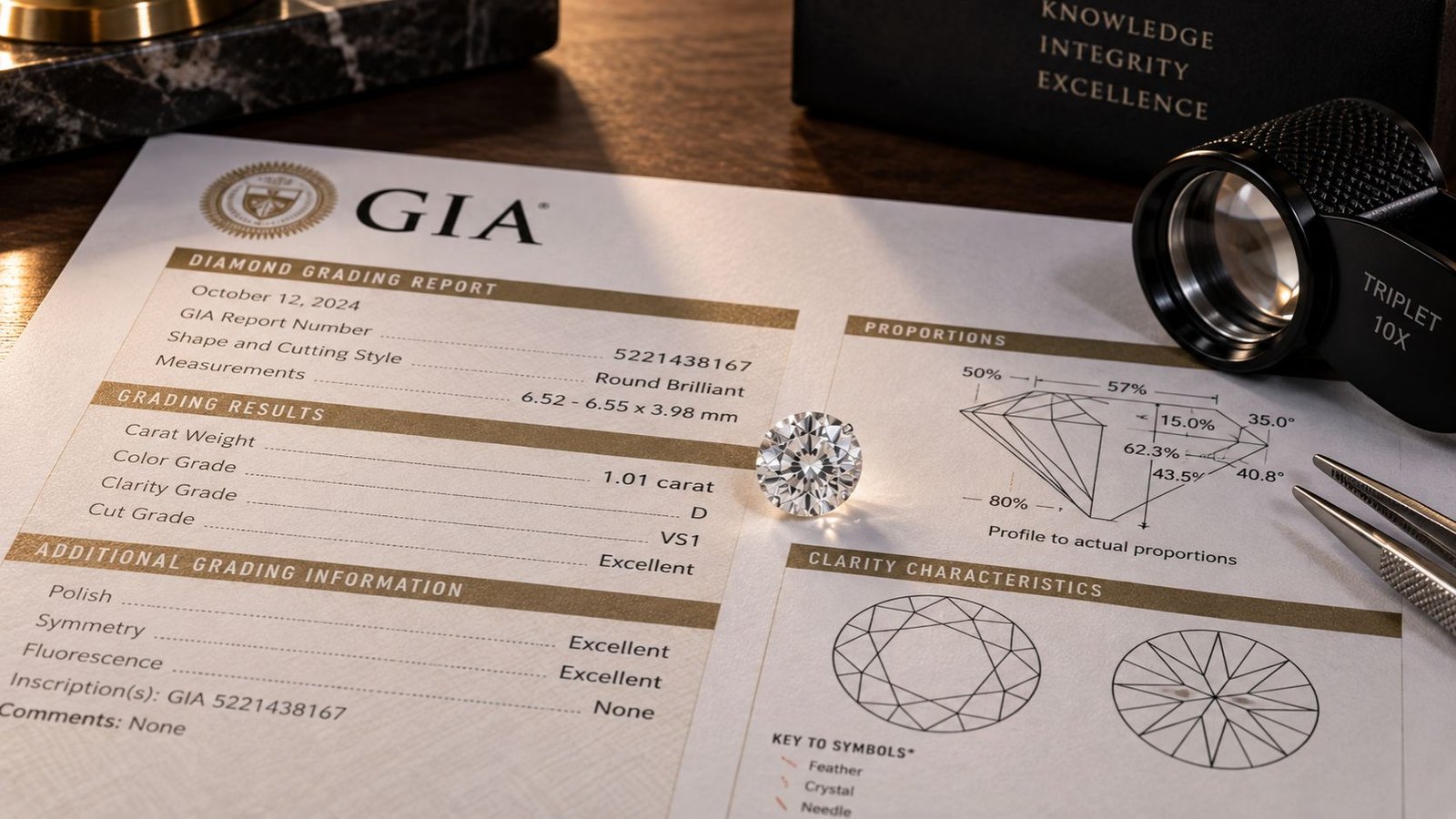
Before addressing what happens when a certificate goes missing, it helps to be precise about what the document actually does and does not represent. A grading report from a laboratory such as GIA or IGI is not a title deed and does not establish legal ownership of the stone. Instead, it is an independent, third-party record of the diamond’s specific characteristics — carat weight, cut grade, colour grade, clarity grade, and, for lab grown diamonds, explicit confirmation of the diamond’s laboratory origin and growth method.
This distinction matters enormously for understanding what a lost diamond certificate actually threatens. The diamond has not lost any of its physical characteristics, and it has not lost its ownership status. What has been lost is the convenient, independently verifiable proof of those characteristics — proof that buyers, insurers, and future appraisers rely on to confirm a stone’s quality without needing to reassess it entirely from scratch.
Does Losing the Certificate Actually Change the Diamond’s Value?
In the strictest sense, no — the diamond’s intrinsic value, meaning what a qualified gemologist would assess it as being worth based on its actual physical characteristics, remains unchanged. The stone did not become smaller, less well cut, or lower in clarity simply because a piece of paper went missing.
In a practical, market sense, however, a lost diamond certificate can create real friction that affects perceived value, particularly during resale. Buyers, especially wholesale buyers and reputable resale platforms, generally prefer or require independent certification before completing a purchase, both to confirm quality and to satisfy their own downstream buyers. Without that documentation readily available, a seller may face a slower sale process, a request for re-certification before a deal can proceed, or in some cases a lower initial offer reflecting the buyer’s own cost and effort in confirming the stone’s characteristics independently.
This gap between intrinsic value and easily provable, market-ready value is the real practical consequence of a lost diamond certificate — and it is also exactly the kind of problem that can usually be resolved without permanent damage to the stone’s marketability.
Step 1: Don’t Panic — The Stone Itself Is Fine
The first and most important step is simply recognising that nothing has physically happened to the diamond. This matters because panic often leads to rushed decisions, including accepting a lowball resale offer out of fear that the stone has somehow become less valuable, when in reality the underlying value remains fully intact and recoverable through the right documentation process.
Taking a breath and working through the recovery process methodically almost always produces a better outcome than assuming the worst and making a hasty decision based on that assumption.
Step 2: Check for a Laser Inscription on the Stone Itself

Many diamonds, both natural and lab grown, carry a microscopic laser inscription on the girdle — the thin edge running around the widest part of the stone — recording the certificate number from the original grading report. This inscription is invisible to the naked eye but can be read using a jeweller’s loupe or microscope, and it provides a direct link back to the original grading report even without the physical certificate in hand.
A local jeweller can typically check for this inscription in a matter of minutes at little or no cost. If present, the inscription number can often be used to look up the original report directly through the grading laboratory’s website, which may resolve the entire situation immediately without requiring any further steps.
Step 3: Search the Grading Laboratory’s Online Report Database
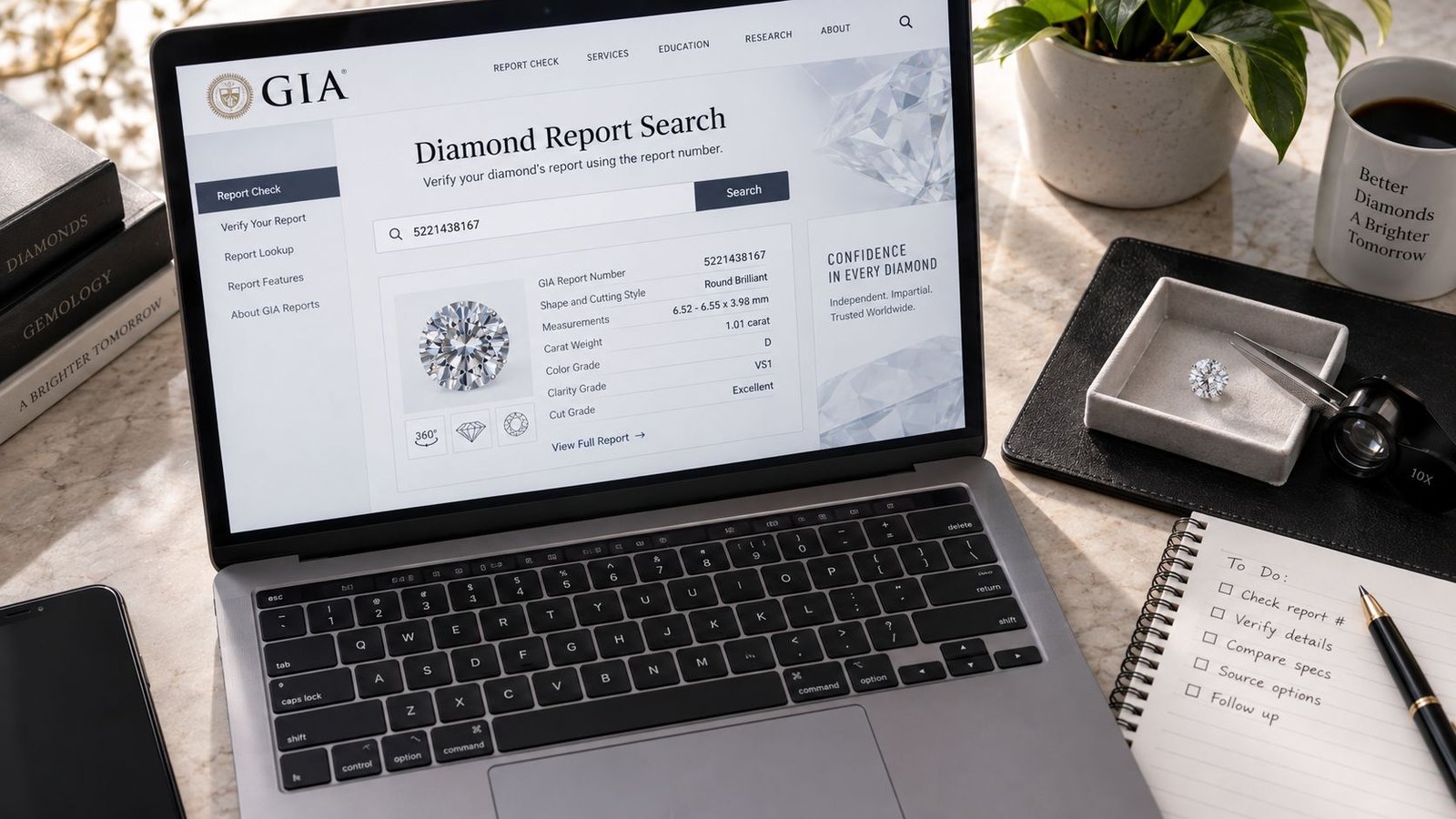
Major grading laboratories, including GIA and IGI, maintain searchable online databases of previously issued reports. If the report number is known — whether recovered from a laser inscription, an old insurance document, a purchase receipt, or an email confirmation from the original purchase — it can often be looked up directly through the laboratory’s website, providing immediate access to the same information the physical certificate contained.
This step alone resolves a significant share of lost diamond certificate situations, since many owners retain the report number somewhere even after losing the physical document itself, whether in an old email, a receipt, or insurance paperwork filed separately from the certificate.
Step 4: Request an Official Duplicate From the Grading Lab

If the report number cannot be recovered through inscription or existing records, most major grading laboratories offer a formal process for reissuing a duplicate certificate, provided the diamond can be resubmitted for verification. This typically involves sending the stone back to the laboratory, where its characteristics are reverified against the original report on file, followed by issuance of a replacement document confirming the same grading information.
This process usually involves a fee and a waiting period, and requirements vary by laboratory, but it remains one of the most reliable paths to fully restoring a lost diamond certificate’s documentation, since it produces an officially reissued report rather than a workaround or substitute.
Step 5: Consider a Fresh Independent Appraisal if Reissue Isn’t Possible
In situations where the original report cannot be located or reissued — for example, if the stone was graded by a laboratory that has since closed, or if identifying details cannot be confirmed — a fresh independent appraisal from a qualified, credentialed gemologist offers a practical alternative. While a new appraisal is not identical to an original laboratory grading report and generally carries somewhat less weight with wholesale buyers, it still provides credible, professional documentation of the stone’s characteristics that can support both insurance needs and resale conversations.
For lab grown diamonds specifically, a fresh appraisal should explicitly confirm the stone’s laboratory origin, since this distinction remains legally and commercially significant and needs to be clearly documented regardless of which path is used to restore certification.
Step 6: Update Insurance Documentation With the New Certificate
Once a certificate has been recovered, reissued, or replaced through a fresh appraisal, updating any related insurance policy documentation is an essential final step. Insurance providers typically require current, valid documentation to process a claim in the event of loss, theft, or damage, and outdated or missing documentation can create unnecessary complications during precisely the moment when a smooth claims process matters most.
Taking this step promptly, rather than treating it as an optional afterthought, ensures that resolving a lost diamond certificate situation actually restores full practical protection for the piece going forward, rather than just resolving the immediate documentation gap.
How a Lost Certificate Affects Resale in Practice

For sellers specifically, the practical impact of a lost diamond certificate tends to show up most clearly during resale negotiations. Wholesale buyers and reputable resale platforms generally view current, verifiable certification as a baseline requirement rather than a nice-to-have, both to protect themselves and to reassure their own downstream customers, much like the certification expectations we outlined in our guide on diamond markup and retail pricing. A seller without accessible certification may need to complete one of the recovery steps outlined above before a sale can proceed smoothly, or may receive an initial offer that accounts for the buyer’s own cost and effort in independently verifying the stone.
This friction tends to be temporary and resolvable rather than permanent, provided the seller takes reasonable steps to restore documentation before finalising a sale. Sellers who attempt to sell without any documentation at all, hoping a buyer simply won’t ask, generally encounter far more resistance and weaker offers than sellers who proactively address the missing certificate before entering negotiations.
Preventing This Situation From Happening Again

A handful of straightforward habits meaningfully reduce the risk of facing a lost diamond certificate situation in the future. Keeping a digital scan or photograph of the original certificate, stored securely in cloud storage rather than solely as a physical document, provides an easily accessible backup that survives even if the physical paperwork is misplaced. Recording the certificate number separately, in a password manager or a dedicated document rather than only on the physical certificate itself, ensures the number remains recoverable even if both the certificate and its digital scan are somehow lost simultaneously.
Requesting a laser-inscribed girdle at the time of original purchase or certification, if not already present, provides a permanent, physical link back to the grading report that cannot be misplaced the way a paper document can. And reviewing insurance documentation periodically to confirm it references current, valid certification helps catch any documentation gaps before they become relevant during an actual claim or resale situation.
The Bottom Line
A lost diamond certificate is a genuinely stressful situation, but it is rarely a permanent or catastrophic one. The diamond’s actual physical value remains completely unchanged — what has been lost is convenient proof of that value, and in the great majority of cases, that proof can be recovered or reasonably replaced through laser inscription lookup, laboratory database search, official reissue, or a fresh independent appraisal.
Taking methodical, informed steps rather than panicking or rushing into a disadvantageous resale decision almost always leads to a full or near-full recovery of the diamond’s documented, market-ready value. And building simple preventive habits — digital backups, recorded certificate numbers, and periodic insurance review — makes it considerably less likely that this situation arises again in the future.
Frequently Asked Questions
No. The diamond’s physical characteristics remain unchanged; what’s lost is convenient proof of those characteristics, which can usually be recovered or replaced.
Often, yes. If you know the report number, major labs like GIA and IGI let you search their databases directly to view the original report.
It’s a microscopic engraving on the diamond’s girdle recording the certificate number, which a jeweller can read even without the physical document.
You typically need to resubmit the diamond for reverification, after which the lab can reissue an official duplicate report, usually for a fee.
Not exactly. An appraisal is credible documentation but generally carries less weight with wholesale buyers than an original or reissued lab report.
It can create temporary friction with buyers, but this is usually resolvable by restoring documentation before finalising a sale.
Yes. Any replacement documentation should explicitly confirm laboratory origin, since this remains commercially and legally significant.
Keep a digital scan in cloud storage, record the certificate number separately, and consider a laser-inscribed girdle for a permanent backup link.
Yes. Updating your policy with the new or reissued certificate ensures smooth claims processing if something happens to the piece later.
It’s not recommended. Buyers generally offer less or hesitate without documentation, so pursuing recovery first typically protects your value better.
Disclaimer: This article is intended for general informational purposes only and does not constitute appraisal, legal, or insurance advice. Certificate replacement processes and requirements vary by grading laboratory and may change over time. Always consult the relevant grading laboratory, a certified appraiser, or your insurance provider directly for guidance specific to your situation.