

Government Oversight vs Certification: Who Really Governs the Lab Grown Diamond Trade
Ask most buyers “who regulates lab grown diamonds,” and a lot of them will answer GIA or IGI. It’s an understandable mix-up, and it’s also incorrect in a way that actually matters. Grading labs and government regulators do genuinely different jobs, with genuinely different legal authority behind them, and understanding lab grown diamond regulation properly means keeping those two categories clearly separate rather than treating a grading report and a legal requirement as the same kind of oversight.
This guide walks through the real shape of lab grown diamond regulation — who actually holds legal enforcement power over how lab grown diamonds are sold and advertised, what grading organisations like GIA and IGI actually are if not regulators, and where the real regulatory gaps — and real regulatory teeth — currently sit around the world.
The Key Distinction: Regulation vs Certification
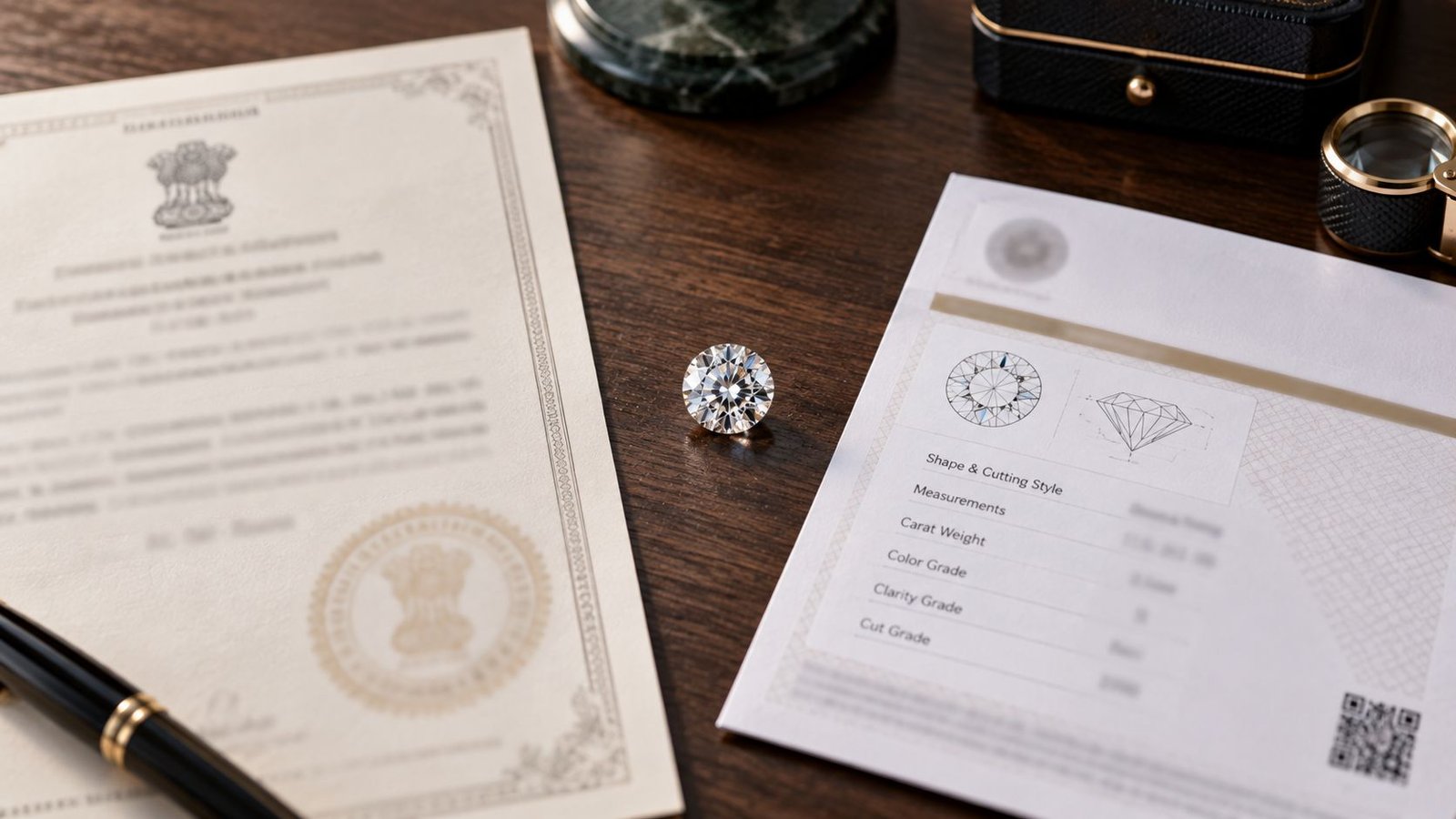
Regulation comes from a government body with actual legal authority — the power to investigate, issue warnings, and impose real penalties for violations. Regulators set enforceable rules that businesses are legally required to follow, whether or not any individual buyer ever asks about them.
Certification, by contrast, is a voluntary service provided by private organisations. A grading lab examines a stone and issues a report describing its characteristics, but no law requires any seller to obtain that report, and the grading lab itself has no legal power to fine anyone or shut down a non-compliant business. Buyers value certification because it’s trusted and widely adopted across the trade — not because any government mandates it.
Understanding this distinction is the foundation of lab grown diamond regulation as a topic, since conflating the two leads to a common and genuinely mistaken assumption: that a GIA or IGI report somehow carries legal weight the way a government regulation does.
The FTC: America’s Actual Regulator
In the United States, the Federal Trade Commission holds real regulatory authority over how diamonds — lab grown and natural alike — are advertised and sold, codified in the Jewelry Guides under 16 CFR Part 23 of federal regulations. This isn’t a voluntary industry code; it’s enforceable law.
The core requirement is “clear and conspicuous” disclosure: any advertisement describing a lab grown stone must make that fact obvious to a reasonable consumer, immediately alongside the word “diamond,” not buried in fine print or a linked FAQ page. The FTC’s own guidance specifies approved terminology — “laboratory-grown,” “laboratory-created,” or “[manufacturer name]-created” — and explicitly warns that simply calling a stone a “diamond” without qualification, when it’s lab grown, risks misleading consumers into assuming it’s mined.
This isn’t a theoretical rule sitting unused on the books. The FTC has issued formal warning letters to companies over advertising it considered potentially deceptive regarding lab grown diamonds and diamond simulants, giving those companies a short window to correct their marketing or face further action. That’s genuine regulatory enforcement, backed by real consequences — a category of oversight no grading lab has ever had the authority to exercise.
What GIA and IGI Actually Are

GIA (the Gemological Institute of America) and IGI (the International Gemological Institute) are private organisations that grade and certify diamonds based on established gemological standards — the well-known 4Cs framework, plus, for lab grown diamonds specifically, GIA’s newer Premium and Standard classification introduced in October 2025. Neither organisation has any government-granted legal authority. They cannot fine a business, cannot shut down a non-compliant seller, and cannot enforce disclosure requirements the way the FTC can.
What they do have is trust, built over decades of consistent, credible grading — which is precisely why the trade treats their reports as close to a de facto standard even without any legal requirement to use them. A supplier can legally sell an uncertified lab grown diamond in most jurisdictions; they simply won’t be trusted by buyers who’ve come to expect independent verification as standard practice.
India’s BIS Standard: A Genuine Regulatory Body
India represents one of the clearer examples of actual lab grown diamond regulation entering this space directly. The Bureau of Indian Standards introduced IS 19469:2025, a mandatory labelling standard requiring explicit “laboratory-grown diamond” disclosure across retail, enforced from January 2026. Unlike GIA or IGI’s voluntary grading services, this is a government-backed legal requirement with real enforcement mechanisms behind it.
Indian trade bodies have also begun matching their practices to global regulatory expectations. Take GJEPC, India’s main export promotion body for the gems and jewellery sector: it has reshaped how lab grown stones are described in its marketing so that the phrasing mirrors American regulatory terminology, despite having no legal reach into the US market. This reflects a broader pattern worth understanding: lab grown diamond regulation increasingly involves trade bodies voluntarily aligning with the strictest applicable standard, even beyond their own legal jurisdiction, simply because operating consistently across markets is more practical than maintaining separate standards for each one.
Why the Kimberley Process Doesn’t Apply to Lab Grown Diamonds

Few topics in this trade cause as much mix-up as this one, so it deserves a straight answer. The Kimberley Process Certification Scheme is an international agreement established specifically to prevent the trade of conflict diamonds — natural, mined stones whose sale funds armed conflict. It governs the certification of rough natural diamonds crossing international borders.
Lab grown diamonds fall entirely outside this system, since they were never mined and therefore can’t be “conflict diamonds” in the sense the Kimberley Process was designed to address. This isn’t a regulatory gap so much as a category mismatch — asking whether a lab grown diamond is “Kimberley Process certified” is a bit like asking whether a laptop has passed a food safety inspection. The certification exists for a genuinely different category of product.
A Genuinely Uneven Global Picture
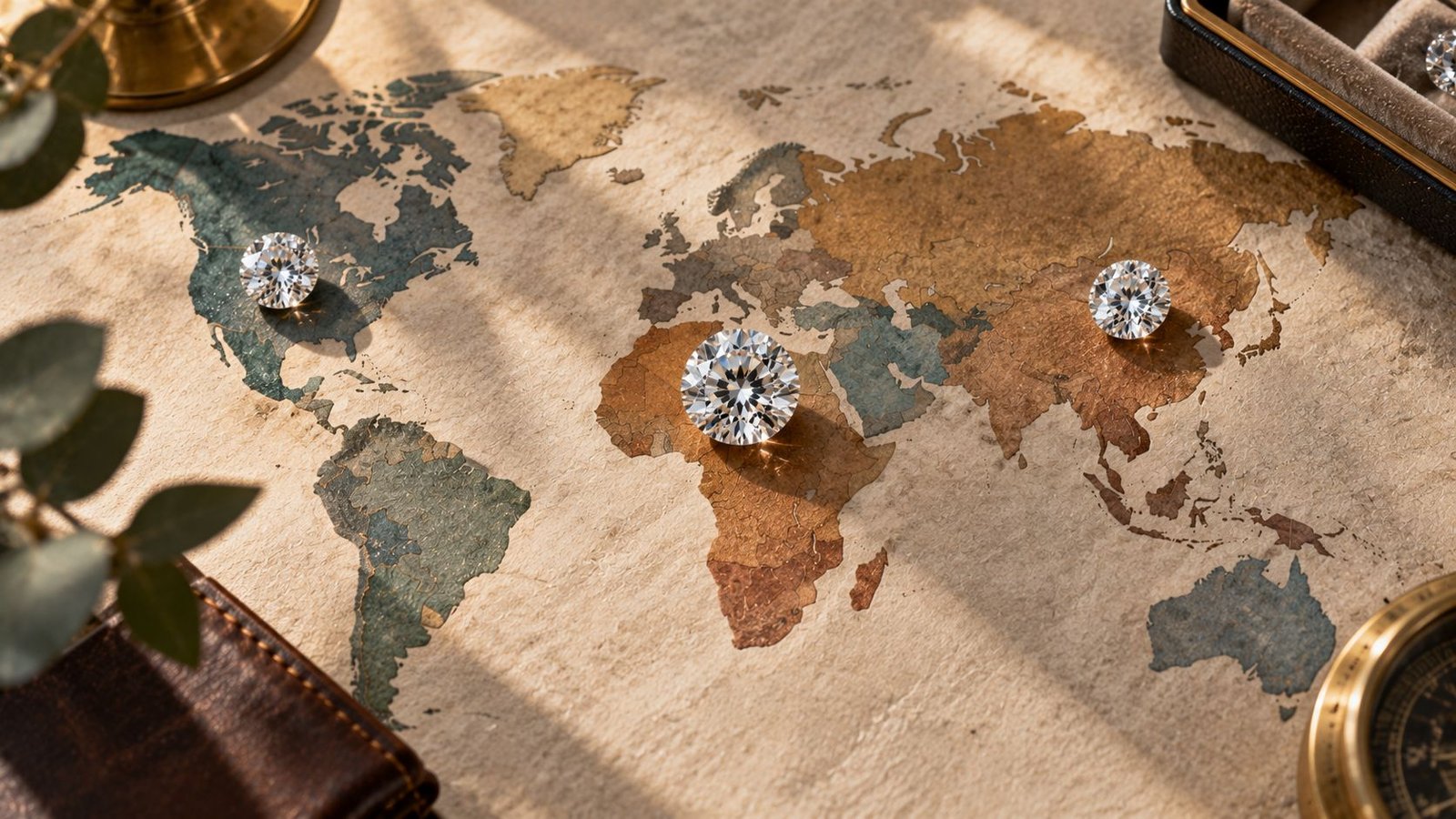
Lab grown diamond regulation isn’t remotely uniform worldwide, and it’s worth being honest about that rather than implying a single global standard exists. The US has clear, actively enforced FTC rules. India now has a mandatory BIS labelling standard. Other major markets, including much of the EU and UK, generally rely on broader consumer protection and trading standards law rather than diamond-specific regulation, meaning the same disclosure principle — don’t mislead consumers about what they’re buying — applies, but without a dedicated regulatory framework built specifically around lab grown diamonds the way the FTC’s Jewelry Guides are.
This patchwork matters practically for any business operating across multiple markets: what’s merely trade best practice in one jurisdiction can be a specific legal requirement in another, and treating them as interchangeable is a genuine compliance risk.
What This Means for Buyers and Sellers
For buyers, understanding lab grown diamond regulation means knowing that a certificate confirms quality and characteristics, not legal compliance on the seller’s part — those are separate questions entirely, even though a reputable seller should be getting both right simultaneously.
For sellers, it means treating disclosure language as a genuine legal obligation in regulated markets like the US, not merely a nice-to-have detail. Our warning guide on choosing a lab grown diamond wholesaler covers broader due-diligence questions worth asking any supplier, and proper regulatory compliance on their end is exactly the kind of question that belongs on that list. If pricing and terminology consistency across markets matters to your business, our shape-by-shape price guide reflects current market terminology conventions across the regions it covers. And for a broader look at how grading standards themselves continue evolving, our look at AI’s role in lab grown diamond production and grading covers GIA’s own recent grading changes in more depth.
What Happens When Regulation and Certification Overlap
In practice, lab grown diamond regulation and certification interact more than the clean separation above might suggest, and understanding where they actually connect helps clarify why the confusion between them persists.
A grading certificate can support regulatory compliance without being legally required. A supplier disclosing a stone’s lab grown origin using FTC-approved terminology, backed by an independent GIA or IGI report confirming that origin, is in a genuinely stronger compliance position than one making the same disclosure without independent verification — even though the certificate itself isn’t what the law technically requires.
Regulators sometimes reference grading standards without adopting them wholesale. India’s BIS standard, for instance, mandates disclosure language without dictating which specific grading lab a seller must use, leaving that choice to trade practice rather than legal requirement.
Industry bodies sometimes bridge the gap between the two. Trade organisations like GJEPC don’t have direct regulatory authority themselves, but by formally adopting terminology that mirrors a genuine regulator’s standard, they create a kind of soft compliance layer that influences member behaviour even without legal force behind it.
This overlap is exactly why the regulation-versus-certification distinction matters practically, not just conceptually — a business that understands both systems can build a genuinely stronger compliance position than one relying on certification alone as a stand-in for legal compliance.
A Brief Look at How This Could Change
Lab grown diamond regulation is still a relatively young area of law by comparison to most consumer protection frameworks, and the pattern so far suggests it’s likely to keep evolving rather than settle into a fixed, permanent structure.
More countries are likely to introduce dedicated rules as lab grown diamonds continue capturing a larger share of the global diamond market, following India’s example of moving from general consumer protection principles toward diamond-specific mandatory standards.
Enforcement activity in already-regulated markets is likely to continue, given the FTC’s demonstrated willingness to issue warning letters over unclear advertising, particularly as lab grown market share continues to grow and the financial stakes of getting disclosure wrong increase accordingly.
Grading standards themselves continue to evolve alongside regulation, even though the two remain legally distinct — GIA’s own 2025 shift to a Premium and Standard classification for lab grown stones shows that certification practices keep changing in response to the same market growth driving regulatory attention, even without any legal requirement forcing that specific change.
Common Misconceptions About Lab Grown Diamond Regulation
“GIA and IGI are government-regulated bodies.” They’re private organisations providing voluntary grading services — respected and trusted, but without government-granted legal enforcement authority.
“A GIA or IGI certificate means a seller is legally compliant.” Certification confirms a stone’s characteristics; legal compliance around disclosure and advertising is a separate matter governed by bodies like the FTC, not by the grading lab.
“The Kimberley Process applies to lab grown diamonds too.” It doesn’t — the Kimberley Process specifically covers natural, mined rough diamonds to prevent conflict-diamond trade, a category lab grown stones fall entirely outside of.
“Lab grown diamond regulation is the same everywhere.” It genuinely isn’t — the US has active FTC enforcement, India has a mandatory BIS standard, and many other markets rely on broader consumer protection law rather than diamond-specific rules.
Questions Worth Asking a Supplier About Compliance
Since lab grown diamond regulation genuinely varies by market, a handful of direct questions help confirm a supplier takes compliance seriously rather than treating it as an afterthought.
Ask which specific disclosure terminology they use across their marketing and invoicing, and whether it aligns with the standard actually enforced in your target market — FTC-approved language for US sales, BIS-compliant labelling for Indian retail, and so on.
Ask whether their compliance approach changes by destination market, rather than applying one blanket standard everywhere. A supplier treating every market identically, regardless of which one has active legal requirements, may be under-complying somewhere without realising it.
Ask how they stay current on regulatory changes, given how much this area has shifted even in the past year — a supplier with no clear answer to this question is relying on habit rather than active compliance awareness, which is a genuine risk as lab grown diamond regulation continues to evolve.
Final Thoughts: Two Different Systems Working Alongside Each Other
Lab grown diamond regulation and grading certification solve different problems, and understanding that distinction protects both buyers and sellers from a genuinely common misunderstanding. Government bodies like the FTC and India’s BIS hold real legal authority and can enforce real consequences; GIA and IGI provide trusted, valuable, but entirely voluntary certification with no legal teeth of their own. Neither one substitutes for the other — a well-run business in this space needs to get both right, not assume that excelling at one automatically covers the other.