

Diamond Sales Objections: 7 Winning Scripts for the “Fake Diamond” Myth
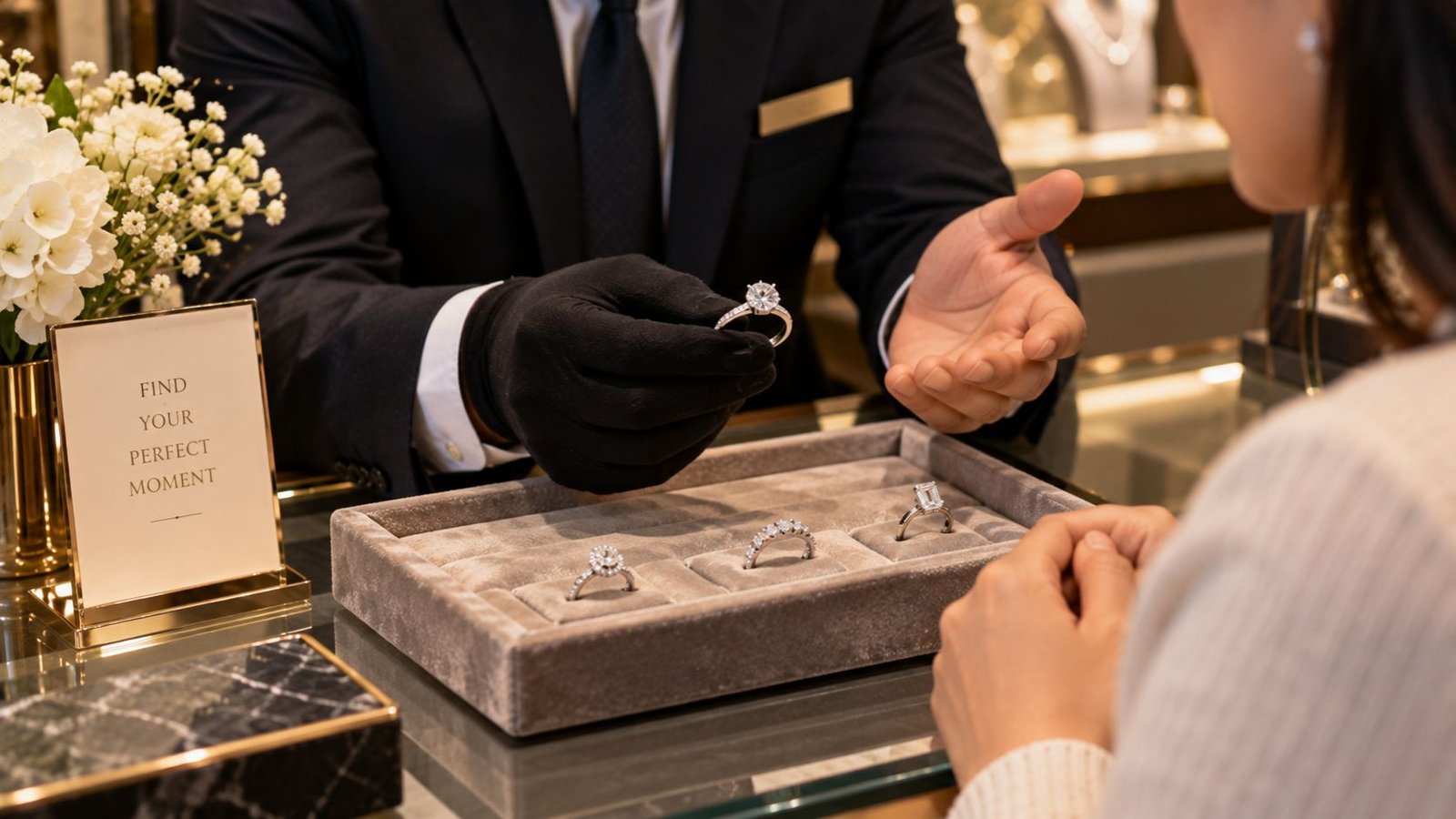
Every jewellery sales associate working with lab grown diamonds has heard some version of the question eventually: “So this isn’t a real diamond, right? It’s fake?” It’s a question sales associates in this industry field almost daily, and it tends to come out a little tentatively, as if the shopper is bracing to hear that they’ve be corrected or, worse, expects to have wasted their time browsing something they assume is a lesser imitation. Handling diamond sales objections like this one well is not about winning an argument or lecturing a customer on gemology. It is about responding with genuine warmth and clarity, in a way that turns a moment of uncertainty into a moment of confidence — for both the customer and the sale itself. Sales associates who have a clear, well-practiced approach to this specific objection consistently close more sales and build considerably more customer trust than those who respond defensively or launch into an overly technical explanation that leaves the customer more confused than before. This guide provides seven specific, practical scripts for handling this exact diamond sales objection, along with guidance on tone, common mistakes to avoid, and how to train a sales team to deliver these responses naturally rather than robotically. Understanding why this specific objection comes up so frequently helps sales associates respond with genuine empathy rather than frustration. Decades of natural diamond marketing built an entire cultural narrative around scarcity, geological origin, and “real” as synonymous with “mined from the earth.” Lab grown diamonds, despite being chemically and physically identical to natural diamonds, arrived into a marketplace where customers had already internalised that narrative, creating a natural moment of confusion when a genuinely real diamond is described as having been grown rather than mined. Adding to this confusion, many customers have previously encountered diamond simulants — cubic zirconia or moissanite, materials that only resemble diamond visually without sharing its actual chemical composition — and reasonably wonder whether a lab grown diamond falls into that same category. It does not, but the confusion is entirely understandable given how the terminology has historically been used, sometimes loosely, across different parts of the jewellery industry. Addressing this diamond sales objection well starts with recognising it as a reasonable question rooted in genuine uncertainty, not as a challenge to be defended against. “Good question — let me be direct about it. What’s on this tray is diamond. Full stop. Carbon, arranged the exact same way, just as hard, just as brilliant as anything pulled from the ground. Nature took its route over billions of years. This stone took a shortcut through a lab that copies those same conditions. No substitute crystal, no coating, nothing artificial mixed in. Pull out any gemological test you like — it reads as diamond because it is one.” This opening script works well for addressing diamond sales objections because it leads immediately with reassurance and clarity rather than launching into technical detail first. It directly answers the underlying fear — “am I buying something fake?” — before providing any supporting explanation, which keeps the customer feeling informed rather than lectured. “Diamonds form when carbon is exposed to intense heat and pressure. In nature, that happens deep underground over an incredibly long period of time. What lab grown diamond technology does is recreate those exact same conditions in a controlled facility, so the diamond forms through the same fundamental process, just in a matter of weeks or months instead of over geological time. The result is a diamond with identical physical, chemical, and optical properties — a gemologist actually needs specialised equipment to tell the two apart, since they look completely identical to the naked eye.” This script provides just enough technical grounding to satisfy a customer who wants to understand the “why” behind the reassurance, without overwhelming them with excessive scientific detail that risks losing their attention or turning the conversation about diamond sales objections into a lecture rather than a helpful explanation. “Don’t just trust me on this one. There’s a report from GIA or IGI attached to it — outside labs, no financial dog in this fight, no reason to shade the truth either way. They lay out this stone’s exact specs in writing and name it plainly as lab-grown, nothing else. So the confirmation isn’t coming from a salesperson trying to close a deal — it’s coming from a neutral third party with a reputation to protect.” This script directly addresses lingering skepticism by pointing to independent verification rather than asking the customer to simply trust the salesperson’s word. Bodies like GIA exist specifically to provide this kind of neutral, third-party confirmation. For many customers, this is the moment the diamond sales objection genuinely resolves, since it shifts the reassurance from a sales pitch to an objective, verifiable fact — the same kind of rigorous, technology-backed verification we cover in our guide on how AI is changing diamond grading. “It’s actually a completely different category from something like cubic zirconia or moissanite. Those are simulants — stones engineered to mimic a diamond’s look without sharing its actual chemistry. The stone itself is genuine diamond — the lab is just where it grew up instead of underground. Picture the difference between a tomato grown in a greenhouse and a plastic tomato meant to look like one — the greenhouse tomato is still genuinely a tomato, just raised somewhere different, while the plastic version was never a tomato to begin with. That’s essentially the gap between a lab grown diamond and a simulant.” Simple, relatable analogies like this one tend to land particularly well when handling diamond sales objections with customers who do not have a scientific background but want an intuitive way to understand the distinction clearly. Adjusting the specific analogy to fit natural conversational flow, rather than reciting it verbatim every time, helps this script feel genuine rather than rehearsed. “Here’s what I find really exciting about this option: because lab grown diamonds cost less to produce, you’re able to get a larger, higher-quality stone within your budget than you could with a natural diamond at the same price point. So rather than thinking about what’s different, I like to think about what this actually gives you — more diamond, better clarity, exactly the ring you’re picturing, without compromising on your budget.” This script proactively shifts the conversation from a defensive posture toward genuine excitement about what the customer is actually gaining, which tends to be considerably more persuasive than simply reassuring them that they are not being shortchanged when handling diamond sales objections. Framing this among common diamond sales objections as an opportunity to highlight real value, rather than purely as a concern to neutralise, tends to move the conversation forward more naturally toward closing the sale. “Honestly, that’s one of the most common questions I get, and it makes total sense — the terminology around this can genuinely be confusing, especially with everything the diamond industry has said about natural diamonds for so many decades. Let me walk you through exactly what makes this a real diamond, and you can ask me anything along the way.” Leading with genuine empathy, rather than immediately jumping into a factual correction, helps the customer feel heard rather than corrected, which meaningfully lowers any defensiveness they might otherwise bring into the rest of the conversation around diamond sales objections. This script works particularly well as an opening line before transitioning into one of the more detailed explanatory scripts above. “Before we go any further, I want to mention something upfront since it comes up a lot: this is a lab grown diamond, meaning it was grown in a controlled facility rather than mined from the earth. I want to be totally transparent about that from the start, because I think once you understand what that actually means, you’ll see it as a real advantage rather than something to worry about.” Rather than waiting for the objection to surface, this script addresses one of the most common diamond sales objections proactively during the initial presentation of a piece, which often prevents the objection from becoming a moment of doubt or hesitation at all. Customers generally respond very positively to this kind of upfront transparency, since it signals confidence and honesty rather than something being deliberately downplayed or hidden until directly asked. Certain responses, even when well-intentioned, tend to backfire when addressing this particular one among common diamond sales objections. Sounding defensive or slightly irritated by the question, even subtly through tone, signals to the customer that their concern touched a nerve, which paradoxically increases rather than decreases their skepticism. Disparaging natural diamonds directly, rather than simply explaining lab grown diamonds on their own terms, can feel unnecessarily negative and may alienate customers who still have emotional attachment to natural diamond tradition for personal or family reasons. Overwhelming a customer with excessive technical jargon, particularly early in the conversation before establishing basic reassurance, risks losing their attention and making the entire topic feel more confusing and suspicious rather than less. And treating one of these diamond sales objections as an inconvenience to move past quickly, rather than a genuine opportunity to build trust through a clear, confident answer, misses one of the most valuable trust-building moments available during the entire sales interaction. Scripts for handling diamond sales objections work best as a foundation for genuine conversation rather than as word-for-word lines to recite mechanically. Role-playing practice sessions, where staff take turns playing both the customer and the sales associate, help team members internalise the underlying logic of each script well enough to adapt it naturally to their own voice and to the specific tone of each individual customer interaction. Encouraging staff to genuinely believe in and understand the material they are explaining, rather than simply memorising approved talking points, produces noticeably more confident and convincing delivery than rote recitation ever achieves. Regularly revisiting and refining these scripts for common diamond sales objections based on real customer interactions, incorporating specific phrasing that has worked particularly well in actual conversations, keeps the training material genuinely useful rather than static and increasingly disconnected from how customers actually engage in practice. Handling this particular diamond sales objection well is ultimately about confidence, clarity, and genuine empathy rather than defensiveness or over-explanation. Customers asking whether a lab grown diamond is “fake” are not challenging the salesperson — they are seeking honest reassurance about a genuinely real diamond, and a well-prepared, warmly delivered response consistently turns that moment of uncertainty into one of the strongest trust-building opportunities available during the entire sales conversation. Sales teams equipped with clear, well-practiced scripts, delivered naturally rather than robotically, are consistently better positioned to close sales confidently while leaving customers feeling genuinely informed and reassured about exactly what they are purchasing.Why the “Fake Diamond” Objection Happens So Often

Script 1: “It’s a Real Diamond, Just a Different Origin”
Script 2: Breaking Down How a Diamond Actually Forms
Script 3: The “Certification Proves It” Reassurance

Script 4: The Simulant Comparison Script

Script 5: The Value Reframe Script
Script 6: The Empathy-First Acknowledgment

Script 7: The Proactive, Preemptive Script
What Not to Say When Handling This Objection
Training a Sales Team to Deliver These Scripts Naturally

The Bottom Line
Frequently Asked Questions