

Diamond Jewelry Cleaning: 7 Simple Steps to Protect Your Settings
A diamond ring left uncleaned for a few months does not lose its sparkle because the stone itself changes — diamond, whether mined or lab grown, is chemically inert and essentially indestructible under normal daily conditions. What actually dulls a diamond’s appearance is far more mundane: a thin film of hand lotion, soap residue, cooking oil, and everyday skin oils building up on the surface of the stone and quietly blocking the light that would otherwise pass through it and bounce back as brilliance.
The good news is that removing that film is genuinely simple, and diamond jewelry cleaning does not require expensive equipment or a trip to the jeweller every time a ring starts to look a little flat. The part that trips people up is not the stone itself — it is the setting. Prongs, pavé work, bezels, and delicate metal detailing can all be damaged by the wrong cleaning method, even when the diamond itself would have been perfectly fine.
This guide walks through exactly how to approach diamond jewelry cleaning at home safely, with particular attention to protecting the setting rather than just the stone, and covers the specific adjustments worth making depending on what kind of setting is holding your diamond in place.
Why Lab Grown Diamonds Need the Same Careful Approach
Lab grown diamonds are chemically, physically, and optically identical to natural diamonds — same crystal structure, same hardness, same resistance to scratching and everyday wear. This means diamond jewelry cleaning guidance applies exactly the same way to a lab grown stone as it would to a natural one; there is no special cleaning method required simply because a diamond was grown in a laboratory rather than formed underground.
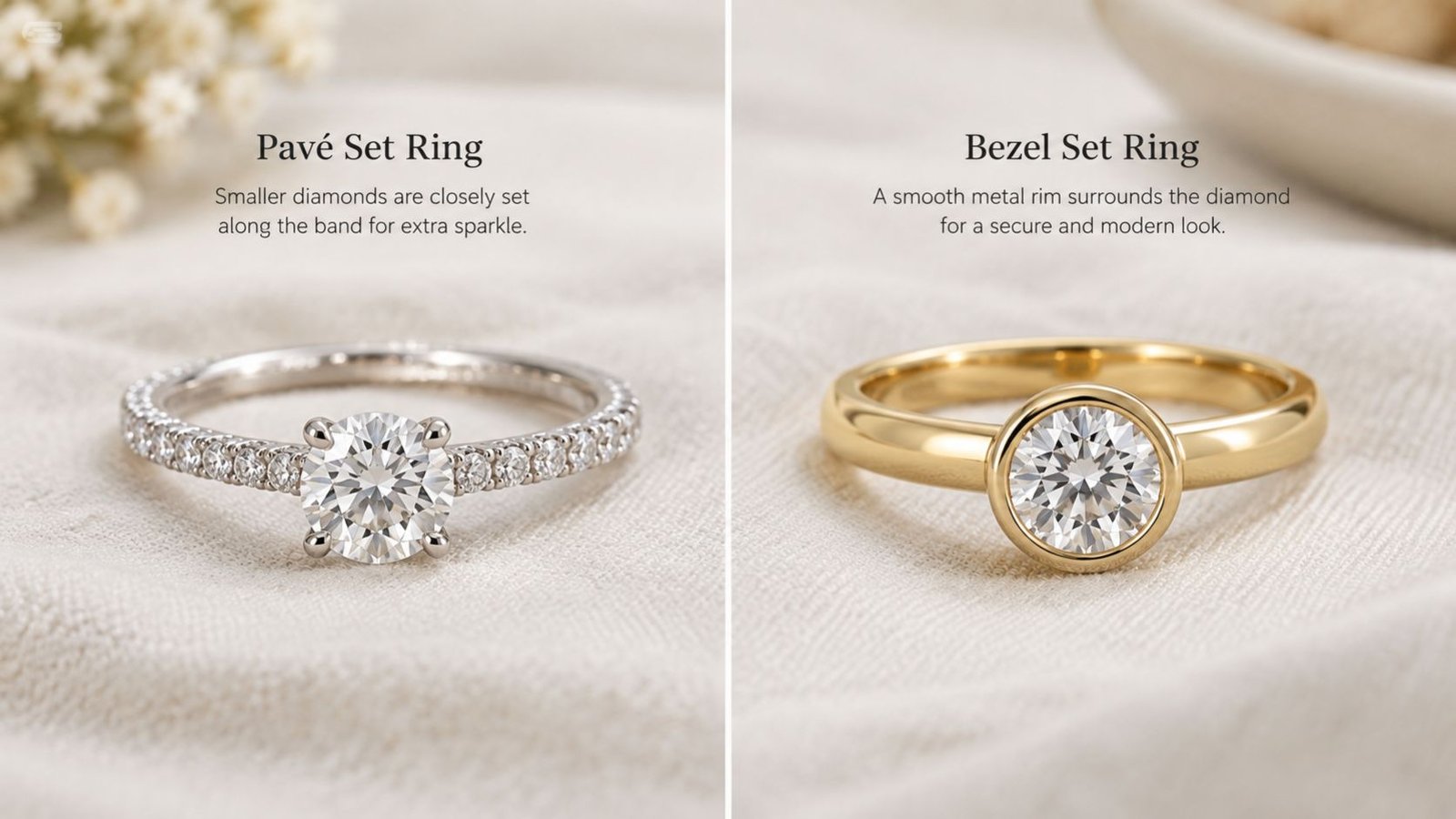
What does vary, and what actually matters most for safe cleaning, is not the diamond at all but the setting holding it. A delicate pavé setting with dozens of small stones held by thin prongs needs a gentler approach than a sturdy, bezel-set solitaire, regardless of whether the stones themselves are lab grown or natural. Understanding your specific setting type is the real key to cleaning safely, and it is where most at-home cleaning mistakes actually happen.
Why Getting This Right Matters
Prongs, in particular, are more vulnerable than most people realise. They are typically thin, precisely bent pieces of metal designed to hold a stone securely while remaining nearly invisible. Repeated exposure to harsh scrubbing, excessive force, or aggressive chemical cleaners can gradually weaken prongs over time, loosening a stone long before it becomes obviously wobbly to the naked eye. A stone lost because of a weakened prong is a far more expensive and disappointing problem than a slightly dull-looking ring, which makes protecting the setting just as important as getting the stone clean.
Step 1: Start With Warm Water and Mild Dish Soap

The safest and most universally recommended starting point for diamond jewelry cleaning is also the simplest: warm water combined with a few drops of gentle, unscented dish soap. Avoid hot water, since sudden temperature changes can occasionally stress a stone, and avoid soaps containing added moisturisers or oils, which can leave their own residue behind and partially undo the cleaning process.
Fill a small bowl with the warm soapy water and let the piece soak for roughly twenty to thirty minutes. This soaking period does most of the actual work, gently loosening built-up oils and residue without requiring any scrubbing at all, which is exactly the outcome you want when trying to protect a delicate setting.
Step 2: Use a Soft-Bristled Brush, Never a Hard One
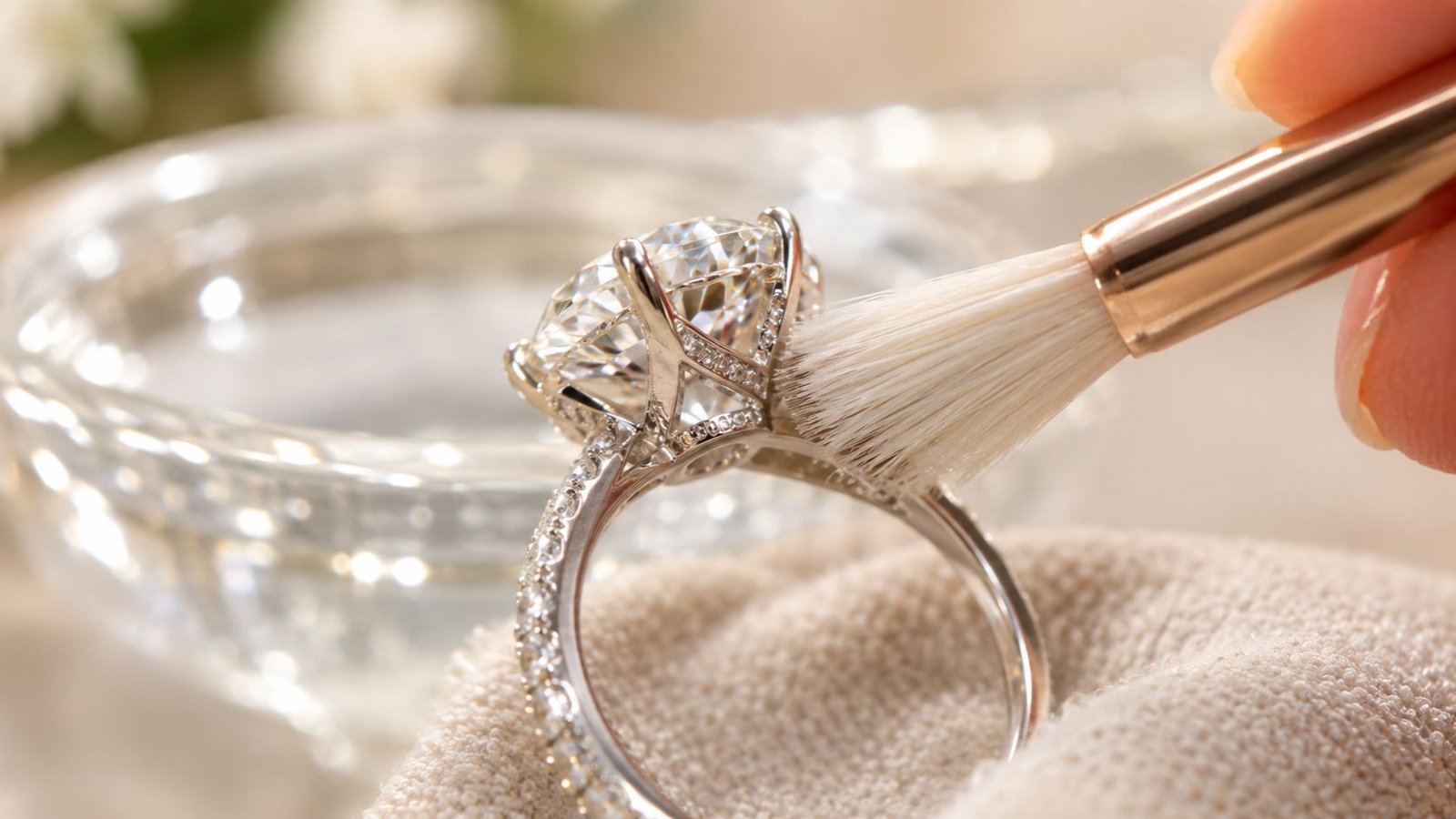
After soaking, a soft-bristled brush — a clean, unused baby toothbrush works particularly well — can be used to gently work loose any remaining residue as part of your regular diamond jewelry cleaning routine, paying particular attention to the underside of the stone and the small crevices around the setting where debris tends to accumulate most.
The key word here is gentle. There is no need to scrub forcefully; the goal is simply to dislodge material that soaking has already loosened, not to physically scour the surface. Firm scrubbing pressure is one of the most common ways well-meaning at-home cleaning accidentally stresses or bends delicate prongs over time, so a light touch consistently produces better long-term results than an aggressive one.
Step 3: Rinse Thoroughly in a Contained Area
Rinsing sounds like the simplest part of diamond jewelry cleaning, but it is also where a surprising number of rings are accidentally lost down bathroom drains every year. Always rinse over a closed sink, a bowl, or a cloth-lined surface rather than an open drain, and consider placing a fine mesh strainer over the drain as an extra precaution regardless of how careful you intend to be.
Warm, not hot, running water is sufficient to rinse away the loosened soap and debris. There is no need for anything more elaborate at this stage — the goal is simply to remove everything the soaking and brushing steps already loosened.
Step 4: Dry With a Lint-Free Cloth
Once rinsed, the final step in any good diamond jewelry cleaning routine is to pat the piece dry gently with a soft, lint-free cloth rather than a regular towel, which can occasionally snag on delicate prong work or leave small fibres caught in the setting. A microfibre cloth, the same type often used for cleaning eyeglasses, works particularly well and is worth keeping specifically for jewellery care.
Avoid air-drying jewellery on a paper towel or tissue, since both can leave small fibres behind that become trapped in the setting and are surprisingly difficult to fully remove afterward.
Step 5: Know Which Cleaning Tools to Avoid Entirely

Several commonly recommended household cleaning methods should be avoided entirely when it comes to diamond jewelry cleaning, particularly for settings with any delicate detailing. Ultrasonic cleaners, while genuinely effective at removing built-up residue, use high-frequency vibrations that can loosen already-weakened prongs or worsen small existing cracks in a setting, making them a poor choice for older jewellery or pieces that have not been professionally inspected recently. Steam cleaners carry similar risks and are best left to professional jewellers who can assess a setting’s condition first.
Household chemical cleaners — particularly anything containing chlorine bleach, ammonia in concentrated form, or abrasive cleaning agents — can damage certain metal alloys, discolour softer metals like rose gold, and in some cases even affect glue or resin sometimes used in composite settings. Toothpaste, despite being a commonly repeated home remedy, is also worth avoiding, since its mild abrasiveness, while generally safe for a diamond itself, can dull softer metal surfaces and settle into tiny setting crevices in ways that are genuinely difficult to fully clean out afterward.
Step 6: Adjust Your Approach Based on Setting Type
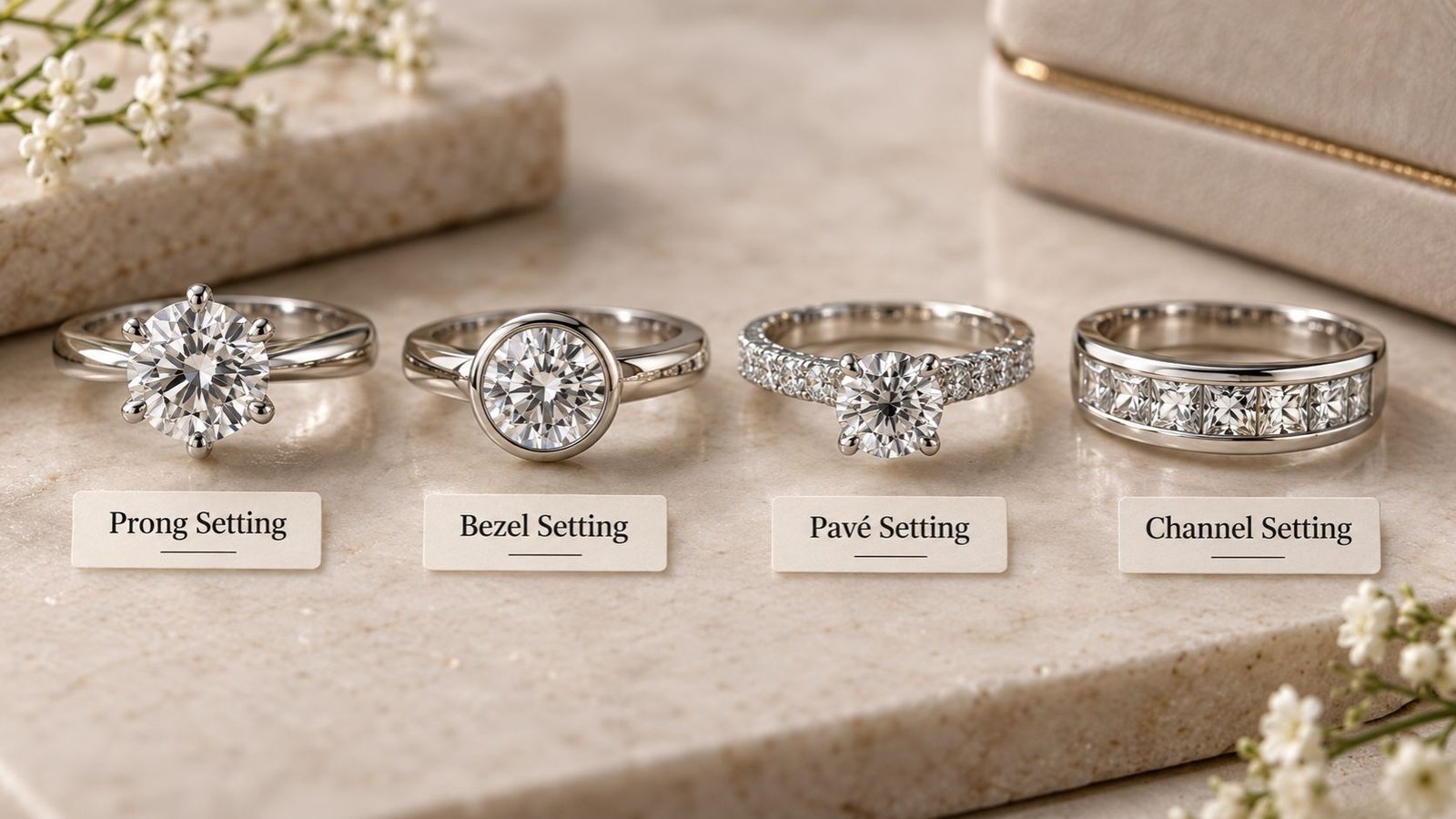
Not all settings tolerate the same handling equally well, and adjusting technique based on setting type is one of the most overlooked aspects of safe diamond jewelry cleaning.
Prong settings benefit most during diamond jewelry cleaning from the gentle soak-and-soft-brush method described above, with particular attention paid to avoiding any direct pressure on the prongs themselves during brushing.
Bezel settings, where metal fully surrounds the stone’s edge, are generally more forgiving and durable during cleaning, since there is no thin prong to bend or weaken, though the small gap between stone and metal edge still benefits from gentle brushing to remove trapped residue.
Pavé and micro-pavé settings, featuring many small stones held by correspondingly small and delicate prongs, require the gentlest handling of all. Extended soaking with minimal brushing, and specifically avoiding any scrubbing motion across the surface, helps protect the numerous small prongs from gradual weakening.
Channel settings, where stones sit within a metal channel rather than being individually pronged, tend to trap more residue than other setting types simply due to their design, making the initial soaking step particularly important, though brushing should remain light to avoid disturbing the channel’s edges.
Step 7: Build a Simple, Consistent Cleaning Routine
Diamond jewelry cleaning works best as a light, regular habit rather than an occasional deep clean tackled only once a ring starts looking visibly dull. A brief soak-and-rinse roughly every two to four weeks, depending on how frequently the piece is worn, keeps residue from building up to the point where more vigorous cleaning becomes necessary at all.
Removing rings before applying hand lotion, sunscreen, or cooking, and before activities involving heavy exposure to chlorine or saltwater, meaningfully reduces how quickly residue accumulates in the first place, cutting down on both how often cleaning is needed and how much buildup needs to be addressed each time.
When to See a Professional Instead of Cleaning at Home

Certain situations call for a professional jeweller rather than at-home diamond jewelry cleaning, regardless of how careful the technique. Any piece where a stone feels loose, where a prong appears visibly bent or worn thin, or where the setting shows any sign of physical damage should be taken to a professional for inspection before any cleaning is attempted, since agitation from even gentle cleaning could worsen an existing structural issue. Antique or vintage settings, particularly those using older mounting techniques or more delicate metalwork, also generally benefit from professional cleaning and periodic inspection rather than routine at-home handling.
Most jewellers offer complimentary or low-cost professional cleaning and prong inspection services, and having a piece checked roughly once a year is a reasonable habit regardless of how diligent your at-home cleaning routine already is, since a trained eye can catch early setting wear long before it becomes visible or obvious to the wearer. Organizations such as the Gemological Institute of America also publish general jewellery care guidance worth reviewing if you want a deeper technical understanding of diamond durability. If you’re still deciding on a setting style for a future piece, our earlier guide on choosing a center stone size covers how setting choice and stone size interact.
Common Mistakes Worth Avoiding
A few recurring mistakes account for the majority of at-home diamond jewelry cleaning problems. Using excessive force while brushing, assuming that harder scrubbing produces better results, is one of the most common and most avoidable. Cleaning over an open, unprotected drain remains a surprisingly frequent cause of lost stones and rings entirely. Reaching for whatever household chemical is closest at hand rather than sticking to mild soap and water introduces unnecessary risk for minimal additional benefit. And skipping professional inspection entirely, relying solely on at-home cleaning indefinitely, allows small setting issues to go unnoticed until they become larger, more expensive problems.
The Bottom Line
Diamond jewelry cleaning is genuinely simple at its core — warm water, mild soap, a soft brush, and a careful rinse handle the vast majority of everyday buildup safely and effectively. The real skill lies not in the cleaning itself but in respecting the setting holding the stone in place, adjusting technique based on setting type, avoiding harsh tools and chemicals, and knowing when a piece needs professional attention rather than another round of at-home care.
Because lab grown diamonds share every physical property with natural diamonds, none of this guidance changes based on where the stone came from — the diamond itself can handle almost anything. It is the setting that deserves the careful, gentle approach, and getting that part right is what keeps a piece looking brilliant and structurally sound for years of regular wear.
Frequently Asked Questions
No. Lab grown and natural diamonds share identical physical properties, so the same cleaning methods apply equally to both.
A light soak-and-rinse every two to four weeks is generally enough to prevent noticeable buildup, depending on how often the piece is worn.
It’s best avoided for pieces with delicate prongs or unknown setting condition, since vibrations can worsen existing weaknesses without warning.
It’s generally not recommended, since its mild abrasiveness can dull softer metals and settle into small setting crevices.
Avoid chlorine bleach, concentrated ammonia, and abrasive cleaning agents, all of which can damage metal settings or discolour softer alloys.
Rely mainly on soaking with minimal, very gentle brushing, since the small prongs holding pavé stones are especially delicate.
Stop cleaning it and take it to a professional jeweller for inspection before attempting any further at-home care.
Only with the drain closed or covered by a strainer — open drains are a common cause of lost stones and rings.
Removing rings before applying lotion or sunscreen, and before swimming or cooking, meaningfully slows residue buildup.
Roughly once a year is a reasonable habit, even with a careful at-home routine, since a professional can catch early setting wear.
Disclaimer: This article is intended for general informational purposes only and does not replace professional jewellery care advice. Cleaning recommendations may not be suitable for antique, vintage, or unusually delicate settings. Always consult a qualified jeweller before cleaning valuable or structurally uncertain pieces.