

How the Rise of Lab-Grown Diamonds Is Reshaping Diamond Mining Economies Around the World
For most of the last century, a handful of countries built entire national economies around a single export: natural diamonds. Botswana turned diamond revenue into one of Africa’s strongest healthcare and education systems. India’s city of Surat became the world’s cutting and polishing capital, employing hundreds of thousands of skilled workers. That foundation is now shifting. As lab-grown diamonds have moved from a niche alternative to a mainstream choice for a large share of buyers, the Diamond Mining Communities and industrial hubs that depended on natural stone production are being forced to adapt faster than almost anyone in the trade expected. This guide looks at what’s actually happening on the ground, why the causes are more layered than a single technology shift, and how these communities and companies are responding.
Why This Shift Is Happening So Quickly
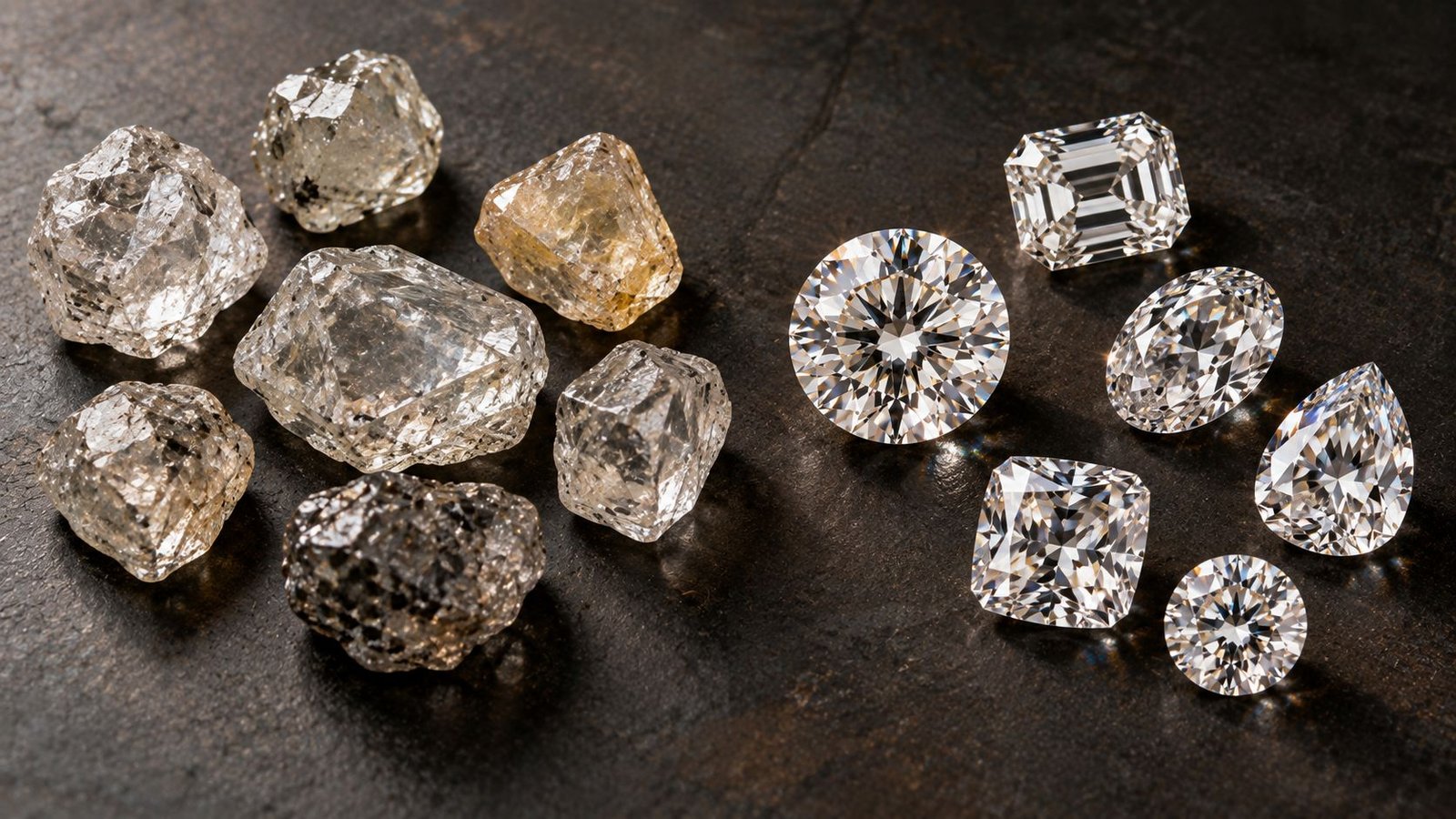
The scale of the change is easier to understand with one comparison. Lab-grown diamonds accounted for almost half of engagement ring purchases in the United States last year, up from roughly five percent in 2019, according to jewelry insurer BriteCo. That’s not a gradual trend; it’s a near-total transformation of buyer preference within a handful of years, concentrated in the single biggest market for diamond jewelry in the world.
Price is the most obvious driver. Lab-grown diamonds are chemically and physically identical to natural stones, but cost a fraction of the price at equivalent size and clarity, and that gap has continued to widen as production technology has improved. Shifting buyer values have played a role too, with younger consumers increasingly prioritizing cost-efficiency and traceability over the rarity story that has historically anchored natural diamond marketing.
What makes this different from past commodity disruptions is how concentrated the exposure is. Unlike oil or agricultural goods, where production is spread across dozens of countries with diversified economies, natural diamond mining and processing is heavily concentrated in a small number of places, several of which built deep, long-term economic and social systems around diamond revenue specifically. When demand for the underlying commodity contracts quickly, those Diamond Mining Communities feel it faster and harder than a more diversified economy would.
Botswana: A Nation Built on Diamonds Facing a New Reality

No country illustrates this shift more starkly than Botswana. Diamond exports account for roughly 80% of Botswana’s exports and about a third of government revenue, and diamond revenue more broadly makes up around one-fifth of the country’s entire GDP. That revenue built one of the strongest social safety nets on the African continent, funding free healthcare, tertiary education both at home and abroad, and infrastructure most neighboring economies couldn’t match.
The reversal has arrived quickly. Botswana’s president described the situation as no longer just an economic challenge, but a national and social existential threat, pointing to a diamond market that had reached the limits of a decades-long dependence on a single commodity. On the ground, that’s translating into longer queues at government clinics, construction firms tied to state spending laying off workers, and university students facing delayed funding increases they had been promised.
De Beers, which operates Botswana’s flagship Jwaneng and Orapa mines, has repeatedly scaled back production targets in response to weak demand. Its 2026 guidance was revised down to between 21 and 26 million carats, a drop from an earlier forecast of 26 to 29 million, continuing a pattern of cuts that began the year before. Production at Jwaneng and Orapa fell 16% year on year, while Namibia’s output dropped 7% and Canadian production fell a further 7% over the same period. Botswana’s fiscal position has tightened as a result, with projections pointing toward a fiscal deficit approaching 11% of GDP alongside rising government debt.
The government’s response has focused on extending the productive life of its existing assets rather than walking away from the industry entirely. A roughly $6 billion project is underway to extend the operational lifespan of the Jwaneng mine, reflecting a bet that Botswana’s advantage in natural diamond quality and provenance can still carry the industry through the current downturn, even as the country works in parallel on longer-term economic diversification.
Surat, India: Retooling the World’s Diamond-Cutting Capital
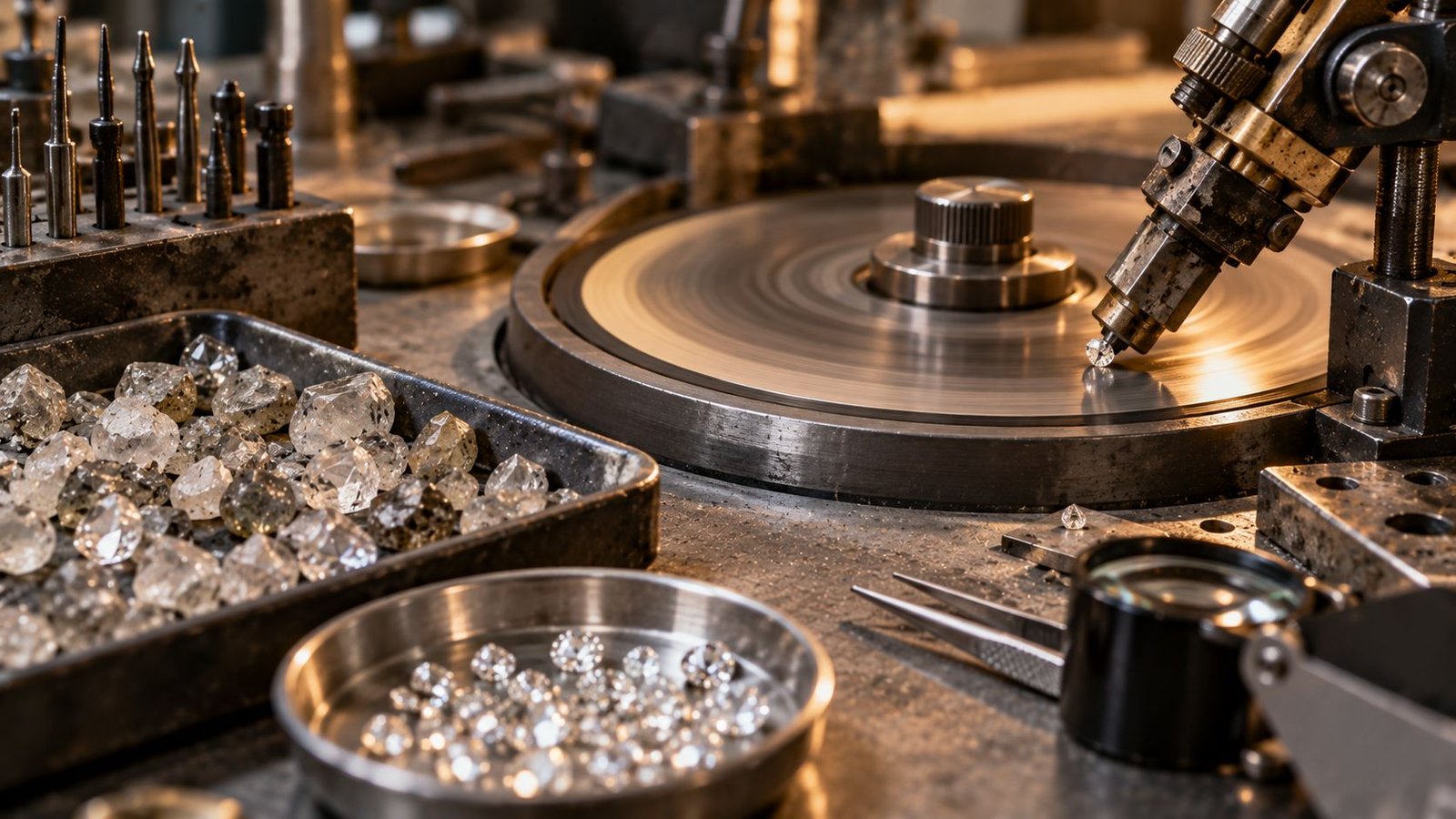
Botswana sits at the mining end of the supply chain; Surat, in India’s Gujarat state, sits at the other end. Surat cuts and polishes nearly 90% of the world’s diamonds, and the industry there employs roughly 800,000 workers in Surat alone, out of about 1.3 million diamond workers across India, spread across more than 7,000 companies concentrated mostly in Gujarat and Maharashtra.
The downturn has hit this workforce differently than it has hit Botswana, because Surat’s exposure runs through export volumes and commission-based wages rather than government royalties. India’s polished-diamond exports fell from roughly $23 billion in 2022 to about $16 billion in 2023, and were projected to decline further toward $12 billion. Because most polishers are paid per stone rather than a fixed salary, a slowdown in orders translates almost immediately into reduced household income rather than showing up first as a corporate balance sheet issue.
The human cost of this adjustment has been serious enough to draw sustained coverage from labor unions and journalists covering the region: reporting has documented a rise in worker distress during the downturn, including at least 100 reported deaths by suicide over a two-year period among Surat’s diamond cutting and polishing workforce, according to accounts gathered from local worker unions. It’s a sober reminder that a global pricing shift playing out in showroom catalogs and marketing campaigns has a very direct human dimension in the communities that do the physical work of turning rough stones into finished jewelry.
It’s worth noting that Surat’s story isn’t purely a natural-versus-lab-grown story. India has also become a major lab-grown diamond producer in its own right, now accounting for roughly 15% of global lab-grown diamond production, the second-largest share after China. Some of the same factories and workers affected by the natural diamond slowdown are simultaneously part of the industry supplying the lab-grown stones reshaping the market, which makes the transition more of a retooling process than a simple story of one technology replacing another.
It’s Not Just Lab-Grown Diamonds: A More Complex Picture
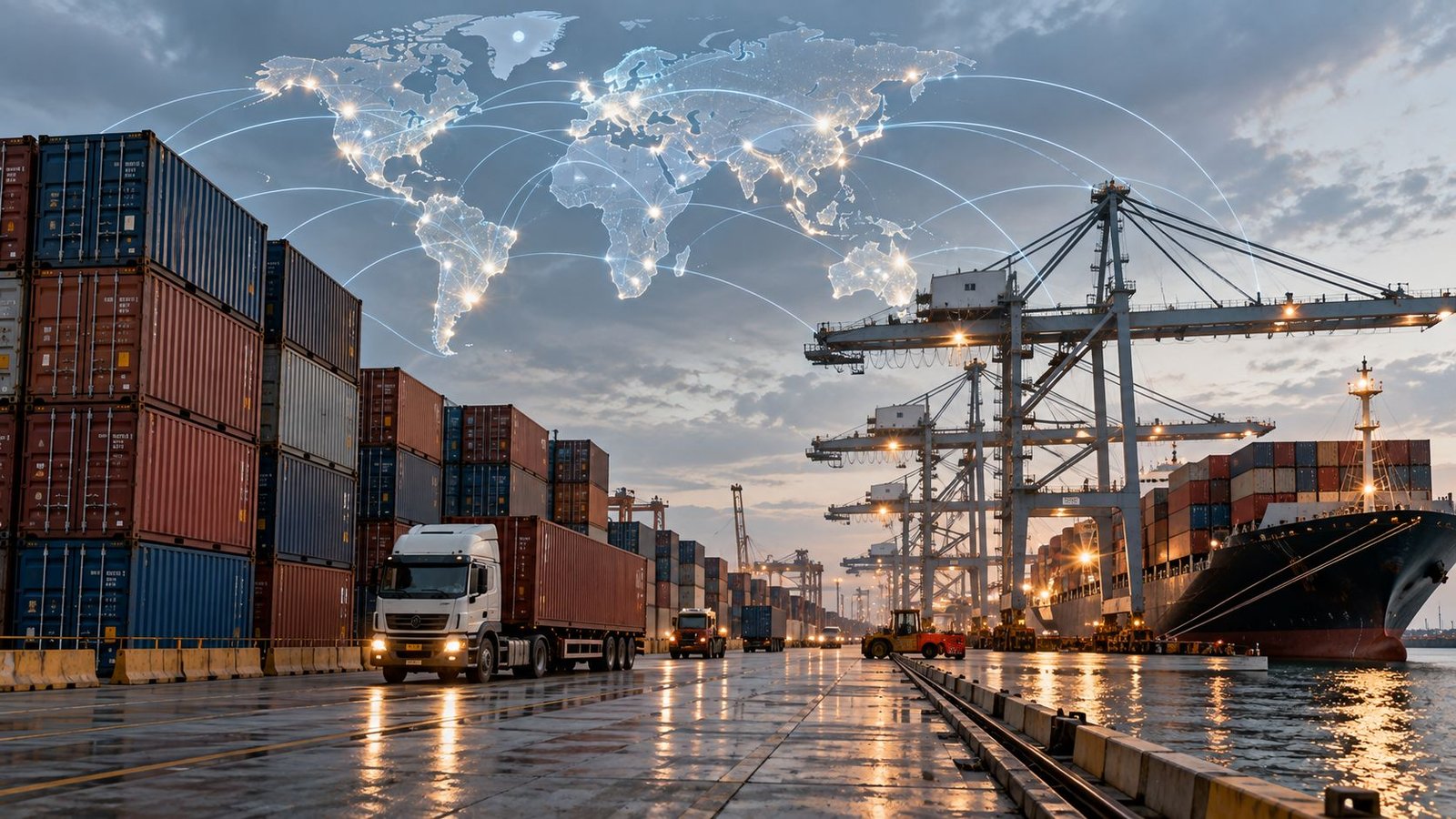
It would be an oversimplification to attribute every difficulty facing these Diamond Mining Communities to lab-grown competition alone. Several other forces have compounded the pressure at the same time. Sanctions on Russian rough diamond exports have significantly reduced global supply, since Russia has historically supplied close to 30% of the world’s natural rough diamonds, disrupting established supply chains that fed cutting centers like Surat regardless of lab-grown competition.
A prolonged luxury spending slowdown in China, historically one of the largest markets for diamond jewelry, has further depressed demand independent of any shift toward synthetic stones. Broader trade tensions, including new tariffs affecting diamond-exporting countries, have added another layer of pressure on top of changing consumer preferences. Taken together, the picture is one of several overlapping economic shocks arriving at the same time as a genuine, structural shift in consumer buying habits, rather than lab-grown diamonds acting as the sole cause of the disruption.
This distinction matters for anyone trying to understand the industry honestly. Lab-grown diamonds are a major and lasting factor reshaping demand, but treating them as the only variable oversimplifies a transition that also involves geopolitics, currency effects, and a broader luxury spending slowdown that would have created real strain in these communities regardless of how quickly synthetic diamond technology had advanced.
How Mining Nations and Companies Are Responding
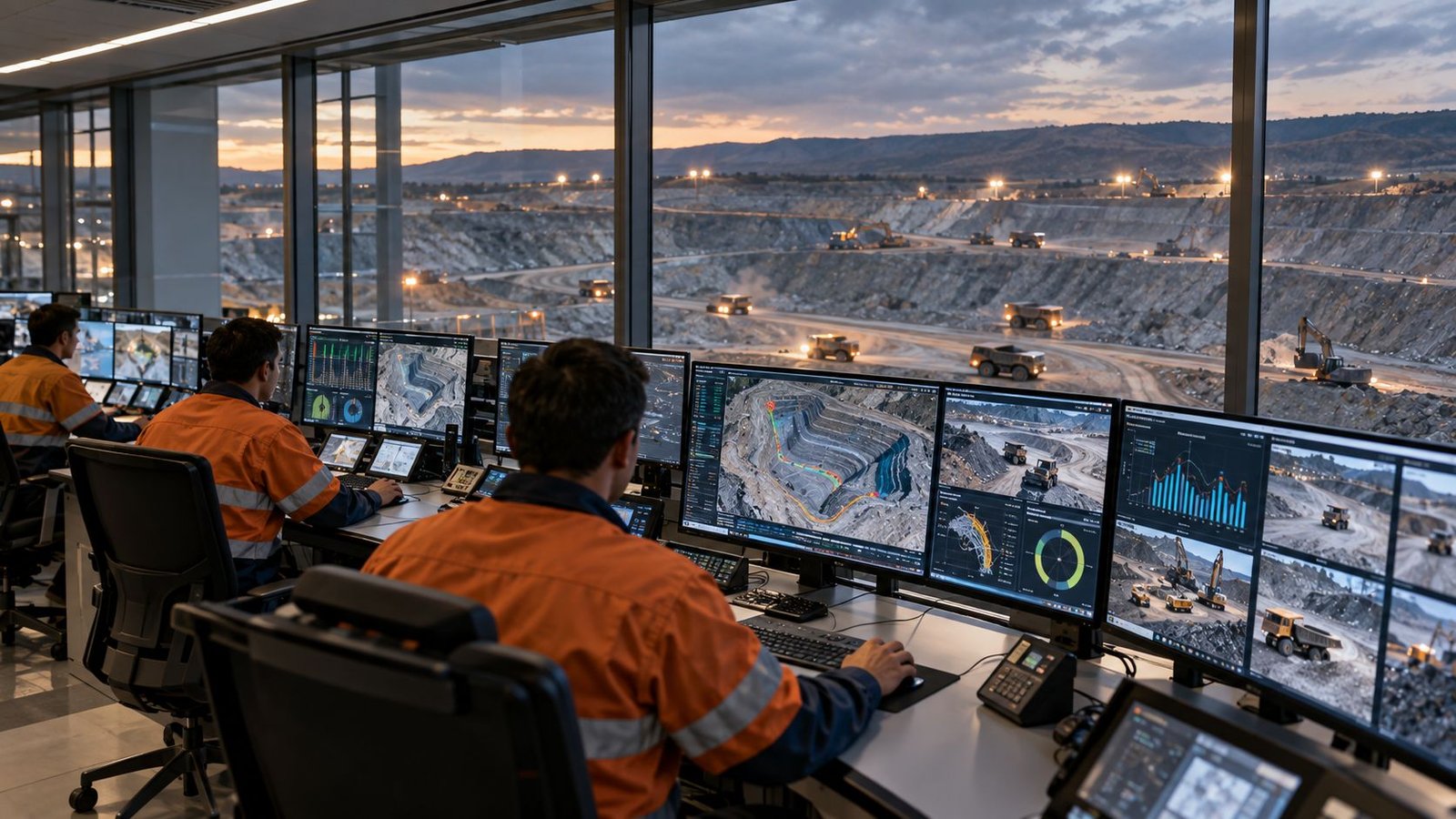
Rather than treating the shift as purely a crisis to weather, several of the most affected countries and companies have begun actively repositioning themselves. Botswana’s government has been vocal about leaning into what natural diamonds can offer that lab-grown stones structurally cannot: verified geological rarity and a documented chain of custody tied to a specific country’s development story. Marketing efforts increasingly emphasize responsible sourcing and provenance rather than competing with lab-grown diamonds purely on price, a battle natural stones are unlikely to win given the fundamental cost advantage of synthetic production.
Corporate restructuring has followed a similar logic. Anglo American’s move to spin off De Beers as a standalone entity reflects a broader recognition that natural diamond mining now needs a distinct strategy, investment profile, and risk tolerance separate from the rest of a diversified mining conglomerate. Extending the life of high-quality assets like Jwaneng, rather than opening costly new exploration projects, signals a strategy focused on defending existing high-value production rather than expanding overall output.
On the labor side, industry bodies including the World Diamond Council have placed growing emphasis on responsible business practices and worker welfare as non-negotiable parts of the industry’s future, a response partly shaped by the very real hardship reported among cutting and polishing workers in centers like Surat. Diversification beyond diamonds entirely, into sectors like tourism, agriculture, and financial services, has become a more urgent policy priority in diamond-dependent economies, even though building out those alternative sectors at the scale needed to replace diamond revenue will take years rather than months.
What This Means for Buyers Choosing Lab-Grown Diamonds

For everyday buyers, none of this changes the practical case for lab-grown diamonds: identical hardness, brilliance, and durability at a significantly lower price, with certification available from the same major labs that grade natural stones. But understanding the broader picture adds useful context to a purchase decision that many buyers previously thought of as a simple product comparison.
Buyers who want to support responsible practices across the industry, regardless of which type of diamond they choose, can look for retailers who are transparent about sourcing, whether that’s a documented lab-grown growth process or a natural stone with verified origin.
Some buyers specifically choose lab-grown diamonds for cost and traceability reasons while remaining aware of the transition happening in mining communities, and often look for a documented IGI-graded lab-grown certificate as part of that decision; others intentionally choose natural stones from producers investing visibly in worker welfare and community development. Neither choice is inherently more “correct,” and the growing availability of clear documentation on both sides of the market makes it easier than it used to be to buy with a full picture of where a stone actually came from.
Common Misconceptions
“Lab-grown diamonds are single-handedly destroying mining economies.” Lab-grown competition is a major factor, but sanctions on Russian supply, a Chinese luxury spending slowdown, and broader trade pressures have all compounded the impact at the same time.
“Every diamond-producing country is affected equally.” Impact varies significantly by country and by position in the supply chain; Botswana’s exposure runs through government revenue and mining output, while Surat’s runs through export volumes and commission-based cutting and polishing wages.
“The industry is simply disappearing.” Major producers and processing hubs are actively restructuring, extending the life of high-value assets, and repositioning around provenance and responsible sourcing rather than shutting down entirely.
“Countries that produce lab-grown diamonds aren’t affected by the natural diamond downturn.” India is a major example of both being true at once, ranking as the world’s second-largest lab-grown diamond producer while its natural diamond cutting and polishing sector faces significant strain.
“Buying lab-grown means you’re not supporting any mining community.” Many lab-grown diamond producers, including major hubs in India, employ large numbers of skilled workers who came from or still work alongside the natural diamond trade.
A Balanced Way to Think About Your Next Diamond Purchase
Start by separating the product decision from the industry-level story. Lab-grown and natural diamonds remain identical in hardness, brilliance, and day-to-day wear, so the choice between them can still come down to budget, personal preference, and whatever documentation matters most to you as a buyer.
If sourcing and community impact matter to your decision, ask specifically about it rather than assuming either category is automatically more or less responsible. Retailers working with lab-grown stones can usually explain where and how their diamonds were grown; retailers working with natural stones can usually speak to mine-level certification and any community investment programs tied to their supply chain.
Recognize that this is an industry in the middle of a genuine structural transition, not a settled situation. Prices, sourcing practices, and even which countries dominate production are likely to keep shifting over the next several years, so treating any single article or dataset as the final word on where things stand is less useful than checking current sourcing information at the time you actually make a purchase.
Final Thoughts
The rise of lab-grown diamonds has done more than change what sits in a jewelry case; it’s reshaping the economic foundations of Diamond Mining Communities that spent decades building their futures around a single natural resource. Botswana’s government finances, Surat’s cutting and polishing workforce, and mining operations across several other countries are all navigating a transition that’s proving faster and more difficult than many expected. At the same time, the response from governments, major mining companies, and industry bodies shows an industry actively adapting rather than simply absorbing the impact, whether through extending high-value assets, diversifying national economies, or investing more visibly in worker welfare. Understanding this fuller picture doesn’t have to complicate a diamond purchase decision, but it does make for a more informed one.
Frequently Asked Questions
Disclaimer: Economic conditions, production figures, and industry responses referenced in this article reflect reporting available at the time of writing and are subject to change as market conditions evolve. This article is intended for general informational purposes and does not constitute financial, investment, or policy advice.