

Diamond Parcel Guide: 7 Smart Terms Every Buyer Should Know
Anyone who opens a wholesale diamond listing for the first time tends to have the same reaction: the words look familiar, yet the meaning is slippery. Melee, calibrated, loose, sorted, assorted, sieve, lot. Each one sounds simple enough on its own, but together they form a small private language, and a buyer who misreads even one of those words can end up paying for something that looks different from what they pictured. A diamond parcel is the place where that language matters most, because a parcel is not one stone with one certificate. It is a group of many stones sold together, and the description attached to it is the only real promise about what will arrive. This guide is written to take the mystery out of that description. Rather than simply listing definitions, we will walk through seven practical terms, explain how each one shows up in real listings, and show you how to combine them into a single clear picture of what you are buying. Whether you are a jewellery designer sourcing stones for a collection, a small retailer building stock for pavé work, or simply a curious shopper who wants to understand how a tennis bracelet gets its sparkle, you will finish with a confident working vocabulary. Think of this diamond parcel guide as a translation manual. By the end, a line such as “calibrated round melee, sorted, loose, 1.30 mm” will read like plain English instead of a puzzle. A diamond parcel is a quantity of diamonds packaged and sold together as one unit, usually described by total weight instead of by individual stone. Instead of a single diamond with its own report, you receive a group, often counted in the dozens, hundreds or even thousands of pieces, and the seller describes the group by shared traits: shape, size range, colour range, clarity range, and how the stones were prepared. The reason parcels exist is efficiency. Small stones are far too numerous to certify one by one, and it would make no economic sense to issue an individual report for a diamond the size of a grain of sand. So the trade groups them, describes the group with a standard vocabulary, and sells them by the carat or by the piece. Every term you meet in a listing is really an answer to one question: how similar are the stones inside this parcel to one another, and how closely do they match what I need? Once you see it that way, the vocabulary stops feeling like jargon and starts feeling like a checklist. Some words describe size, some describe preparation, some describe quality, and some describe the state the stones arrive in. Let’s go through them one by one. Melee is the word for small diamonds, generally those weighing well under a quarter of a carat, with many sellers using a ceiling of roughly 0.20 carat. The exact cut-off is not universal, and different dealers draw the line in slightly different places, which is why it always pays to read the size range in the listing rather than relying on the word alone. Melee is the workhorse of the jewellery world. These small stones are what surround a centre diamond in a halo, line the shoulders of an engagement ring, form the continuous row of a tennis bracelet, and create the glittering surface of pavé and cluster designs. A single finished piece can contain dozens of them, and because they are so small, quality control has to happen at the diamond parcel level. Within the melee family, you will often see finer subdivisions. Very tiny stones are sometimes called single cuts or full cuts, depending on how many facets they carry, and the smallest sizes are sometimes described with even more specific trade terms. What matters for a buyer is simple: when a diamond parcel is labelled melee, you should expect small stones sold in bulk, and you should immediately look for the millimetre range or the average weight per stone, since those details tell you what the stones will actually look like when set. A common beginner mistake is to assume that melee means low quality. It does not. Melee can be exceptionally well cut, beautifully white and very clean. The word describes size, not grade. Quality is described by other terms on our list, which we will reach shortly. If melee describes how small the stones are, calibrated describes how exact they are. A calibrated diamond is cut to a precise, standardised dimension so that it fits a matching setting without adjustment. Calibrated stones are measured in millimetres, and a properly calibrated diamond parcel contains stones that are all extremely close to the same measurement. Why does that matter? Imagine a jeweller preparing a bracelet with a hundred small stones set in a straight line. If each stone differs even slightly in diameter, the row will look uneven, the settings will not hold cleanly, and the finished piece will show gaps or crowding. Calibration solves that problem before it starts. Every stone drops into its seat as expected, which saves labour, reduces breakage and protects the look of the finished design. Calibrated stones also make ordering predictable. A designer who knows that a particular pendant uses 1.50 mm rounds can order that exact size again next season and receive stones that behave the same way. Consistency across repeat orders is one of the quiet advantages of buying calibrated. There is a trade-off worth knowing. To achieve exact dimensions, a cutter sometimes sacrifices a little natural weight or ideal proportion, so calibrated stones can occasionally carry slightly different depth or table figures than stones cut purely to maximise carat weight. For small pavé stones this is rarely visible, but it explains why calibrated parcels are usually judged by how they look when set rather than by weight alone. The word loose is the easiest term on our list, yet it deserves a moment. A loose diamond is simply one that has not been mounted in jewellery. In a diamond parcel, loose means the stones arrive individually, unset and free-moving, typically in a sealed paper packet or a small container. Buying loose gives the greatest flexibility. The designer or manufacturer chooses the metal, the setting style, the layout and the finishing, and can inspect each stone before it goes into a piece. Loose diamond parcels are also the natural starting point for custom work, since nothing about the stones has been decided for you. The word loose is often paired with other terms in a single line, as in “loose calibrated melee.” When you read a combination like that, break it into parts. Loose tells you the state, calibrated tells you the precision and melee tells you the size class. Each word answers a different question, and none of them contradicts another. There is one practical point to keep in mind. Because loose stones are unset, they should be handled with care and checked on arrival. A buyer who receives a parcel should count the pieces, verify the total weight on a calibrated scale and compare a sample against the description before signing off. Doing this promptly protects both sides and keeps disputes short. Sorted is where a diamond parcel starts to reveal the effort that went into preparing it. A sorted parcel has been separated into groups so that the stones inside share a defined set of characteristics. Depending on the seller, sorting can cover size, shape, colour, clarity or a combination of these. The tighter the sorting, the more uniform the stones will look next to one another. The opposite idea is assorted, and the two words are easy to confuse. An assorted parcel contains a mixture: several sizes, sometimes several colours, sometimes a range of clarity levels, all packed together. Assorted parcels are usually priced lower per carat because the buyer takes on the work of sorting, and they suit manufacturers who have their own grading process or who can use a wide spread of stones. Neither approach is better in every case. A jeweller producing a matched row for a bracelet needs sorted stones, because even small variations in body colour would be noticeable across a long line. A workshop that makes many different pieces from varied stock may find assorted parcels more economical. The skill lies in matching the parcel to the job. When a listing says sorted, always ask sorted by what. Sorted by size only is very different from sorted by size, colour and clarity. A trustworthy seller will state the sorting criteria plainly, and if the listing does not, a short question before purchase is entirely reasonable. Size is the single most important factor in a melee parcel, and there are three common ways to express it. Understanding all three prevents costly confusion. The first is millimetre size, the measurement across the stone. This is the most intuitive and the most useful for design, because it tells you exactly how large the stone will look in a setting. The second is sieve size. In the trade, small stones are passed through sieves with holes of graduated sizes, and a stone that stays on a given sieve is assigned that number. It is an old, reliable system that lets sellers group stones physically rather than by measuring each one. The third is carat weight, either as an average weight per stone or as a total for the parcel. These measures relate to one another but do not translate perfectly, because two stones of the same diameter can weigh slightly different amounts depending on depth and proportion. That is why a careful buyer looks at at least two of the three in every listing. A diamond parcel described only by total carat weight, with no millimetre range or piece count, leaves too much unanswered. Total weight tells you how much material you receive, not how many stones or how big each one is. A helpful habit is to work out the average weight per stone yourself. Divide the total carat weight by the number of pieces. If the result does not match the size claimed in the description, something is off, and it is worth asking before you buy. Individual large diamonds are graded on exact colour and clarity scales, but a diamond parcel is graded by range. You will see notations that group several adjacent grades together, such as a band covering the near-colourless letters or a band covering slightly included clarity grades. The range tells you the worst and best you can expect inside the parcel. Reading ranges correctly is crucial. A narrow range means the stones are more uniform, and you can expect them to look alike when set together. A wide range means more variation, and the price usually reflects that. Neither is wrong; they simply serve different purposes. For lab grown stones, the same grading language is used, and many buyers find that lab grown parcels offer unusually consistent colour and clarity, since growing conditions can be controlled. That consistency is a genuine advantage when matching stones across a long row. Remember that grading language for small stones is often more relaxed than for large certified diamonds. Small melee is commonly judged by eye and by sample rather than by full laboratory reports on every piece. If your project demands strict quality control, ask whether the seller offers a sample or a sealed report that covers a representative portion of the parcel. For a deeper understanding of the grading scales themselves, the educational resources published by the Gemological Institute of America explain how colour and clarity are assessed in the trade. The final term on our list is the vocabulary of quantity. You will often see the words lot and parcel used almost interchangeably, and in everyday trade conversation they are close cousins. A diamond parcel is a group of diamonds sold together. A lot is often a group offered in a specific sale, sometimes with defined quantities set by the seller. In practice, the distinction is small, and what matters is that both describe multiple stones sold as a unit. Set against this is the single stone, which carries its own individual identity, usually with its own report. The pricing logic is completely different. A single stone is valued on its own particular traits, whereas a parcel is valued as a group with shared characteristics and an averaged price per carat. This has a practical consequence. When you buy a single stone, you inspect that exact diamond. When you buy a diamond parcel, you inspect a representative sample and trust that the rest matches. That trust is why the description, the seller’s reputation and the return policy all carry so much weight in parcel buying. Now that the seven terms are clear, let’s put them together. Imagine you see the following line: “Round melee, calibrated, sorted, loose, 1.30 mm, total 5.00 carats, near-colourless, clean to slightly included.” Read it in layers. Round is the shape. Melee is the size class. Calibrated says the stones match a precise measurement. Sorted says they were grouped by shared traits. Loose says they are unset. 1.30 mm gives the diameter. Five carats is the total weight. The colour and clarity ranges describe quality. Together, those words paint a full picture of a diamond parcel you could confidently plan a design around. Now test the description with a quick calculation. A 1.30 mm round diamond weighs roughly a hundredth of a carat, so a five carat parcel of that size would hold several hundred stones. If the seller claims a piece count wildly different from that estimate, ask for clarification. Small checks like this are the fastest way to catch errors and to spot listings that were written carelessly. Finally, look for what is missing. A complete description covers shape, size, colour and clarity range, preparation, condition and total weight or count. If two or three of those are absent, the listing is asking you to guess, and a diamond parcel bought on guesswork rarely delivers a happy surprise. Lab grown diamonds have changed the parcel market in a notable way. Because growth conditions are controlled, lab grown melee tends to arrive with very consistent colour and clarity, which makes sorted and calibrated parcels especially easy to produce. For designers who need dozens of identical stones for a continuous row, that consistency is precious. Lab grown parcels also bring accessible pricing, which allows more ambitious designs. A full tennis bracelet or a heavily pavéd band can be difficult to justify in natural stones for many budgets, whereas lab grown melee makes those designs achievable without compromising on visual impact. The same vocabulary applies. Melee, calibrated, loose and sorted mean exactly the same thing whether the stones are natural or lab grown, so everything you have learned here transfers directly. The only additional point is disclosure: a reputable seller states clearly that the stones are lab grown, and describes any treatment or growth method accurately, so that there is never any ambiguity about origin. If you would like to keep exploring the subject, our library of buyer guides at the Mira Art Collection blog covers many related topics in the same plain language. Understanding where the stones go helps you choose the right parcel. In a tennis bracelet, a uniform row demands calibrated and tightly sorted stones, because any variation shows immediately along the line. In a halo ring, the small surrounding stones must match the centre stone in colour so that the whole piece reads as one glowing unit. In pavé work, where hundreds of stones are set close together, calibration and sorting determine how smooth the surface looks. Cluster designs and scattered star settings are more forgiving, and a less strictly sorted parcel may work perfectly well there. Even in those cases, however, the stones should be checked for damage such as chips and abraded edges before setting, because small flaws multiply when stones are packed closely. Matching the diamond parcel to the piece saves money and prevents disappointment. Paying for very tight sorting on a design that will never show it is wasteful, while saving money on an assorted parcel for a precision row is a false economy. Several errors appear again and again when people buy a diamond parcel. The first is judging a parcel by price per carat alone. A lower price often reflects a wider spread of size, colour or clarity, so the comparison is only fair when the descriptions match closely. The second is ignoring the piece count. Two parcels of the same total weight can hold very different numbers of stones, and the number you need depends on your design. The third is skipping the sample or the return policy. A trustworthy seller welcomes questions about both. Vague answers are a signal to slow down. The fourth is assuming every seller uses the words identically. The trade has broad agreement on these terms, but small differences exist, especially around the melee size ceiling and the meaning of sorted. When in doubt, ask for the criteria in writing. The fifth is forgetting to verify on arrival. Count the pieces, weigh the parcel and inspect a sample straight away, while any issue can still be resolved quickly. Before you commit to any purchase, run through a short list. Confirm the shape and the millimetre range. Confirm whether the stones are calibrated. Confirm how they were sorted and by what criteria. Confirm the colour and clarity ranges. Confirm that the stones are loose, and whether they arrive in a sealed packet. Confirm the total weight and the piece count. Confirm the origin, natural or lab grown. Finally, confirm the return and inspection policy. If a seller can answer all of those points clearly and promptly, you have found a source worth building a relationship with. Good suppliers understand that repeat business depends on parcels that match their descriptions every time, and they are happy to be specific. The language of diamond parcels is not difficult once you see the logic behind it. Melee describes small size. Calibrated describes exact dimension. Loose describes the unset state. Sorted describes grouping by shared traits. Sieve size, colour and clarity ranges, and the difference between a lot, a parcel and a single stone fill in the rest of the picture. Put them together, and every listing becomes a clear set of answers instead of a puzzle. The next time you meet a line full of trade vocabulary, read it layer by layer, run a quick calculation, and ask about anything that is missing. With that habit, you will choose the right stones for the right design, avoid the common traps and enjoy the process of buying diamonds in bulk with far more confidence. Disclaimer: This article is intended for general informational purposes only and reflects general industry observations as of 2026. Terminology, size limits and grading practices vary by seller and region. Always confirm specifications, pricing and return terms directly with your chosen supplier before purchasing.What Exactly Is a Diamond Parcel?

Term 1: Melee, the Small Stones That Do the Big Work

Term 2: Calibrated, Where Precision Meets Practicality
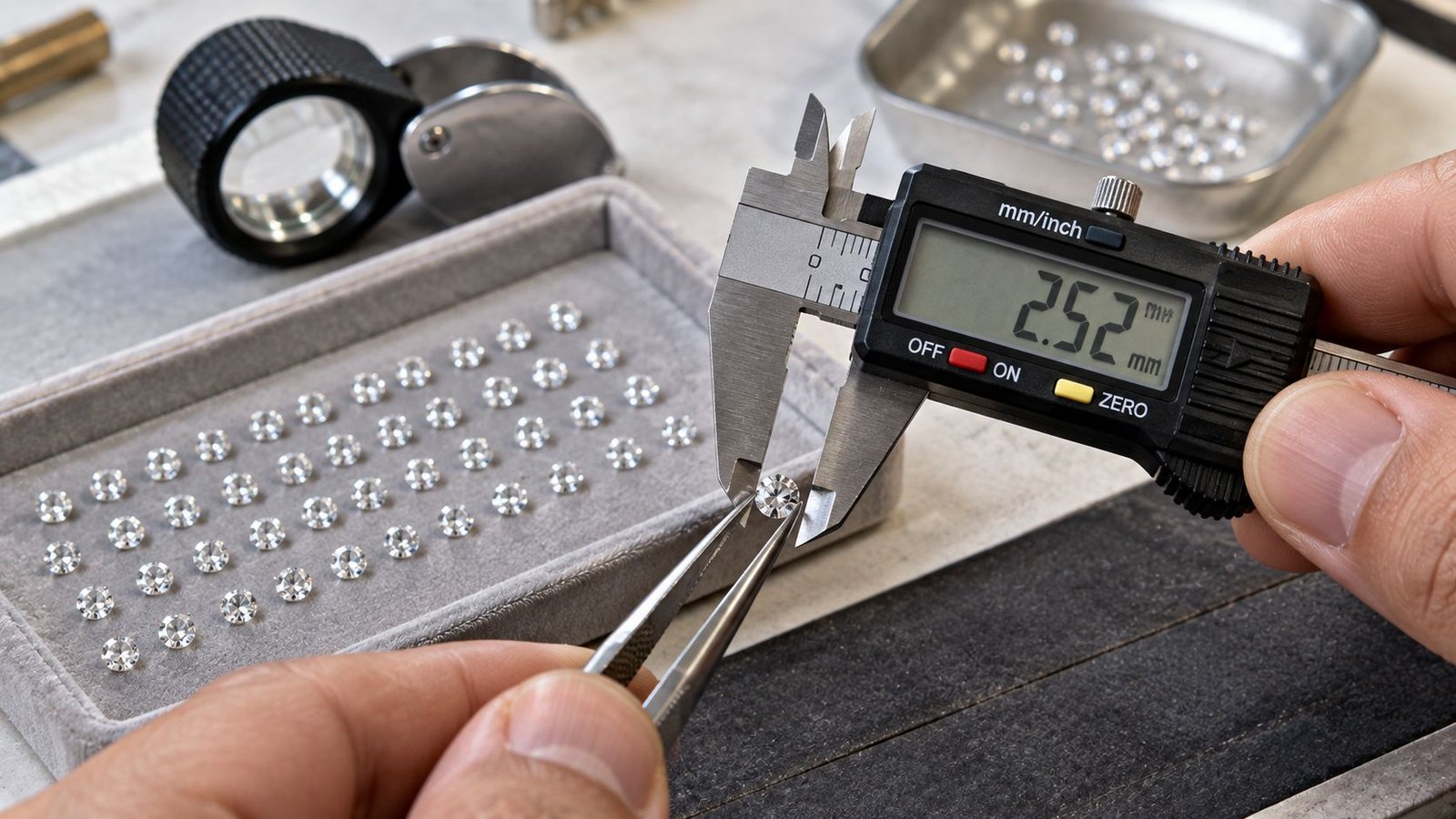
Term 3: Loose, Meaning Unset and Ready to Use
Term 4: Sorted, and How It Differs From Assorted

Term 5: Sieve Size, Millimetres and Carat Weight

Term 6: Colour and Clarity Ranges
Term 7: Lot, Parcel and Single Stone
How to Read a Diamond Parcel Description, Step by Step
Lab Grown Diamond Parcels: A Modern Advantage
Where Melee Parcels End Up in Finished Jewellery
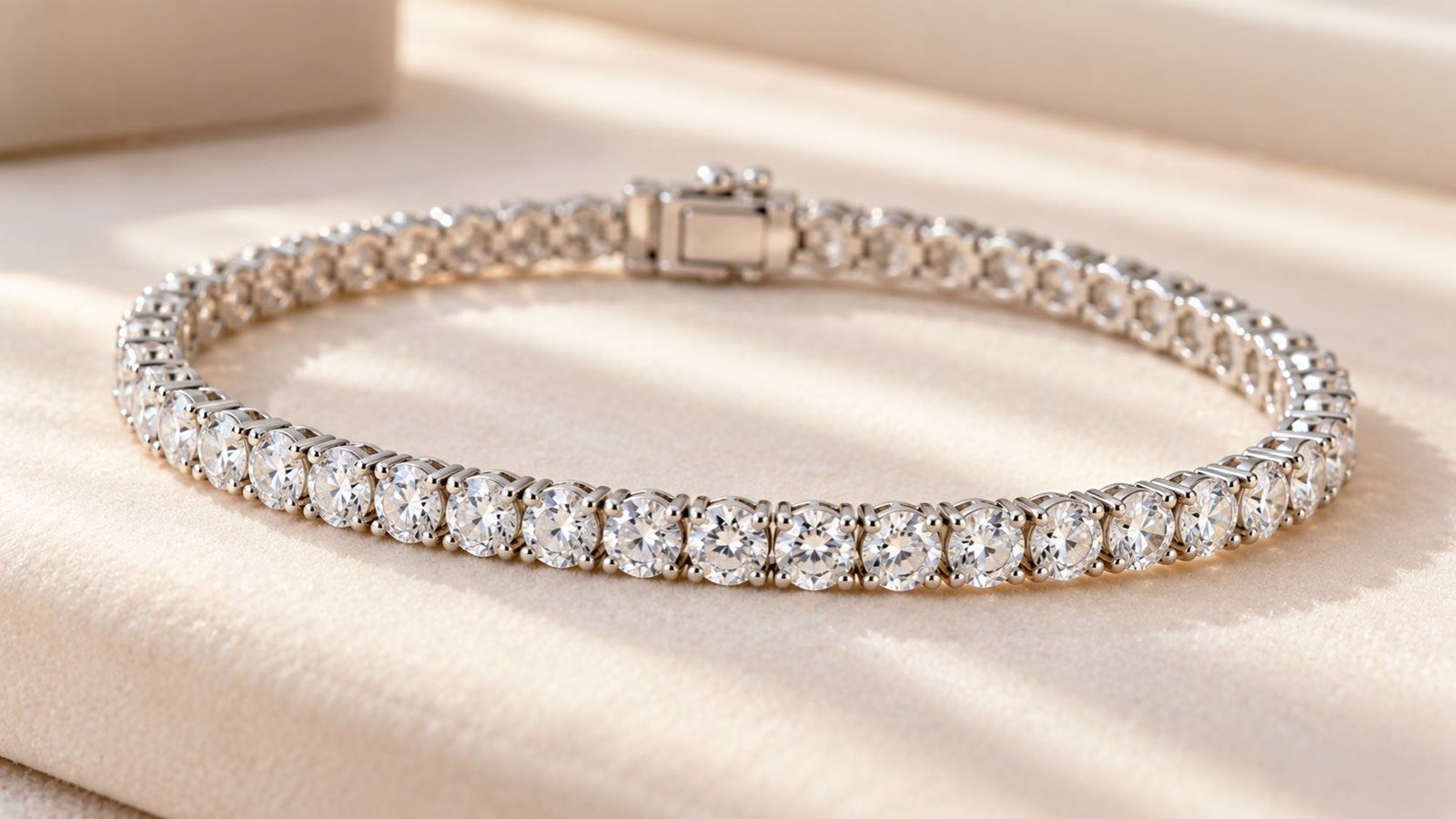
Common Mistakes Buyers Make With Parcels
A Practical Checklist Before You Order
The Bottom Line
Frequently Asked Questions