
Are Lab Grown Diamonds vs Natural Diamond Worth the Price Difference in 2026
If you have recently stepped into a jewelry showroom, you have likely noticed something striking: two rings sitting side by side, one carrying a price tag four times higher than the other, and both containing stones that look completely identical under the display lights.
That is exactly why the question of lab grown diamonds vs natural diamond value has become the most searched fine jewelry topic of 2026 — and why understanding the lab grown diamonds vs natural diamond difference matters before you spend a single dollar — and it is no longer a niche industry conversation. It has become the defining question for today’s engagement ring buyer, fine jewelry collector, and anyone thinking carefully about how luxury spending intersects with long-term financial health.
This guide cuts through the marketing noise on both sides and gives you a clear, honest picture of how these two stones actually behave — in your ring, in your wallet, and across decades.

What Actually Makes Lab Grown Diamonds vs Natural Diamond Different?
Before we talk money, let us settle a foundational misconception that floats around consumer forums constantly: lab-grown diamonds are not fake diamonds. They are not cubic zirconia (zirconium dioxide) or moissanite (silicon carbide). They are real diamonds in every measurable sense.
| Property | Natural Diamond | Lab-Grown Diamond |
| Chemical Composition | Pure Carbon Crystal | Pure Carbon Crystal |
| Hardness (Mohs Scale) | 10 — Maximum | 10 — Maximum |
| Refractive Index | 2.417 | 2.417 |
| Brilliance & Fire | Full | Full |
| Crystal Structure | Isometric-Hexoctahedral | Isometric-Hexoctahedral |
| Origin | Earth’s Mantle | Plasma or Pressure Reactor |
Both stone types receive official grading reports from respected institutions like the GIA (Gemological Institute of America) and IGI (International Gemological Institute), evaluated on the same 4Cs framework: Cut, Color, Clarity, and Carat. A trained gemologist using a standard loupe or even a microscope cannot distinguish one from the other by sight alone.
The material is identical. The market behavior, however, is a completely different story.
How Lab Grown Diamonds Are Made — and Why It Changes Their Value
Understanding the price trajectory of lab grown diamonds vs natural diamond requires understanding one key thing: lab-grown diamonds are a technology product.
Two primary methods are used to create them. The first is High-Pressure High-Temperature (HPHT), which uses industrial hydraulic presses to replicate the extreme heat and pressure conditions found roughly 100 miles beneath the Earth’s surface, forcing carbon seeds to crystallize. The second is Chemical Vapor Deposition (CVD), where a carbon-rich gas mixture is converted into plasma inside a reactor chamber, causing pure carbon atoms to gradually build up into a crystal structure, layer by atomic layer.
Because these processes live inside a factory rather than inside the Earth, they follow the same economic logic as every other manufactured technology. When flat-screen televisions first launched, they were expensive and rare. As production efficiency scaled globally, costs plummeted. The same trajectory is playing out with lab diamonds.
In 2016, a comparable lab-grown diamond sold for roughly 10–15% less than a mined equivalent. By 2020, that gap widened to around 35%. Today, lab-grown diamonds routinely retail at 80–90% below the price of a comparable natural stone — and that curve is still pointing downward as manufacturers in India, China, and the United States continue to expand and optimize their output.
Lab Grown Diamonds vs Natural Diamond: 2026 Pricing Trends and Market Data
The pricing gap between lab grown diamonds vs natural diamond options has never been wider — and 2026 is proving to be a pivotal year for both markets.
Lab-Grown Diamond Pricing in 2026
The deflationary trend in lab-grown diamond pricing has not slowed. In fact, it has accelerated. As of 2026, a well-cut 1-carat lab-grown diamond with VS1 clarity and G color can be purchased from reputable retailers for as little as $300–$600 — a price point that would have seemed impossible even three years ago. A comparable 2-carat stone in the same quality range typically falls between $900 and $1,800 depending on the retailer and certification.
Several factors are driving prices even lower this year. Indian manufacturing hubs — particularly in Surat — have dramatically increased CVD reactor output. Chinese producers have similarly scaled, and US-based lab diamond companies are competing aggressively on price to capture market share. The combined effect is a global supply glut that shows no sign of reversing.
What this means practically: if you purchased a lab-grown diamond just two or three years ago, a comparable stone today costs significantly less. This reinforces the core financial argument that lab-grown diamonds should not be viewed as appreciating assets — the market itself is actively working against that possibility.
Natural Diamond Pricing in 2026
Natural diamond pricing tells a different story. Wholesale rough diamond prices from major producers like De Beers and ALROSA have remained relatively stable, with polished natural diamond retail prices holding firm or edging slightly upward in the 1–3 carat range due to tightening supply from aging mines.
The most notable 2026 trend in the natural diamond market is the growing premium on certified origin. Stones with documented Canadian, Botswanan, or Australian provenance are commanding increasing premiums from buyers who prioritize full supply chain transparency. A GIA-certified 1-carat natural diamond in the G/VS2 range currently retails for approximately $4,500–$6,500 depending on cut grade and market region.
Additionally, fancy colored natural diamonds — particularly yellows, blues, and the increasingly rare pinks — have seen significant price appreciation as mine closures permanently reduce supply of these already scarce stones.
The 2026 Price Gap at a Glance
| Stone Type | 1-Carat (G, VS2) | 2-Carat (G, VS1) |
| Lab-Grown Diamond | $300 – $600 | $900 – $1,800 |
| Natural Mined Diamond | $4,500 – $6,500 | $14,000 – $22,000 |
| Price Difference | ~90% cheaper | ~88–92% cheaper |
This table makes the core lab grown diamonds vs natural diamond consumer decision stark. The visual product is effectively identical. The financial product is completely different. Where you land on that trade-off defines which stone is right for you.
The Resale Reality: Where Lab Grown Diamonds vs Natural Diamond Truly Diverge
This is where the financial picture becomes impossible to ignore.
Natural Diamond Secondary Market
A natural diamond purchased today retains a measurable floor value on the resale market. While you will rarely recover the full retail price — which includes jeweler markup, taxes, and overhead — a well-documented natural stone can typically be liquidated for 30–55% of its original retail price at estate dealers, auction houses, or certified buyers, even decades later. That floor exists because global mining output is declining and geological supply is finite.
Lab-Grown Diamond Secondary Market
Walk into most jewelry dealers or estate buyers today with a pre-owned lab-grown diamond and the offer you receive will likely be close to zero. This is not sentimental bias. It is basic wholesale economics: any dealer can order a brand-new, flawless lab-grown stone directly from a manufacturer at a very low wholesale price. There is no logical incentive for them to buy your used stone when pristine inventory is available on demand at minimal cost.
The practical takeaway is this: purchasing a lab-grown diamond ring should be treated the way you treat purchasing an appliance, a vehicle, or a consumer electronics device. It delivers immediate utility and genuine daily enjoyment, but it holds no meaningful resale equity. It is a consumption expenditure, not a capital asset.
The Geology Behind Natural Diamond Scarcity
Natural diamonds were formed between one and three billion years ago, deep inside the Earth during its early geological history. They were carried to the surface only through rare explosive volcanic events — narrow conduits called kimberlite pipes — and only a small fraction of what erupted ever qualified as gem-quality rough.
No significant new kimberlite deposits have been discovered in recent decades. Several of the world’s most productive mines have permanently closed due to resource exhaustion, including the famous Argyle mine in Australia, which supplied over 90% of the world’s rare pink diamonds before shutting down in 2020. Global mined diamond output has been on a long-term structural decline.
This is why a natural diamond maintains a price floor that a laboratory product simply cannot replicate. The Earth cannot be scaled. A factory can.
The Financial Opportunity Cost Calculation
Modern buyers are running sharp math on the lab grown diamonds vs natural diamond decision — and it reveals a genuinely interesting financial trade-off.
Take a standard 2-carat engagement ring scenario:
Path A — Natural Diamond
- Purchase price: approximately $8,000
- 30 years later: retains roughly $4,000–$6,000 in secondary market value
- Result: capital is preserved but locked entirely in a non-earning asset
Path B — Lab-Grown Diamond
- Purchase price: approximately $1,500 for an optically identical stone
- Freed capital: $6,500 available for investment
- 30 years later (at a 7.5% average annual return): that $6,500 compounds to approximately $57,500
- Result: the ring itself is worth near-zero, but the freed capital generates substantial independent wealth
The formula is straightforward:
A = P(1 + r)^t Where P = $6,500 | r = 0.075 | t = 30 years → A ≈ $57,556
This is the core reason the lab grown diamonds vs natural diamond debate has become a financial planning conversation for younger buyers, not just a jewelry preference. Choosing the lab option does not mean settling for less. It means making a deliberate decision to accept zero resale equity on the ring itself in exchange for significantly greater financial freedom everywhere else.
The Ethical and Environmental Picture
Many shoppers approach the lab grown diamonds vs natural diamond comparison expecting a clear ethical winner. The truth is more nuanced.
Lab-Grown Diamonds Lab-grown stones completely eliminate the risk of sourcing from conflict zones — a genuine concern that plagued parts of the mined diamond industry for decades. However, growing diamonds requires enormous, continuous energy input. Reactors must operate at temperatures exceeding those found on the sun’s surface for weeks at a time. If the facility draws from a coal-heavy power grid, the carbon footprint of the process can be significant. To their credit, leading lab diamond producers are increasingly certifying climate-neutral operations through partnerships with solar and hydroelectric energy suppliers.
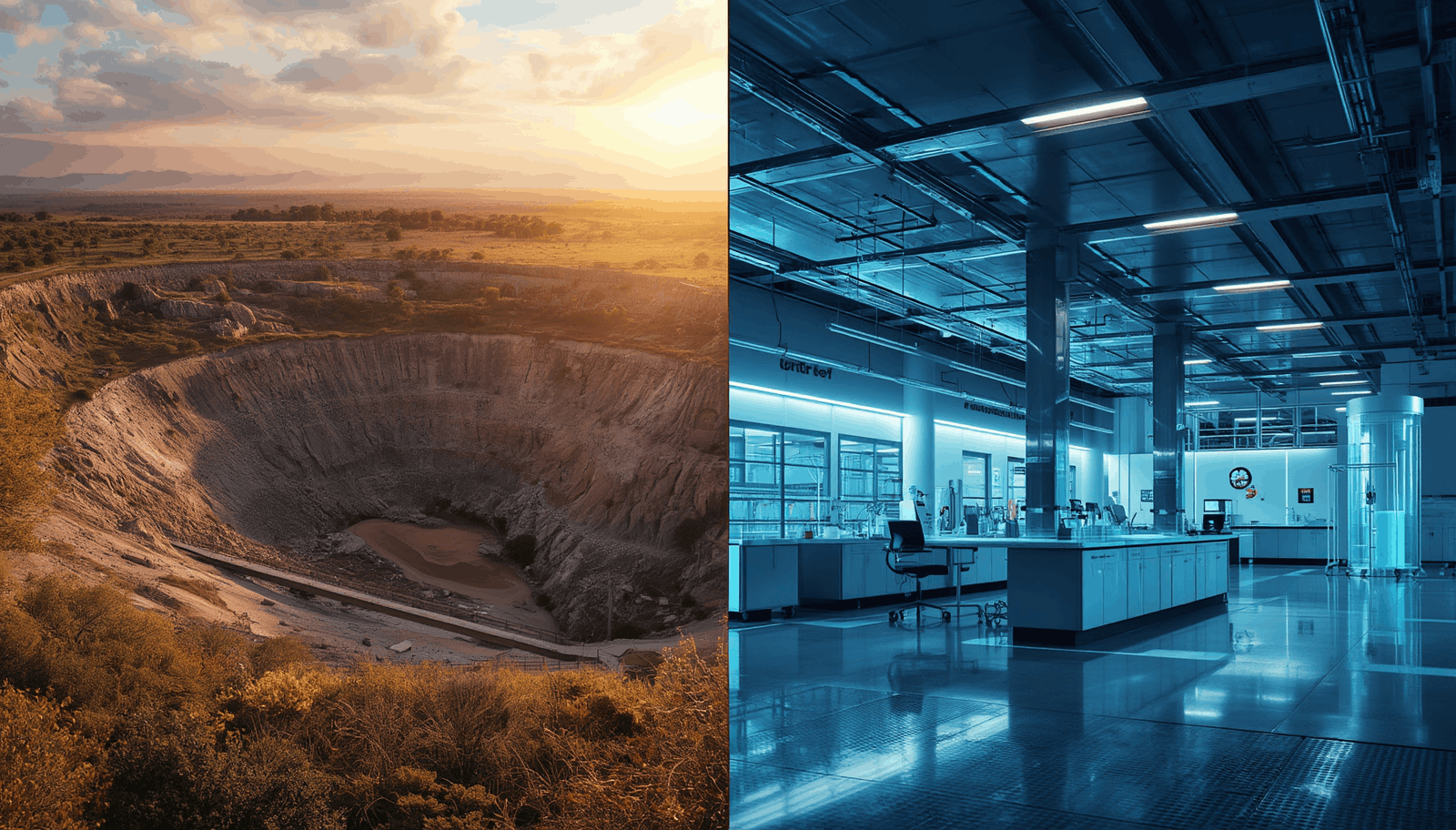
Natural Diamonds Modern certified mining operations — particularly from Canada (Ekati and Diavik mines) and Botswana — operate under strict environmental regulation, indigenous land agreements, and wildlife protection protocols. Beyond environmental considerations, diamond mining is a foundational economic driver for several developing nations, funding healthcare, infrastructure, and employment at scale.
Neither path is without its considerations. The ethical edge goes to lab diamonds only when they can demonstrate verified use of renewable energy throughout production.
How to Choose: A Practical Decision Guide
| Your Priority | Recommended Path |
| Maximum visual size within a tight budget | Lab-Grown Diamond |
| Long-term generational wealth preservation | Natural Diamond |
| Verified ethical and conflict-free sourcing | Climate-neutral certified Lab Diamond |
| Fashion pieces, earrings, tennis bracelets | Lab-Grown Diamond |
| Heirloom quality for future generations | Natural Diamond |
Choose lab-grown when: You are working within a defined budget (typically under $2,000) and want to maximize carat size and cut quality without taking on debt. Also ideal for fashion jewelry, everyday wear, or any piece where resale value was never part of your plan.
Choose natural when: You are building a piece that will carry genuine long-term asset value, or when the story of the stone — its geological age, rarity, and irreplicable origin — is meaningful to you personally. Natural stones are also the right call for anyone intentionally building a fine jewelry collection as part of a broader wealth preservation strategy.
The Cultural Shift Reshaping the Market
For most of the 20th century, the diamond industry was effectively shaped by one dominant narrative: a natural diamond symbolized commitment, and the size of the stone measured the depth of that commitment. That narrative was carefully cultivated through decades of marketing and successfully linked geological permanence with romantic permanence.
Today’s buyers are deconstructing that framing. For a growing segment of modern consumers — particularly Millennials and Gen Z — luxury is no longer defined by rarity or historical provenance. It is defined by intentional living, financial autonomy, and transparent sourcing. Spending a premium on a mined stone when an optically identical alternative exists at a fraction of the cost does not signal wealth to this generation. It signals financial inefficiency.
The result is that the lab grown diamonds vs natural diamond market is now genuinely bifurcated — not by quality, but by consumer philosophy.

Frequently Asked Questions: Lab Grown Diamonds vs Natural Diamond
Most buyers researching lab grown diamonds vs natural diamond options have the same core questions.
Do lab-grown diamonds pass a diamond tester?
Yes, lab-grown diamonds pass standard diamond testers because they share the same thermal conductivity as natural diamonds. Basic handheld testers used by most jewelers cannot distinguish between the two. Only specialized equipment — such as a De Beers DiamondView or a dedicated HPHT/CVD detector — can identify a lab-grown stone, and even then it requires trained interpretation.
Will a lab-grown diamond lose its sparkle over time?
No. Because a lab-grown diamond is chemically and structurally identical to a mined diamond — a 10 on the Mohs hardness scale — it is equally resistant to scratching, dulling, and surface degradation. With the same routine cleaning and care you would give any fine jewelry, a lab-grown stone will maintain its brilliance indefinitely.
Are lab-grown diamonds graded the same way as natural diamonds?
Yes. Both IGI and GIA grade lab-grown diamonds using the same 4Cs system applied to natural stones: Cut, Color, Clarity, and Carat weight. The grading certificates look nearly identical, with lab-grown reports simply noting the stone’s origin as laboratory-grown. Always request a grading certificate from either IGI or GIA when purchasing either type of stone.
Is a lab-grown diamond a good investment?
In the traditional financial sense, no. Lab-grown diamond prices are on a sustained downward trajectory due to expanding global manufacturing capacity. A stone purchased today will likely be replaceable for significantly less in five years. They are best treated as a consumption purchase — like a luxury watch or high-end electronics — rather than a store of value.
Do natural diamonds actually go up in value?
Natural diamonds do not consistently appreciate like stocks or real estate. However, they do tend to hold a stable secondary market floor and, in some cases, track inflation over long periods. Exceptional stones — large carat weights, rare fancy colors, or pieces with notable provenance — can appreciate meaningfully. Standard round brilliant stones in the 1–2 carat range are more likely to hold value than gain it dramatically.
Can jewelers tell the difference between lab-grown and natural diamonds?
Not with standard tools. A professional gemologist with a loupe, microscope, or standard thermal tester cannot distinguish between the two. Identifying a lab-grown stone requires advanced equipment like a DiamondView machine, which uses UV fluorescence imaging to detect the growth patterns unique to CVD and HPHT processes. Most retail jewelers do not own this equipment.
Which is better for an engagement ring — lab-grown or natural?
Neither is objectively better. If maximum visual size within a budget is the priority, lab-grown delivers dramatically more stone per dollar. If long-term sentimental and financial preservation matters — or if the ring is intended as a family heirloom — a natural diamond carries intrinsic value that a lab-grown stone simply does not. The right answer depends entirely on the buyer’s values and financial goals.
Are lab-grown diamonds covered by insurance?
Yes. Lab-grown diamonds can be insured through standard jewelry insurance providers just like natural diamonds. The key difference is the replacement value: because lab-grown prices continue to drop, insurers may reassess replacement costs at the time of a claim rather than the original purchase price. Always read your policy terms carefully and work with an insurer who understands the lab-grown market specifically.
Final Verdict: Two Different Assets for Two Different Buyers
There is no objectively correct answer in the lab grown diamonds vs natural diamond debate. There are only different philosophies aligned with different financial and personal priorities.
The natural diamond is a preservation model. It is the right choice for the buyer who values geological rarity, generational legacy, and the security of a tangible asset that retains real-world equity across decades. It is slower, more expensive, and deliberate — but it holds its ground.
The lab-grown diamond is an optimization model. It is the right choice for the buyer who wants the full visual impact of a large, brilliant stone today while keeping their capital liquid and deployed where it grows. The ring itself depreciates to near-zero, but the financial strategy it enables can compound significantly over time.
Knowing which model aligns with your values — and your financial goals — is the only decision framework you truly need.
Disclosure: This article is intended for informational and educational purposes only. Diamond values fluctuate based on market conditions, certification, and individual stone characteristics. Consult a certified gemologist and a financial advisor before making high-value purchasing decisions.