

The Rose Cut Diamond Guide: Antique Sparkle Reimagined in Lab-Grown Stones
Most diamond shapes chase the same goal: maximum fire and brilliance, engineered facet by facet to scatter as much light as possible. Rose Cut Diamonds were never built for that kind of sparkle, and that’s precisely their appeal. With a flat, unfaceted base and a domed crown covered in small triangular facets, a rose cut diamond produces a softer, more candlelit glow rather than a flashy scatter of light, a look that predates the modern brilliant cut by several centuries. Lab-grown diamonds have made this historic shape newly accessible, letting buyers get that distinctive antique character without hunting down an actual period stone. This guide covers where the cut comes from, how it actually behaves optically, and what to know before choosing one.
Why Rose Cut Diamonds Are Back in Demand
For most of the 20th century, the round brilliant cut dominated the diamond market so completely that older cutting styles like the rose cut were largely treated as collectibles rather than realistic options for new jewelry. That’s shifted considerably as more buyers have moved toward vintage and Art Deco-inspired designs, looking for rings that feel deliberately different from the standard sparkle-first stone most jewelry counters default to.
Rose Cut Diamonds fit that shift particularly well because the look genuinely can’t be replicated by a modern brilliant cut; it’s not a matter of styling preference so much as a fundamentally different optical structure. Buyers drawn to Georgian and Victorian-era jewelry, or simply looking for a stone with more visual history behind it, have increasingly sought out rose cuts specifically for that softer, more romantic glow rather than treating brilliance as the only measure of a diamond’s appeal.
Lab-grown diamonds have removed much of the friction that used to come with sourcing a rose cut. Because antique rose-cut diamonds are inherently limited in supply and often carry collector pricing independent of their actual size or quality, buyers wanting a reliably sized, well-matched rose cut, particularly for a pair of earrings or a symmetrical ring design, previously had limited options. Lab-grown production makes it realistic to get a consistent, well-cut rose cut diamond in the exact size needed, without depending on what happens to be available from estate or antique sources.
What Makes a Rose Cut Different
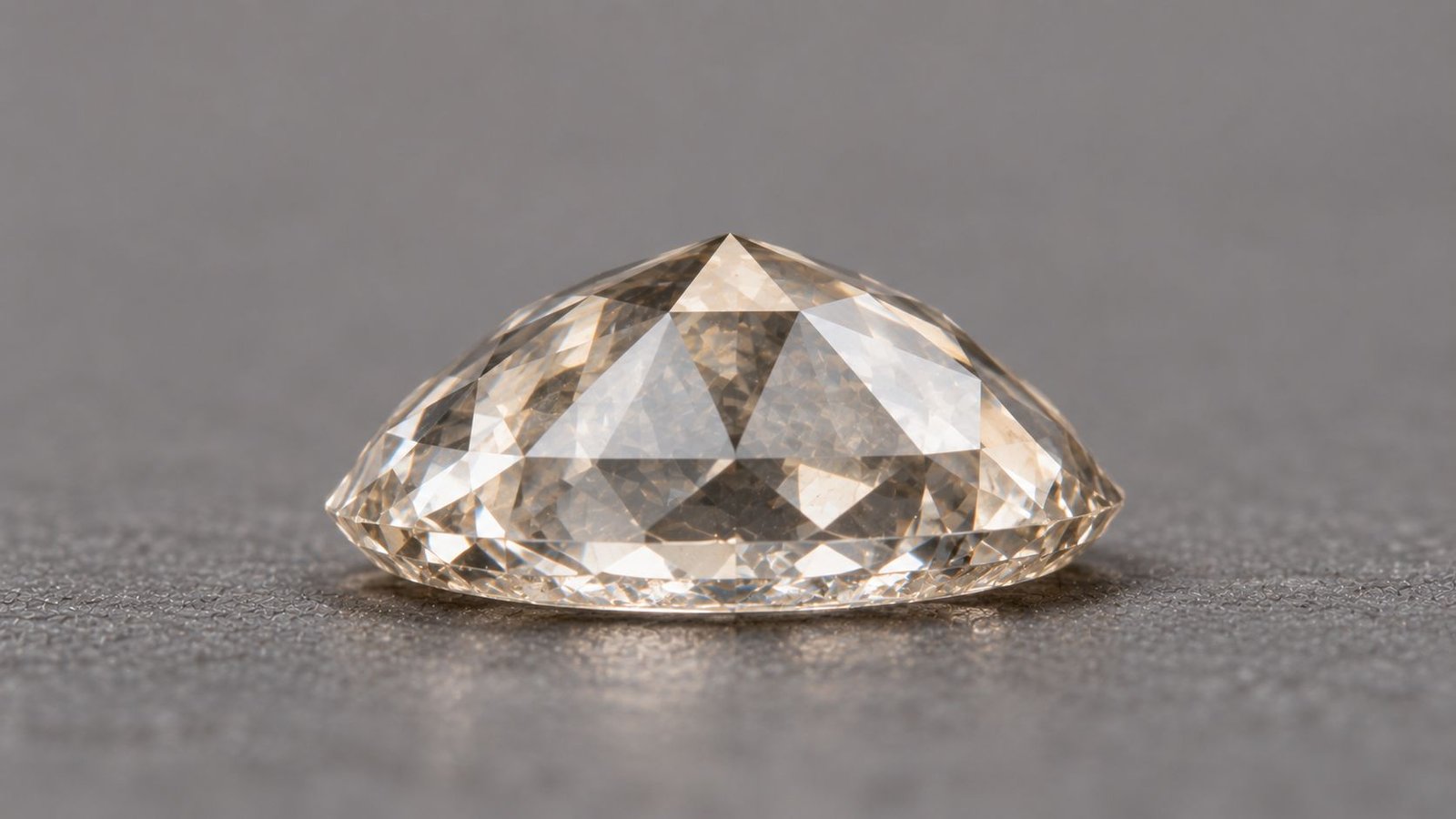
The defining structural feature of a rose cut is the absence of a pavilion. Where a modern brilliant cut diamond has a pointed base beneath the girdle that helps bounce light back up through the crown, a rose cut is left completely flat on the bottom, essentially just a crown with no pavilion at all. Light enters and exits almost entirely through the domed, faceted top, rather than bouncing between a crown and pavilion the way it does in a brilliant cut.
This structure produces the cut’s signature look: a soft, glowing light return rather than the scattered fire and scintillation associated with modern cuts. Because there’s no pavilion to refract and redirect light internally, a rose cut diamond doesn’t throw the same flashes of color and brightness a round brilliant does. Instead, it produces a gentler, more diffuse glow, often described as looking especially beautiful under candlelight or warm, low lighting, which is part of why the cut became so closely associated with romantic, antique jewelry in the first place.
The domed crown itself is covered in small triangular facets arranged in a radiating pattern that meets at a central point, resembling the unfurling petals of a rose bud when viewed from above, which is exactly where the cut’s name comes from.
A Brief History of the Rose Cut

The rose cut’s origins trace back to the mid-16th century, with early examples associated with Antwerp and the Brabant region, historically significant centers of European diamond cutting. Some historical accounts also point to earlier roots in India, where rough diamond crystals were shaped to resemble closed rose petals before the cutting tradition migrated into European workshops. Early rose cuts were simple, carrying as few as three to six facets ground onto a flat-bottomed crystal, a style that suited the irregular, flat cleavage fragments that made up much of the diamond rough available at the time far better than a deeper, more complex cut would have.
The cut reached its peak popularity during the Georgian and Victorian eras, when it became closely associated with romantic jewelry design, appearing widely in engagement rings, brooches, and pendants throughout the 17th, 18th, and 19th centuries. As faceting techniques advanced, cutters developed deeper, more complex cuts designed specifically to maximize brilliance, and the rose cut’s popularity declined through the early 20th century as the modern round brilliant cut became the industry standard.
Interest in the rose cut has returned meaningfully over the past couple of decades, driven largely by renewed appreciation for vintage and estate jewelry aesthetics. Today it’s recognized and reported on formal grading documentation, including GIA Diamond Grading Reports and Diamond Dossiers, as either a rose cut or rose modified cut depending on the exact facet arrangement used.
Facet Counts and Variations
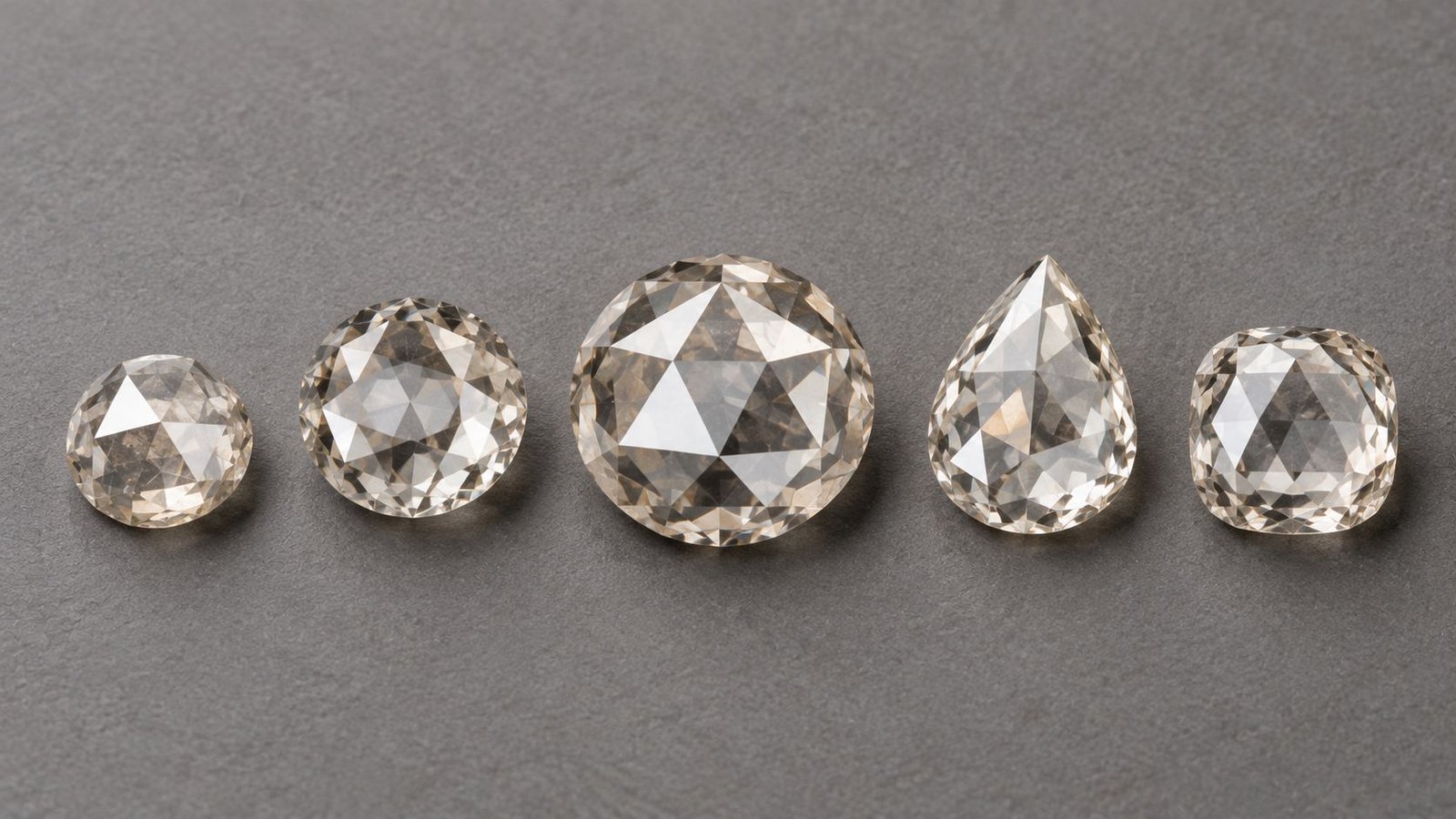
Rose cuts aren’t a single fixed design; the number and arrangement of facets vary meaningfully between different historical and modern styles. The simplest versions, sometimes called three-facet or six-facet rose cuts, use a minimal number of large triangular facets arranged around a central point. The Antwerp rose, one of the more commonly referenced classic styles, typically carries twelve crown facets arranged in a single ring.
The full rose cut, sometimes called the Holland rose, increases that count to twenty-four facets arranged in two distinct rows, producing noticeably more scintillation than the simpler early styles while still retaining the flat-bottomed, domed structure that defines the cut. A rarer variation known as the double rose, or Double Dutch rose, essentially combines two rose-cut domes back-to-back, eliminating the flat base entirely in favor of a fully faceted, roughly spherical shape that can carry upward of 48 facets total.
Modern rose cuts produced for today’s bridal and fine jewelry market are generally cut with tighter, more consistent symmetry than their handmade antique counterparts, often using automated or semi-automated equipment to achieve a more precise, repeatable result, particularly useful for matched pairs or symmetrical multi-stone designs.
Rose Cut vs Brilliant Cut: Key Differences
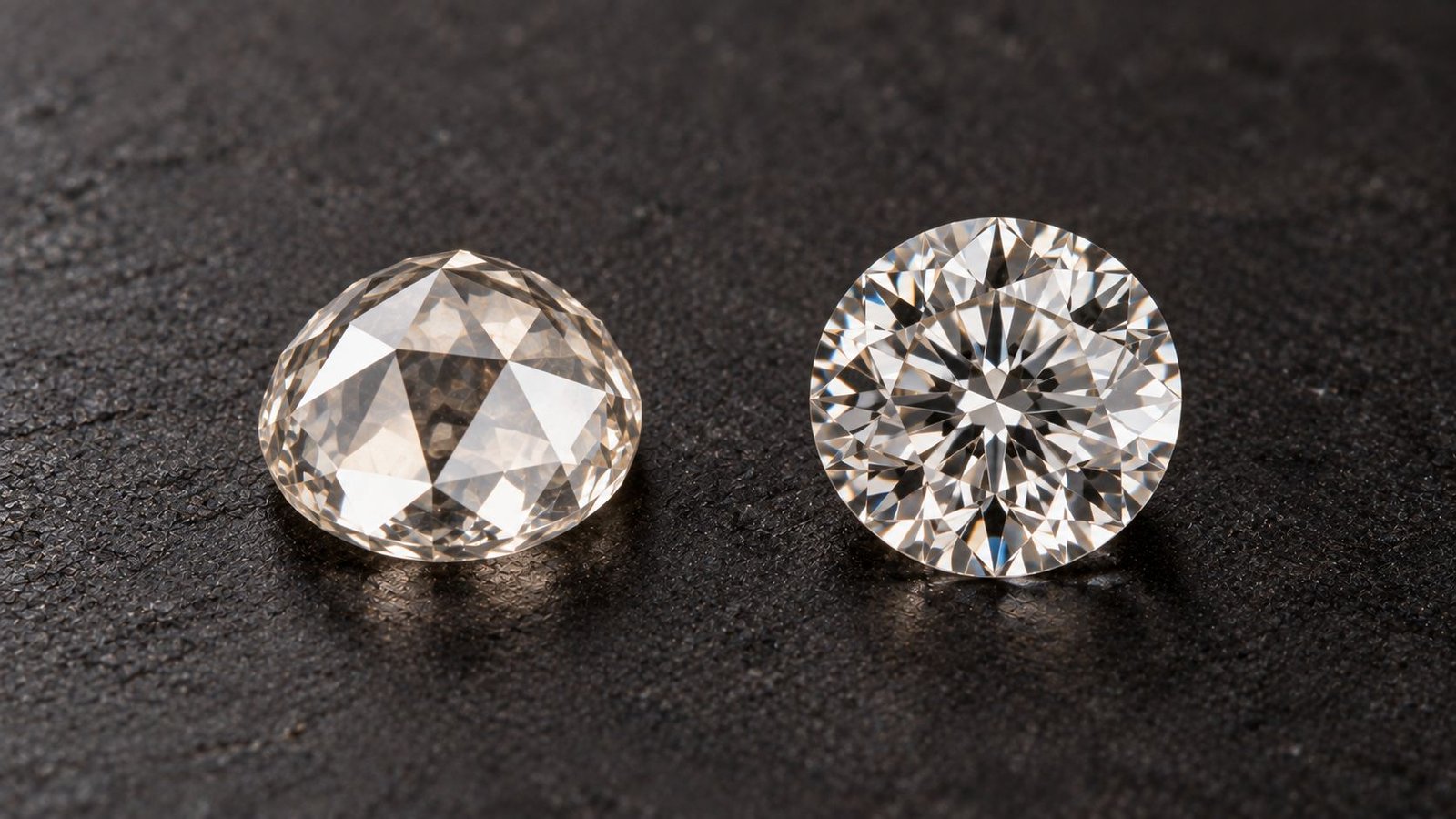
| Factor | Rose Cut | Round Brilliant Cut |
| Base structure | Flat, no pavilion | Pointed pavilion beneath girdle |
| Typical facet count | 3 to 24 (up to 48 in double rose) | 57 to 58 |
| Light behavior | Soft, diffused glow | Scattered fire and scintillation |
| Face-up size at equal carat weight | Appears wider and larger | Appears more compact |
| Historical period | Peaked in Georgian/Victorian eras | Standardized in the 20th century |
| Best suited for | Antique and vintage-style designs | Maximum brilliance and sparkle |
Neither cut is objectively superior to the other; they’re built around genuinely different goals. A rose cut prioritizes a soft, romantic visual character and a historically grounded silhouette, while a round brilliant prioritizes maximum measurable light return. Buyers choosing between them are really choosing between two different aesthetic philosophies rather than comparing quality in the way they might compare two round brilliants.
Clarity, Color, and Size Appearance Considerations
Because a rose cut’s flat base allows direct visibility into the stone without the same light-scattering effect a brilliant cut provides, inclusions can be somewhat more visible than they would be in a modern cut of comparable clarity grade, though generally less dramatically so than in a step cut like an emerald or Asscher, since the rose cut’s many small triangular facets still break up the view to some degree. Buyers generally want to avoid stones with obvious inclusions visible near the center of the dome, where they’re most noticeable.
Color tends to matter less in a rose cut than it does in step cuts or brilliant cuts, since the softer, more diffused light return doesn’t showcase warmth the same way a highly reflective modern cut does. Many rose cut diamonds are set in warmer metals like yellow or rose gold specifically because a touch of color in the stone tends to blend naturally with the metal tone rather than standing out as a flaw.
One practical sizing consideration worth knowing before shopping: because of the flat base, a rose cut diamond spreads its weight across a wider surface area than a brilliant cut of the same carat weight, which means a rose cut can appear noticeably larger face-up than a round brilliant carrying the same number on the scale, a detail worth factoring in when comparing carat weights across different shapes.
Lab-Grown Advantages for Rose Cut Diamonds
Sourcing a well-matched pair or a specific size of antique rose cut diamond has traditionally been a genuine challenge, since supply is limited to whatever happens to have survived from earlier centuries, with size, symmetry, and quality varying considerably from stone to stone. Lab-grown diamonds solve this in a fairly direct way: because lab-grown stones cost significantly less than natural diamonds at equivalent size and clarity, it becomes realistic to source a rose cut diamond, or a matched set of several, in the exact dimensions a specific design calls for, rather than working around whatever’s available.
This matters particularly for designs using multiple rose cut stones, such as a cluster ring or a pair of earrings, where visual consistency across stones is important. Lab-grown production allows for far more reliable matching of size, symmetry, and color than hunting for compatible antique stones individually.
It’s also worth noting that lab-grown diamonds carry the exact same hardness, optical properties, and light behavior as natural diamonds, so a lab-grown rose cut produces precisely the same soft, candlelit glow as a natural stone of the same cutting style; the look and the physical experience of wearing it are identical. When shopping for a lab-grown rose cut, it’s worth requesting documentation confirming the cutting style and grade, since a clear IGI-graded certificate helps confirm exactly what you’re buying, particularly given how much variation exists between different historical rose cut styles.
Setting and Styling Rose Cut Lab-Grown Diamonds
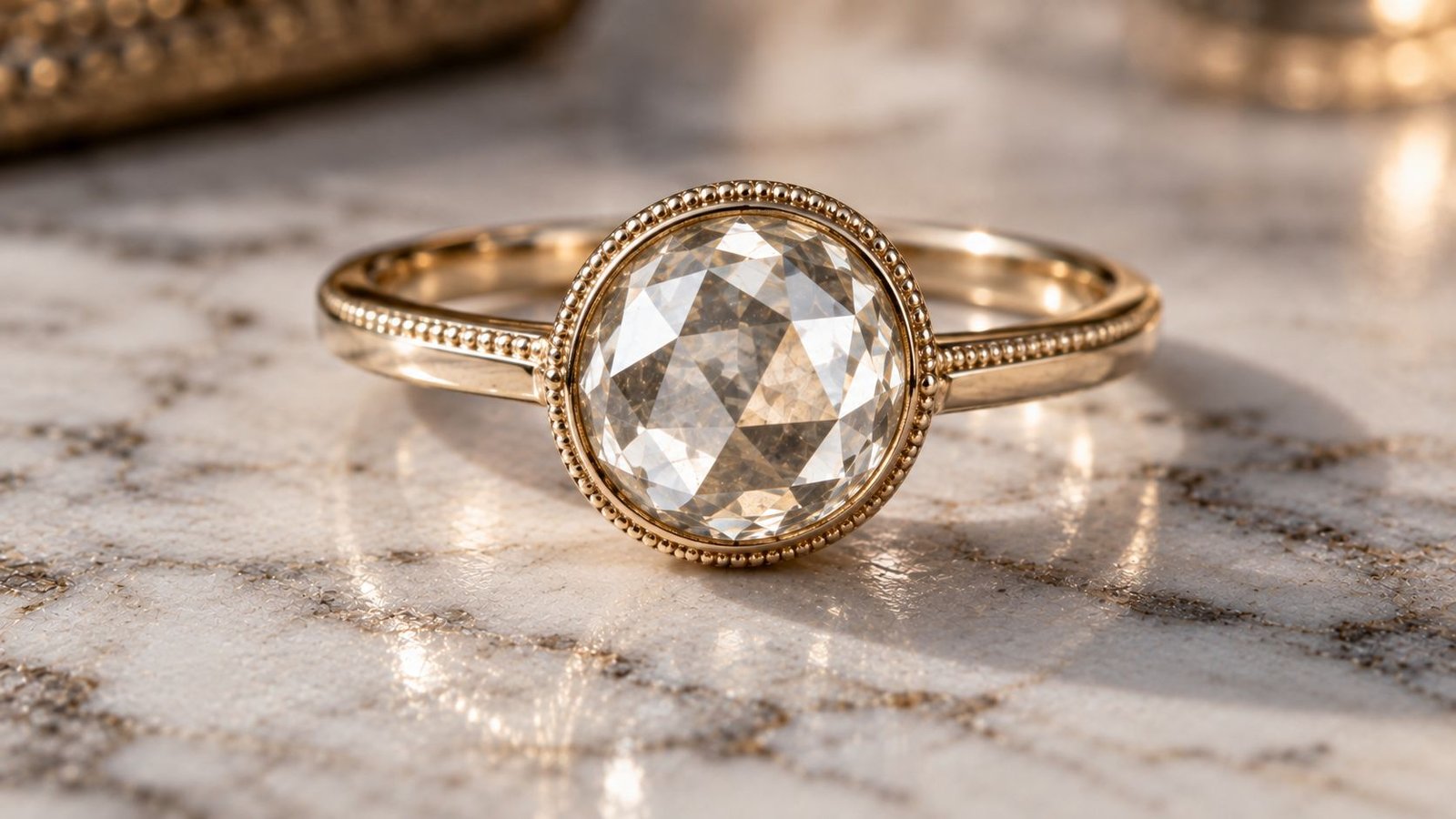
The flat base of a rose cut diamond pairs particularly well with bezel and gypsy-style settings, where the stone sits low against the finger with no pavilion to catch on clothing or fabric. This low profile is part of why rose cuts were historically popular for everyday wear despite their delicate appearance; the setting protects the stone’s edges while keeping the domed crown visible.
Despite the thinner profile compared to a deep brilliant cut, diamond’s exceptional hardness means a properly set rose cut diamond holds up well to daily wear, even though the flat base and shallower overall depth might suggest otherwise at first glance. Milgrain detailing and filigree work, both historically associated with the Georgian and Victorian eras when rose cuts were most popular, continue to pair especially well with this shape, reinforcing the antique character buyers are typically seeking out.
Rose cuts also work particularly well as accent stones surrounding a larger center stone, since their softer light output doesn’t compete visually with a brighter brilliant-cut or step-cut centerpiece, instead adding texture and historical character around the edges of a design.
Common Misconceptions
“A rose cut diamond doesn’t sparkle at all.” Rose cuts produce a different, softer kind of light return rather than no sparkle; the glow is more diffused and candlelight-friendly rather than absent entirely.
“Rose cuts are only available as antique stones.” Lab-grown rose cut diamonds are widely available today, offering the same cutting style and optical character as antique examples without depending on limited historical supply.
“All rose cuts have the same number of facets.” Facet counts vary considerably, ranging from as few as three in the simplest early styles up to 24 or more in a full Holland rose, with distinct historical variations in between.
“Rose cuts are fragile because they’re flat.” Diamond’s inherent hardness means a properly set rose cut holds up well to everyday wear, even with its thinner profile compared to deeper modern cuts.
“Color grade doesn’t matter at all for a rose cut.” Color matters less than in a highly reflective modern cut, but it’s still worth considering, particularly for buyers who want a bright, cool-toned look rather than the warmer glow typical of the shape.
Buying Guide: Choosing a Rose Cut Lab-Grown Diamond
Start by deciding how many facets and which historical style appeals to you, since a simple 6-facet or 12-facet Antwerp-style rose cut looks noticeably different from a full 24-facet version with considerably more scintillation. Viewing a few different facet counts side by side, ideally in person, makes this decision much easier than comparing specifications alone.
Next, prioritize clarity primarily around visible inclusions near the center of the dome rather than chasing the highest possible clarity grade, since the rose cut’s soft light return doesn’t demand the same clarity standard a step cut requires. This generally makes rose cuts a more budget-friendly option relative to other historically detailed cuts, even before factoring in the additional savings from choosing lab-grown.
If you’re building a design with multiple rose cut stones, confirm with your jeweler how closely matched the stones will be in size and symmetry, since consistency across several small stones matters more for visual balance than it does with a single center stone. Finally, choose a setting style, ideally bezel or gypsy, that protects the stone’s edges and complements its historically low, flat profile rather than fighting against it.
Final Thoughts
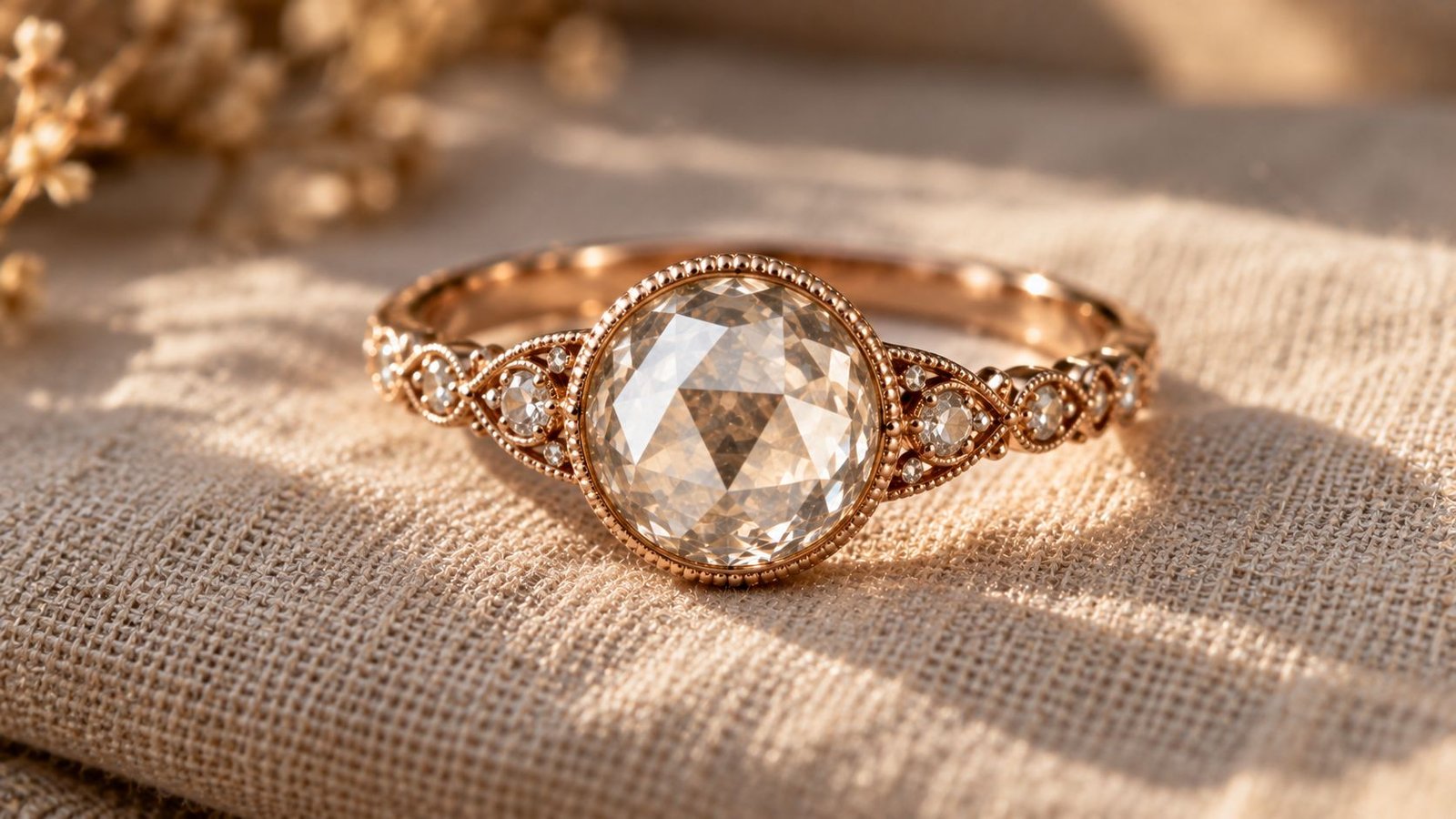
Rose Cut Diamonds offer something genuinely different from the brilliance-focused design philosophy that’s dominated diamond cutting for the past century, trading scattered fire for a softer, more historically grounded glow. Understanding the structural reason behind that look, the absence of a pavilion, makes it much easier to appreciate what the cut is actually doing rather than comparing it unfavorably to a modern brilliant. With lab-grown production now making well-matched, consistently sized rose cuts realistic to source, this centuries-old cutting style has become a genuinely practical option for anyone drawn to its antique character.
Frequently Asked Questions
Disclaimer: Historical accounts of diamond cutting origins and terminology can vary between sources. This article is intended for general educational purposes and should not replace a professional evaluation from a certified gemologist for any specific stone.