

Prenup Diamond Value: 5 Key Ways Origin Shapes Ring Worth
A couple sits down with an attorney, a stack of financial disclosures, and one small but surprisingly emotional question: what exactly is the engagement ring worth, and who keeps it? A few years ago, that conversation was fairly simple. Today, it has an interesting new layer, because the ring in question might hold a natural diamond or a lab grown one, and the two are treated quite differently once numbers go onto paper.
Understanding prenup diamond value has become a genuinely useful skill for modern couples. The good news is that the topic is far less intimidating than it sounds. Lab grown diamonds are chemically and visually the same material as natural diamonds, they come with the same style of grading reports, and they have opened the door to larger, better-quality stones at friendlier prices. What changes between the two is not beauty or durability but how value is measured, documented, and expected to behave over time.
This article explores five clear ways diamond origin influences how a ring is treated inside a prenuptial agreement, and why thoughtful documentation matters more than the origin label itself. A quick heads-up first: what follows is meant to inform and explain, and it should not be treated as a substitute for professional legal counsel. Rules about rings, gifts, and marital property differ widely from one jurisdiction to another, so any real agreement should be drafted with a qualified family law attorney.
Why Rings Get Their Own Line in a Prenup
Most couples assume a prenup is mainly about houses, businesses, and retirement accounts. In practice, jewelry deserves a place on the page too, and the engagement ring is usually the most visible piece. There are a few reasons it earns that attention.
First, a ring occupies an unusual legal and emotional category. In many places, an engagement ring is treated as a conditional gift, meaning it is given in anticipation of marriage. Once the wedding takes place, it is commonly regarded as the personal property of the person who received it. Where that principle applies, the ring often sits outside the pool of assets divided at separation. Still, local rules vary, and a written agreement removes guesswork by stating clearly what both people intend.
Second, rings can carry meaningful financial weight. A center stone paired with a quality setting may represent a significant purchase, and in some families it is joined by heirloom pieces that hold both monetary and sentimental importance. Listing these items by description and value helps both partners understand what is being protected.
Third, a ring is easy to misunderstand. The price paid at a store, the amount an insurer would pay to replace it, and the sum it could fetch if sold tomorrow are three different numbers. A prenup that simply says “engagement ring, worth a certain amount” without explaining which number it means can create confusion later. This is exactly where diamond origin enters the picture, and where a clear approach to prenup diamond value pays off.
Insight 1: Replacement Value and Resale Value Tell Two Different Stories
The first and most important way origin shapes a prenup is through the gap between what a ring costs to replace and what it might sell for later. Both natural and lab grown diamonds follow this pattern, since nearly all jewelry sells for less on the secondhand market than it costs at retail. The difference lies in how that gap tends to look.
Natural diamonds have a long history on the resale market, with established buyers, dealers, and auction channels. A natural stone with a strong grading report and desirable characteristics usually finds an audience, although the amount received is typically below the original retail price. Lab grown diamonds, by contrast, are a newer category. Their production has become more efficient over the years, and the prices buyers pay at retail have generally trended downward as supply has grown. That downward movement is wonderful news for the person buying the ring, because it means more diamond for the budget. It also means the secondhand market for lab grown stones is still finding its footing.
What does this mean for a prenup? It means couples benefit from agreeing on the basis of valuation rather than assuming a single figure. Some agreements record the original purchase price. Others reference an appraisal. Others avoid assigning any monetary value at all and simply state that the ring belongs to the wearer regardless of worth. Each approach is perfectly valid, and the right choice depends on what the couple wants the document to accomplish.
A smaller resale number says nothing about the quality of a lab grown ring itself. Its owner still receives full beauty, durability, and everyday enjoyment, often at a larger size or higher quality grade than the same budget would have allowed in a natural stone. The prenup simply needs to reflect honestly how that value is measured. When both partners understand this distinction early, the conversation stays calm and constructive instead of becoming a debate about numbers nobody has defined.
Insight 2: The Type of Appraisal Matters More Than the Origin Label
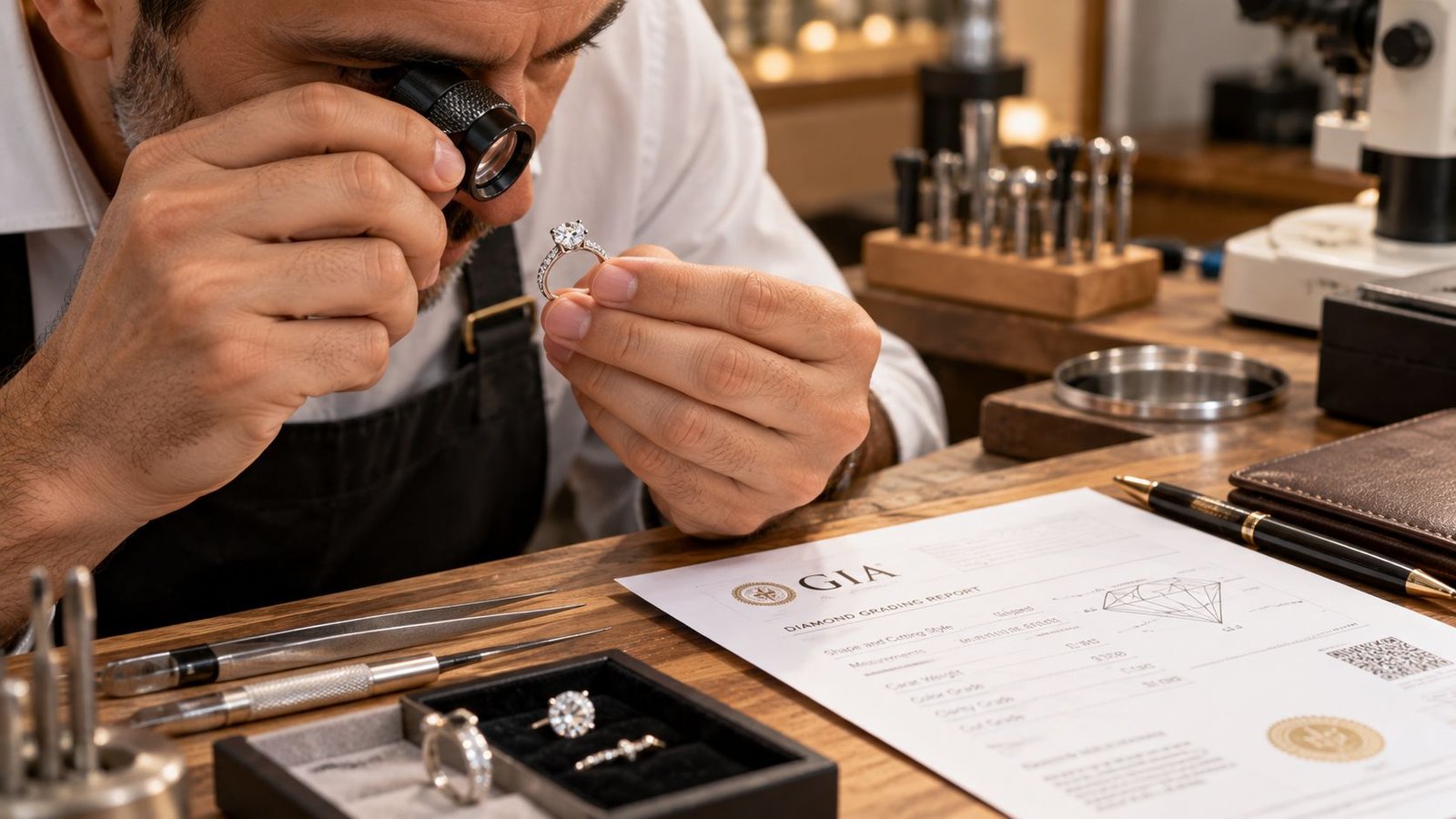
If there is one practical lesson that every couple should take away, it is that the kind of appraisal used often matters more than whether the stone was grown in a lab or formed in the earth. Appraisals are not all created equal, and they answer different questions.
A retail replacement appraisal estimates what it would cost to buy a comparable item from a jewelry store today. Insurance companies lean on this type, because the goal is to restore the owner to the same position after a loss. These figures tend to be the highest of the three common types.
A fair market value appraisal estimates what the item might reasonably sell for between a willing buyer and willing seller. It tends to land below replacement value, since it reflects the secondhand marketplace rather than the retail showroom.
A liquidation value appraisal estimates what the item might bring in a quick sale, such as to a dealer who needs room to resell at a profit. It is generally the lowest figure.
For prenup diamond value, choosing the type of appraisal in advance is a powerful way to avoid disagreement. A couple who wants to protect the ring as personal property may decide that the replacement value is the most meaningful number. A couple who wants a realistic picture of liquid assets might prefer fair market value. Neither choice is wrong. What matters is that the agreement names the method so that nobody is surprised later.
Origin enters this picture because appraisers handle natural and lab grown stones with slightly different reference points. Natural diamond pricing relies on long-established price benchmarks, while lab grown pricing reflects a fast-evolving market. A qualified independent appraiser who is comfortable with both categories can describe each stone accurately, state its origin clearly, and explain the basis of the number. Choosing a credentialed professional, rather than relying on a seller’s own valuation, adds credibility to the document and reassurance for both partners.
Insight 3: Clear Origin Documentation Protects Everyone Involved
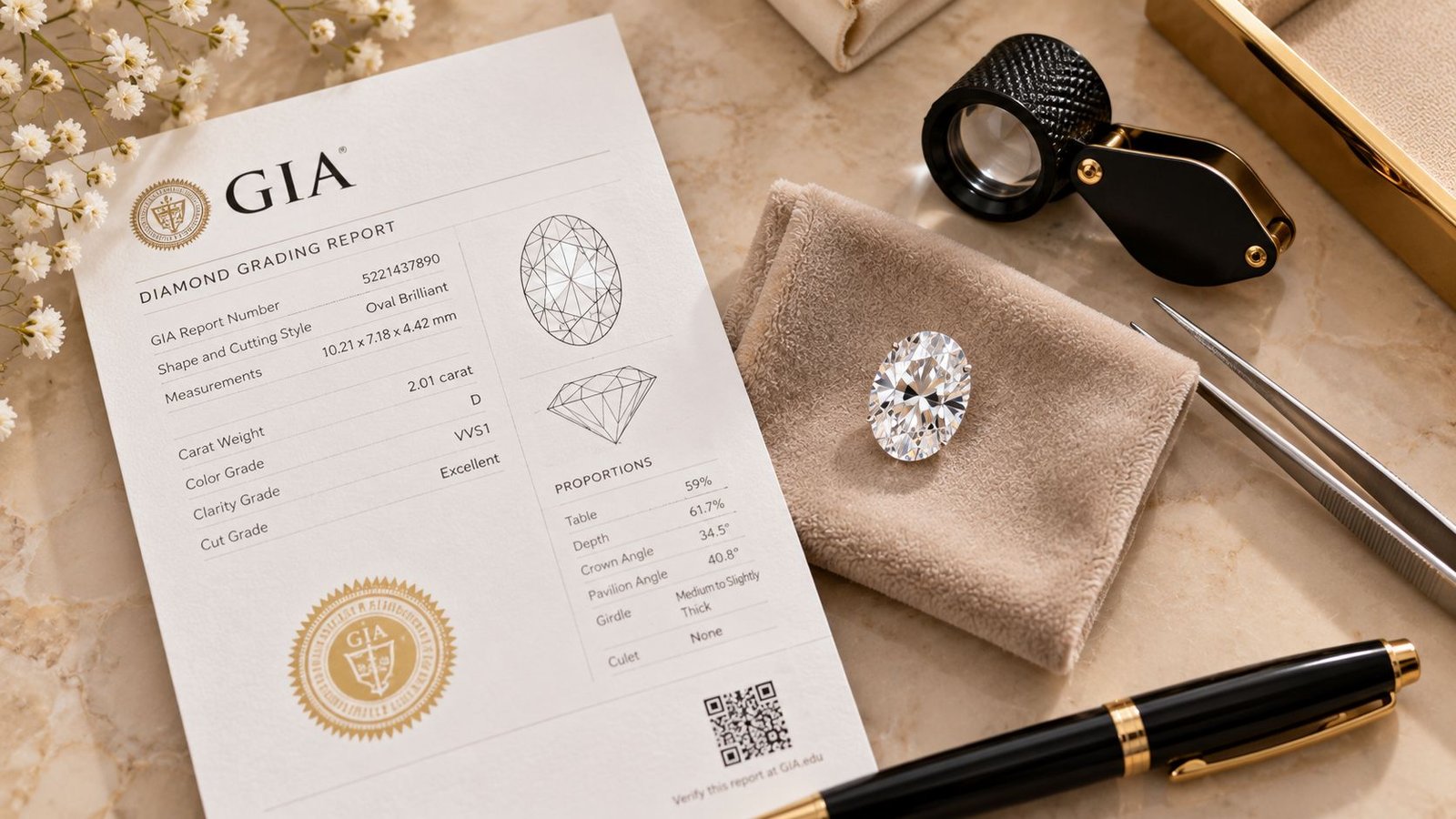
The third way origin shapes a prenup is through paperwork, and this is where lab grown diamonds quietly shine. Reputable laboratories grade lab grown diamonds on the same familiar characteristics used for natural stones: carat weight, color, clarity, and cut. Many report forms also note the growth process and often include a laser inscription on the girdle that matches the report number. Each of these details creates a traceable identity for the stone.
Why does that matter in a prenup? Because specificity is the foundation of any good asset schedule. Describing a ring as “diamond engagement ring” leaves room for ambiguity. Describing it as a certain carat weight, with a named laboratory report number, a stated color and clarity grade, a stated origin, and a description of the setting leaves very little. If the ring is later insured, appraised, repaired, or sold, everyone can point to the same documented identity.
Accurate origin disclosure also matters ethically and commercially. Consumer protection guidance in several markets, including the United States, encourages clear terminology such as “laboratory-grown” so that buyers know exactly what they are purchasing. A couple who records the origin precisely in their agreement is following the same spirit of transparency, and it prevents any later confusion between a ring that was purchased as lab grown and one that someone assumed was natural.
It is also wise to keep a tidy folder of supporting documents. That folder might include the grading report, the original receipt, a recent appraisal, insurance paperwork, and clear photographs. Attaching or referencing these records in the prenup makes the schedule dependable. The result is a stronger, cleaner document and a lot less stress if the ring ever needs to be located, insured, or replaced.
Insight 4: Lab Grown Affordability Changes How Couples Budget and Negotiate
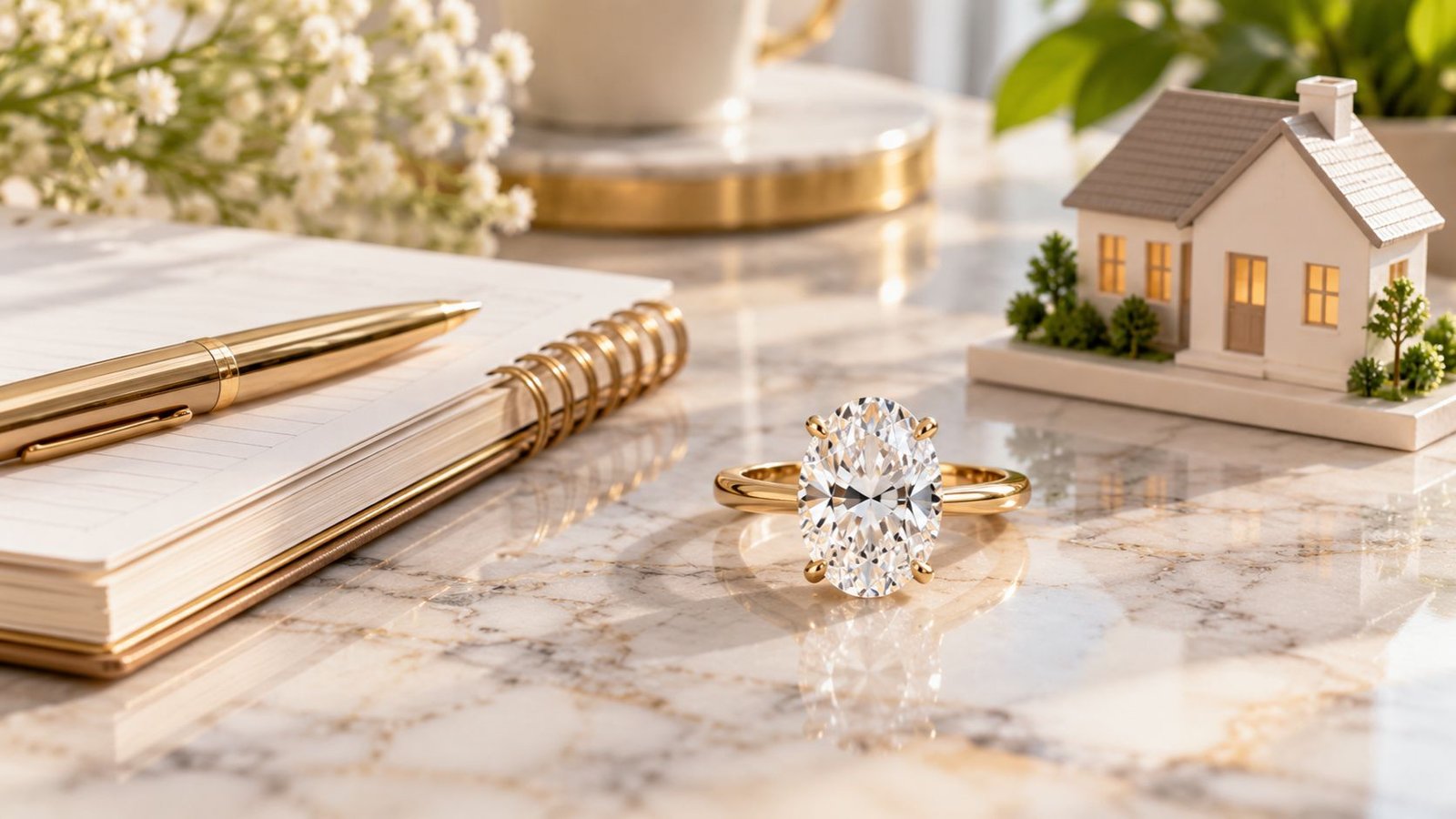
The fourth insight is a hopeful one. Lab grown diamonds have changed the emotional temperature of the whole ring conversation. Because a lab grown stone typically costs considerably less than a natural stone of similar size and quality, many couples can choose a bigger center stone, a higher grade, or a more intricate setting without stretching their finances. Others choose to keep the savings for a home, travel, or a shared goal.
This matters for prenups in a surprisingly positive way. When the ring is a smaller part of a couple’s overall finances, it tends to be a less contentious part of the discussion. A partner who spent a more modest amount on a beautiful lab grown ring has less to worry about regarding valuation swings, and the recipient has less pressure to treat the ring as a financial asset that must hold its price. Instead, the ring becomes what it was always meant to be: a meaningful symbol that happens to look spectacular.
Affordability also encourages healthier planning. Couples who feel comfortable with their ring budget often have more energy to focus on the substantive parts of their agreement, such as how they will handle shared accounts, future property, and long-term goals. In that sense, the lower price of a lab grown stone supports prenup diamond value discussions by lowering the stakes rather than raising them.
There is also a practical angle. Some couples choose to treat the ring as a purely personal item and exclude it from any calculation of net worth. Others decide to include it at a conservative figure. Lab grown rings make either choice easy, because the amounts involved are usually more manageable and the conversation about it more relaxed.
Insight 5: Planning for Changing Prices Keeps the Agreement Future-Proof
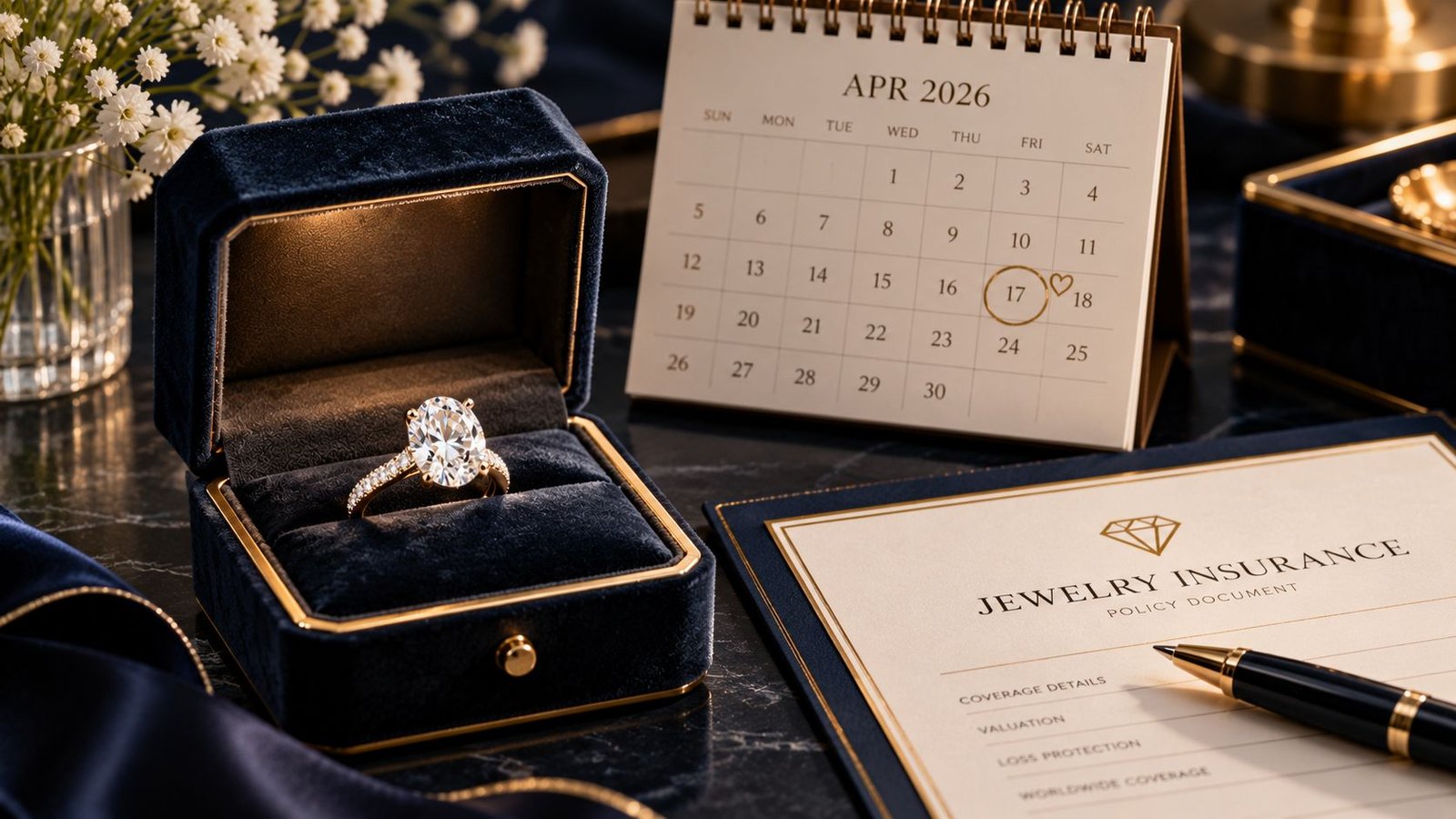
The fifth way origin shapes a prenup is time. Diamond prices are not frozen, and lab grown pricing has shown a particularly noticeable tendency to change as technology improves and production scales. A figure written into an agreement today may look different in ten or twenty years.
Smart agreements account for this reality with simple, flexible wording. Rather than locking in a number that may age quickly, a couple might state that the ring is the separate property of the person who wears it, regardless of future value. This approach sidesteps the need to revalue the stone and keeps the focus on ownership instead of fluctuating prices.
Couples who do want a monetary figure can attach a date to it. For example, an agreement might record the appraised value as of a specific date and note that the figure is for identification purposes only. Some couples also agree to refresh appraisals every few years for insurance reasons, which is good practice anyway. A ring that is accurately insured at current replacement value is protected against loss, theft, or damage, and the updated appraisal can be kept with the original paperwork.
Another forward-looking tool is a clause about upgrades. Many people eventually want to trade up to a larger stone, add side stones, or reset the center diamond into a new design. The agreement can state that any upgrade remains the separate property of the original recipient, so the ring’s identity stays consistent even as it evolves. Because lab grown diamonds make upgrades more approachable, this kind of clause can be especially useful for couples who expect to enhance their ring over time.
None of this requires complicated language. It simply asks couples to think ahead, which is a healthy habit for any marriage. Treating prenup diamond value as a living, well-documented topic rather than a one-time snapshot gives the agreement lasting usefulness.
Common Misunderstandings Worth Clearing Up
A few myths tend to surface whenever rings and prenups come up together, and clearing them away makes planning easier.
One misconception is that a lab grown diamond is somehow less “real” and therefore needs special treatment in a legal document. In reality, a lab grown diamond is a genuine diamond with the same chemical composition and crystal structure as a natural one. The agreement should simply state the origin accurately, the way it would state any other fact about the stone.
Another misconception is that a higher price tag automatically means a higher future value. Retail prices include markups, setting costs, and brand premiums that do not carry over to a resale. That is true for natural and lab grown stones alike, which is why choosing the valuation method matters so much.
A third misconception is that every prenup must assign a dollar value to the ring. Many do not. Some simply identify the ring and declare it the separate property of the recipient. Others list it with a documented figure. The best choice is the one that matches the couple’s comfort level and local legal requirements.
Finally, some people believe that talking about the ring in a prenup is unromantic. Many couples find the opposite. Putting the details in writing is an act of care. It shows that both partners respect the ring, respect each other, and want to remove uncertainty from the future.
What This Means for Jewelers and Retailers
Jewelry professionals have a genuine opportunity to support couples who are thinking about prenups. Offering clear, accurate documentation at the point of sale is a simple way to add value. A complete packet might include the laboratory grading report, a plain-language summary of the stone’s origin, a detailed receipt, and a recommendation to obtain an independent appraisal for insurance.
Retailers who explain the difference between replacement value and resale value in an honest, friendly way tend to earn trust. Buyers appreciate hearing that a ring is wonderful to wear and a joy to own, while also understanding that jewelry is purchased for its beauty and meaning rather than as a guaranteed financial investment. That honesty builds long-term relationships, and many couples return later for anniversary gifts, upgrades, and referrals.
Training sales teams to use consistent, transparent terminology is equally valuable. Clear labeling of lab grown and natural stones, accurate descriptions of treatments or enhancements, and straightforward answers about warranties and returns all help customers feel confident. When a buyer later shares the paperwork with an attorney, a well-prepared jeweler’s documentation makes the process smooth.
It is also worth offering practical extras, such as a reminder that appraisals should be refreshed periodically, a service for photographing and recording the ring’s details, and guidance on insurance schedules. These small touches position a retailer as a helpful partner rather than a one-time seller.
Practical Tips for Couples Before Signing
A few simple habits make the process easier and more rewarding. Gather every document connected to the ring early, including the receipt, the grading report, and any warranties. Request an independent appraisal and ask the appraiser to name the type of value being reported. Decide together whether the ring will be listed with a value or simply identified as the recipient’s separate property. Ask your attorney how your local rules treat engagement rings before and after the wedding. Review insurance coverage so that the ring is protected at an accurate replacement value. Finally, store copies of everything in a secure place, both digital and physical.
Taking these steps does not require expertise in gemology or law. It requires curiosity, honesty, and a willingness to put clear words on paper. Couples who do this tend to feel more relaxed afterward, knowing the ring is protected and that both partners understand the plan.
The Bottom Line
Origin does shape how a ring appears in a prenup, but not in the way many people expect. Whether a stone was grown in a laboratory or formed in the earth, what truly protects a couple is clarity: an accurate description, an identified valuation method, and complete documentation. Lab grown diamonds add a refreshing advantage by making larger, higher-quality stones more attainable and by lowering the financial pressure surrounding the purchase.
Approached with openness, prenup diamond value becomes less a source of worry and more a chance to start a marriage with transparency and trust. Choose the ring you love, record it carefully, and let the paperwork do its quiet work in the background so you can enjoy the sparkle.
Frequently Asked Questions
Disclaimer: This article provides general educational information about diamonds and jewelry documentation and is not legal, financial, or appraisal advice. Laws and valuation practices vary by location, so consult a qualified family law attorney and an independent credentialed appraiser for guidance on your specific situation.