Buying a Lab Grown Diamond Tennis Bracelet: Carat Weight, Millimetre Size, and How to Choose Right
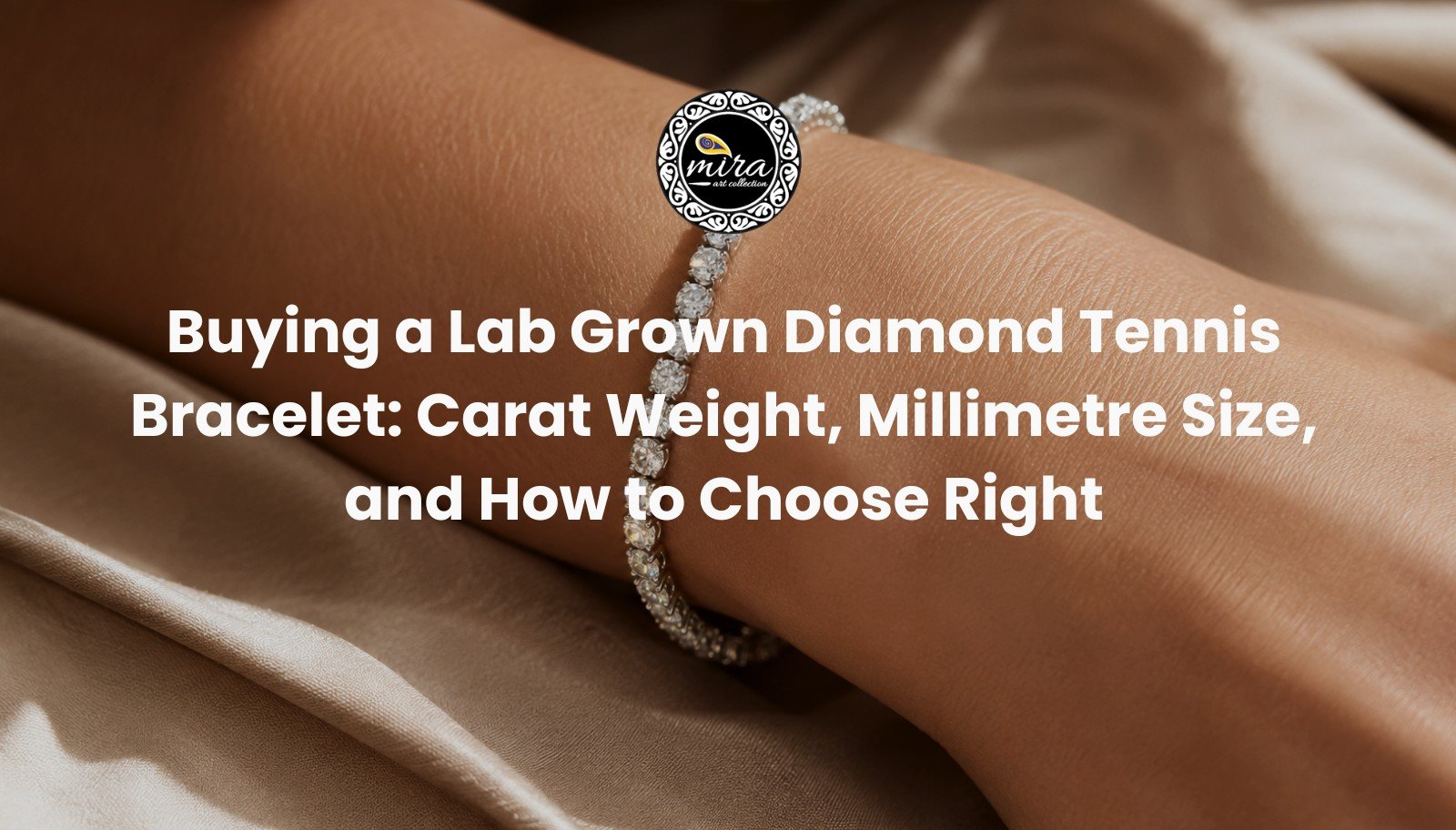
Few pieces of jewellery generate as many second-guesses at checkout as a tennis bracelet. It looks simple enough — a single line of diamonds wrapped around the wrist — but the moment you start comparing options, two numbers start competing for your attention: carat weight and millimetre size. They sound like they should tell you the same thing. They don’t, and getting that distinction wrong is the single most common reason buyers end up disappointed with a bracelet that looked perfect in a product photo but felt off the moment it arrived.
This guide breaks down exactly how a lab grown diamond tennis bracelet is sized, priced, and built, so you can walk into that decision with a clear head instead of guessing between two similar-looking spec sheets. We’ll go through what actually separates carat weight from mm size, how wrist size and setting style change what looks right, and where lab grown diamonds specifically change the calculation compared to natural stones.
What Makes a Tennis Bracelet a Tennis Bracelet
A lab grown diamond tennis bracelet is, at its core, a flexible line of individually set diamonds running the full length of a bracelet, secured by a clasp sturdy enough for daily wear. The name has an unusual origin: it was originally sold simply as a “diamond line bracelet,” and picked up its current name after a professional tennis player famously paused a match to search for her bracelet after the clasp gave way mid-game.
What’s changed since then isn’t the basic design — it’s the range of ways a modern piece can be built. A lab grown diamond tennis bracelet today can be set in a four-prong, shared-prong, or bezel style, finished in white, yellow, or rose gold or platinum, and specified down to the exact millimetre size of every individual stone. That level of customisation is exactly why carat weight and mm size need to be understood separately rather than treated as interchangeable.
Carat Weight vs. Millimetre Size: What’s Actually Different
Carat Weight
In a lab grown diamond tennis bracelet, carat weight measures how much the diamonds weigh in total, not how large any individual stone looks. According to GIA’s own explanation of carat weight, a carat is a standardised unit equal to 200 milligrams, and it describes weight rather than physical dimensions. In a tennis bracelet, that total carat weight is spread across every stone in the line, so a 3.00 carat bracelet with 60 stones carries a very different look than a 3.00 carat bracelet with 40 larger stones.
- Around 1.00 ct total: A subtle, everyday line of sparkle that sits close to the wrist.
- 2.00 to 3.00 ct total: The most commonly chosen range — noticeable without tipping into a full statement piece.
- 4.00 ct and above: Reserved for clients who want a genuine focal point rather than a quiet accessory.
Millimetre Size
For a lab grown diamond tennis bracelet, millimetre size describes the diameter of each individual stone, and it’s the number that actually determines how big every diamond looks sitting on the wrist. Two bracelets with identical total carat weight can look meaningfully different if one uses smaller, more numerous stones and the other uses fewer, larger ones.
- 1.7mm to 2.0mm per stone: Delicate, fine, and understated.
- 2.5mm to 3.0mm per stone: The classic, most versatile look for a lab grown diamond tennis bracelet.
- 3.5mm and above per stone: Bold, high-impact, and best suited to statement pieces.
The practical takeaway: carat weight tells you roughly what the bracelet is worth, while mm size tells you what it will actually look like on your wrist. A well-informed buyer checks both before deciding, rather than anchoring on carat weight alone because it’s the more familiar number.
Which Number Should Actually Guide Your Decision?
There’s no universally correct answer for a lab grown diamond tennis bracelet — it comes down to what you’re optimising for.
If visual appearance is your priority, lead with millimetre size. It tells you directly how prominent each stone will look, independent of how carat weight happens to be distributed across the piece.
If overall value is your priority, lead with carat weight, since it reflects the total material weight of diamond in the bracelet and is the figure most closely tied to price.
Most experienced buyers end up using both together — settling on an mm size that looks right on their specific wrist, then checking what total carat weight that translates to at their chosen bracelet length, rather than picking one number in isolation.
Factors That Should Shape Your Choice
1. Occasion and Personal Style
A lab grown diamond tennis bracelet meant for daily wear generally calls for a different spec than one bought for a single formal event.
- Everyday wear: 1.00 to 2.00 ct total, with stones in the 1.7mm to 2.5mm range, tends to sit comfortably and draw the right amount of attention without feeling excessive.
- Formal or statement occasions: 3.00 ct and above, with stones from 3.0mm upward, delivers the kind of presence that’s appropriate for evening wear.
2. Wrist Size
On a lab grown diamond tennis bracelet, the same mm size can read completely differently depending on wrist circumference.
- Smaller wrists (under 6 inches): 1.7mm to 2.0mm stones tend to look proportionate rather than overwhelming.
- Average wrists (6 to 7 inches): 2.5mm to 3.0mm stones generally hit the most balanced, flattering proportion.
- Larger wrists (over 7 inches): 3.5mm and above helps the bracelet read clearly rather than getting visually lost.
3. Budget
Price rises faster than size, not in a straight line — larger individual stones cost disproportionately more per carat than smaller ones of comparable quality, so a jump from 2.5mm to 3.5mm stones can move the total price far more than the visual difference alone might suggest. This is one area where a lab grown diamond tennis bracelet has a genuine practical advantage: because lab grown diamonds are typically priced lower per carat than natural stones of comparable grade, buyers can often move up in mm size or total carat weight for a similar budget compared to a natural-diamond equivalent.
4. Diamond Quality Beyond Size
Size and weight aren’t the whole story. Cut, colour, and clarity all affect how a lab grown diamond tennis bracelet actually performs in daily light, and a smaller, better-cut bracelet frequently looks livelier than a larger one built from mediocre stones. A well-matched set of consistently cut, consistently graded lab grown diamonds will read as more cohesive and sparkle more evenly across the full line than a mismatched batch, regardless of the total carat figure on the certificate.
MM Size to Carat Weight: A Practical Reference
Because these conversions come up constantly when specifying a lab grown diamond tennis bracelet, here’s a general reference for how mm size and total carat weight typically relate across a standard 7-inch line of round stones. Treat these as working approximations rather than fixed figures — actual results shift slightly depending on stone shape, cut proportions, and exact bracelet length.
| MM Size (per stone) | Approx. Carat per Stone | Approx. Total Carat (7 in.) | Overall Look |
| 1.7mm | ~0.02 ct | ~1.00 ct | Fine and delicate |
| 2.0mm | ~0.03 ct | ~1.50 ct | Subtle, everyday |
| 2.5mm | ~0.06 ct | ~2.50 ct | Classic, versatile |
| 3.0mm | ~0.10 ct | ~4.00 ct | Noticeable statement |
| 3.5mm | ~0.14 ct | ~5.50 ct | Bold and glamorous |
If you’re speccing a custom lab grown diamond tennis bracelet, this table is a useful starting conversation with your supplier, but always confirm the exact figures for your specific stone shape and bracelet length before finalising an order.
Setting Styles: How the Mount Changes the Final Look
The setting style used along a lab grown diamond tennis bracelet changes how prominent each stone appears, independent of carat weight or mm size.
Four-prong settings hold each stone with four visible claws, letting maximum light into the diamond for the strongest possible sparkle, though the prongs themselves are slightly more visible along the line.
Shared-prong settings let neighbouring stones share a single prong between them, creating a more continuous, seamless line of diamonds with less visible metal — a popular choice for buyers who want the bracelet to read as one unbroken sparkle.
Bezel settings wrap a thin rim of metal around each stone, offering the most protection for daily wear at a slight cost to brilliance, since less of the stone’s surface is exposed to direct light.
Three-prong settings sit between the two extremes — less metal than a four-prong line, more visible structure than a shared-prong design — and work well for buyers who want durability without fully committing to a bezel’s more contained look.
Metal Choice for a Lab Grown Diamond Tennis Bracelet
Metal tone is often an afterthought when shopping for a lab grown diamond tennis bracelet, but it changes how the whole line reads on the wrist just as much as stone size does.
White gold and platinum stay virtually invisible against the diamonds themselves, letting the line of stones do all the visual work. This is the most common choice for buyers who want the bracelet to read as pure sparkle rather than a metal-and-diamond combination.
Yellow gold has made a strong comeback in recent years, and against yellow gold, a lab grown diamond tennis bracelet reads warmer and slightly more vintage-inspired, with the metal itself becoming part of the visual texture of the piece rather than disappearing behind it.
Rose gold softens the overall look and has become a popular choice specifically for daily-wear bracelets, since it tends to photograph and wear well against a wide range of skin tones without competing with the diamonds’ brilliance.
Platinum specifically is worth calling out on its own: it’s denser and more durable than gold, which matters more for a tennis bracelet than for almost any other jewellery category, since the clasp and prongs on a bracelet absorb far more daily wear and impact than a ring or pendant typically does.
How Bracelet Length Changes the Numbers
Every figure in this lab grown diamond tennis bracelet guide assumes a standard 7-inch length, which fits most average wrists, but length is its own variable worth getting right before finalising carat weight or mm size.
A shorter 6.5-inch bracelet will naturally carry a lower total carat weight than a 7.5-inch bracelet built from the exact same mm-size stones, simply because it contains fewer stones along the line. This matters most when comparing quotes between suppliers — a lower total carat weight quoted for a shorter bracelet isn’t necessarily a lower-quality piece, and a same-length comparison is the only fair way to judge value between two options.
Getting bracelet length right is also a comfort issue as much as a sizing one. A tennis bracelet that’s too tight will dig into the wrist during normal movement, while one that’s too loose will spin around and expose the clasp — measuring wrist circumference accurately, and adding a small comfort allowance, matters just as much as choosing the right mm size or carat weight.
Sourcing Well-Matched Stones: Why Consistency Matters More Than It Seems
A tennis bracelet lives or dies on how consistent its stones are, far more than a solitaire piece does, simply because every mismatch along the line is visible at once rather than hidden in a single centre stone. This is one area where sourcing decisions genuinely affect the finished result, not just the certificate.
If you’re building or speccing a bracelet yourself, our guide to calibrated lab grown diamonds and why size consistency matters for professional manufacturing goes into exactly why a batch of precisely matched melee stones makes such a visible difference in a finished line piece like a tennis bracelet.
If budget is the deciding factor in your carat weight versus mm size decision, our breakdown of lab grown diamond pricing across USD, EUR, and INR is worth checking before you finalise a spec, since price scales differently across shapes and carat brackets than most buyers expect. And if this bracelet is being bought to mark a specific occasion rather than for everyday wear, our piece on how lab grown diamonds mark life’s meaningful milestones covers how to think about a piece meant to carry that kind of significance.
Common Mistakes to Avoid
Fixating on carat weight alone when choosing a lab grown diamond tennis bracelet. Two bracelets with identical total carat weight can look completely different depending on how that weight is distributed across the stones — always cross-check mm size before deciding.
Ignoring wrist proportion. An mm size that looks striking in a product photo can look disproportionate on a smaller wrist, or underwhelming on a larger one. When possible, request photos or video of the bracelet worn on a wrist close to your own size.
Overlooking setting style. A shared-prong setting and a four-prong setting at the identical mm size and carat weight can look noticeably different once worn — don’t finalise a decision based on spec numbers alone without seeing how the setting itself reads.
Skipping certification. Every stone in a lab grown diamond tennis bracelet should be backed by consistent grading, ideally from GIA or IGI, especially for larger mm sizes where quality variation becomes far more visible along the line.
Questions Worth Asking Your Supplier
Ask for the total carat weight and the individual mm size of each stone, not just one or the other — a supplier who can only give you one number is likely working from a less precisely matched batch.
Ask how the stones are matched for colour and clarity across the line. A well-sourced lab grown diamond tennis bracelet should show minimal visible variation from one stone to the next.
Ask for a worn photo or video, not just a flat-lay product shot, so you can judge how the mm size and setting style actually look in motion on a wrist.
Final Thoughts: Choosing With Confidence
A lab grown diamond tennis bracelet rewards buyers who understand both halves of the sizing equation rather than anchoring on the more familiar number. Let millimetre size guide how the bracelet will actually look on your wrist, let carat weight guide your sense of overall value, and don’t separate either from setting style, stone consistency, and proper certification. Get those pieces right together, and the specific numbers on the spec sheet matter far less than how confidently you chose them.
Frequently Asked Questions: Lab Grown Diamond Tennis Bracelets
Neither is more important on its own — they answer different questions. Carat weight reflects total value and weight, while mm size reflects how large each individual stone will actually look on the wrist. Most confident buyers check both together rather than relying on just one.
Lab grown diamonds are generally priced lower per carat than comparable natural stones, which often lets buyers choose a larger mm size or higher total carat weight for a similar budget than a natural-diamond bracelet would allow.
Stones in the 1.7mm to 2.5mm range tend to sit comfortably for daily wear without feeling overly prominent, though the ideal size still depends on wrist size and personal style preference.
Yes, meaningfully. The same mm size can look delicate on a larger wrist and overwhelming on a smaller one, so matching stone size to wrist circumference is one of the most overlooked steps in choosing a tennis bracelet.
A four-prong setting shows more visible metal between stones and maximises light entry for stronger sparkle per stone, while a shared-prong setting creates a more continuous, seamless line with less visible metal between stones.
Most suppliers who work with lab grown diamonds can customise both mm size and total carat weight, along with setting style and metal type, since lab grown stones are typically easier to source in precisely matched batches than natural equivalents.
Ask your supplier directly how stones are matched for colour and clarity across the line, and request a close-up photo or video — visible variation in colour or brilliance from one stone to the next is usually a sign of a less carefully sourced batch.
Generally yes. Bezel settings wrap metal around each stone’s edge, offering better protection against everyday knocks, though this comes with a slight reduction in how much light reaches the stone compared to an open prong setting.
Cut quality affects sparkle more directly than raw carat weight does, so a smaller, well-cut lab grown diamond tennis bracelet often looks livelier and more brilliant than a larger bracelet built from lower-quality stones.
GIA or IGI certification is the most reliable standard, and it matters just as much for the many smaller stones in a tennis bracelet as it does for a single centre stone in a ring, since consistency across the full line depends on every stone being properly graded.
Disclaimer: This article is intended for informational and educational purposes only. Sizing conventions, pricing patterns, and design trends referenced here reflect information available as of 2026. Always consult a qualified jeweller for guidance specific to an individual piece.
Radiant
1.01 ct Radiant PINK VVS2 IGI Certified Lab Grown Diamond
Cushion
4.08 ct Cushion YELLOW VS2 IGI Certified Lab Grown Diamond
Oval
5.01 ct Oval YELLOW VS1 IGI Certified Lab Grown Diamond
Cushion
6.05 ct Cushion PINK VS2 IGI Certified Lab Grown Diamond