

Ring Setting 101: Comparing Solitaire, Halo, and Three-Stone Diamonds
Every engagement ring conversation eventually reaches the same fork in the road. The centre stone is more or less decided — shape, carat range, colour and clarity all narrowed down — and then the question shifts to something less obvious: what actually holds that diamond, and what does the setting do to how it looks, wears, and photographs for the next several decades?
This is where diamond ring settings quietly become the more important decision of the two. The same round brilliant can look completely different depending on whether it sits alone in a slim band, surrounded by a halo of smaller stones, or flanked by two additional diamonds on either side. None of the three is objectively “better.” Each does a different job, suits a different hand and lifestyle, and tells a slightly different story about the wearer. This guide walks through solitaire, halo, and three-stone diamond ring settings in detail — how each one is built, what it does visually, how it wears day to day, and which one tends to suit which kind of buyer.
What “Diamond Ring Settings” Actually Means
Before comparing styles, it helps to be precise about what the term covers. Diamond ring settings refer to the metalwork and stone arrangement that holds the centre diamond in place — the prongs, bezel, or channel structure, plus any accent stones arranged around or beside it. The setting is separate from the diamond itself; the same 1.5-carat oval could be mounted as a solitaire, a halo, or a three-stone design, and each choice changes the finished ring’s presence, durability, and price without changing the diamond underneath it at all.
That distinction matters because many first-time buyers conflate the diamond and the setting into a single decision, when really they’re two separate ones made in sequence. Get the diamond right first — shape, quality, budget — and then treat the setting as its own design problem with its own trade-offs.
The Solitaire Setting: Understated by Design
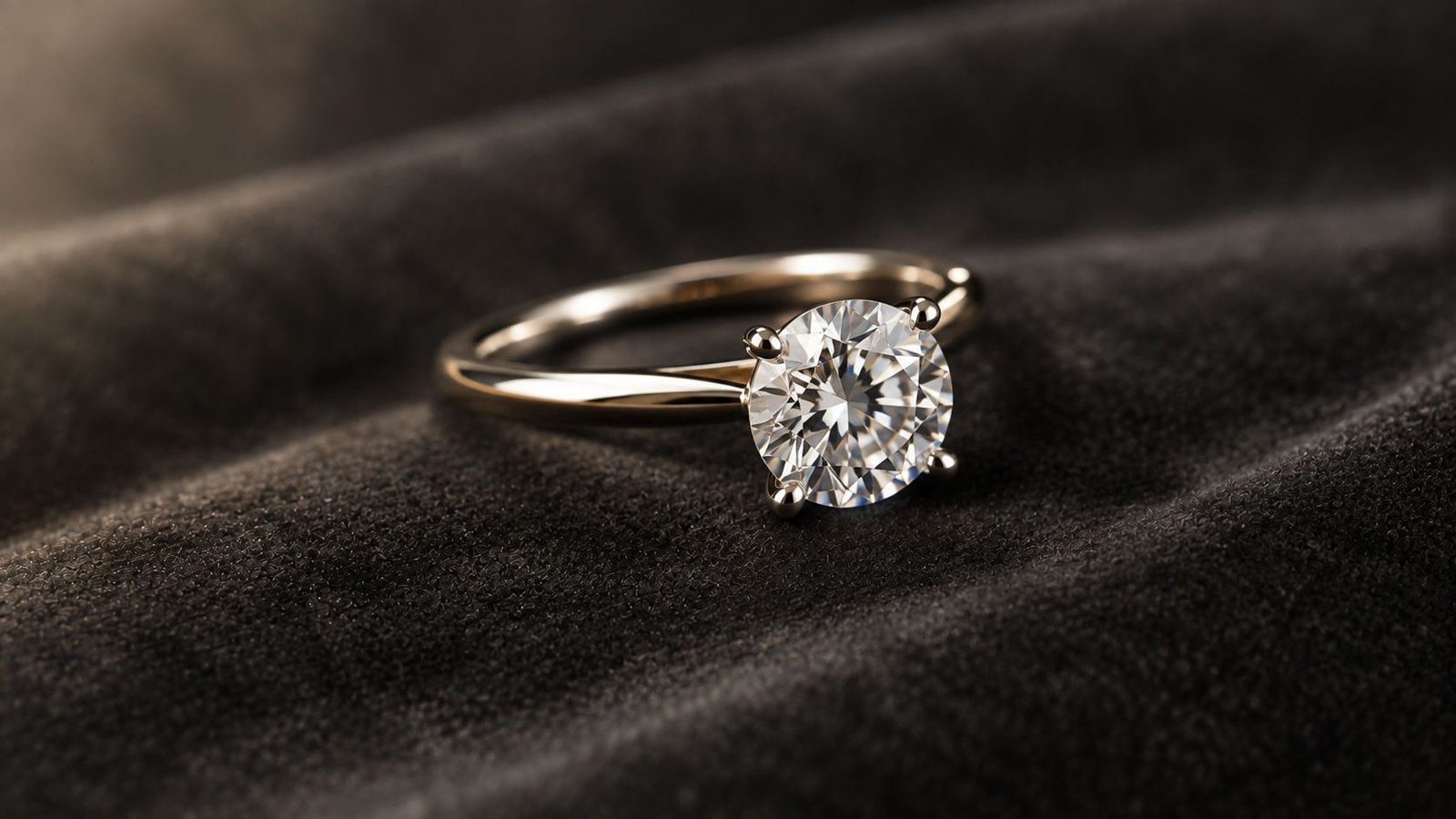
The solitaire is the oldest and most recognisable of the three styles, and its enduring popularity comes down to restraint. A single centre diamond, typically held by four or six prongs, sits on a plain or lightly detailed band with nothing else competing for attention.
Why Solitaires Remain the Default Choice
A solitaire setting puts the entire visual weight on the centre diamond’s own cut, proportions, and light performance. There’s nowhere for a mediocre cut to hide, which is precisely why serious buyers who’ve invested in a well-cut stone often gravitate toward this style — it lets the diamond do the talking rather than surrounding it with distraction. The clean silhouette also ages well; a solitaire bought today will look just as appropriate in twenty years as it does now, largely immune to shifting jewellery trends.
Solitaires are also the easiest of the three settings to resize, repair, and clean, since there are no accent stones to work around during any of those processes. For a ring that will likely see decades of daily wear, that practical simplicity carries real long-term value beyond the initial purchase. This blend of restraint and low upkeep is exactly why solitaire diamond ring settings remain the industry’s default choice year after year.
Where Solitaires Fall Short
The trade-off is presence. A solitaire relies entirely on the centre stone’s actual size and cut quality to create visual impact, since there’s no supporting cast of smaller diamonds adding perceived sparkle or apparent size. A smaller or lower-colour diamond that might read as more impressive inside a halo can look comparatively modest set alone, which is worth factoring in honestly before committing to this style on a tighter budget. This is one of the most commonly cited limitations of solitaire-style diamond ring settings among first-time buyers.
The Halo Setting: Maximising Perceived Size and Sparkle

A halo setting surrounds the centre diamond with a ring of smaller accent stones, almost always set close together in a continuous circle or cushion-shaped border that frames the main diamond. As a category, halo diamond ring settings are built around exactly this kind of visual amplification.
What a Halo Actually Does Visually
The mechanics here are fairly simple but genuinely effective. A halo of small diamonds sitting flush against the centre stone’s girdle makes the whole cluster read as one larger continuous diamond from a normal viewing distance, particularly in photographs or under indoor lighting where fine detail is harder to pick out. This is the primary reason halo diamond ring settings have become so widely requested among buyers working with a fixed budget who still want a ring that reads as substantial.
Beyond size, a halo setting adds a second, faster layer of sparkle. The centre stone flashes at its own rhythm while the smaller halo stones catch and release light more quickly, and the combined effect produces noticeably more overall movement than a solitaire of the same centre carat weight. For buyers specifically drawn to maximum sparkle over minimalist restraint, this is usually the deciding factor.
The Real Trade-Offs of a Halo
Halo settings do carry some genuine downsides worth being upfront about. The additional prongs and metalwork around the centre stone make the ring somewhat harder to clean thoroughly at home, since debris and lotion residue can build up in the tighter gaps between the centre stone and its surrounding accents. Halo rings can also look dated faster than a solitaire if the specific halo shape follows a moment-in-time trend rather than a more classic round or cushion outline, so it’s worth choosing a halo shape that has stayed popular over a longer stretch rather than one tied to a single recent styling wave.
There’s also a resizing consideration. Because the halo sits so close to the centre stone and often extends partway down the shoulders of the ring, resizing a halo setting is typically a more involved — and slightly more expensive — job for a jeweller than resizing a plain solitaire band. These are the trade-offs worth weighing carefully before committing to halo diamond ring settings specifically.
The Three-Stone Setting: Symbolism Built Into the Design
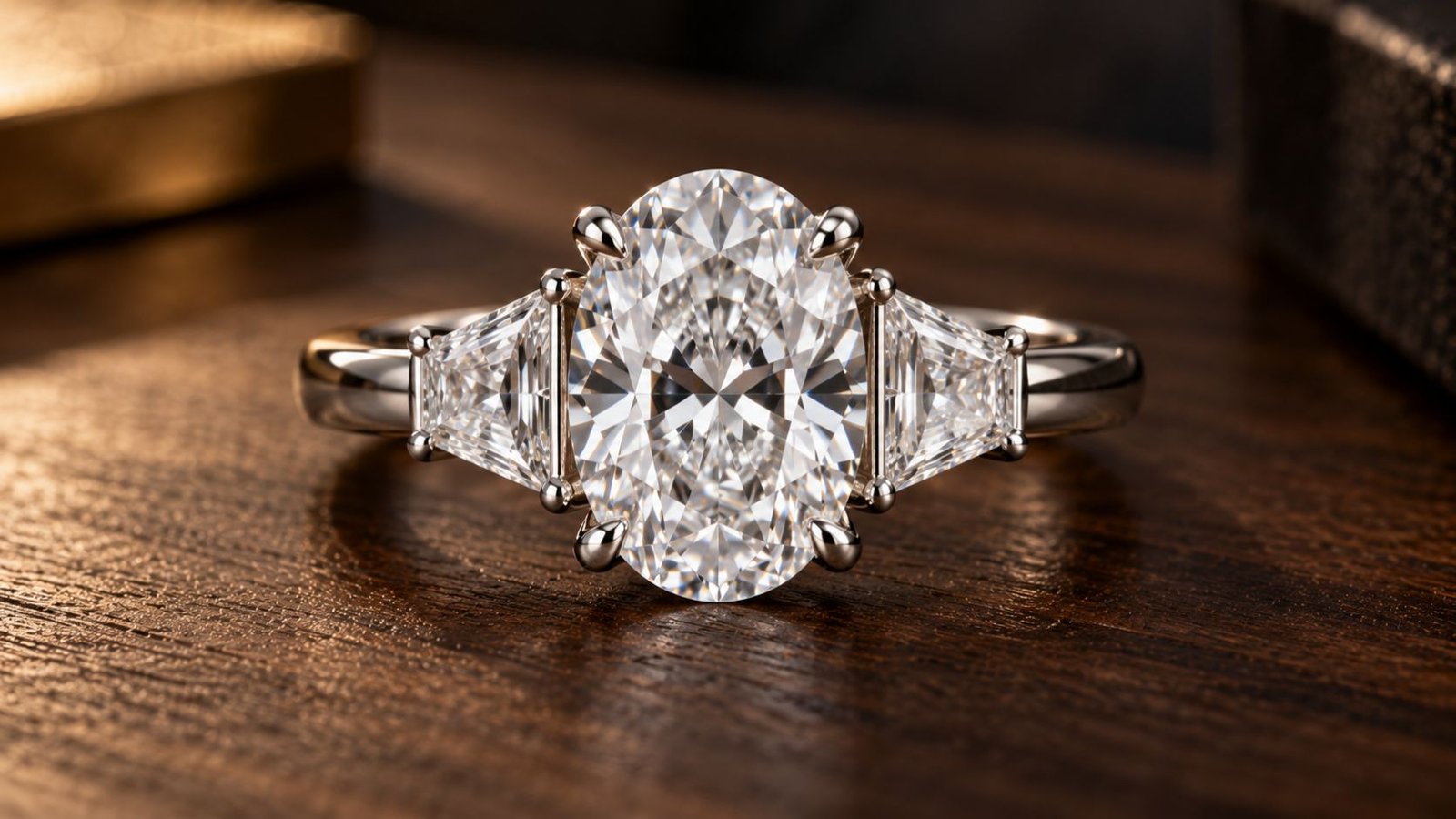
A three-stone setting places the centre diamond between two flanking stones, usually smaller than the centre but matched in cut and colour, running in a single horizontal line across the finger.
The Meaning Behind the Structure
Three-stone rings carry more built-in symbolism than either of the other two styles, and that meaning is a meaningful part of why buyers choose this setting specifically. The three stones are commonly read as representing a couple’s past, present, and future, which gives the ring a narrative that solitaire and halo settings simply don’t carry in the same explicit way. For buyers who want the ring itself to say something beyond “this is an engagement ring,” that built-in story is often the deciding factor over any purely visual consideration. It’s this narrative that sets three-stone diamond ring settings apart from the other two styles.
How a Three-Stone Ring Wears and Looks
Visually, three-stone diamond ring settings create a more elongated silhouette across the finger than either a solitaire or a halo, which can be genuinely flattering depending on hand shape and finger length. Pairing a round or cushion centre stone with pear or trapezoid side stones is a particularly popular combination, since the tapered side stones echo the centre shape while adding visual length without adding much actual carat weight or cost.
Three-stone settings do ask a bit more of the wearer’s hand than a solitaire, since the ring’s total width and weight sit noticeably higher across the finger. It’s worth trying one on in person before committing, since the visual proportions read differently on different hand sizes than they do in a product photo.
Durability Considerations for Three-Stone Rings
Because a three-stone setting has three separate stones each requiring their own prongs, there are simply more points of potential wear and more places for a prong to eventually need re-tipping compared to a solitaire’s single stone. This isn’t a reason to avoid the style, but it does mean a three-stone ring benefits from a slightly more frequent professional check-up than a solitaire would need over the same number of years. Regular maintenance is simply part of owning three-stone diamond ring settings long-term.
Solitaire vs Halo vs Three-Stone: A Side-by-Side Comparison
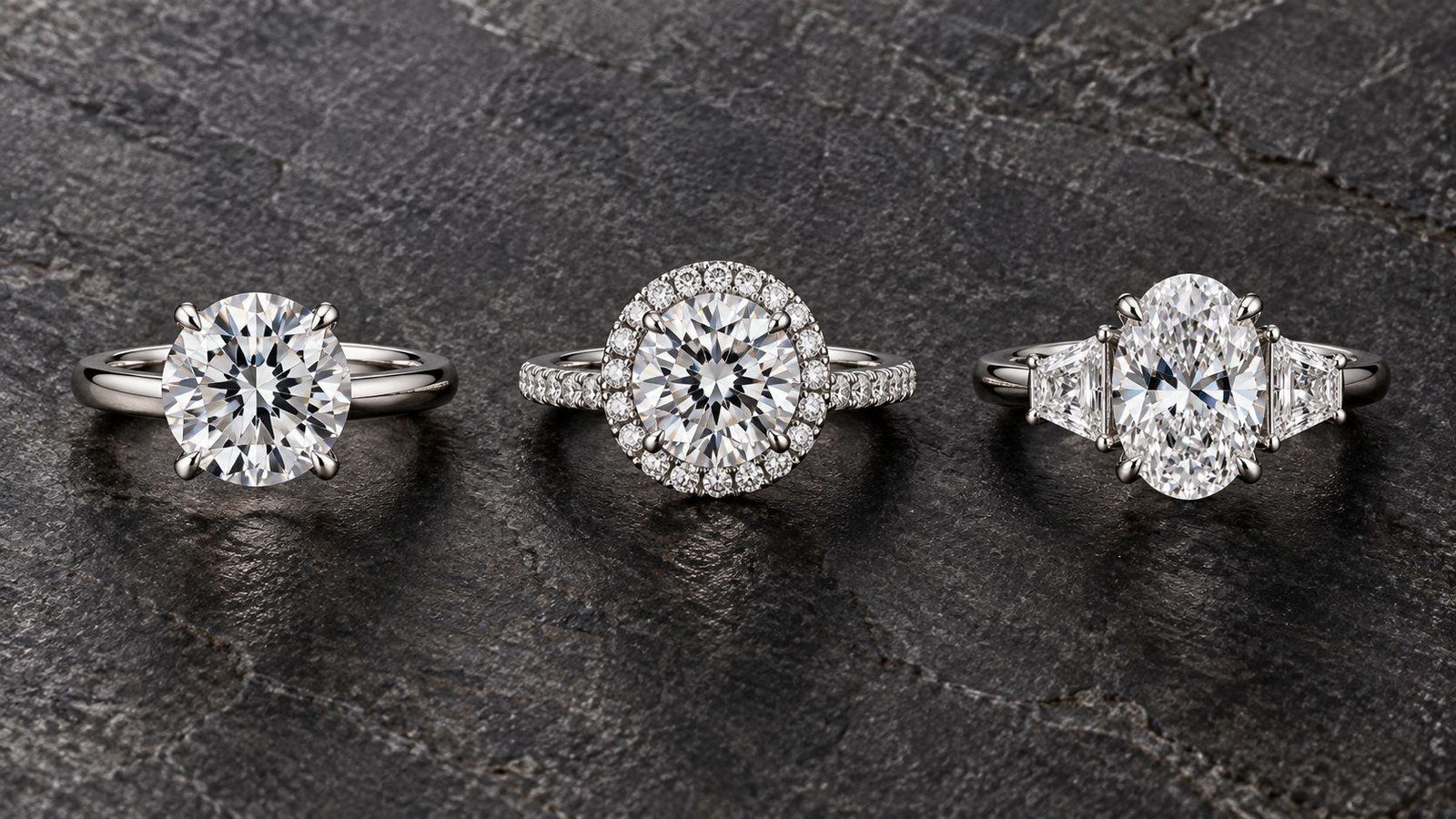
| Feature | Solitaire | Halo | Three-Stone |
| Visual focus | Centre diamond alone | Centre diamond + surrounding sparkle | Centre diamond + narrative symbolism |
| Perceived size boost | None | Significant | Moderate |
| Everyday cleaning | Easiest | More involved | Moderate |
| Resizing complexity | Lowest | Highest | Moderate to high |
| Style longevity | Timeless | Depends on halo shape | Timeless |
| Best hand fit | Any hand shape | Shorter or narrower fingers | Longer fingers |
| Symbolic meaning | Minimal | Minimal | Strong (past, present, future) |
| Ideal for | Purists who prioritise a well-cut stone | Buyers maximising visual impact per carat | Buyers who want built-in meaning |
How Diamond Shape Interacts With Each Setting

The centre diamond’s shape changes how each of these three settings performs, and it’s worth thinking about shape and setting together rather than choosing one and then the other in isolation.
Round and cushion cuts adapt well to all three diamond ring settings, which is part of why they remain the two most commonly chosen centre shapes. Elongated shapes like oval, marquise, and pear tend to look especially striking in a three-stone design, since tapered side stones naturally continue the centre stone’s own elongated line.
Emerald and other step cuts pair particularly well with a halo, since the halo’s continuous outline balances the step cut’s more architectural, geometric lines. Our guide to choosing a lab grown diamond shape for an engagement ring goes into this shape-specific reasoning in more depth if the centre stone shape isn’t fully decided yet. Getting this pairing right is a big part of what makes certain diamond ring settings feel intentional rather than generic.
Lab Grown Diamonds and the Setting Decision

Lab grown diamonds change this decision in one practical way worth naming directly: because lab grown pricing sits well below comparable natural diamond pricing for the same size and quality, buyers often find they can afford a larger centre stone, a more elaborate halo, or well-matched three-stone side diamonds within the same overall budget that might only stretch to a modest solitaire in natural stones.
That extra budget flexibility is a genuine part of why more buyers are able to choose a setting based on which style they actually prefer, rather than which one their budget technically allows. This pricing advantage is exactly why lab grown diamonds have become so closely linked with more elaborate diamond ring settings in recent years. For buyers weighing a centre diamond purchase generally, the GIA’s overview of laboratory-grown diamonds is a useful independent reference point on how these stones are identified and graded.
Setting choice also interacts with diamond cut grade in a way worth understanding. A diamond’s cut — not its carat weight — is what determines how much light it returns to the eye, and a solitaire setting in particular leaves that cut quality fully exposed with nothing to visually compensate for a weaker one. The GIA’s diamond cut grading information explains how cut grade is actually assessed, which is worth reviewing before finalising a centre stone destined for a solitaire mount specifically.
Common Misconceptions About Diamond Ring Settings
“A halo is always the better value option.” A halo does create the appearance of a larger stone for less money, but it also adds ongoing maintenance and, over time, more prongs that eventually need attention. Value should be measured across the ring’s whole lifetime, not just at the point of purchase.
“Three-stone rings are old-fashioned.” The symbolism behind three-stone settings is genuinely timeless, and the style has moved through several modern reinterpretations — slimmer bands, mixed shapes, contemporary metal finishes — that keep it feeling current rather than dated.
“A solitaire looks plain or unfinished.” A solitaire is a deliberate design choice that prioritises the diamond’s own cut and proportions over any additional embellishment. On a well-cut stone, that restraint often reads as more elevated, not less finished.
“The setting doesn’t affect how the diamond wears day to day.” Setting style has a direct, measurable effect on how often a ring needs cleaning, how easily it snags on fabric, and how straightforward future resizing will be — it’s a practical decision as much as an aesthetic one.
Choosing Between the Three: A Practical Framework
Rather than starting from which style looks best in isolation, it helps to work through a short set of practical questions first. What’s the wearer’s daily routine, and how much hands-on work does it involve? Someone working regularly with their hands may find a low-profile solitaire or a well-secured three-stone setting more practical than an intricate halo with more surface detail to catch on things.
What’s the actual budget, and how much of it is meant to go toward carat size versus perceived size versus built-in symbolism? And finally, what does the wearer’s existing jewellery and personal style already lean toward — minimal and clean, detailed and sparkly, or meaningful and story-driven? These questions are the fastest route to narrowing down the right diamond ring settings for an individual buyer.
Answering those three questions honestly tends to point toward one of the three diamond ring settings fairly clearly, well before any specific ring is tried on in person. From there, trying the shortlisted style on with the actual centre stone shape in mind is the only reliable way to confirm the decision, since photographs and product renderings rarely capture how a setting’s proportions actually sit on an individual hand.
Final Thoughts: There’s No Universally “Best” Setting
Solitaire, halo, and three-stone diamond ring settings each solve a different design problem, and none of them is a mistake if it’s chosen for the right reasons. A solitaire rewards a genuinely well-cut stone with nowhere to hide it. A halo stretches a given budget further in visual terms while asking for a bit more upkeep in return. A three-stone setting carries a story into the design itself that neither of the other two styles quite matches. The right choice comes down to matching the setting’s real trade-offs — in maintenance, in visual effect, in meaning — against what actually matters most to the person who’ll be wearing the ring every day.
Frequently Asked Questions: Diamond Ring Settings
Solitaire settings are generally the most durable for daily wear since there’s only one stone and one set of prongs to maintain, though a well-made three-stone or halo setting can hold up just as well with regular professional check-ups.
Yes. A halo of closely set smaller diamonds around the centre stone creates the visual effect of one larger continuous diamond, which is one of the main reasons buyers choose this style on a fixed budget.
No. While three-stone rings are commonly chosen as engagement rings for their past-present-future symbolism, the same setting style works equally well as an anniversary ring or a standalone fashion piece.
A solitaire is the easiest to clean at home, since there’s a single stone and no tight gaps between accent stones where debris or lotion residue can collect.
Most shapes can work, but elongated shapes like oval, pear, and marquise tend to look especially well-proportioned in a three-stone design, since tapered side stones naturally continue the centre stone’s own line.
It depends on the accent stones used, but a halo generally costs somewhat more than a plain solitaire of the same centre stone, since it includes additional small diamonds and more detailed metalwork.
Yes. Lab grown diamonds perform identically to natural diamonds in terms of hardness and brilliance, so they suit solitaire, halo, and three-stone settings equally well, with the added benefit of more budget flexibility for the setting itself.
A halo setting benefits from a professional check roughly once a year, since the additional prongs holding the smaller accent stones are more numerous and can loosen slightly with regular wear.
Solitaires and slimmer three-stone designs tend to suit smaller or narrower hands well, since a large, wide halo can occasionally look disproportionate on a more petite finger.
In many cases yes — a jeweller can often reset a centre diamond into a new mounting, though the feasibility and cost depend on the diamond’s shape, the condition of the original setting, and the complexity of the new design.
Disclaimer: This article is intended for informational and educational purposes only and reflects general jewellery design conventions. Individual ring proportions, comfort, and durability can vary by hand shape, lifestyle, and craftsmanship. Always consult a qualified jeweller before finalising a setting choice for a specific diamond.