

Diamond Growth Time: 5 Important Factors Behind Weeks vs Months
A question that comes up constantly among wholesale buyers and curious consumers alike is deceptively simple: how long does it actually take to grow a diamond? The honest answer is considerably less straightforward than most people expect, because diamond growth time varies enormously depending on the specific stone being produced — sometimes just a few weeks, sometimes well over two months, even within the same production facility.
This variability is not random, and it is not a sign of inconsistency or unreliability in the manufacturing process. It reflects a genuinely complex set of technical trade-offs that diamond growers navigate for every single production run, balancing speed against quality, size against consistency, and equipment capacity against overall output. Understanding what actually drives diamond growth time offers real practical value, particularly for wholesale buyers trying to plan realistic lead times and for anyone curious about what actually happens inside a diamond growth facility.
This guide breaks down the five most significant factors behind diamond growth time variability, walks through realistic timeframes for different stone categories, and explains what this all means for buyers planning around production schedules.
How Lab Grown Diamonds Are Actually Made
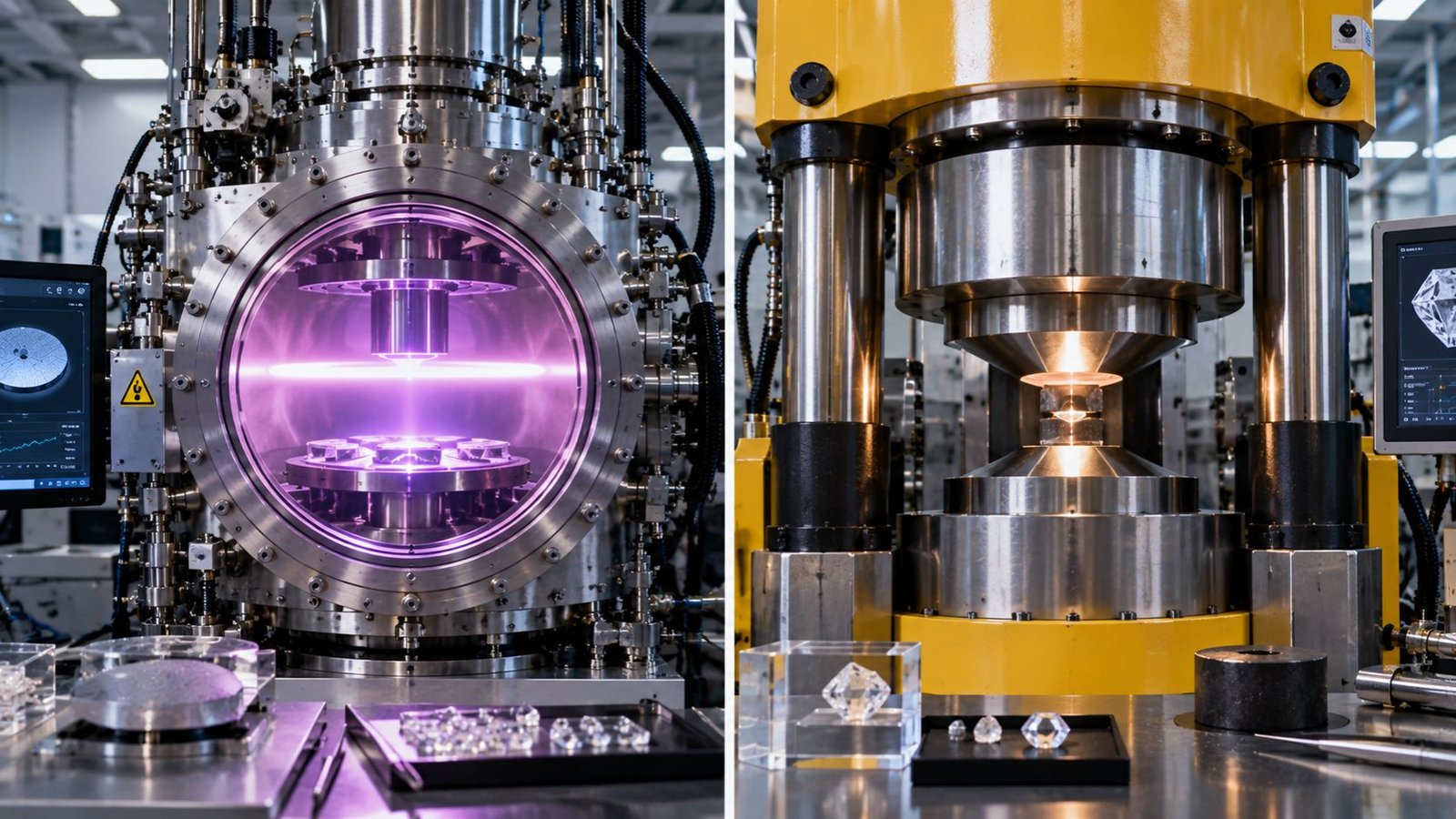
Lab grown diamonds are produced using one of two primary methods, and understanding both is essential context for understanding why diamond growth time varies so much. Chemical Vapor Deposition, or CVD, grows a diamond by exposing a thin diamond seed to a carbon-rich gas mixture inside a vacuum chamber, using microwave energy to break the gas down into plasma. Carbon atoms from that plasma settle onto the seed layer by layer, gradually building a diamond crystal from the bottom up over an extended period.
High-Pressure High-Temperature, or HPHT, growth takes a fundamentally different approach, replicating the extreme pressure and heat conditions found deep within the Earth to force carbon into a diamond crystal structure around a small seed, typically using a hydraulic press capable of generating enormous sustained pressure alongside intense heat.
Both methods can produce excellent gem-quality diamonds, but they differ meaningfully in how long a given production run actually takes, which is the first of several factors driving diamond growth time variability.
Factor 1: Target Carat Size and Final Weight
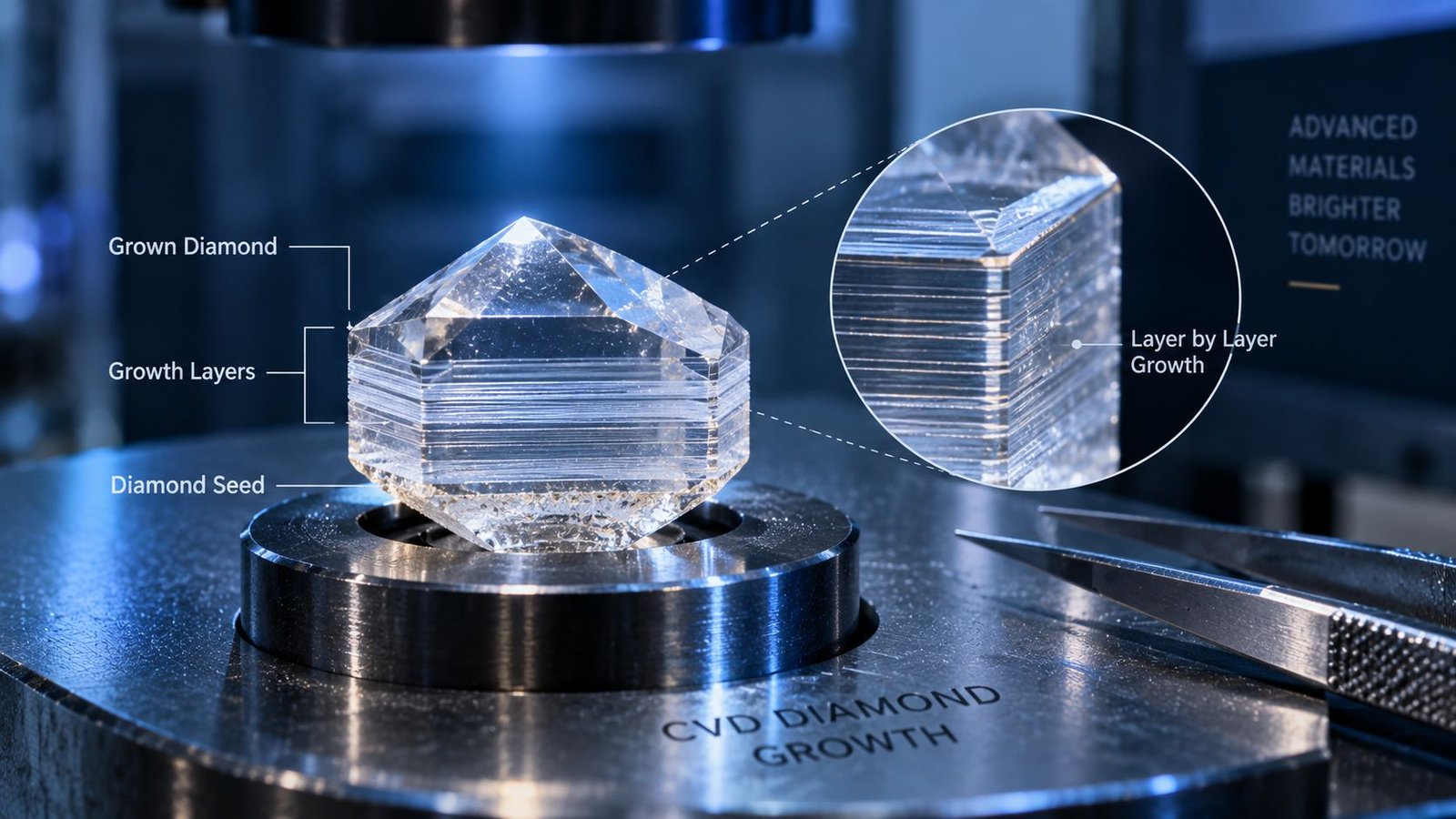
The single biggest driver of diamond growth time is simply how large the finished stone needs to be. Because CVD growth builds a crystal gradually, atom by atom, layer by layer, a larger target carat weight directly requires a proportionally longer growth period. A small melee-sized stone destined for a pavé setting might complete its growth cycle in a matter of days to a couple of weeks, while a larger stone intended for a prominent centre stone position can require six to ten weeks or more of continuous growth time to reach the necessary size before cutting even begins.
This relationship is not perfectly linear, since growth rate can vary somewhat throughout a run depending on reactor conditions, but the general principle holds firmly across the industry: bigger finished stones require meaningfully longer diamond growth time, and buyers seeking larger, more substantial centre stones should generally expect correspondingly longer production and delivery timelines.
Factor 2: Growth Method and Reactor Conditions
CVD and HPHT growth operate on different timelines even when producing similarly sized rough material. CVD growth tends to progress at a relatively steady, gradual rate measured in fractions of a millimetre per hour, meaning total diamond growth time for a given size is comparatively predictable but often longer in absolute terms. HPHT growth can, under certain conditions, produce rough material somewhat more quickly for specific size and colour targets, though it comes with its own equipment and process constraints that affect overall throughput differently than CVD.
Reactor and press conditions also introduce meaningful variability within each method. Temperature stability, gas composition consistency for CVD, and pressure calibration for HPHT all affect how efficiently a given growth run proceeds, meaning two production runs targeting the same final carat weight can still show measurably different diamond growth time depending on how smoothly the specific run proceeds technically.
Factor 3: Target Colour Grade and Post-Growth Treatment

As-grown diamond rough does not always emerge at the precise colour grade a producer is targeting for the finished stone. CVD-grown rough in particular often develops a brownish tint during growth, caused by structural strain accumulated as the crystal builds layer by layer, which frequently requires a secondary HPHT annealing treatment after initial growth to remove that tint and achieve a more desirable, near-colourless final grade.
This secondary treatment step adds meaningfully to total diamond growth time, since the rough must complete its initial CVD growth cycle, undergo a separate HPHT annealing process afterward, and then proceed through cutting and polishing only once that treatment is complete. Producers targeting fancy colour diamonds, such as blue or pink stones achieved through specific treatment processes, face additional timeline considerations tied to those particular treatment steps as well.
Factor 4: Reactor and Press Capacity, Batch Scheduling

Beyond the pure physics of crystal growth, practical facility logistics meaningfully affect how quickly a specific order moves through production. Diamond growth facilities operate a finite number of reactors or presses, each capable of running a limited number of seeds simultaneously, and facility scheduling — how many other orders are currently in the production queue, how reactors are allocated across different size and quality targets, and routine equipment maintenance schedules — all affect how quickly a specific new order actually begins its growth cycle, independent of how long the growth process itself technically requires.
This means published diamond growth time estimates from a producer often reflect actual growth duration only, without necessarily accounting for queue time before a specific order’s growth cycle even begins. Buyers working directly with manufacturing facilities benefit from asking specifically about current queue times alongside standard growth duration estimates, since the two can differ considerably depending on facility demand at any given moment.
Factor 5: Cutting, Polishing, and Certification Timeline
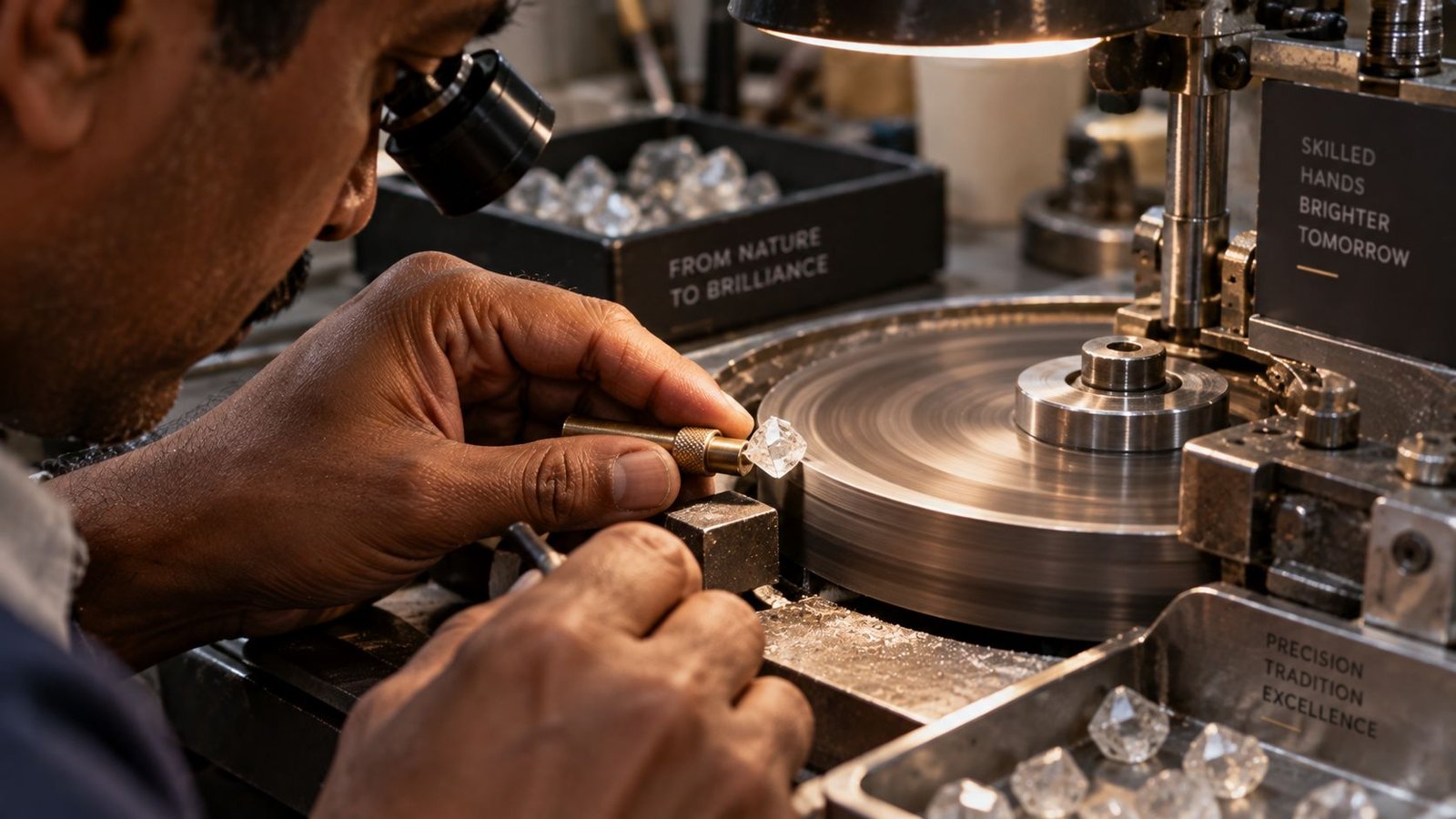
Diamond growth time itself is only one portion of the total time between placing an order and receiving a finished, certified stone. Once rough material completes its growth cycle, it must be evaluated, planned for cutting, actually cut and polished by a skilled diamond cutter, and then submitted to a grading laboratory for certification — each of which adds meaningful additional time beyond the growth period itself.
Cutting and polishing timelines vary depending on the complexity of the target cut and the cutter’s current workload, typically adding anywhere from several days to a few weeks. Certification timelines depend heavily on the grading laboratory’s current submission volume, with major labs like GIA and IGI sometimes experiencing longer turnaround during periods of particularly high submission volume industry-wide. Buyers evaluating total delivery timelines should account for this full production pipeline, not just the diamond growth time portion specifically, to set realistic expectations for when a finished, certified stone will actually be available. For more on how certification affects a stone’s documented value, see our guide on what happens if a diamond certificate is lost.
Typical Timeframes by Stone Size
While exact figures vary by producer and specific order, general industry patterns provide a useful reference point. Small melee diamonds, typically under a quarter carat and often grown in larger batches simultaneously, generally complete growth in one to three weeks. Mid-size stones in the half-carat to one-carat range typically require three to six weeks of growth time. Larger stones in the one-and-a-half to two-carat range often need six to eight weeks, and stones above three carats can require eight to twelve weeks or longer, particularly when targeting the highest colour and clarity grades.
These figures reflect growth time specifically and do not include the additional cutting, polishing, and certification time discussed above, which can meaningfully extend total delivery timelines beyond the growth period alone.
What This Means for Wholesale Buyers and Retailers

Understanding diamond growth time variability carries genuine practical value for wholesale buyers and retailers planning inventory and customer expectations. Placing orders for larger, more time-intensive stones well ahead of anticipated demand, rather than expecting rapid turnaround comparable to smaller melee orders, helps avoid inventory gaps during peak selling periods such as engagement season. Building realistic customer-facing timelines for custom or made-to-order pieces, informed by accurate production time expectations rather than optimistic best-case assumptions, helps manage customer expectations and reduces the friction that comes from missed delivery estimates.
Maintaining relationships with multiple producers or reactor facilities, rather than relying on a single source, can also provide valuable flexibility during periods of high demand or facility scheduling constraints, helping buyers secure more predictable delivery timelines even when individual facility queues fluctuate.
The Bottom Line
Diamond growth time is shaped by a genuinely complex interplay of factors — target size, growth method, colour requirements, facility scheduling, and the additional cutting and certification pipeline that follows growth itself. None of this variability reflects inconsistency or unreliability in lab grown diamond production; it simply reflects the real physical and logistical realities of building a diamond crystal, atom by atom or under sustained pressure, to a specific size and quality target.
For buyers and retailers, understanding these factors leads to more realistic planning, better-informed customer conversations, and fewer surprises when a larger or more specialised stone takes noticeably longer to arrive than a standard melee order. Diamond growth time, once properly understood, becomes a manageable planning variable rather than an unpredictable source of frustration.
Frequently Asked Questions
It depends on target carat size, growth method, colour requirements, and facility scheduling, all of which affect how long a specific stone takes to grow.
Small melee diamonds under a quarter carat typically complete growth in one to three weeks, often grown in batches.
CVD growth builds a crystal gradually, so a larger target carat weight directly requires a proportionally longer growth period.
It depends on the specific size and quality target. CVD tends to be steadier but often longer overall, while HPHT can be quicker for certain targets under the right conditions.
No. Growth time refers only to the crystal-growing process; cutting, polishing, and certification add additional weeks afterward.
CVD-grown rough often develops a brownish tint from growth strain, requiring a secondary HPHT annealing step to reach a near-colourless grade.
Stones above three carats targeting top colour and clarity grades can take eight to twelve weeks or longer to grow.
Yes. Reactor or press availability and order queues can add time before a stone’s growth cycle even begins.
Yes. Ordering larger or specialised stones well in advance helps avoid inventory gaps during high-demand periods.
Not necessarily. Growth time mainly reflects size and process requirements, not a direct measure of the finished stone’s quality.
Disclaimer: This article is intended for general informational purposes only. Production timelines vary by manufacturer, reactor conditions, and market demand, and figures referenced here reflect general industry patterns as of 2026. Always confirm specific lead times directly with your diamond supplier or manufacturer.