

Blue vs Orange Fluorescence in Fancy Color Diamonds: What Actually Changes the Value
Fluorescence is one of the most misunderstood characteristics on a diamond grading report, and that confusion only deepens once color enters the picture. In colorless diamonds, fluorescence is treated as a minor footnote most buyers barely notice. In fancy color diamonds, Diamond Fluorescence Colors become a genuinely important factor, because the way a stone reacts under ultraviolet light can visibly shift its face-up hue. Two reaction colors dominate this conversation: blue, which is common and well understood, and orange, which is rare and handled with far more caution by labs and dealers alike. This guide breaks down why these two reactions get treated so differently, what that means for value, and how to think about fluorescence the next time you’re evaluating a fancy color stone.
Why Diamond Fluorescence Colors Matter More in Fancy Color Stones
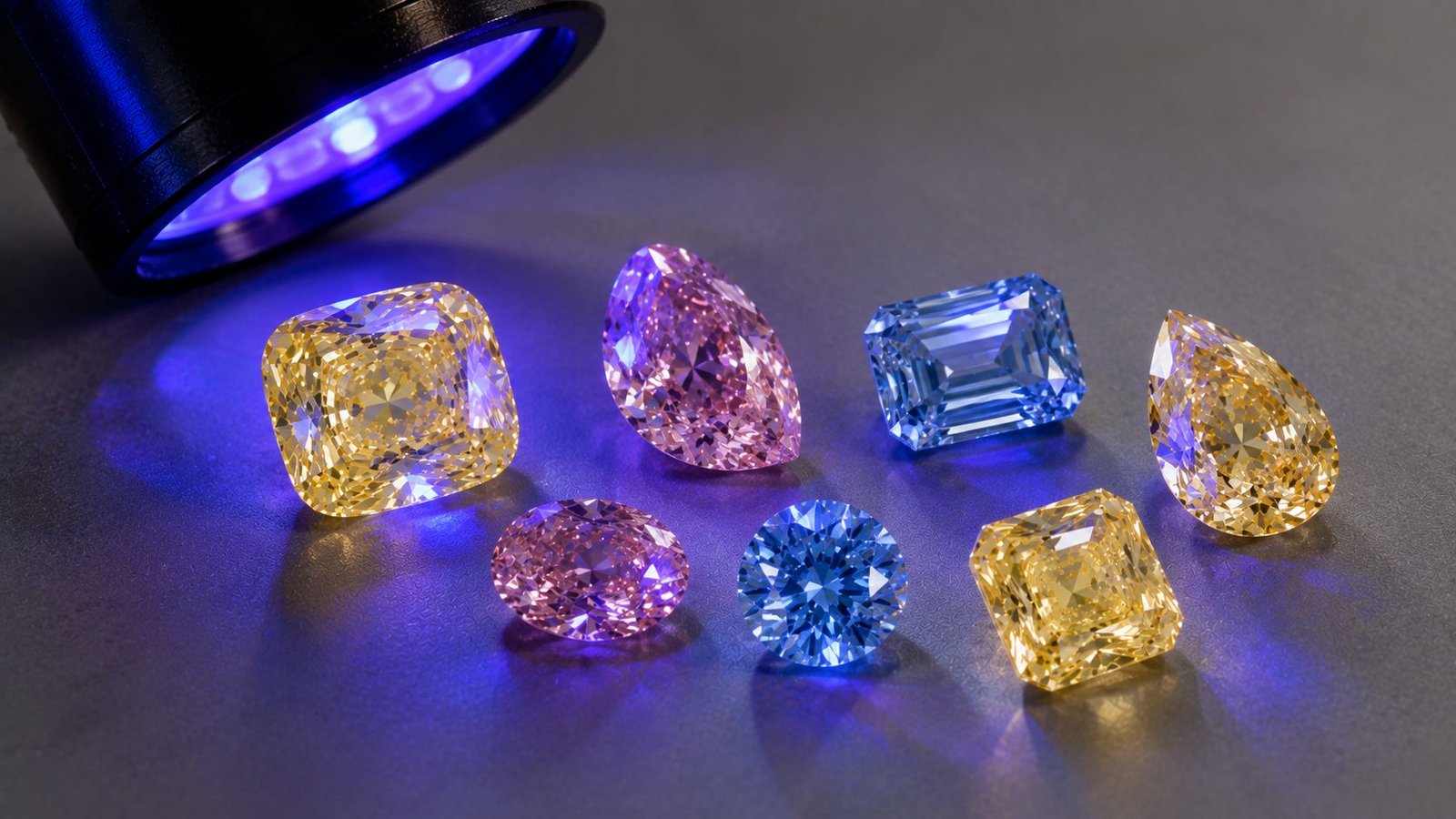
In a colorless or near-colorless diamond, fluorescence mostly affects perceived brightness and, in rare cases, clarity-related haziness. It doesn’t change the diamond’s underlying hue because there isn’t much hue to change in the first place. Fancy color diamonds work differently. Their entire value proposition rests on a specific, often rare bodycolor, whether that’s a vivid pink, a fancy blue, or a deep yellow. When a diamond fluoresces, it’s essentially adding a second layer of color on top of that bodycolor, visible under any light source containing UV wavelengths, which includes daylight.
This is why Diamond Fluorescence Colors get a level of scrutiny in fancy color grading that simply doesn’t apply to colorless stones. A blue fluorescent reaction layered over a yellow bodycolor behaves very differently than the same blue reaction layered over a pink or a brown bodycolor. The interaction between fluorescence and bodycolor can make a stone look more saturated, less saturated, or even shift its apparent hue slightly toward a different color family altogether. Graders have to account for this face-up effect when assigning a final color grade, which is part of why fluorescence intensity and color are always noted on fancy color grading reports rather than treated as an afterthought.
The growing interest in fancy color diamonds over the past decade has only sharpened this scrutiny. As more buyers shop for fancy color stones as investment pieces or statement jewelry, dealers and labs have had to get more precise about explaining exactly how fluorescence will affect the stone a buyer is looking at, rather than leaving it as a vague line item on a certificate. That shift in transparency is a big part of why terms like Diamond Fluorescence Colors have become more visible in buyer-facing conversations rather than staying confined to gemological reports.
What Fluorescence Actually Is
Fluorescence occurs when a diamond absorbs invisible ultraviolet radiation and re-emits some of that energy as visible light. This happens because of trace structural elements within the crystal lattice, most commonly related to nitrogen impurities, though the exact cause varies depending on the reaction color involved. Under a UV lamp in a controlled gem lab, this reaction is easy to see and measure. Under normal daylight, which contains a meaningful amount of UV radiation, the same reaction happens more subtly but is still present.
Grading labs measure fluorescence on two dimensions: intensity and color. Intensity ranges from none through faint, medium, strong, and very strong, describing how visibly the diamond glows under UV light. Color describes the actual hue produced by that glow, with blue being by far the most frequently observed reaction. Other reaction colors exist, including yellow, white, and orange, but they occur with dramatically less frequency, which is part of why they’re treated with more individual attention when they do appear.
For colorless diamonds, only intensity tends to matter much in practical terms, since a blue reaction on a colorless stone simply adds a touch of blue that most buyers can’t detect with the naked eye except at very strong intensities. For fancy color diamonds, both intensity and reaction color matter enormously, because that added hue is interacting directly with a bodycolor the buyer is specifically paying for.
Blue Fluorescence Explained
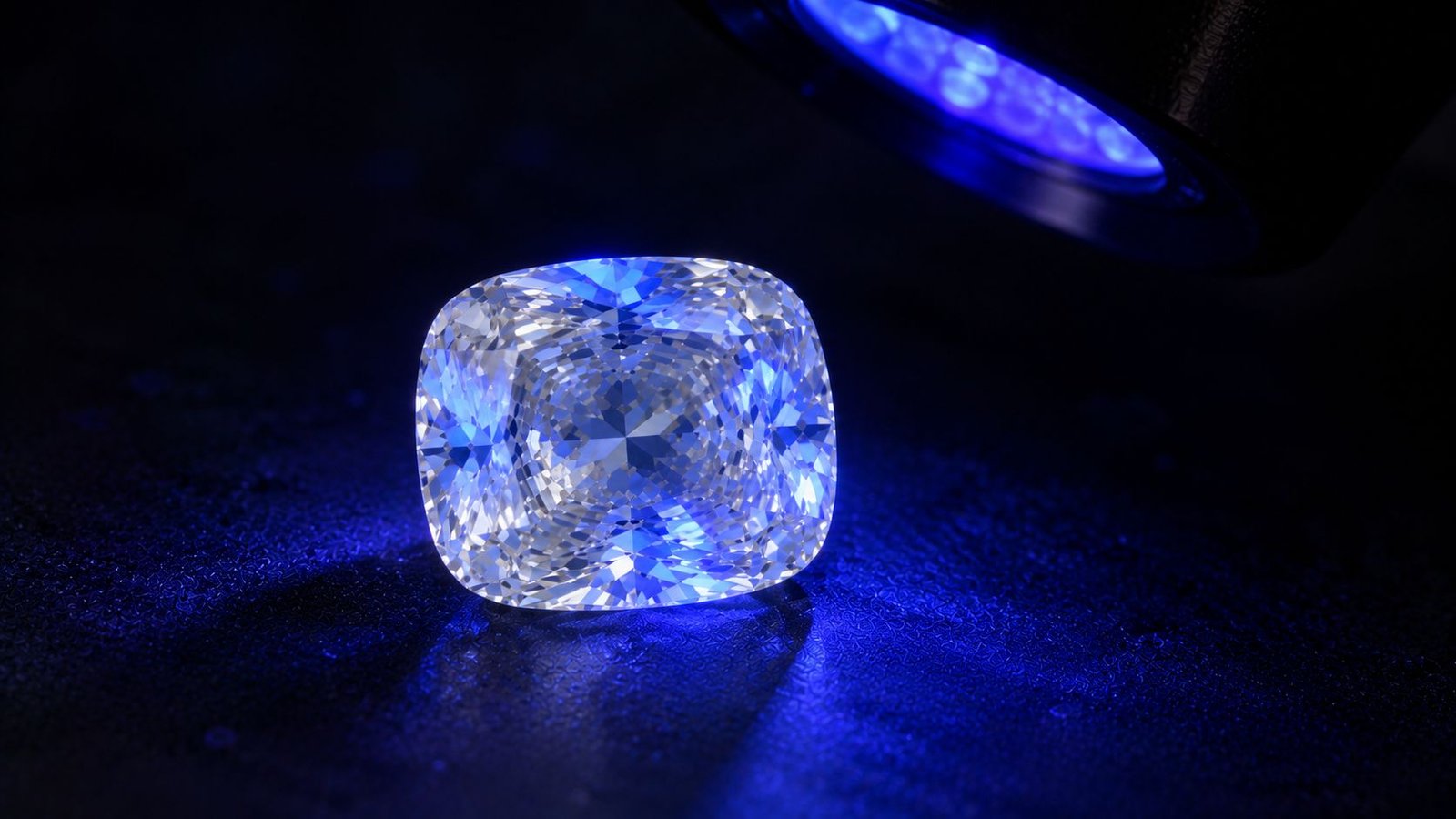
Blue fluorescence is the most commonly observed reaction across the diamond population as a whole, appearing in a meaningful percentage of all diamonds submitted for grading. Its prevalence means gemologists have decades of comparative data on how it behaves, which is a major reason it’s treated as a well-understood, relatively low-risk factor even in fancy color stones.
In fancy yellow diamonds, blue fluorescence can sometimes work in the stone’s favor, subtly muting excess yellow saturation in a way that some buyers find pleasing, though this effect varies by individual stone and intensity level. In fancy blue or fancy gray diamonds, blue fluorescence tends to blend more naturally with the bodycolor since the reaction color and the bodycolor sit in a similar part of the spectrum, generally producing a less noticeable shift. In pink or brown fancy color diamonds, blue fluorescence can occasionally introduce a cooler undertone that shifts the face-up appearance away from the warmth buyers are usually seeking in those color categories.
Because blue fluorescence has been studied so extensively, most labs and dealers can predict its likely visual effect on a given bodycolor with reasonable confidence before a buyer even views the stone in person. This predictability is a major reason blue fluorescence, even at strong or very strong intensities, rarely triggers the kind of price caution that other reaction colors can produce.
Orange Fluorescence Explained
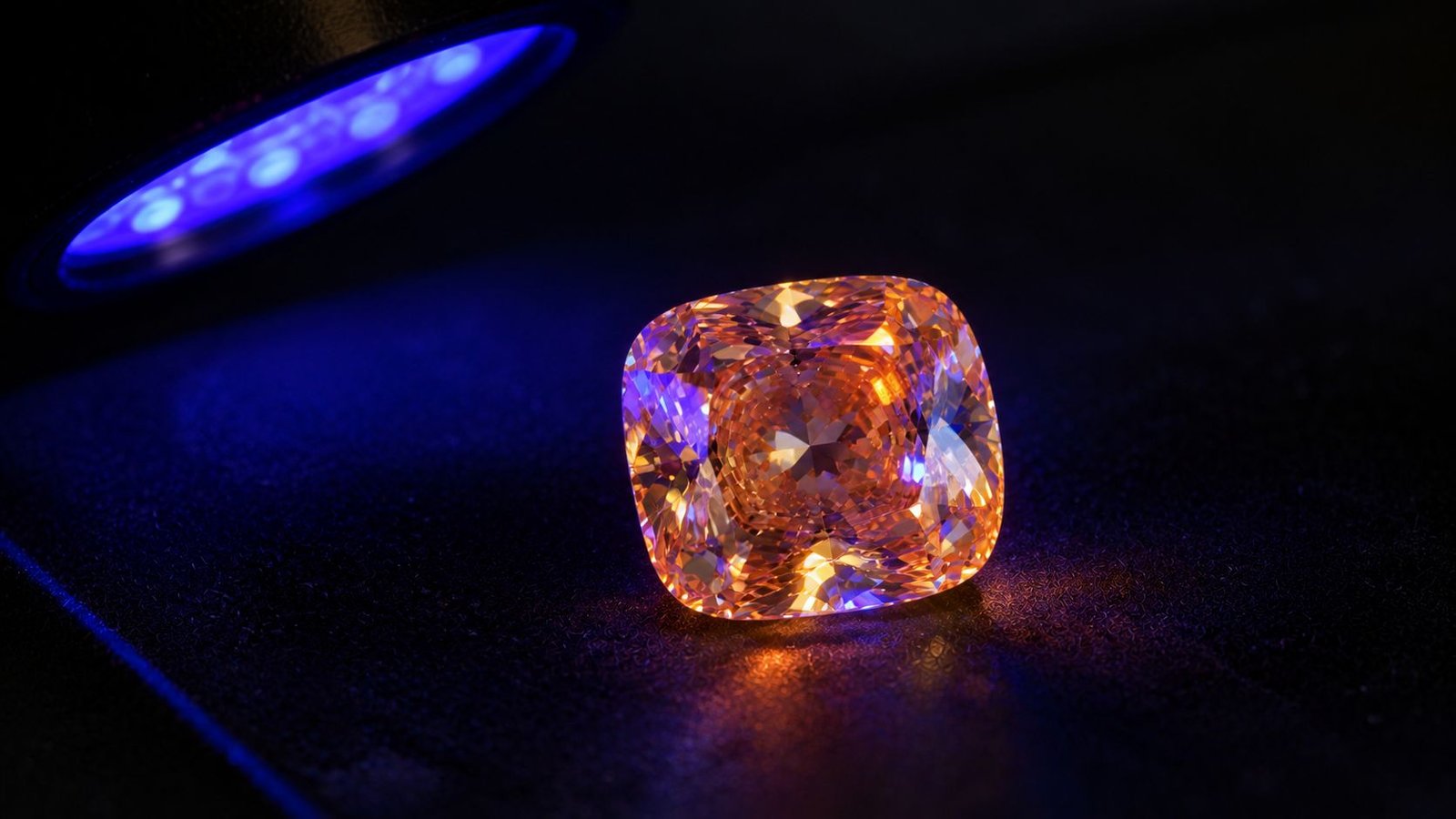
Orange fluorescence is significantly rarer than blue, appearing in only a small fraction of diamonds submitted for grading. Its rarity alone makes it harder to price with confidence, since dealers simply don’t have the same volume of comparable sales data to draw on. But rarity isn’t the only reason orange fluorescence gets extra attention: the reaction color itself sits close to several fancy color hues on the spectrum, which means it can meaningfully shift face-up appearance in ways that are harder to predict than a blue reaction.
In fancy pink diamonds, orange fluorescence can either warm up the face-up color in a way some buyers find attractive, or push it toward a muddier, less saturated appearance depending on the specific bodycolor and lighting conditions. In fancy yellow or fancy orange diamonds, an orange reaction sits close enough to the bodycolor that it can intensify saturation in a way that’s sometimes desirable and sometimes overwhelming, again depending heavily on the individual stone. In fancy blue or fancy green diamonds, orange fluorescence introduces a much starker contrast, since the reaction color sits on the opposite side of the color wheel from the bodycolor, which can produce a visibly inconsistent or “off” appearance under mixed lighting.
Because these outcomes vary so much from stone to stone, orange fluorescence tends to require in-person or high-quality video evaluation before a buyer can confidently predict how a specific diamond will look across different lighting environments. This case-by-case unpredictability is the central reason orange fluorescence gets treated so differently from blue in professional grading and pricing conversations.
Why the Two Are Graded and Perceived Differently
The core distinction comes down to data volume and predictability rather than any inherent rule that blue is “good” and orange is “bad.” Blue fluorescence has been observed across such a large number of diamonds that gemologists can generalize its likely effect on a given bodycolor with real confidence. Orange fluorescence, by contrast, shows up too infrequently for that same level of generalization, which means each stone effectively has to be evaluated on its own merits rather than compared against a large, well-documented pattern.
This difference shows up directly in how grading reports are worded. A diamond with blue fluorescence typically receives a straightforward intensity and color notation with little additional commentary, since buyers and dealers already understand roughly what that combination will look like. A diamond with orange fluorescence is more likely to prompt additional notes about the specific face-up effect observed during grading, precisely because that effect can’t be assumed from the reaction color alone.
Rarity also plays a role in how the market responds, though not always in a straightforward way. Because orange fluorescence is uncommon, some buyers and collectors specifically seek it out as a distinctive feature, particularly when it produces a face-up effect they find attractive. Other buyers treat it with more caution precisely because it’s harder to predict without seeing the stone directly. Blue fluorescence, being common and predictable, rarely produces either of these strong reactions; it’s simply treated as an expected, well-documented variable in the color equation.
Value Impact: Blue vs Orange Fluorescence
| Factor | Blue Fluorescence | Orange Fluorescence |
| Frequency in graded diamonds | Common | Rare |
| Predictability of face-up effect | High, well documented | Lower, varies by stone |
| Typical grading report treatment | Standard intensity/color notation | Often includes added face-up description |
| Buyer perception | Generally neutral to favorable | Split between sought-after and cautious |
| Price impact range | Usually minor | Can be more significant either direction |
| Recommended evaluation method | Certificate review usually sufficient | In-person or high-quality video review advised |
For most buyers comparing two otherwise similar fancy color diamonds, the practical takeaway is that Diamond Fluorescence Colors shouldn’t be judged purely by their name on a certificate. A blue reaction is easier to evaluate from a report alone because the data supporting it is so extensive. An orange reaction, being rarer, usually rewards the extra step of seeing the stone under multiple lighting conditions before making a final decision, since its effect on value can swing more widely depending on the exact combination of bodycolor and reaction observed.
How Fluorescence Shows Up Under Different Lighting
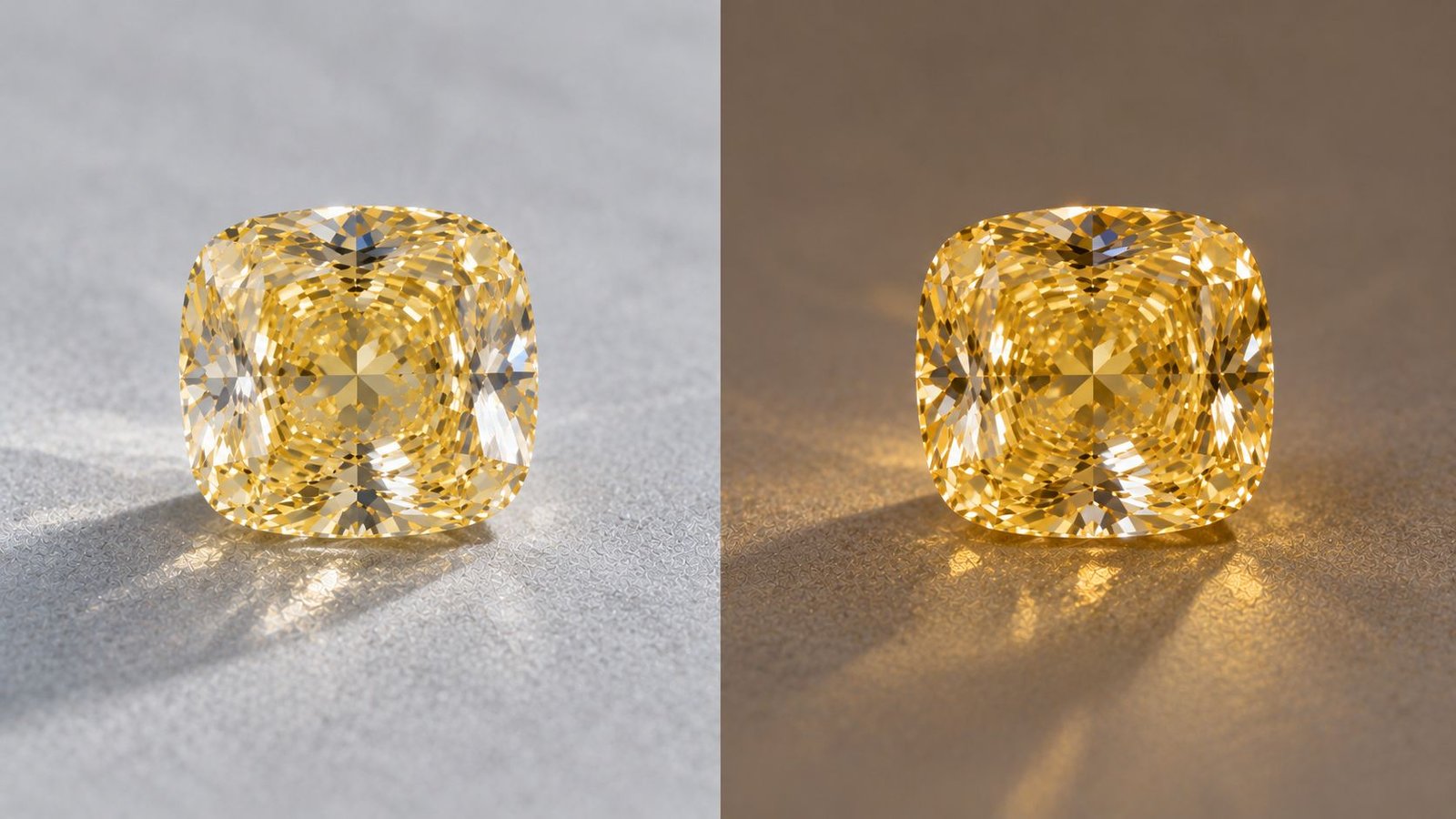
Fluorescence isn’t a fixed, constant effect; it changes depending on how much UV radiation is present in the light source a diamond is viewed under. Outdoor daylight contains a meaningful amount of UV, so fluorescence is generally most visible outside or near a window. Standard indoor incandescent lighting contains very little UV, which means fluorescence is much less apparent under typical indoor conditions. Fluorescent tube lighting and many LED sources fall somewhere in between, depending on the specific bulb.
This variability matters most for stones with strong or very strong fluorescence, since the difference in appearance between outdoor and indoor lighting can be noticeable enough that a buyer should see the stone in both environments before purchasing. It matters less for faint or medium intensity fluorescence, where the effect is subtle enough that most buyers won’t notice a meaningful shift regardless of lighting.
Photography adds another layer of complexity, since camera sensors don’t always capture UV-driven color shifts the same way the human eye does. This is part of why relying solely on product photos to judge fluorescence, particularly orange fluorescence in a fancy color stone, can be misleading, and why a request for video under multiple lighting conditions is a reasonable step before finalizing a purchase.
Common Misconceptions
“Fluorescence always lowers a diamond’s value.” This isn’t accurate for either colorless or fancy color diamonds. In colorless stones, research has shown fluorescence has minimal impact on value in most cases. In fancy color stones, the effect depends entirely on how the specific reaction color interacts with the bodycolor, and it can just as easily be neutral or favorable as unfavorable.
“Orange fluorescence means something is wrong with the diamond.” Orange fluorescence is a natural optical property, not a defect. Its rarity makes it require more careful evaluation, not less desirable by default.
“Blue fluorescence is always safer than orange.” Blue fluorescence is more predictable because it’s better documented, but “predictable” isn’t the same as “always better.” A strong blue reaction can still shift a bodycolor in a way some buyers don’t prefer.
“You can judge fluorescence accurately from a photo.” Photography often fails to capture the subtle way fluorescence interacts with bodycolor under real-world lighting, which is why in-person or video evaluation is recommended for anything beyond faint intensity.
“All fancy color diamonds with fluorescence look inconsistent.” Most fluorescence effects are subtle rather than dramatic, and many diamonds with fluorescence show no obvious inconsistency to the naked eye at all.
“Fluorescence intensity is the only thing that matters.” Reaction color matters just as much as intensity, since the same intensity level can produce very different face-up effects depending on whether the reaction is blue, orange, or another color entirely.
Buying Guide: Evaluating Fluorescence in a Fancy Color Diamond
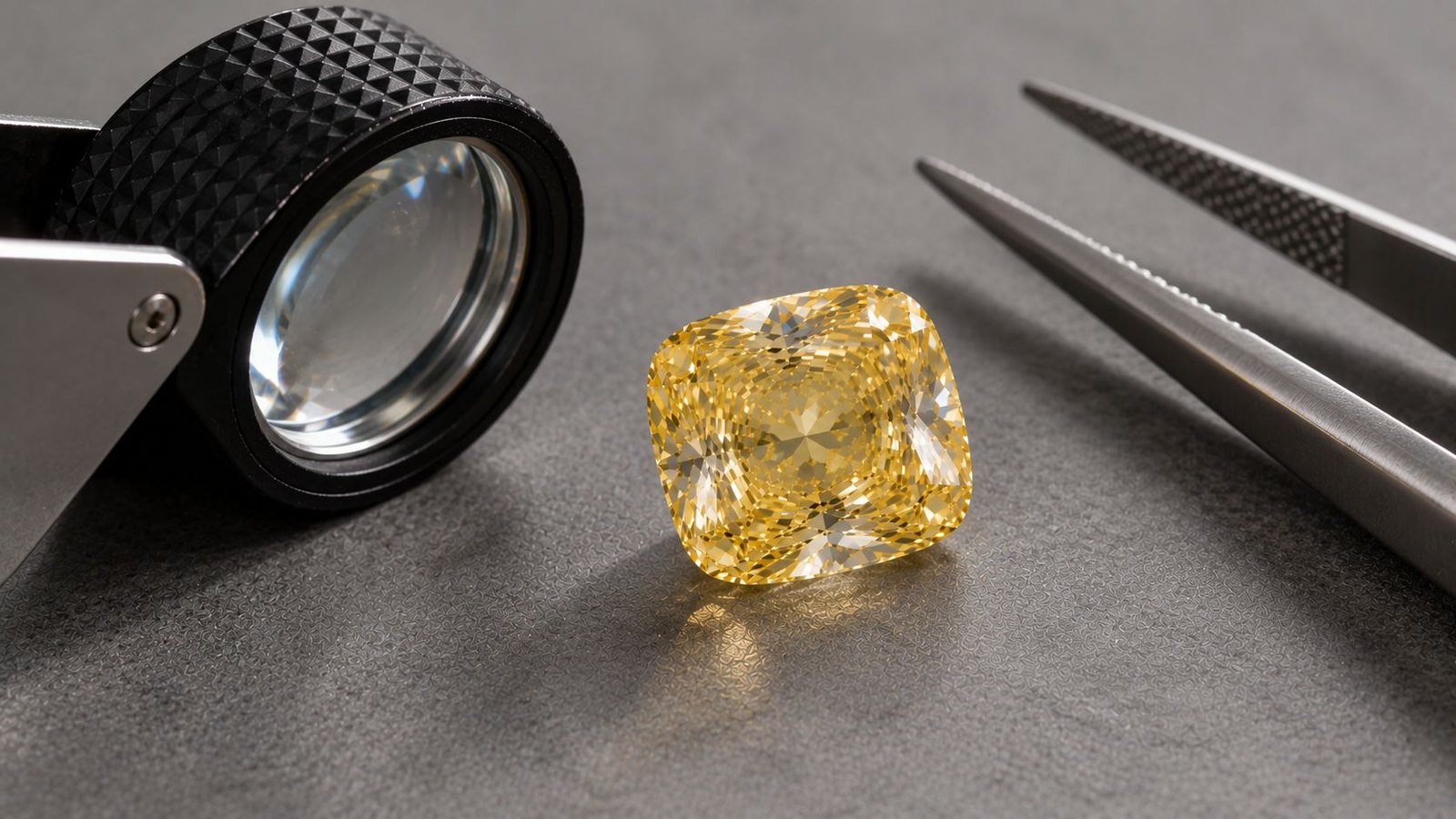
Start by reading the full grading report rather than just the headline color grade, since the fluorescence intensity and color notation directly affects how that headline grade will look in person. A report showing strong or very strong fluorescence, regardless of color, is worth a closer look before committing.
Next, ask specifically about the reaction color, not just the intensity. Diamond Fluorescence Colors aren’t interchangeable, and a dealer or jeweler familiar with fancy color stones should be able to explain how the specific reaction observed is likely to interact with that diamond’s bodycolor.
For any stone with orange fluorescence, request to see it under more than one lighting condition before finalizing a decision, ideally including natural daylight, since that’s where UV-driven effects are most visible. For stones with blue fluorescence, a certificate review combined with standard photos is usually sufficient given how well documented that reaction color is. When possible, view the stone loose rather than mounted, since a setting can sometimes obscure subtle fluorescence effects that would otherwise be visible face-up.
Finally, don’t treat fluorescence as automatically negative or automatically positive. Judge it the same way you’d judge cut quality or clarity characteristics: as one factor among several that determines whether a specific stone looks the way you want it to look, in the lighting conditions where you’ll actually wear it.
Final Thoughts
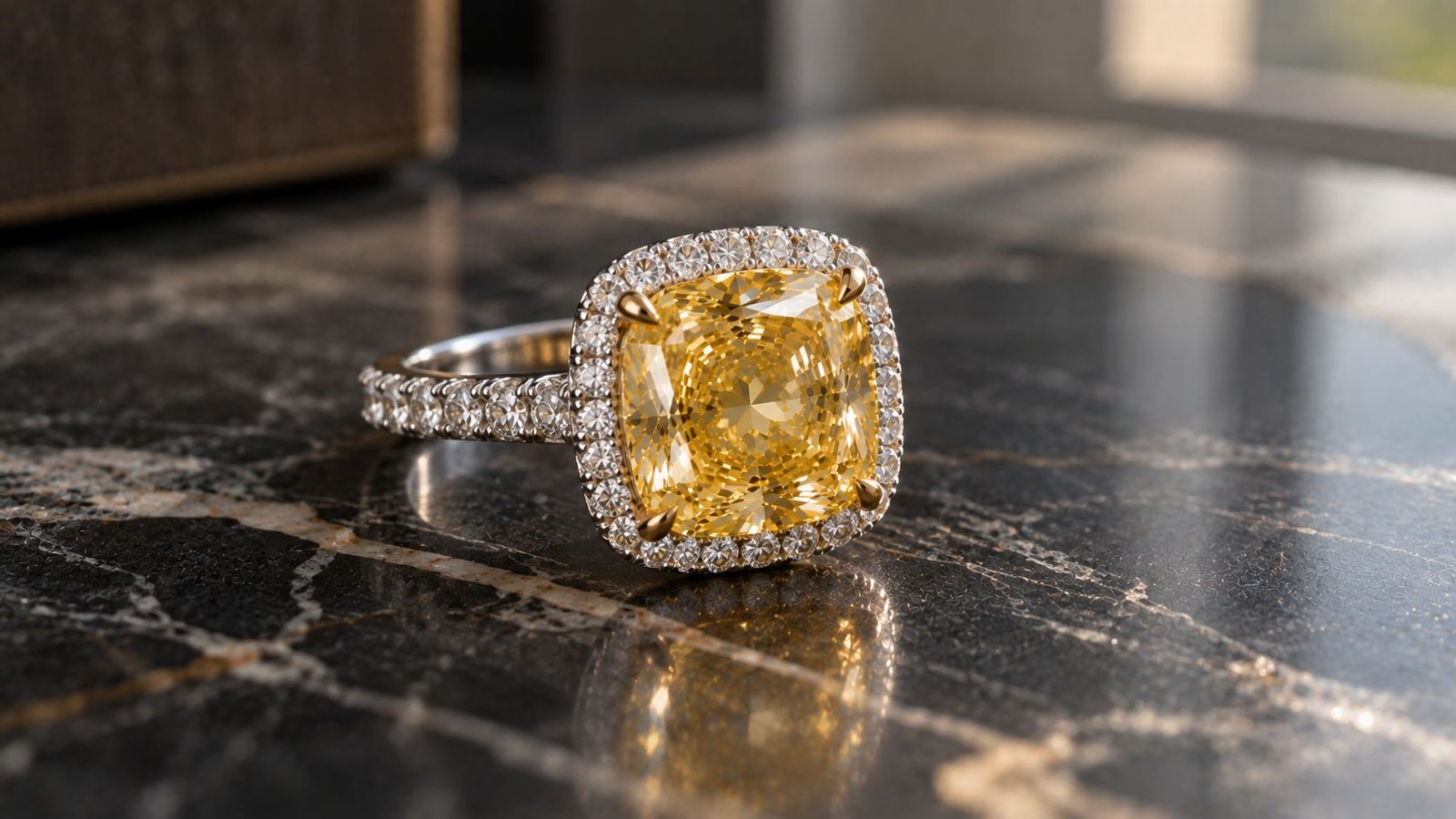
Diamond Fluorescence Colors aren’t a simple pass-or-fail characteristic, and treating blue and orange reactions as interchangeable misses what actually matters to buyers of fancy color diamonds. Blue fluorescence earns its more relaxed treatment through decades of comparative data and predictable outcomes. Orange fluorescence earns its extra scrutiny not because it’s inherently worse, but because its rarity makes each stone’s face-up effect harder to predict without direct evaluation. Understanding this distinction turns fluorescence from a confusing line on a certificate into a useful tool for judging exactly how a fancy color diamond will actually look once it’s in your hand.
Frequently Asked Questions
Disclaimer: Diamond grading interpretations and market perceptions can vary between gemological laboratories and individual dealers. The information in this article is intended for general educational purposes and should not replace a professional evaluation from a certified gemologist for any specific stone.