

The Science Behind Color Zoning in Lab-Grown Diamonds
Hold certain colored diamonds up to the light at the right angle and you’ll notice something unexpected: the color isn’t uniform throughout the stone at all. Diamond Color Zoning describes exactly this phenomenon, where distinct regions within a single crystal show different color intensities or even different hues entirely. Far from a flaw, this effect is a direct window into how a diamond actually grew, layer by layer, and understanding it explains a surprising amount about how colored diamonds are cut, graded, and valued.
What Is Diamond Color Zoning?
Diamond Color Zoning refers to the uneven distribution of color within a single diamond crystal, where certain internal regions display stronger, weaker, or entirely different coloration than the areas around them. Rather than color spreading evenly throughout the stone the way it might in a simple mental model, real diamonds — natural and lab-grown alike — often develop color in a pattern directly tied to the crystal’s internal growth structure.
This happens because a diamond doesn’t form all at once. It builds up gradually, layer upon layer, and the specific conditions present during each stage of that growth determine how much color-causing material gets incorporated into that particular layer. When growth conditions shift even slightly partway through the process, the resulting crystal can end up with visibly different color concentrations in different internal regions.
Gemologists sometimes describe this using the analogy of tree rings, though the comparison only goes so far. Like a tree ring, each growth layer in a diamond preserves a record of the specific conditions present at the moment it formed. Unlike tree rings, diamond growth layers aren’t necessarily concentric or evenly spaced, since the underlying crystal geometry follows the diamond’s cubic structure rather than a simple radial pattern, which is exactly why Diamond Color Zoning often shows up in distinct geometric shapes rather than smooth, even gradients.
It’s worth emphasizing that zoning is a completely normal part of diamond formation rather than a defect in the traditional sense. Every diamond, colored or colorless, grows through this same layered, sector-based process. Zoning only becomes visually noticeable when there’s enough of a color-causing element present, and enough variation in how that element gets incorporated across different growth sectors, for the human eye or gemological instruments to actually detect a difference.
Growth Sectoring: How a Diamond’s Internal Structure Forms
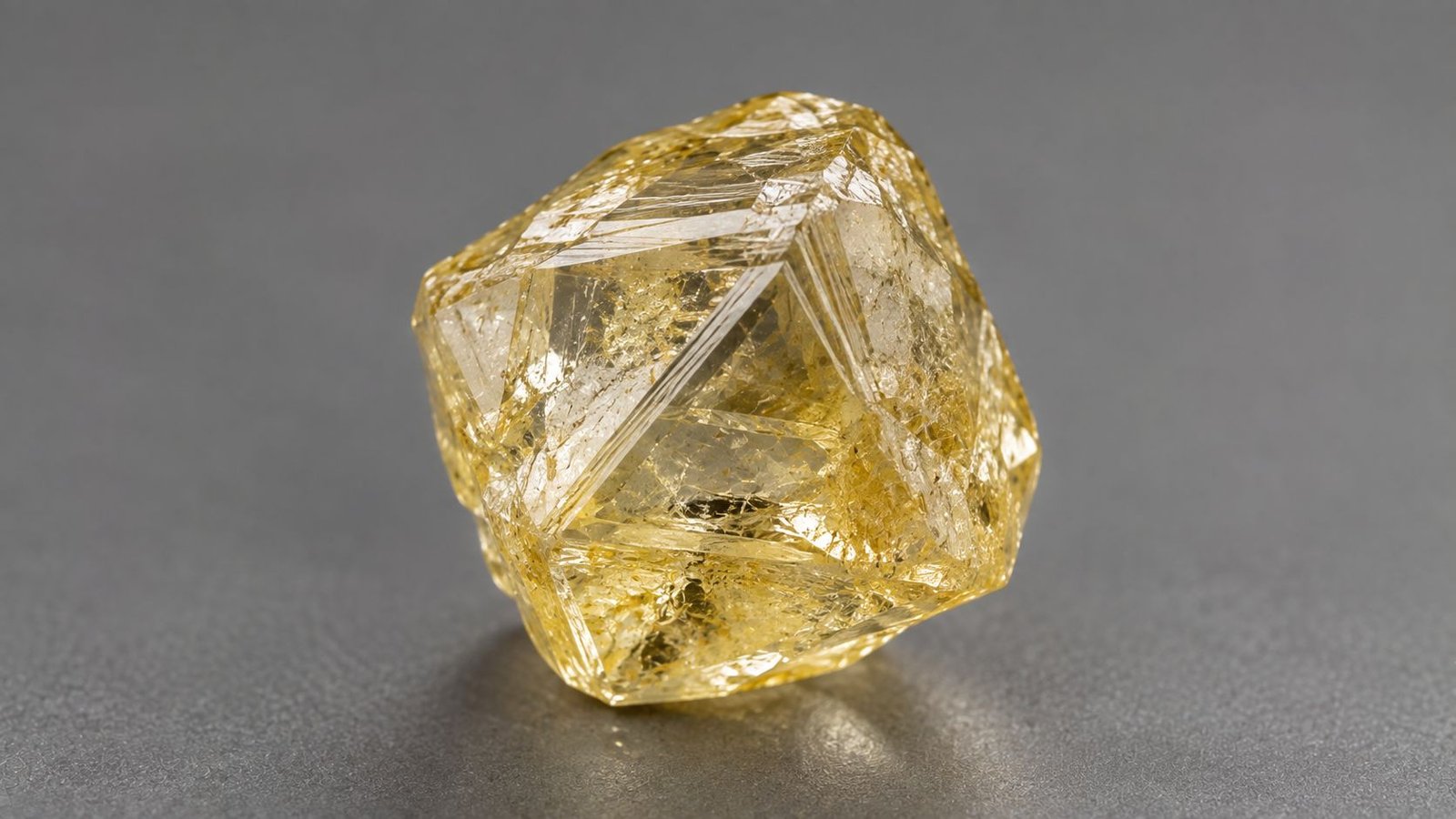
To understand color zoning, it helps to understand growth sectoring first. As a diamond crystal grows, different crystallographic faces develop at different rates and under slightly different local conditions, even within the same growth environment. These distinct growth regions, called growth sectors, each incorporate trace elements like nitrogen or boron at different rates depending on which crystal face was growing at that moment.
Because each growth sector can absorb color-causing elements differently, the finished crystal often ends up looking like a three-dimensional patchwork when examined internally, with sectors that grew under slightly different conditions displaying measurably different color concentrations. This sector-based structure is essentially the crystal’s growth history preserved in visible form, and it’s the direct mechanical cause behind most cases of Diamond Color Zoning.
Growth sectoring isn’t unique to colored diamonds specifically — every diamond crystal grows through this sector-based process regardless of color. It only becomes visually obvious, however, in diamonds with enough color-causing trace elements present for the sector-to-sector variation to actually show up to the eye or under magnification.
Different crystal faces are typically labeled using standard crystallographic notation, such as cubic, octahedral, and dodecahedral sectors, each corresponding to a different face orientation of the growing crystal. Octahedral sectors, for example, often behave differently from cubic sectors in terms of how readily they incorporate nitrogen, which is one specific mechanical reason why diamonds with mixed-habit growth — meaning growth that combines multiple crystal face types — are especially prone to visible zoning compared to diamonds that grow with a single, dominant face type throughout.
This sector structure can be mapped and studied using specialized gemological imaging equipment, giving researchers and graders a detailed picture of exactly how a specific stone grew. This kind of detailed internal mapping is part of what allows gemological labs to speak with real confidence about growth origin and method, rather than relying on surface appearance alone.
Why Diamond Color Zoning Happens During Lab Growth

In lab-grown diamonds, the growth method used has a major influence on whether and how color zoning appears. According to GIA’s guidance on identifying lab-grown diamonds, HPHT-grown colored diamonds often display distinctly geometric color zoning, since elements like nitrogen concentrate unevenly across the crystal’s growth sectors as it forms under the method’s high-pressure, high-temperature conditions.
CVD-grown diamonds, by contrast, typically show much more even coloration overall, since the layer-by-layer deposition process central to CVD growth tends to distribute color-causing elements more uniformly than the sector-based crystallization involved in HPHT growth. For more background on how these two growth methods actually work, see our complete guide to CVD vs HPHT diamond growing methods. This is one of several structural differences gemologists use when distinguishing between the two lab-grown methods, alongside other internal growth characteristics tied to Diamond Color Zoning.
Growers who specifically want dramatic, visible Diamond Color Zoning as a design feature, rather than a side effect to minimize, generally lean toward HPHT growth and adjust trace element introduction deliberately during the process to encourage more pronounced sector-based color variation. This intentional approach has opened up genuinely striking multi-tone effects that wouldn’t be achievable through more uniform growth methods.
Temperature stability during growth also plays a significant role in how pronounced zoning ends up being. Even small fluctuations in temperature or pressure partway through an HPHT growth cycle can shift how readily nitrogen or other trace elements incorporate into the crystal at that moment, which is one reason experienced growers monitor growth conditions so closely throughout the entire process rather than only at the start and finish. A growth run held at perfectly stable conditions throughout tends to produce more predictable, controllable zoning patterns than one where conditions drift over the course of growth.
Natural Diamonds and Diamond Color Zoning: A Comparison

Natural diamonds can display color zoning too, but the pattern tends to look quite different from what typically appears in HPHT-grown stones. Natural zoning often follows more organic, irregular boundaries shaped by the diamond’s specific geological growth history over millions of years, rather than the sharp, geometric patterns commonly seen in HPHT synthetic material, where zoning frequently follows the crystal’s underlying cubic or octahedral growth-sector geometry with much cleaner boundaries.
This distinction actually serves a practical purpose in the trade. Because geometric, sector-aligned zoning is characteristic of HPHT growth specifically, gemologists use the presence and pattern of color zoning as one diagnostic clue, among several, when working to determine whether a stone is natural or lab-grown. No single feature is used in isolation, but the shape and regularity of Diamond Color Zoning is a genuinely useful piece of that broader diagnostic picture.
How Color Zoning Affects Cutting and Diamond Value

Cutting a rough crystal with visible color zoning requires far more planning than cutting a stone with uniform color. Cutters have to study exactly where the strongest color concentration sits within the rough material and orient the finished cut specifically to showcase that zone as prominently as possible, sometimes sacrificing carat weight from other parts of the rough to protect the most valuable colored region.
This planning process explains why zoned rough often yields a smaller finished stone relative to its starting weight compared to evenly colored rough of the same size. Because Diamond Color Zoning concentrates the most desirable color in specific internal regions rather than spreading it evenly, cutters frequently have to cut away substantial portions of paler material to isolate and preserve the richest color for the final gem.
Value implications cut both ways depending on how the zoning is handled. A well-cut stone that successfully concentrates strong, even-reading color in the face-up view can command a premium despite underlying zoning, since the zoning becomes invisible or nearly so once set. A poorly oriented cut, on the other hand, can leave visible color patches or an uneven, blotchy appearance in the finished stone, which typically reduces both the color grade and the overall value compared to a well-executed cut from similarly zoned rough.
Multi-Color Effects: When Zoning Creates Visible Color Bands
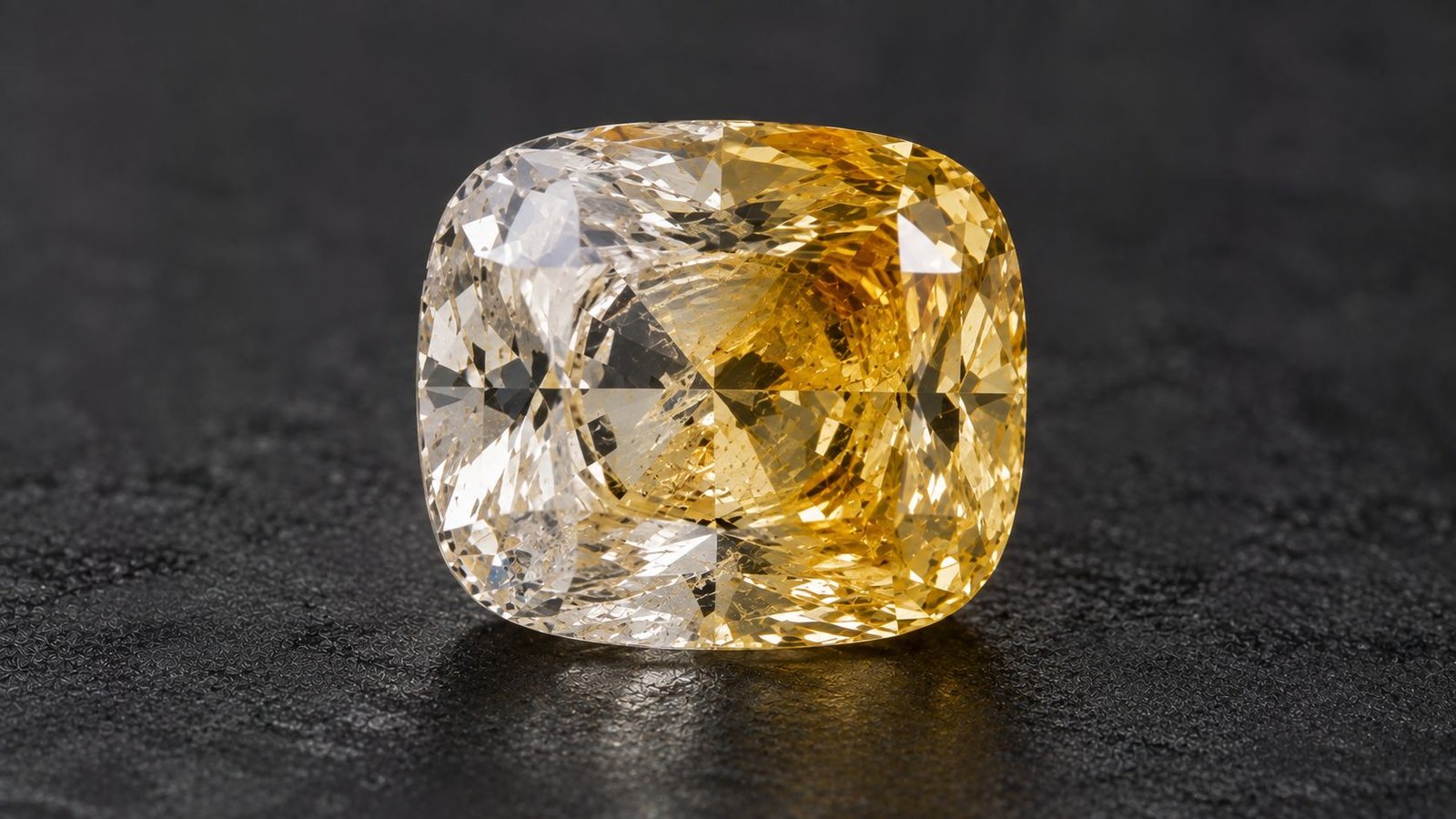
In some of the more striking cases, growth sectoring produces genuinely distinct multi-color effects within a single crystal, with one internal region reading as one hue and an adjacent region reading as a visibly different color entirely, not just a different intensity of the same hue. Documented examples include stones where a central growth sector reads as pink or purple while surrounding regions read predominantly yellow, all within one continuous crystal.
These multi-color effects occur because different growth sectors can favor entirely different color-causing defect structures, not simply different concentrations of the same defect. A sector that favors one type of nitrogen-related defect might produce yellow coloring, while an adjacent sector with a different growth orientation favors a different defect combination that reads as pink or orange instead, all arising from the same overall growth process happening under slightly different local conditions sector by sector.
Cutters working with this kind of dramatic Diamond Color Zoning face a genuinely creative challenge, since preserving and showcasing a visible color transition within a single polished stone requires a completely different cutting strategy than trying to eliminate or minimize zoning entirely. Some finished stones deliberately retain and highlight this multi-color banding as a unique selling point, essentially turning what might otherwise be considered a cutting complication into the stone’s most distinctive feature.
Detecting and Grading Zoned Color
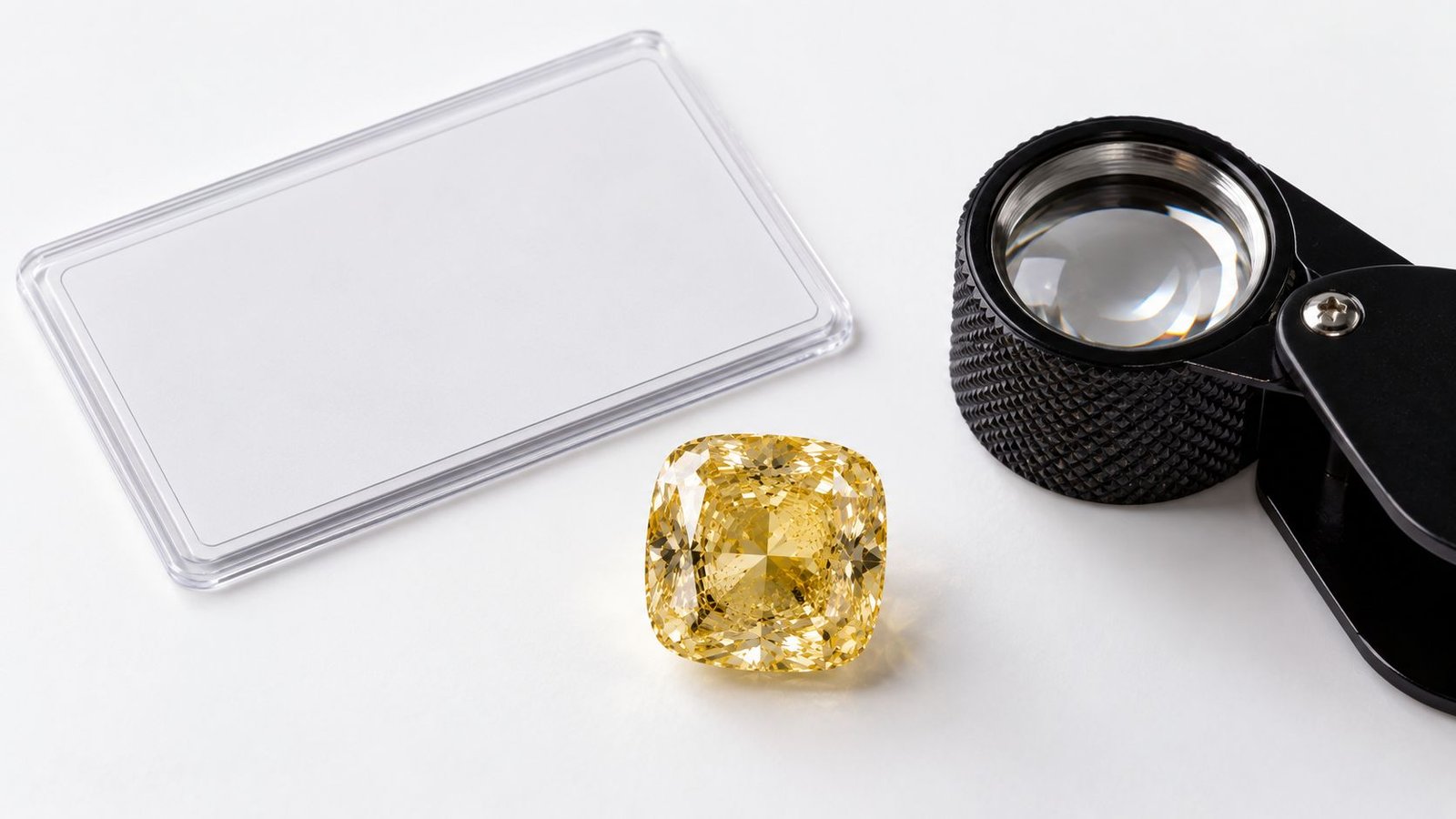
Grading a diamond with visible color zoning presents a specific challenge for gemological labs, since standard fancy color grading assumes a reasonably uniform overall color impression when viewed face-up. Graders have to determine an overall representative grade for the finished stone while also documenting the presence of zoning as a distinct characteristic in accompanying report notes.
Advanced imaging techniques, including specialized photomicrography, allow gemologists to map exactly where color concentrations sit within a stone and document Diamond Color Zoning patterns precisely for research and identification purposes. This level of documentation matters both for authenticating a stone’s growth origin and for helping buyers understand exactly what a specific Diamond Color Zoning pattern means for the stone they’re purchasing.
Buyers considering a diamond with documented zoning should specifically request notes on how the zoning was assessed and whether it affects the stone’s face-up appearance under normal viewing conditions, since a technically documented zoning pattern that’s invisible in practical wear matters far less than zoning that’s clearly visible once the stone is set in jewelry.
Report terminology can vary somewhat between labs, so it’s worth asking directly rather than assuming a particular phrase means what you expect. Some reports describe zoning qualitatively in a comments section, while others may reference it more technically in connection with clarity characteristics or internal graining, since zoning and graining can sometimes appear together in the same stone. Requesting clarification in plain language directly from the certifying lab or your jeweler is always a reasonable step if a report’s terminology feels unclear.
Common Misconceptions
“Color zoning means a diamond is low quality.” Not necessarily. Well-cut stones can minimize or even showcase zoning attractively, and some collectors specifically seek out dramatic multi-color zoned stones as unique pieces.
“Only lab-grown diamonds show color zoning.” Natural diamonds can display zoning too, though the pattern typically looks more irregular and organic compared to the geometric zoning common in HPHT-grown stones.
“Zoning is always visible to the naked eye.” Many zoning patterns are subtle enough to require magnification or specific viewing angles, and a skilled cutter can often minimize visible zoning in the finished stone’s face-up appearance.
“CVD and HPHT diamonds show the same zoning patterns.” They don’t. CVD growth generally produces more even coloration, while HPHT growth is more prone to distinct, geometric color zoning tied to the crystal’s growth sectors.
“A grading report will always flag zoning explicitly.” While thorough reports document zoning when present, buyers should specifically ask whether zoning was assessed and how it affects the stone’s practical appearance, rather than assuming silence on the topic means no zoning exists.
What Buyers Should Know About Zoned Stones
For most everyday jewelry buyers, subtle Diamond Color Zoning that a skilled cutter has successfully minimized in the face-up view is nothing to worry about — it’s simply part of how many colored diamonds naturally form, and a well-executed cut renders it a non-issue in daily wear. What matters far more is how the finished stone actually looks once set, not the underlying growth structure that produced it.
For buyers specifically interested in dramatic multi-color zoned stones as a collector’s piece or a conversation-starting statement, requesting documentation on the specific zoning pattern and asking to view the stone under multiple lighting angles before purchase is worthwhile, since these effects can look quite different depending on how light enters the stone. Always request certification from a recognized lab regardless of which direction you’re leaning, since accurate documentation protects both the stone’s authenticity and its long-term resale value.
It’s also reasonable to ask a jeweler directly whether a particular piece was cut specifically to showcase or to minimize zoning, since this affects how the stone should be viewed and appreciated. A stone cut to highlight a multi-color effect is meant to be examined and enjoyed from multiple angles, while a stone cut to minimize zoning is meant to present a single, consistent color impression from the standard face-up viewing position, and knowing which design intent applies helps set the right expectations for how the piece will actually look day to day.
Final Thoughts
Diamond Color Zoning turns out to be one of the more genuinely fascinating windows into how colored diamonds actually form, revealing the growth history literally frozen inside the crystal. Whether it shows up as a subtle variation a cutter skillfully minimizes or a dramatic multi-color banding effect deliberately preserved as a design feature, understanding the growth sectoring behind this phenomenon gives buyers a much richer appreciation for what they’re actually looking at in a colored diamond, and a more informed basis for evaluating quality and value.