

The Ultimate Guide to Black Lab-Grown Diamonds: Price, Rarity, and Care
Bold, mysterious, and unapologetically dramatic — that’s the appeal of a black diamond, and today more buyers than ever are discovering it through Black Lab Grown Diamonds rather than the rare natural stones that inspired them. If you’ve been eyeing a black diamond ring or pendant and want to understand what you’re actually paying for, this guide walks through everything from how these stones are made to what to check before you buy.
What Are Black Lab Grown Diamonds?

Black Lab Grown Diamonds are created in a laboratory using the same two core methods used for any other lab-created stone: Chemical Vapor Deposition (CVD) or High Pressure High Temperature (HPHT). What makes them appear black isn’t a special growth recipe on its own — it’s the deliberate introduction of a very high concentration of graphite inclusions and structural defects during the growth process, which absorb virtually all visible light passing through the stone.
Because growers can control this process precisely, these lab-created stones achieve a uniform, opaque jet-black appearance that’s difficult to replicate consistently in nature. Some lab-grown black diamonds also undergo a secondary HPHT treatment after initial growth specifically to intensify and stabilize the black coloring, ensuring the finished stone won’t fade or lighten with wear.
Despite their striking, almost metallic appearance, these stones share the same underlying carbon crystal structure as every other diamond. They register the same 10 on the Mohs hardness scale, meaning they’re every bit as durable for daily wear as a colorless or fancy-colored lab-grown diamond.
There’s also a related but distinct category worth knowing about: some black diamonds on the market, lab-grown or natural, are simply colorless or near-colorless diamonds that have undergone irradiation or heat treatment to darken them artificially. True Black Lab Grown Diamonds, by contrast, are grown black from the start through controlled inclusion density, which tends to produce a deeper, more consistent color than treated stones.
There are two distinct growth methods behind these stones, and each shapes the final result slightly differently. For a deeper breakdown of how these processes work in general, see our complete guide to CVD vs HPHT diamond growing methods. In CVD growth, carbon-rich gas is broken down into plasma inside a vacuum chamber, and growers can adjust chamber conditions to encourage a much higher rate of graphite inclusion formation than they would for a colorless stone. In HPHT growth, the same intense pressure-and-heat environment used to grow any lab diamond is combined with specific carbon sources that naturally produce a heavier concentration of internal defects, resulting in the same opaque black finish through a different path.
Growers can also fine-tune exactly how dark the finished stone appears, from a deep charcoal-grey to a true jet black, simply by adjusting inclusion density during growth. This level of control is one of the biggest advantages these lab-created stones offer over their natural counterparts, where color intensity is entirely dictated by whatever mineral inclusions happened to form during the diamond’s natural crystallization.
How Natural Black Diamonds Form

Natural black diamonds, technically called carbonado when they occur in their rawest polycrystalline form, are among the most puzzling gemstones on Earth. Unlike typical diamonds that form as single, clear crystals deep in the mantle, natural black diamonds are usually composed of thousands of microscopic diamond crystals fused together, riddled with graphite and other mineral inclusions that block light entirely.
Their origin has genuinely divided scientists for decades. While most diamonds form through the same well-understood process deep within the earth’s mantle, natural black carbonado diamonds have only ever been found in two places on the planet — Brazil and the Central African Republic — a distribution so unusual that some researchers have proposed they may have arrived via an ancient meteorite impact rather than forming underground at all, based on trace elements not typically found in terrestrial diamonds. Whatever their true origin, this rarity and mystery is part of why natural black diamonds carry such a premium among collectors.
Because they form as a fused aggregate rather than a single clean crystal, natural black diamonds are also notably tougher to cut and polish than typical diamonds, which limits the supply of finished natural black diamond jewelry even further.
Geologists who reject the meteorite theory point instead to ordinary mantle processes, arguing that carbonado simply formed the same way as any other diamond but under conditions that happened to trap far more graphite and mineral debris than usual. Neither camp has definitively settled the question, and that lingering mystery is itself part of the appeal for serious collectors — owning a natural black diamond means owning a small piece of an unresolved scientific puzzle. Radiometric dating places most known carbonado samples at somewhere between 2.6 and 3.8 billion years old, making them among the oldest diamond material ever recovered, regardless of which origin theory eventually proves correct.
This age and rarity combination is precisely why so few natural black diamonds ever reach retail jewelry counters in meaningful sizes. Most of the historical supply has gone toward industrial cutting and drilling applications, where the fused, ultra-hard structure is actually an advantage, leaving only a small fraction suitable for gem-quality faceting and jewelry use.
Price Comparison: Black Lab Grown Diamonds vs Natural Black Diamonds

Cost is often the deciding factor for buyers choosing between these two options. Natural black diamonds, particularly true carbonado stones, are scarce enough that supply simply cannot expand to meet demand, which keeps their prices elevated and often unpredictable. Black Lab Grown Diamonds, on the other hand, can be produced consistently and in far greater volume, which keeps pricing accessible and steady.
On average, a natural black diamond can cost anywhere from 2 to 5 times more than a visually comparable lab-grown black diamond of the same carat weight and cut. Because black diamonds are opaque and don’t rely on brilliance or fire the way colorless diamonds do, many buyers find that a well-cut lab-grown stone looks essentially identical to its natural counterpart once set in jewelry.
| Factor | Black Lab Grown Diamonds | Natural Black Diamonds |
| Price per carat (1ct) | Significantly lower | Significantly higher |
| Supply consistency | Reliable, made to order | Extremely limited |
| Color uniformity | Even, engineered opacity | Can vary with inclusion density |
| Cutting difficulty | Moderate | High (fused crystal structure) |
| Certification available | Yes (IGI, GIA) | Yes (GIA) |
| Best suited for | Statement jewelry on a budget | Rare collector or heirloom pieces |
Because black diamonds are priced largely by size, cut quality, and finish rather than the color-saturation grading used for other fancy colors, these lab-created stones give buyers meaningful flexibility to go larger or bolder in design without the steep costs associated with natural rarity.
It’s also worth understanding how pricing trends differ between the two categories over time. Natural black diamond prices have stayed relatively stable precisely because supply cannot realistically expand — there are only so many carbonado deposits left to mine, and cutting yields remain low. Lab-grown pricing, by contrast, has followed the broader trend across all colors of lab-created diamonds, generally softening as production techniques improve and more growers enter the market, which continues to make bold black diamond jewelry more accessible over time.
As with any diamond purchase, it helps to separate the stone’s cost from the setting’s cost when comparing quotes. Because black diamonds are frequently used in pavé and cluster designs involving multiple smaller stones, the labor and metal cost of the setting can end up representing a larger share of the total price than it would with a traditional single-stone ring.
Black Lab Grown Diamonds: Quality, Clarity, and Grading
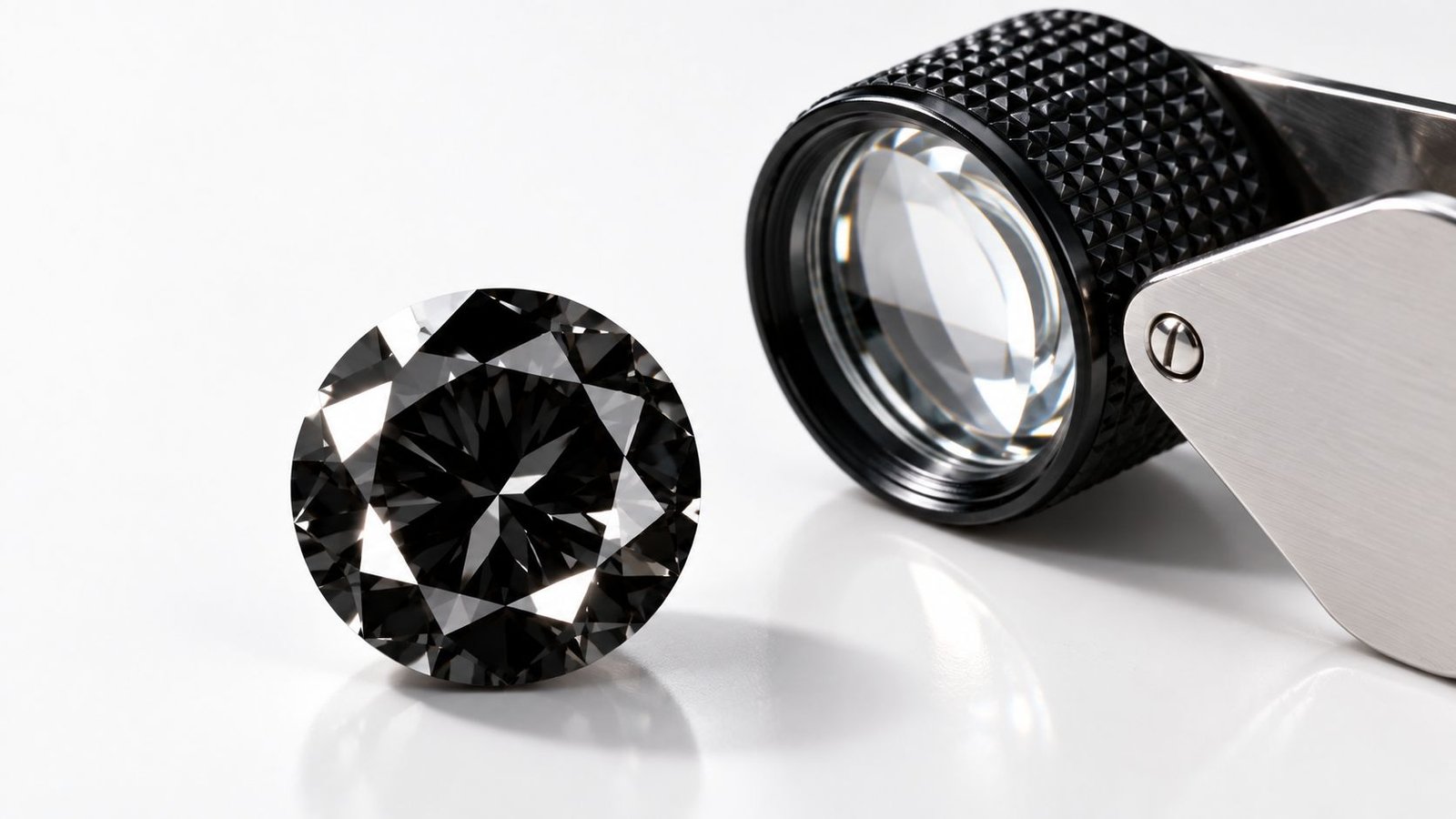
Grading a black diamond works differently than grading a colorless or fancy-colored one. Since these stones are fully opaque, the traditional clarity scale — which grades inclusions visible through a transparent stone — doesn’t apply in the same way. Instead, quality assessment for Black Lab Grown Diamonds focuses on surface finish, uniformity of color, absence of visible fractures or chips, and overall polish quality.
A well-made lab-grown black diamond should display a rich, even black tone with a smooth, glass-like polish and no visible pitting or cracking along the surface. Because there’s no light performance to judge the way there is with a colorless diamond, cut quality here is mostly about symmetry, proportion, and how well the facets catch and reflect light off the stone’s surface for that signature glossy sheen.
Certification still matters. Reputable labs like IGI and GIA can confirm whether a black diamond is genuinely diamond material (as opposed to black spinel, onyx, or another imitation stone), whether it’s natural or lab-grown, and whether any additional treatment has been applied. Always request this documentation, since black diamonds are one of the more commonly misrepresented stones in the current jewelry market — a plain black glass or ceramic imitation can look convincing to an untrained eye.
Weight and proportion also deserve a closer look than they typically get with black stones. Because there’s no internal sparkle to distract from the silhouette, an unevenly proportioned cut is far more noticeable on a black diamond than it would be on a colorless one. When comparing options from different sellers, ask specifically about depth percentage and table size, since these figures reveal whether the stone was cut to maximize visual size or to preserve carat weight at the expense of proportion.
Cut, Setting, and Style Considerations
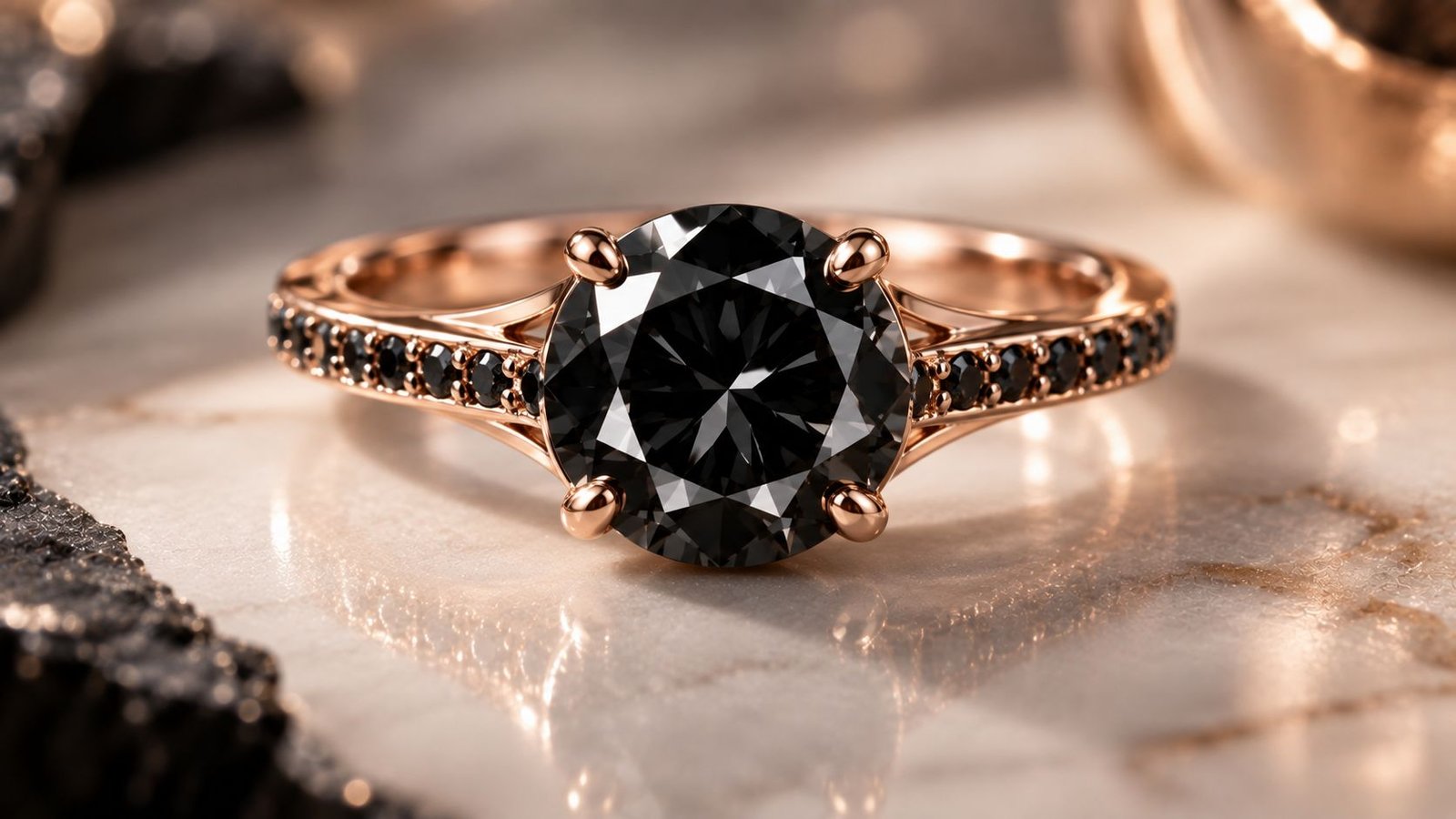
Because Black Lab Grown Diamonds don’t sparkle the way colorless diamonds do, cut choice plays a slightly different role here. Rose cuts and cushion cuts are especially popular because their broader, flatter facets showcase the stone’s glossy surface rather than trying to maximize internal light return, which simply isn’t possible with an opaque stone.
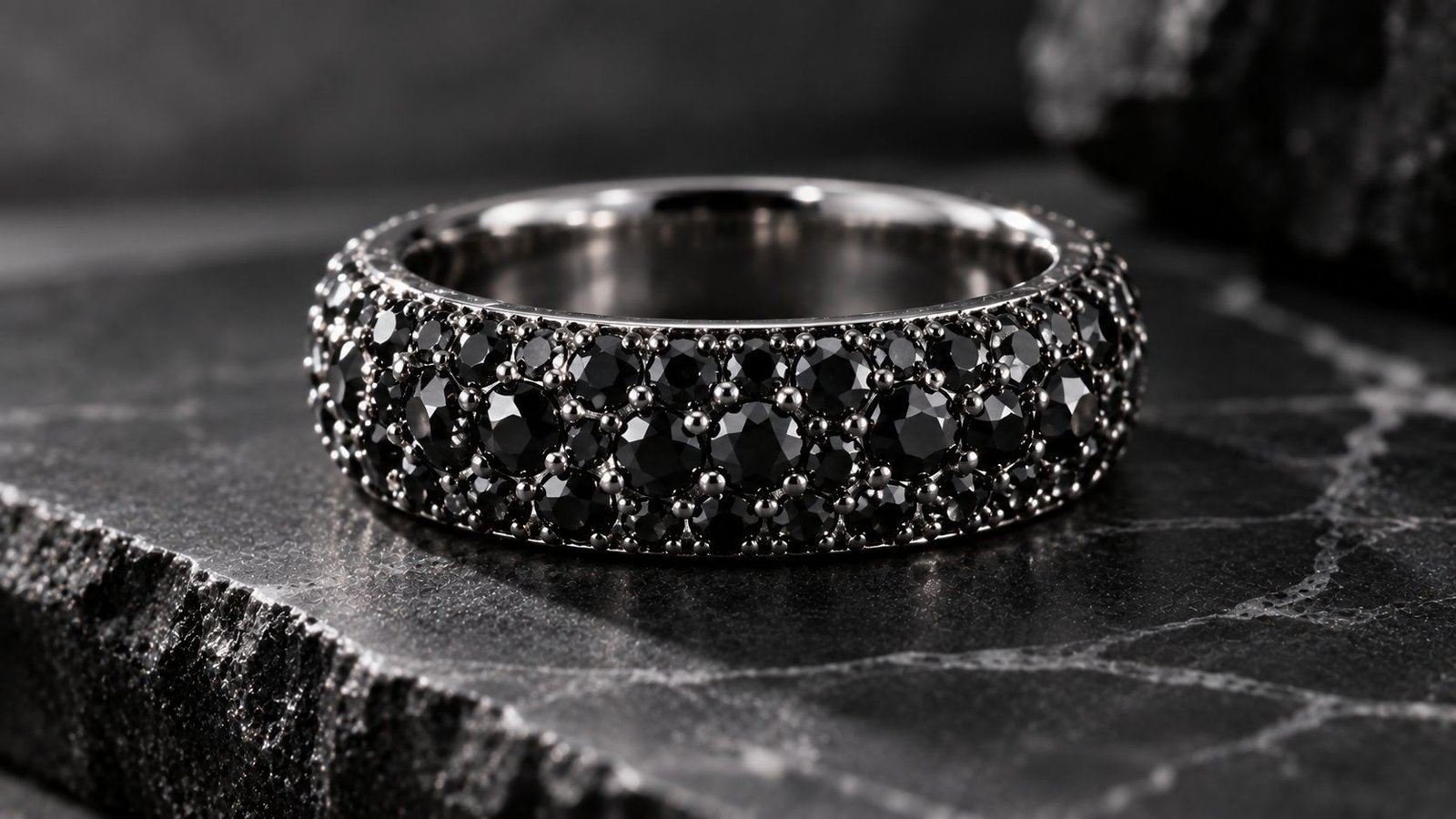
Setting style also matters more with black diamonds than with most other stones. Because the color reads as a bold, graphic element rather than a sparkling one, many designers pair these lab-created stones with warm metals like rose gold or yellow gold to create striking contrast, while others lean into a monochrome look by pairing them with black rhodium-plated white gold or oxidized silver.
Pavé settings using small lab-grown black diamonds have also become a popular way to add graphic detailing to rings and bands without the cost of a single large center stone, since smaller lab-grown black diamonds are widely available and considerably more affordable than sourcing multiple small natural black stones.
Rarity, Durability, and Care
While natural black diamonds hold a stronger scarcity premium due to their unusual and still-debated geological origin, Black Lab Grown Diamonds hold up just as well under daily wear. With a hardness of 10 on the Mohs scale, they resist scratching better than almost any other gemstone used in jewelry, making them an excellent choice for rings worn every day.
Care for black diamonds is largely the same as for any diamond: clean gently with warm water, mild soap, and a soft brush, avoiding harsh chemicals that could dull the surface polish over time. Because the beauty of a black diamond depends heavily on its glossy finish rather than internal brilliance, it’s worth having the surface professionally re-polished occasionally if it develops surface scratches from years of wear, something that matters less with faceted colorless diamonds where sparkle can mask minor surface wear.
One area to double-check with any black diamond, natural or lab-grown, is porosity. Because both true carbonado and some densely included lab-grown black diamonds can have microscopic surface porosity, avoid prolonged exposure to strong cleaning chemicals or perfumes directly on the stone, which can settle into these tiny surface irregularities over time.
Common Misconceptions
“Black diamonds are just dyed or treated colorless diamonds.” Not necessarily. While some black diamonds on the market are treated, genuine Black Lab Grown Diamonds are grown black from the start through controlled inclusion density, not surface-colored after the fact.
“Black diamonds aren’t real diamonds.” They are. Whether natural or lab-grown, a true black diamond has the same carbon structure and hardness as any other diamond — the opacity comes from internal inclusions, not a different material.
“You can’t tell a real black diamond from an imitation.” Certification solves this. A GIA or IGI report will confirm the material is genuine diamond and disclose whether it’s natural, lab-grown, or treated.
“Black diamonds are less durable because they’re not clear.” Durability comes from crystal structure and hardness, not transparency. Black Lab Grown Diamonds are exactly as hard and scratch-resistant as any other diamond.
“There’s no real difference in appearance between natural and lab-grown black diamonds.” In most cases, a well-cut Black Lab Grown Diamond looks essentially identical to a natural black diamond, since the color comes down to inclusion density rather than any visually distinguishable trait.
Buying Guide: What to Check Before You Purchase
Start by requesting certification confirming the stone is genuine diamond material, whether it’s natural or lab-grown, and whether any treatment was applied. This single step eliminates most of the risk associated with buying a black diamond.
Next, examine the surface finish in person or through high-resolution photos and video if buying online. Look for an even, glossy black tone without visible pitting, cracking, or dull patches, since surface quality plays a much bigger role in a black diamond’s appeal than it does in a colorless stone.
Consider the setting carefully. Because Black Lab Grown Diamonds work well with a range of cuts and metal tones, think about whether you want a bold monochrome look or a warm contrast finish before finalizing your design, since changing the metal color later is far more disruptive than choosing correctly from the start.
Finally, compare pricing across a few sellers for the same carat weight and cut style. Because Black Lab Grown Diamonds are priced more by finish quality and size than by the fine color-grading scales used for other diamonds, prices can vary more between sellers than you might expect, making a side-by-side comparison worthwhile. According to GIA’s laboratory-grown diamond grading services, every lab-grown stone should carry documentation confirming its carat, cut, and any treatments applied, regardless of color.
Final Thoughts
Black Lab Grown Diamonds have opened up a striking, durable, and genuinely affordable way to wear one of the boldest looks in fine jewelry today. While natural black diamonds carry a rarity and mystery that collectors will always value — carbonado’s possible extraterrestrial origins remain a genuinely unsettled scientific question — most everyday buyers will find that a well-made lab-grown black diamond delivers the same dramatic look at a fraction of the price. Whichever you choose, insist on proper certification and pay close attention to surface finish, since that’s where the real difference in quality lives.