

Bringing Back Antique Diamond Cuts With Lab-Grown Stones
Long before the modern round brilliant became the default choice for engagement rings, diamonds were cut entirely by hand, and the results looked nothing like the precisely calculated stones sold today. Antique Cut Diamonds — specifically the old mine and old European styles — have surged back into demand as buyers fall for their warm, candlelit sparkle and unmistakable handmade character. Lab-grown production has made it possible to recreate these historic looks with modern reliability, and this guide walks through the history, characteristics, and buying considerations behind this genuinely charming revival.
What Are Antique Cut Diamonds? Old Mine and Old European Explained
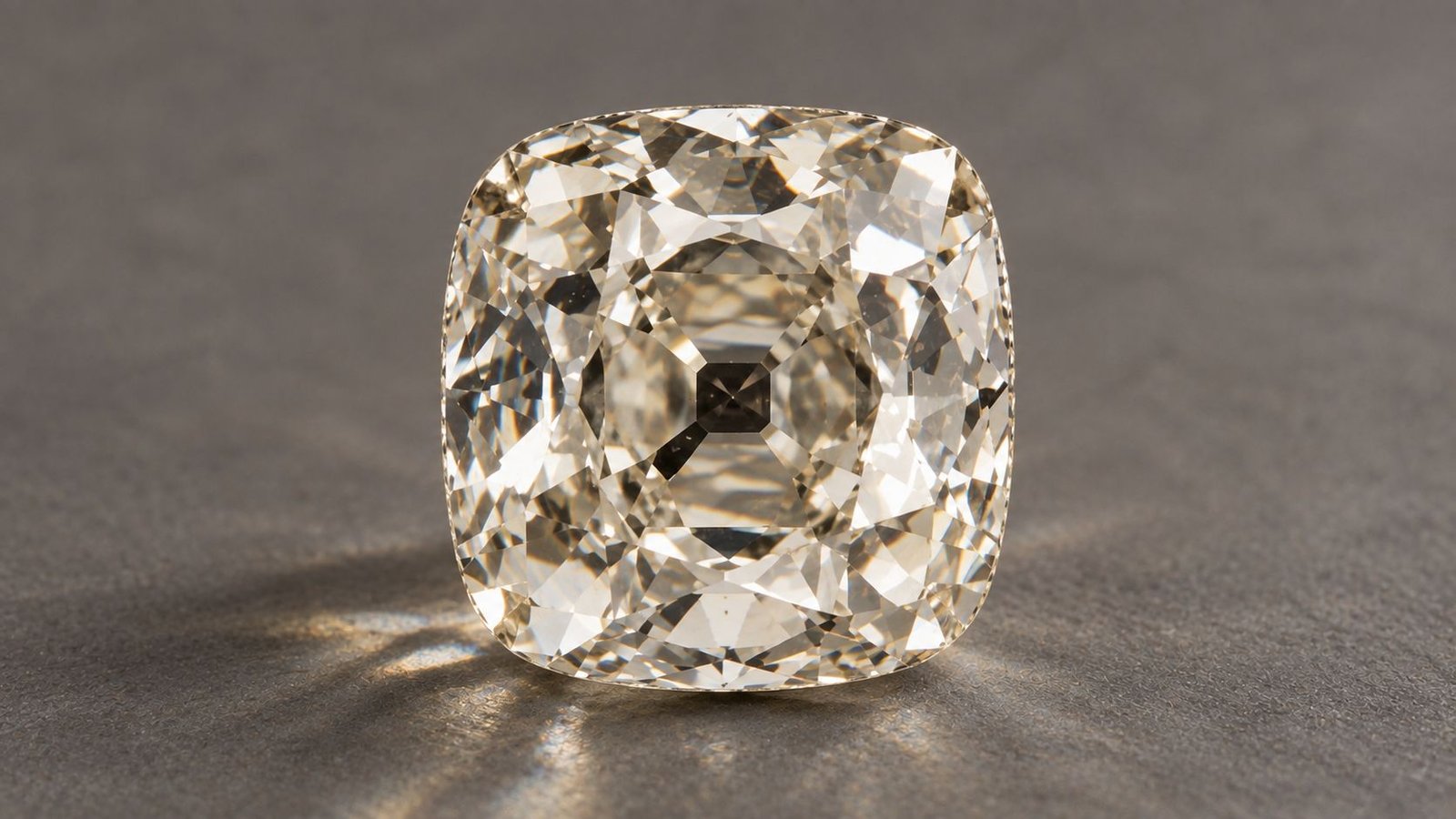
Antique Cut Diamonds refer to historic diamond cutting styles produced before the mechanized, mathematically optimized cutting techniques of the 20th century took over. The two most recognized antique cuts still sought after today are the old mine cut and the old European cut, both predecessors to the modern round brilliant but each with a distinct look shaped by the tools and techniques available when they were originally cut.
The old mine cut was the dominant diamond style from the early 1700s through the late 1800s, appearing throughout Georgian and Victorian era jewelry. Rather than a true round shape, old mine cuts have a soft, squarish outline, since early cutters shaped rough diamonds by hand following the natural octahedral form of the crystal rather than forcing it into a perfectly circular silhouette.
The old European cut followed as a direct evolution of the old mine, emerging once motorized bruting equipment became available in the late 1800s. This mechanical advancement let cutters achieve a genuinely round outline for the first time, making the old European cut the first true ancestor of today’s round brilliant, even though its proportions still look distinctly different from a modern stone.
A third historic style, the rose cut, predates both and is sometimes grouped alongside old mine and old European cuts in broader discussions of antique diamond styles, though it’s technically a different category altogether. Rose cuts have a flat base with no pavilion at all and a domed, faceted crown, giving them a completely different structure and light performance than either old mine or old European cuts, which both retain a traditional crown-and-pavilion structure much closer to modern diamonds.
Together, these three styles represent a rough chronological progression in diamond cutting history, moving from the flat-bottomed rose cut of the 16th century, through the hand-shaped old mine cut of the Georgian and Victorian eras, and finally to the mechanically assisted old European cut that bridged the gap to fully modern cutting. Understanding where each style sits in this progression helps explain why they look so different from one another despite all being considered antique.
Tracing the Origins of These Two Historic Cutting Styles

The old mine cut takes its name from the historic diamond sources in India and Brazil, referred to as the “old mines” once South African mining began dominating global supply in the 1860s. Diamonds from these original sources were cut using techniques that predated any kind of mechanized precision, relying entirely on a cutter’s trained eye and steady hand to shape each stone.
Because every old mine cut diamond was shaped individually without machine assistance, no two stones turned out exactly alike. Slight asymmetries, uneven girdles, and variations in proportion from one stone to the next were simply an accepted, even celebrated, part of the process, giving each finished diamond a genuinely unique character that mass-produced modern cuts don’t replicate.
The old European cut emerged as cutting technology advanced, with the 1874 introduction of motorized bruting equipment allowing cutters far greater control over achieving a true circular outline. This transitional period, running roughly from 1880 through the 1930s, produced the round antique stones most commonly found in Edwardian and Art Deco jewelry, bridging the gap between fully handmade old mine cuts and the mathematically precise round brilliants that would eventually follow.
The eventual shift away from both antique styles came down largely to changing consumer taste combined with continued advances in cutting precision. As electric lighting became standard in homes and jewelry stores throughout the early 20th century, brighter, whiter light exposed the softer, warmer sparkle of antique cuts differently than the candlelight and gas lighting these stones were originally designed to be seen under. Cutters responded by gradually refining proportions toward what eventually became the modern round brilliant, optimized specifically for maximum brilliance under the brighter artificial lighting of the modern era.
It’s this same historical detail that explains why Antique Cut Diamonds are sometimes described as looking their best under warmer, softer lighting rather than the bright showroom lighting typically used to display modern jewelry, a characteristic that has become part of their specific charm for buyers seeking something different from the standard modern sparkle.
Key Characteristics That Define These Antique Cuts

Both antique styles share a set of features that distinguish them clearly from a modern round brilliant. According to GIA’s overview of the old mine cut, both cuts typically display 58 facets, similar to a modern round brilliant, but the proportions differ substantially — a smaller table, a notably higher crown, a larger open culet, and shorter lower-half facets all combine to produce a distinctly different play of light.
The old mine cut’s defining trait is its soft, squarish or cushion-like outline with gently curved edges, a direct result of hand-cutting along the diamond’s natural crystal form. The old European cut, by contrast, achieves a genuinely round shape while retaining the antique family’s signature high crown, deep pavilion, and small table, along with a visible open culet that’s typically smaller than what appears in an old mine cut but still noticeable through the table.
Both cuts produce a fundamentally different kind of sparkle than a modern round brilliant. Rather than the small, rapid, evenly distributed flashes engineered into contemporary cuts, antique cuts produce larger, slower flashes of light often described as “chunky” or “candlelight” brilliance, along with noticeably more visible fire, or flashes of spectral color, thanks to their steeper crown angles and different facet arrangement.
Why Antique Cut Diamonds Are Seeing a Revival Today
Interest in vintage and heirloom-inspired jewelry has grown substantially in recent years, with buyers increasingly drawn to pieces that feel storied and individual rather than mass-produced. Antique Cut Diamonds fit that desire perfectly, offering a genuinely different aesthetic from the ultra-precise sparkle most modern jewelry buyers have grown accustomed to.
Social media has played a meaningful role in this shift as well, with antique and vintage-inspired engagement rings generating significant interest and engagement online, introducing an entire generation of buyers to a look they might never have encountered through traditional jewelry store browsing alone. The warmer, more romantic character of antique cuts photographs and films distinctively, helping fuel demand well beyond dedicated antique jewelry collectors.
Sustainability considerations have contributed too, somewhat indirectly. Buyers interested in vintage aesthetics sometimes start by considering genuinely antique stones, then discover that lab-grown reproductions offer the same historic look with far greater consistency, easier sourcing, and a significantly lower price point than hunting down an authentic century-old stone in good condition.
Recreating Antique Cuts With Lab-Grown Diamonds
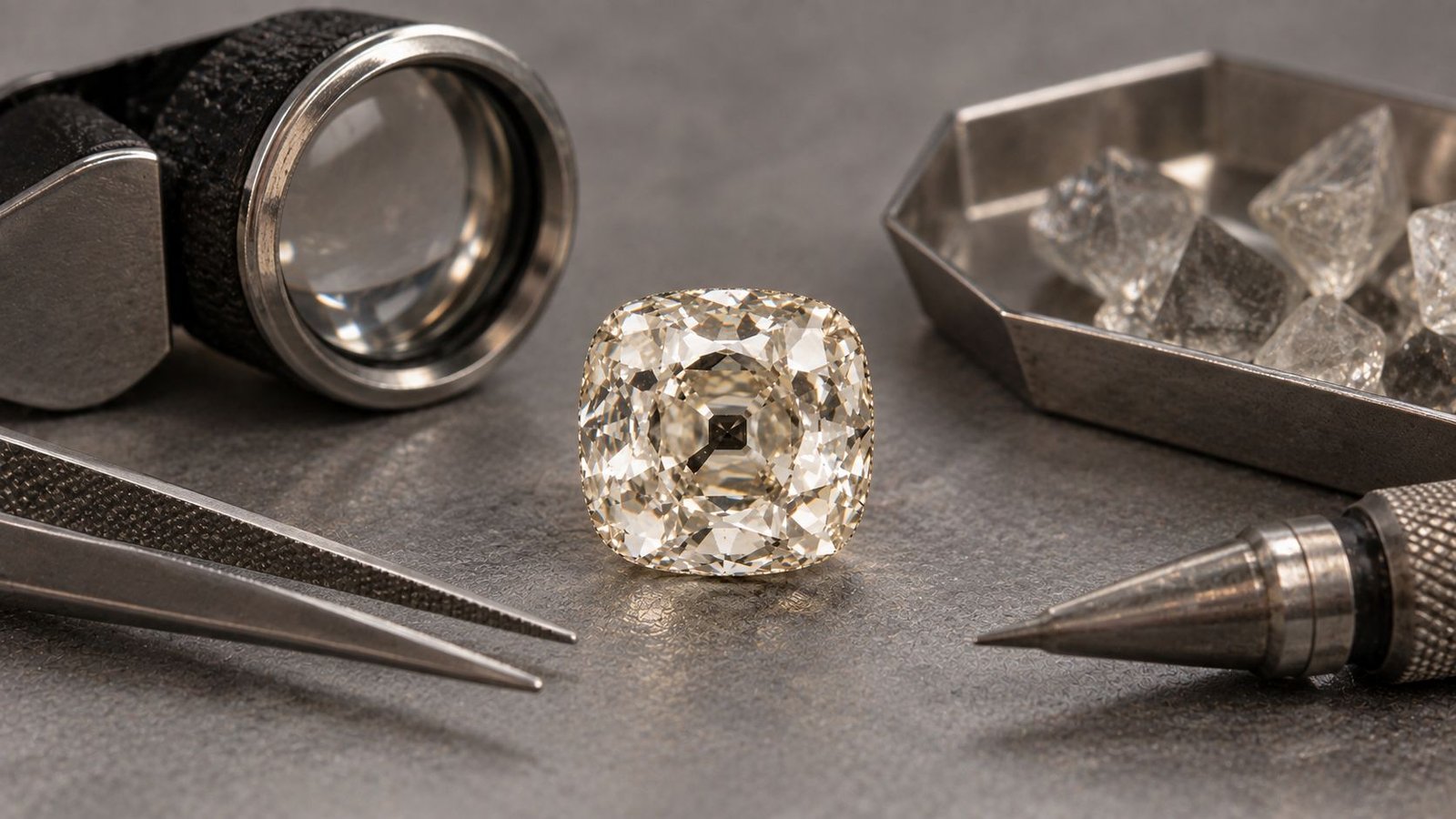
Producing a lab-grown stone with old mine or old European proportions starts the same way any lab-grown diamond does, through controlled CVD or HPHT growth — for background on how these foundational growth methods work, see our complete guide to CVD vs HPHT diamond growing methods. What makes an antique-style lab-grown stone distinctive happens afterward, during cutting, where skilled artisans deliberately recreate the historic proportions and even the subtle handmade irregularities that define genuine antique cuts.
This deliberate approach to cutting represents a meaningful shift from how lab-grown diamonds are typically finished. Most lab-grown stones are cut to modern precision standards for maximum brilliance and consistency, while antique-style reproductions intentionally incorporate a higher crown, smaller table, and open culet, sometimes even introducing slight, controlled asymmetry to more faithfully evoke the handmade character of a genuine period stone.
Because lab-grown production removes the scarcity and condition concerns that come with sourcing genuinely antique rough or reclaimed period stones, cutters working with lab-grown material can focus entirely on faithfully recreating the desired historic look without being constrained by whatever a specific piece of antique rough happens to allow. This makes Antique Cut Diamonds in lab-grown form considerably more accessible and consistent than trying to source authentic century-old stones for a new piece of jewelry.
Old Mine vs Old European: How to Tell Them Apart
The clearest visual distinction between the two styles comes down to outline shape. Old mine cuts display a soft, squarish or cushion-like silhouette with rounded corners, a direct legacy of hand-shaping along the diamond’s natural crystal faces. Old European cuts, by contrast, are genuinely round, reflecting the mechanized bruting technology that made true circular shaping possible for the first time.
Culet size offers another useful clue. Old mine cuts generally display a larger, more prominent open culet visible through the table, while old European cuts typically show a smaller, though still visible, culet. Facet proportions also differ subtly, with old mine cuts tending toward slightly shorter, broader facets compared to the somewhat more refined faceting seen in old European examples.
Timeline provides a helpful shorthand as well, since old mine cuts dominated from the early 1700s through the late 1800s, appearing throughout Georgian and Victorian jewelry, while old European cuts took over from roughly 1880 through the 1930s, spanning the late Victorian period through Edwardian and Art Deco design. When shopping for lab-grown reproductions, specifying which historic style you’re drawn to helps ensure the cutter targets the correct outline and proportion set.
Antique Cut Diamonds: Value, Certification, and Buying Considerations
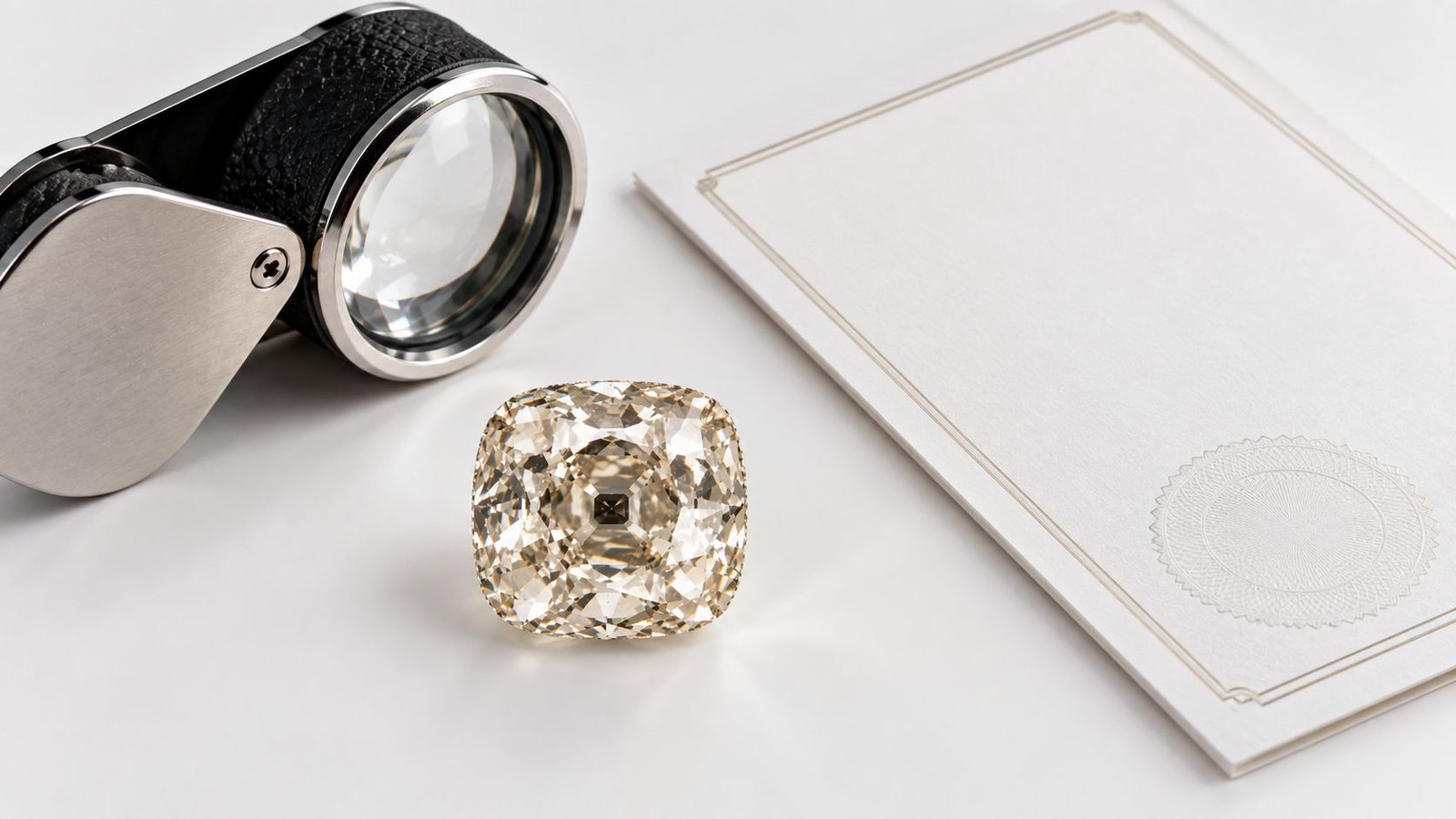
Because antique-style cutting sacrifices some brilliance for historic character, Antique Cut Diamonds are generally evaluated somewhat differently than modern round brilliants when it comes to cut quality assessment. Rather than measuring against the mathematically optimized proportions used for a modern ideal cut, graders and specialists assess antique-style stones against the proportions and character typical of genuine period cutting.
Certification remains just as important for lab-grown antique-style stones as for any other diamond. A grading report should confirm carat weight, clarity, and color as usual, while also disclosing that the stone is lab-grown rather than a genuine antique original, since authentic century-old stones and modern lab-grown reproductions of the same style carry very different market positioning despite looking visually similar.
Price for lab-grown Antique Cut Diamonds tends to sit well below genuine antique originals in good condition, since authentic period stones carry additional value tied to their actual age, provenance, and rarity that a modern reproduction, however faithfully cut, simply cannot replicate. For buyers drawn to the look rather than the historic provenance specifically, this makes lab-grown antique-style cuts a genuinely practical way to get the aesthetic without competing in the antique jewelry collector’s market.
Common Misconceptions
“Old mine and old European cuts are the same thing.” They’re related but distinct, with old mine cuts showing a squarish outline and old European cuts displaying a genuinely round shape, reflecting different eras and cutting technology.
“Antique-style lab-grown diamonds are lower quality than modern cuts.” They’re simply optimized for a different aesthetic goal — historic character and warm, candlelit sparkle rather than the maximum brilliance modern cuts are engineered to achieve.
“A lab-grown antique cut is trying to pass as a genuine period stone.” Reputable sellers clearly disclose that a stone is a modern lab-grown reproduction of a historic cutting style, not an attempt to misrepresent its actual age or origin.
“Antique cuts don’t sparkle as much as modern diamonds.” They sparkle differently rather than less — larger, slower flashes of light and more visible fire, compared to the smaller, more numerous flashes engineered into modern cuts.
“There’s no real skill difference in cutting an antique-style stone versus a modern one.” Recreating authentic antique proportions, including period-appropriate facet arrangements and subtle handmade character, requires specialized expertise that differs meaningfully from standard modern diamond cutting.
Styling Antique Cut Diamonds in Modern Jewelry
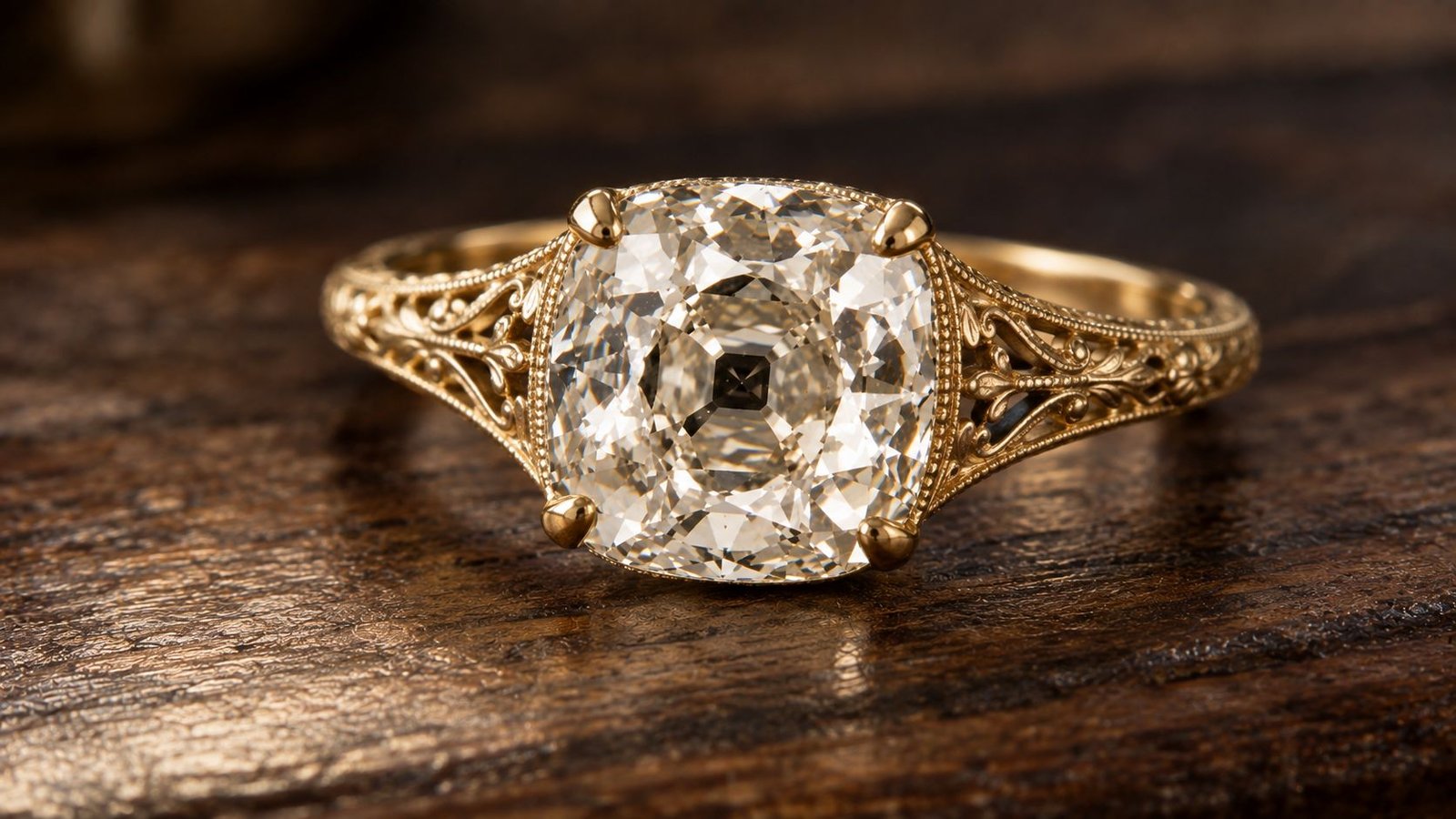
Antique Cut Diamonds pair particularly well with vintage-inspired settings that echo their historic origins, such as milgrain detailing, filigree metalwork, and bezel or claw-prong settings reminiscent of period jewelry design. That said, many designers also enjoy the contrast of setting an antique-style stone in a clean, minimalist modern setting, letting the diamond’s warm, romantic sparkle stand out against contemporary lines.
Metal choice matters too. Yellow gold has historically been the most common pairing for genuinely antique stones, since it was the dominant metal during the eras when these cuts originated, though rose gold and even platinum settings have become popular modern alternatives that still complement the warm character of antique-style cutting.
Because Antique Cut Diamonds photograph and read differently from modern brilliants, it’s worth viewing any prospective stone under a few different lighting conditions before finalizing a purchase, since the characteristic “chunky” sparkle these cuts are known for reveals itself most distinctly under warmer, more ambient lighting rather than the bright, direct lighting typically used to showcase modern round brilliants.
Layering antique-style pieces with other vintage-inspired jewelry, rather than pairing them with obviously modern pieces, also tends to create a more cohesive overall look. A stack of thin, textured bands alongside an old mine cut solitaire, for example, echoes the layered, collected-over-time aesthetic often associated with genuine heirloom jewelry, even when every piece involved is newly made. This styling approach has become especially popular among buyers building a personal jewelry collection with a consistent vintage-inspired thread running through it, rather than treating each piece as an isolated purchase.
Final Thoughts
Antique Cut Diamonds offer a genuinely different kind of beauty than the precisely engineered sparkle most modern buyers are used to, and lab-grown production has made that historic character accessible without requiring a hunt through the antique jewelry market. Whether you’re drawn to the soft, squarish charm of an old mine cut or the romantic, candlelit glow of an old European cut, understanding the history and characteristics behind these styles will help you choose and style a piece that genuinely honors the craftsmanship it’s inspired by.
Frequently Asked Questions
Disclaimer: Diamond cutting terminology and historical information referenced in this article reflect general gemological and jewelry industry knowledge and are provided for educational purposes only. Always consult a certified jeweler or gemologist and request official grading reports before making a purchase decision.