

Designing Fine Jewelry With Multiple Fancy-Color Lab-Grown Diamonds
A single fancy colored diamond makes a statement on its own, but pairing two or three different hues in one piece takes that statement to an entirely different level. Multi-Color Diamond Jewelry has moved from a niche custom request to one of the most requested categories among buyers who want something no one else is wearing, and lab-grown production has made it realistic to combine multiple fancy colors without an eye-watering price tag. This guide walks through the design principles, popular combinations, and practical considerations behind building a piece with more than one fancy color.
Why Multi-Color Diamond Jewelry Is Having a Moment
For decades, combining multiple fancy colored diamonds in a single piece was reserved almost exclusively for museum-grade collector jewelry, simply because sourcing several natural fancy colored stones that worked well together was both extraordinarily difficult and prohibitively expensive. Lab-grown production has fundamentally changed that math, making it possible to source matched sets of yellow, pink, blue, green, and other fancy colors at a fraction of what natural sourcing would require.
This shift has coincided with a broader move in fine jewelry toward personalization and individuality. Buyers increasingly want pieces that feel custom and distinctive rather than mass-produced, and Multi-Color Diamond Jewelry delivers exactly that kind of visual signature. A ring or pendant combining two or three fancy colors reads as intentional and artistic in a way that a single-color piece, however beautiful, simply can’t replicate.
Social sharing has amplified this trend considerably. Distinctive, colorful jewelry photographs and performs well across social platforms, and multi-color pieces in particular tend to generate significantly more engagement than single-stone designs, encouraging both designers and buyers to experiment further with bold color combinations they might not have considered a few years ago.
Jewelry designers have responded to this demand by developing dedicated multi-color collections rather than treating combined-color pieces as one-off custom orders. What used to require a specialist colored-diamond dealer and months of sourcing can now often be assembled from an existing catalog of matched lab-grown stones, dramatically shortening turnaround time for buyers who want a distinctive piece without an extended custom design process.
Younger buyers in particular have driven much of this shift. Engagement ring and fine jewelry preferences among newer generations of buyers have moved noticeably away from strictly traditional, single-stone designs toward pieces that reflect personal style and individuality, and Multi-Color Diamond Jewelry fits that broader shift especially well, since no two combinations need to look exactly alike.
Color Theory Basics for Combining Fancy Colors
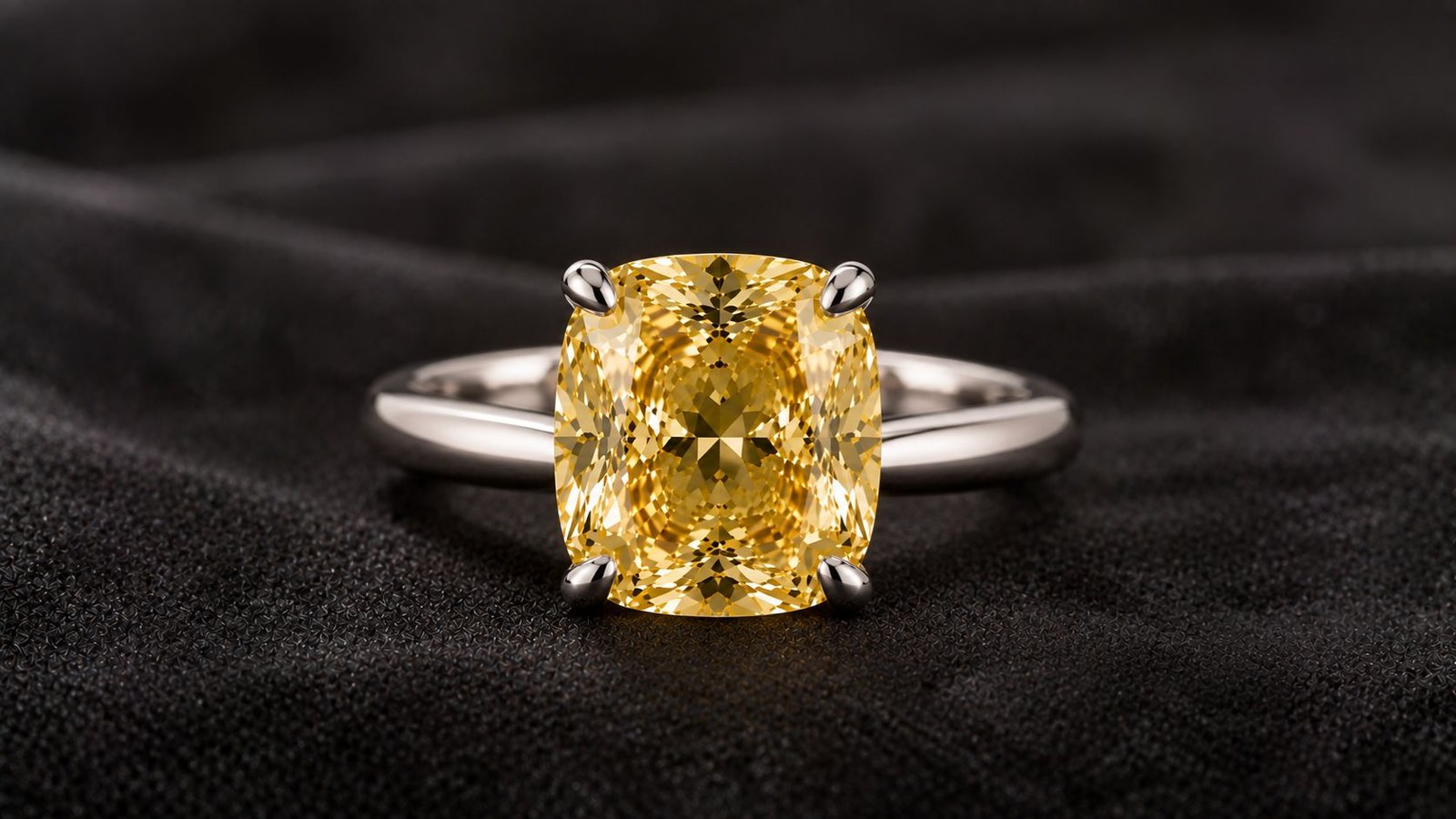
Successful multi-color design isn’t just about picking favorite colors and setting them side by side — it draws on the same color theory principles used across visual design more broadly. Complementary colors, sitting opposite each other on the color wheel, create striking contrast and tend to work particularly well when one color is used as a dominant stone and the other as an accent, such as a central blue diamond surrounded by smaller orange accents.
Analogous color combinations, using hues that sit near each other on the color wheel, create a softer, more harmonious effect. Pairing yellow and orange diamonds, or pink and violet, produces a gradient-like flow that feels cohesive rather than contrasting, which suits buyers wanting a colorful piece that still reads as elegant and understated rather than bold and graphic.
Saturation balance matters just as much as hue selection. Combining a Fancy Vivid stone with a much paler Fancy Light stone can make the lighter stone look washed out by comparison, so most successful Multi-Color Diamond Jewelry designs keep saturation levels reasonably consistent across the different colors used, even when the hues themselves vary considerably.
Proportion is another factor experienced designers weigh carefully. A piece combining three colors in roughly equal quantities reads very differently from one using two colors as small accents around a single dominant stone, and neither approach is inherently better — the right choice depends on whether the goal is a bold, evenly balanced statement or a more traditional design with a subtle multi-color detail. Many first-time buyers gravitate toward the accent approach specifically because it offers a gentler introduction to combining colors without committing to a fully symmetrical multi-hue design.
It’s also worth considering how a combination will read from a distance versus up close. Some color pairings that look striking in a macro photograph or under a jeweler’s loupe can blend together or lose definition when viewed at a normal conversational distance, particularly if the stones are small or the colors sit too close together on the color wheel. Experienced designers often test proposed combinations under everyday lighting and typical viewing distances before finalizing a design, not just under bright studio conditions.
Popular Color Combinations for Multi-Color Diamond Jewelry
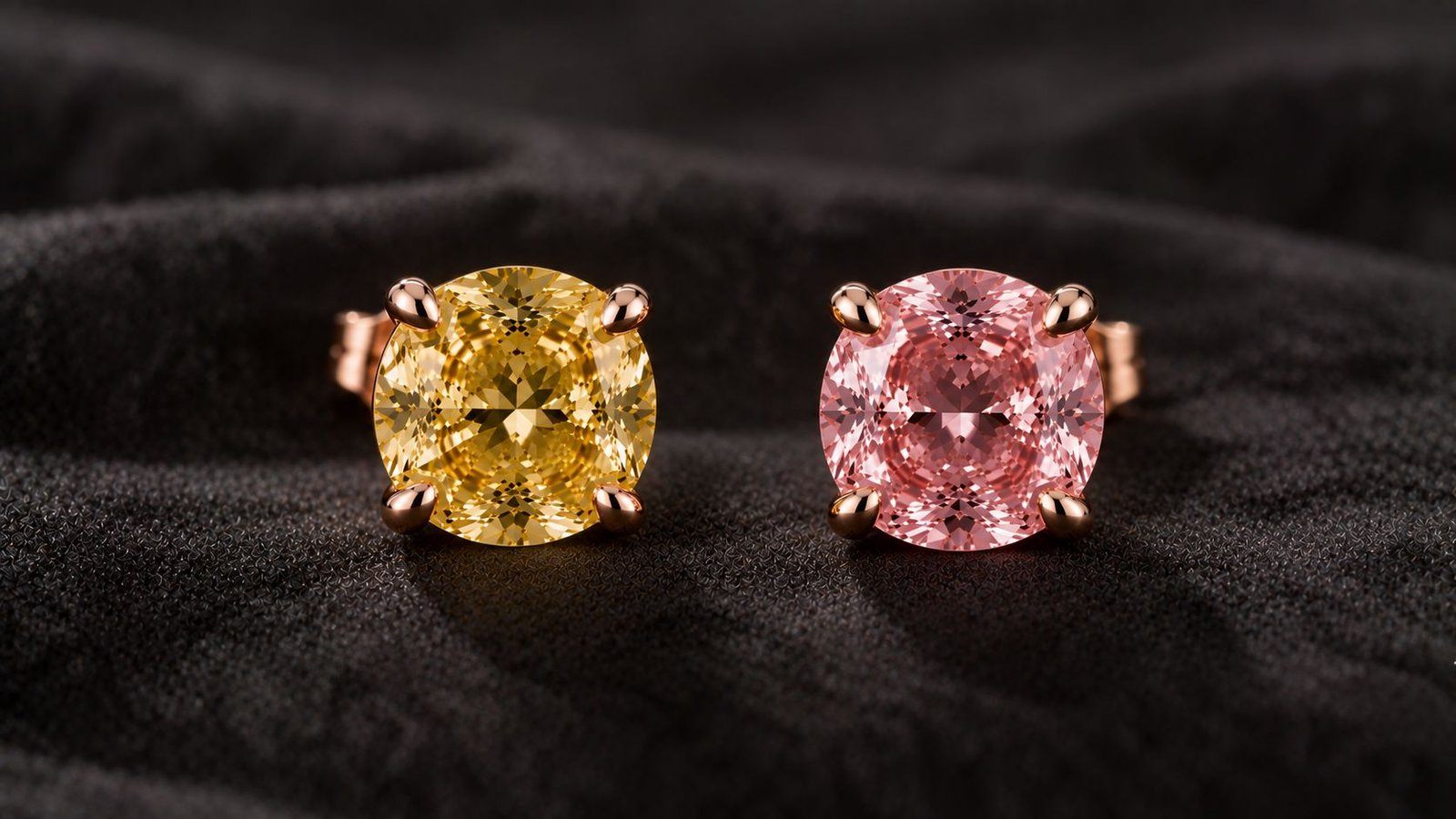
Yellow and pink is one of the most requested combinations, offering a warm, celebratory feel that works particularly well in engagement rings and anniversary pieces. The contrast between yellow’s brightness and pink’s softness creates visual interest without feeling harsh or overly graphic.
Blue and orange, true complementary colors, create some of the boldest Multi-Color Diamond Jewelry designs available, often used in statement earrings or cocktail rings where the wearer specifically wants a conversation-starting piece. Because both colors are relatively rare even in lab-grown form, this combination tends to sit at a higher price point than combinations using more commonly available fancy colors.
Green and yellow, sitting close together on the color wheel, produce a naturalistic, almost botanical feel that has become especially popular in nature-inspired jewelry lines. Black paired with any bright fancy color has also grown in popularity, since black diamonds provide dramatic contrast and grounding without competing for attention the way two bright hues might when placed side by side.
Violet and blue, another analogous pairing, has found a particular following among buyers wanting a cooler, more understated multi-color piece, since the two hues blend almost seamlessly at the boundary while still offering enough visual distinction to read clearly as two separate colors rather than one. Brown and orange, meanwhile, has become a popular choice for buyers wanting warmth and richness without the higher cost typically associated with rarer fancy colors, since both hues are relatively accessible even in larger carat sizes.
Three-color combinations tend to work best when one color clearly anchors the design as the dominant hue, with the remaining two serving supporting roles either as accents or as a smooth transitional bridge between the dominant color and a secondary highlight. Attempting to give three colors truly equal visual weight in a single piece is possible but considerably harder to execute well, and most experienced designers recommend establishing a clear hierarchy among the colors used rather than treating all of them as equally prominent.
Metal Choices That Complement Multiple Colors
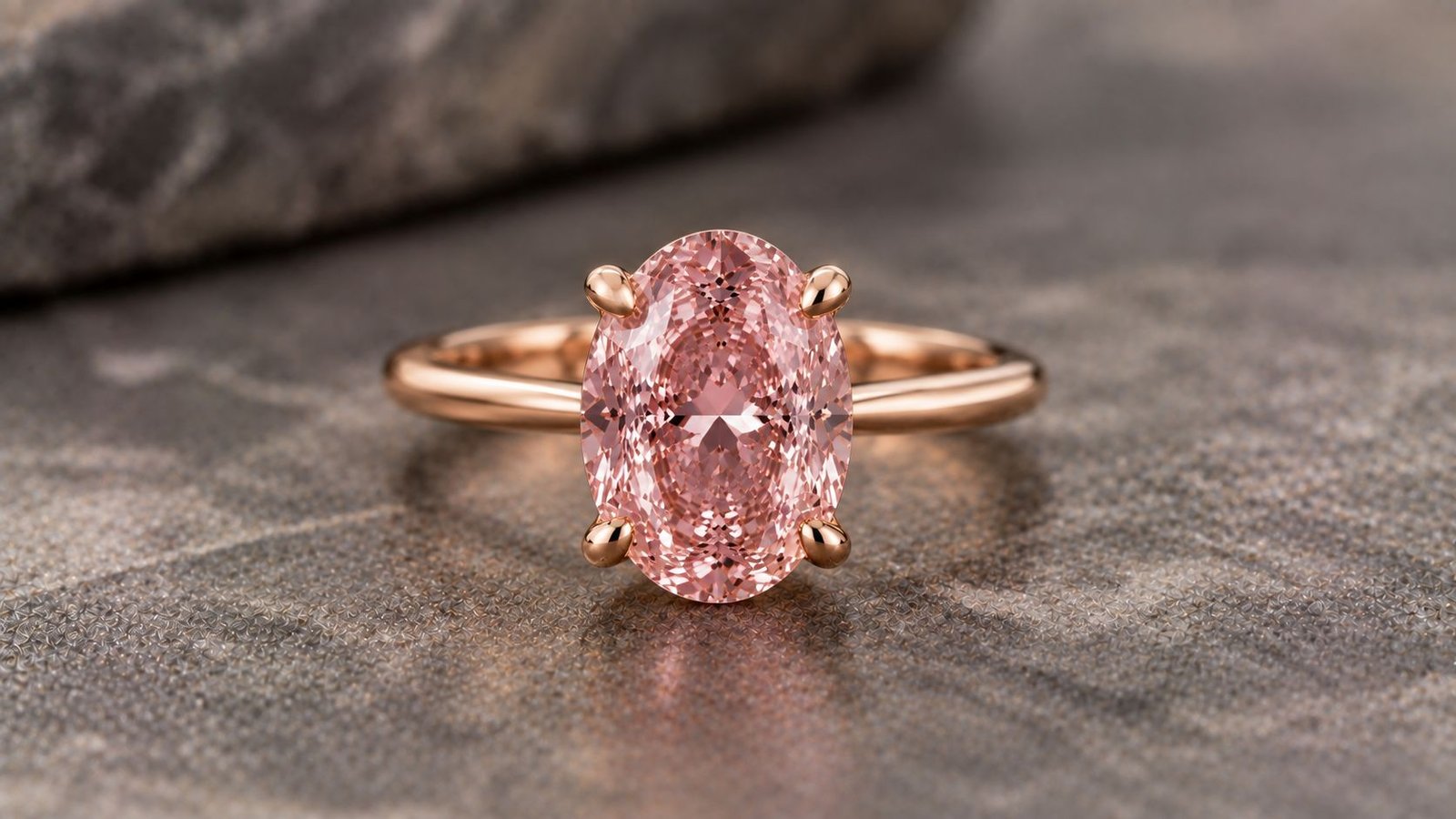
Choosing a metal for multi-color pieces requires thinking about how it interacts with several hues simultaneously rather than just one. White metals like platinum and white gold tend to work as a neutral canvas, letting each color read clearly without the metal itself adding a competing warm or cool tone to the mix.
Yellow and rose gold can beautifully unify a warm-toned color palette, such as yellow, orange, and pink combinations, by echoing the warmth of the stones themselves rather than contrasting against it. For cooler palettes involving blues, greens, or violets, white metals generally provide better harmony, since a warm gold setting can sometimes clash with cooler fancy colors in a way that feels unintentional rather than designed.
Two-tone and mixed-metal settings have also become a popular technique specifically for Multi-Color Diamond Jewelry, using different metal colors within the same piece to echo and reinforce the different diamond colors used, creating a more integrated, deliberately layered design.
Design Approaches: Gradient, Cluster, and Alternating Patterns
Gradient designs arrange stones in a smooth progression from one color to another, often moving through several shades of the same base color family before transitioning to a second hue entirely. This approach works particularly well in tennis bracelets and eternity bands, where the linear format naturally lends itself to a flowing color progression.
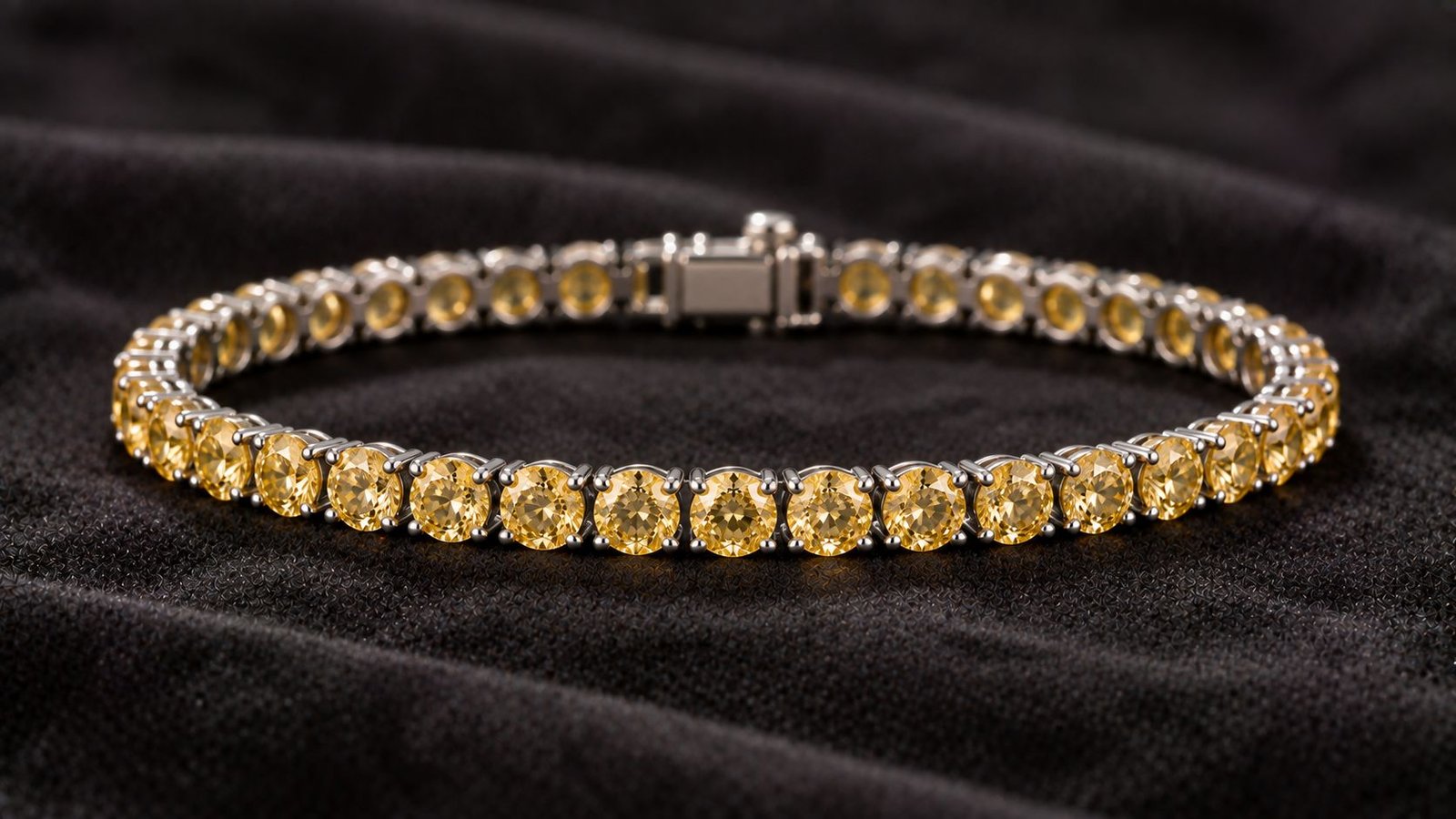
Tennis bracelets are the ideal format for gradient designs, with stones shifting gradually from one hue to the next.
Cluster settings group multiple colors together in a single dense arrangement, often centered around one larger stone with smaller accent stones in contrasting or complementary colors surrounding it. This approach tends to work well for statement rings and pendants where the goal is maximum visual impact in a compact space.
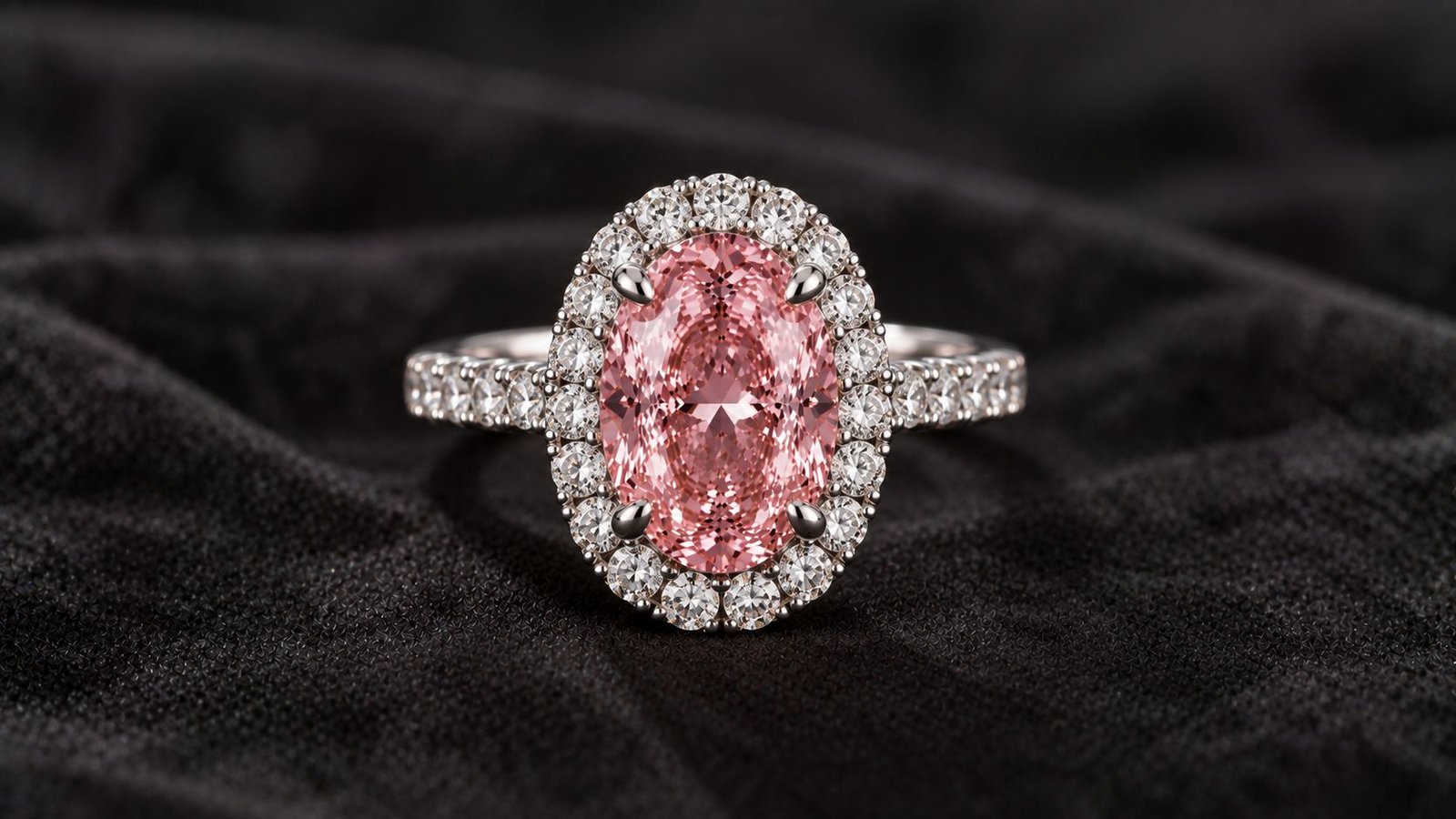
Cluster and halo settings surround a dominant center stone with accent stones, and those accents can be a second fancy color.
Alternating patterns repeat two or three colors in a consistent sequence around a band or across a necklace, creating a rhythmic, structured look rather than a flowing gradient. This approach suits buyers who want a bold color statement with a more graphic, deliberate feel than a softer gradient design would provide.
Price Considerations for Multi-Color Diamond Jewelry
Because Multi-Color Diamond Jewelry typically involves several stones rather than one, total price reflects the combined cost of each color used, and rarer fancy colors will always push the overall price higher regardless of how small each individual stone might be.
| Factor | Lab-Grown Multi-Color Pieces | Natural Multi-Color Pieces |
| Sourcing multiple matched colors | Achievable and consistent | Extremely difficult and costly |
| Typical price range | Accessible for most jewelry budgets | Often reserved for high-end collectors |
| Color and saturation consistency | Controllable across stones | Highly variable between sourced stones |
| Certification available | Yes (IGI, GIA) | Yes (GIA) |
| Best suited for | Statement and personalized jewelry | Rare investment-grade collector pieces |
Choosing more common fancy colors like yellow alongside a single rarer accent color, rather than combining two extremely rare hues, is one of the simplest ways to keep a multi-color piece within a reasonable budget without sacrificing visual impact.
It’s also worth remembering that total price for Multi-Color Diamond Jewelry reflects not just the stones but the added design and setting complexity involved in working with multiple colors. Sourcing and matching several different colored stones typically requires more design consultation time than a single-stone piece, and setting stones of varying sizes and colors precisely can involve more intricate jewelers’ work than a straightforward solitaire setting. Factoring in this design and labor component, not just the raw stone cost, gives a more realistic picture of total pricing when budgeting for a custom multi-color piece.
Multi-Color Diamond Jewelry: Quality and Certification Considerations
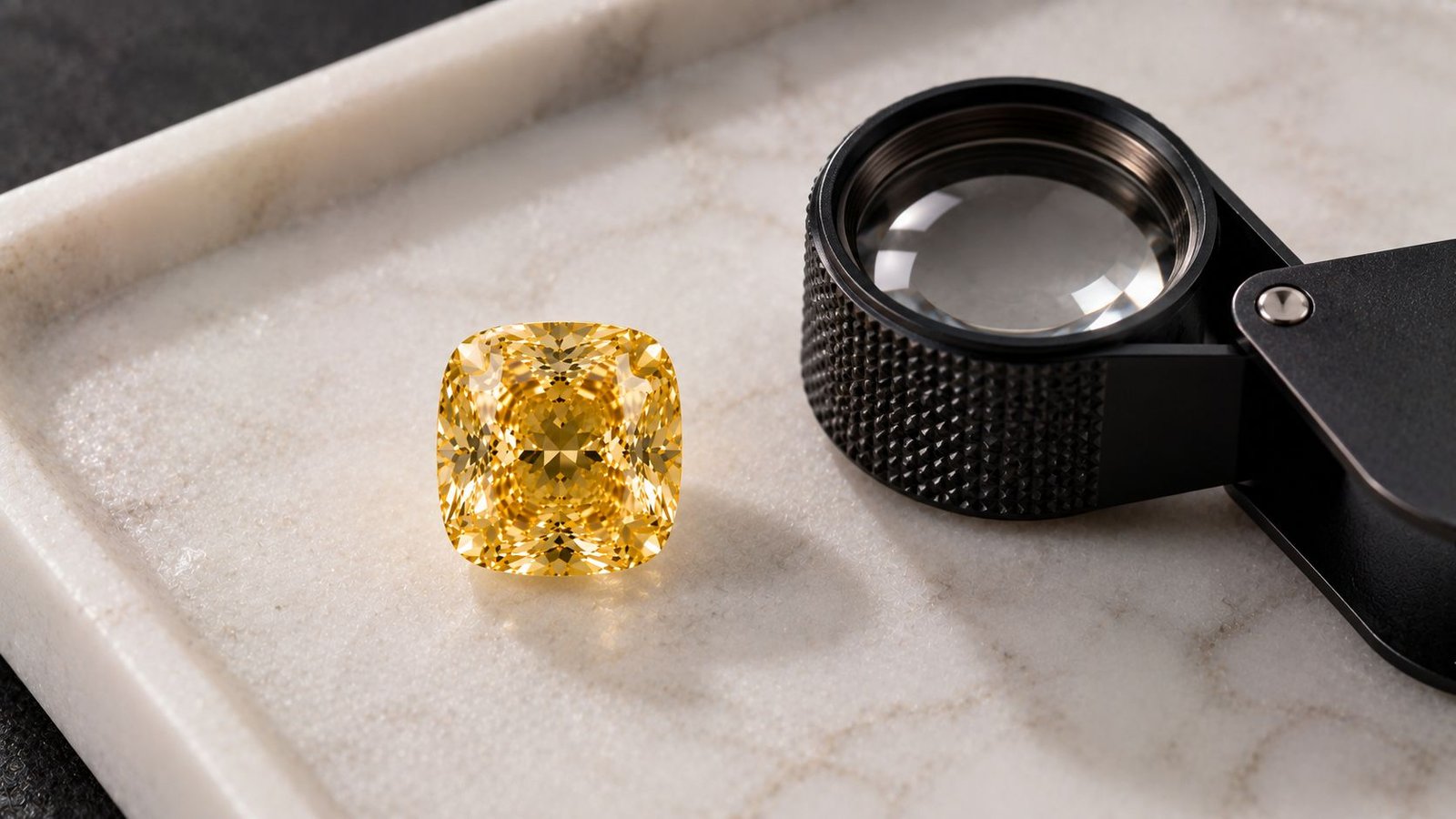
Because Multi-Color Diamond Jewelry involves multiple stones, each with its own color grade, certification becomes more complex than for a single-stone piece. Ideally, every fancy colored stone used should carry its own grading documentation confirming hue, tone, saturation, and origin, whether lab-grown, natural, or treated. According to GIA’s colored diamond report documentation, this level of individual stone documentation is what allows buyers to verify quality and value across a piece with several different fancy colors rather than relying on a single overall description.
Consistency in cut quality across different colored stones also matters more in multi-color pieces than buyers might initially expect, since a well-cut stone in one color placed beside a poorly cut stone in another can create a noticeable imbalance in how the finished piece catches and reflects light. Reputable jewelers sourcing stones for a multi-color design typically prioritize matching cut quality across colors, not just matching size or shape.
Common Misconceptions
“Combining multiple colors always looks busy or overdone.” Thoughtful color theory application, particularly around saturation matching and complementary or analogous pairing, keeps multi-color designs cohesive rather than chaotic.
“Lab-grown multi-color pieces use lower-quality stones than single-color designs.” Quality standards apply identically regardless of how many colors a piece combines; certification confirms grade and origin for each stone individually.
“You need rare, expensive colors to make an impactful multi-color piece.” Common colors like yellow and pink, thoughtfully combined, can create just as much visual impact as rarer hues at a fraction of the cost.
“Multi-color settings are harder to resize or repair than single-color pieces.” In most cases, resizing and repair work the same way regardless of how many diamond colors are present, since the process centers on the metal band rather than the stones themselves.
“There’s no real design skill involved — it’s just picking colors you like.” Successful Multi-Color Diamond Jewelry design draws on genuine color theory principles around hue relationships, saturation balance, and metal pairing that significantly affect how cohesive the finished piece feels.
Styling and Care Tips
When styling multi-color pieces, it generally works best to let one piece carry the color statement rather than stacking multiple colorful items together, since too many competing hues across several pieces can undercut the intentional design of any single item. A bold multi-color ring paired with simple, neutral-toned accessories tends to look more polished than pairing it with additional colored stones elsewhere.
Care for Multi-Color Diamond Jewelry follows the same basic principles as any diamond jewelry: clean regularly with warm water, mild soap, and a soft brush, and have settings checked periodically by a jeweler, particularly for pieces using several smaller stones where a single loose setting could risk losing a stone. Because multi-color pieces often use a mix of setting styles across different-sized stones, an annual professional inspection is especially worthwhile to catch any wear before it becomes a real problem.
For more on the certification standards behind these individual stones, see our complete guide to fancy color diamond grading, and for background on how lab-grown stones are produced in the first place, our complete guide to CVD vs HPHT diamond growing methods covers the foundational process. If you’re specifically drawn to combining unusual hues, our guide to green and orange diamonds covers two of the rarer colors worth considering for an accent stone.
Final Thoughts
Multi-Color Diamond Jewelry represents one of the most creatively rewarding directions in modern fine jewelry design, and lab-grown production has made it genuinely achievable for buyers who want a distinctive, personalized piece without a collector-level budget. Whether you’re drawn to a soft analogous gradient or a bold complementary contrast, understanding the color theory, metal pairing, and certification principles behind these designs will help you build a piece that feels intentional, cohesive, and entirely your own.
Frequently Asked Questions
It refers to jewelry pieces that combine two or more different fancy colored diamonds, using color theory principles to create a cohesive, intentional design rather than a single dominant hue.
Yes. Lab-grown production makes it possible to source matched, consistent fancy colors at a fraction of the cost required to source multiple natural fancy colored stones.
Complementary pairs like blue and orange create bold contrast, while analogous pairs like yellow and pink or green and yellow create a softer, more harmonious look.
Yes. White metals act as a neutral backdrop for any color palette, while warm metals like yellow or rose gold work especially well with warm-toned color combinations.
It depends on the colors chosen. Combining common colors like yellow and pink can be quite affordable, while combining two rare hues will naturally push the price higher.
Ideally, every fancy colored stone should carry individual grading documentation confirming hue, tone, saturation, and origin, rather than relying on a single overall description for the piece.
A gradient design, moving smoothly from one color to another across the linear format, tends to work especially well for bracelets and bands.
Yes, in most cases resizing works the same way as any diamond ring, since the process centers on the metal band rather than the number of colors used.
The same basic care applies: clean with warm water, mild soap, and a soft brush, and have settings checked periodically, especially for pieces with several smaller stones.
Either can work well. Common colors thoughtfully combined can be just as visually striking as rare ones, often at a significantly lower overall cost.
Disclaimer: Diamond and jewelry pricing fluctuates based on market conditions, design complexity, and individual stone characteristics. The figures and comparisons referenced in this article are general industry estimates for guidance purposes and should not be treated as a formal quote. Always consult a certified jeweler for pricing specific to your chosen design.