

Exploring Rare Green and Orange Lab-Grown Diamonds: What Makes Them Special
Most people picture a diamond as clear, or maybe yellow or pink if they’ve shopped around — but Green and Orange Diamonds sit in a category most buyers never even think to ask about. Both colors count among the rarest fancy hues a diamond can display, and both now have accessible lab-grown alternatives that let buyers experience these unusual shades without a museum-piece price tag. This guide breaks down how each color forms, what separates natural from lab-grown versions, and what to look for before you buy.
What Makes Green and Orange Diamonds So Rare?

Colorless and lightly tinted diamonds make up the overwhelming majority of the world’s diamond supply. Fancy colored diamonds — stones with a distinct, saturated body color — represent a tiny fraction of that total, and within the fancy color category, green and orange are consistently ranked among the scarcest hues of all, rarer even than the more commercially familiar pink and blue diamonds.
The rarity comes down to how specific the conditions have to be for either color to form naturally. Most fancy colors, like yellow or blue, result from a single well-understood cause — nitrogen or boron impurities trapped in the crystal lattice. Green and Orange Diamonds, by contrast, typically require a more complex or less common set of conditions, which is exactly why natural stones in these colors are so difficult to source and why lab-grown versions have become an increasingly popular way to access these colors at all.
To put this in perspective, gemological researchers estimate that for every million carats of rough diamond mined worldwide, only a handful will show true fancy green or fancy orange coloring strong enough to be graded at a meaningful saturation level. Most of what does surface tends to fall into the lighter Faint or Very Light categories, with genuinely vivid, richly saturated stones representing an even smaller sliver of that already tiny fraction. This is very different from colors like yellow, where even modestly saturated stones are relatively easy to find in commercial quantities.
Part of the challenge with both colors is also detection and classification. Because subtle greens and oranges can be mistaken for brown, olive, or muddy yellow tones at lower saturation levels, a meaningful percentage of rough stones that could technically be classified as fancy green or fancy orange never get identified or marketed as such, further shrinking the effective supply that reaches specialist dealers and collectors.
How Green Lab-Grown Diamonds Get Their Color

Green diamonds, natural or lab-grown, get their color from what gemologists call GR1 defects — vacancies in the diamond’s carbon lattice created when radiation displaces individual carbon atoms from their normal positions. In natural diamonds, this happens when the stone sits near a radioactive mineral deposit for millions of years after formation. In a lab setting, growers replicate this same mechanism through controlled irradiation treatment, achieving the same optical result in a fraction of the time. The base stone itself is still produced first through standard CVD or HPHT growth — for more on how that foundational process works, see our complete guide to CVD vs HPHT diamond growing methods — with color added as a distinct secondary step afterward.
Because the coloring mechanism is a surface-level lattice defect rather than a deeply embedded structural change, green coloring in diamonds is often limited to a thin outer layer, sometimes called a “skin.” This is true in both natural and lab-grown stones, which is why cutters have to plan very carefully around where facets are placed, since cutting too deep can remove the very layer responsible for the color.
Some lab-grown green diamonds also combine irradiation with a secondary annealing step to stabilize the color and shift the tone toward a more vivid, evenly distributed green, since raw irradiated stones can sometimes show uneven or overly dark coloring that benefits from additional treatment.
The irradiation sources used in controlled lab settings typically include electron beam accelerators or neutron bombardment, both of which allow growers to dose the stone with far greater precision than anything that occurs naturally. This precision is a major advantage: where a natural green diamond’s color intensity is essentially a matter of geological chance, lab treatment allows growers to target a specific saturation level and largely hit it consistently, batch after batch.
It’s worth noting that annealing temperature plays a delicate role in the final result. Heat the stone too little after irradiation and the color can remain unstable or patchy; heat it too much and the GR1 centers responsible for the green color can convert into other defect types entirely, shifting the final hue toward brown or yellow instead. Reputable growers carefully calibrate this step, which is one more reason certification matters even for lab-grown Green and Orange Diamonds.
How Orange Lab-Grown Diamonds Get Their Color
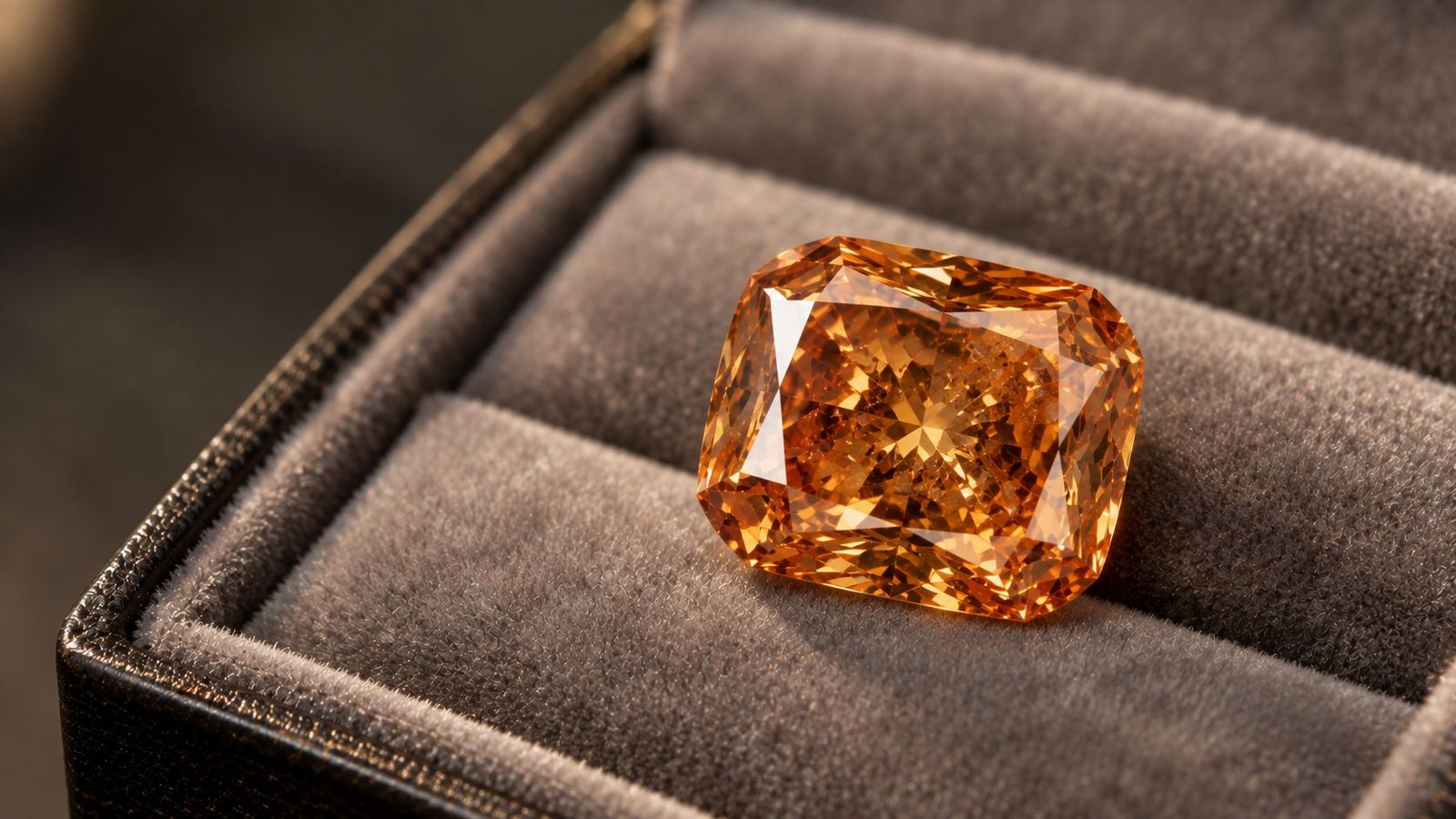
Orange diamonds owe their color to a different mechanism entirely. Rather than radiation damage, orange coloring comes from a specific type of nitrogen-related defect that absorbs blue and green light while allowing orange wavelengths to pass through and reflect back to the eye. This defect is considerably rarer than the nitrogen configurations responsible for common yellow diamonds, which is part of why pure, vivid orange is one of the hardest fancy colors to find in nature at all.
Producing a true orange in a lab setting requires precise control over nitrogen concentration and the diamond’s growth conditions, since even small variations tend to pull the resulting color toward yellow or brown rather than a clean orange. This is one of the more technically demanding fancy colors for growers to consistently reproduce, which keeps supply of high-quality orange lab-grown diamonds comparatively limited even among lab-grown fancy colors as a whole.
Truly pure orange diamonds with no secondary tint, sometimes called “Fancy Vivid Orange,” are exceptionally rare in nature and command significant premiums even in the natural diamond market. Lab-grown production has made this specific shade far more attainable, though a clean, saturated orange remains one of the more difficult colors for growers to hit consistently.
Growers working with orange stones often describe the process as a narrow window rather than a simple recipe. The nitrogen concentration has to sit within a fairly tight range, the growth temperature has to stay remarkably stable throughout the process, and even minor fluctuations partway through growth can pull the developing color toward brown before the stone is finished. Because of this sensitivity, yield rates for high-quality orange stones tend to be lower than for other lab-grown fancy colors, which keeps their price positioned a step above lab-grown yellow or brown diamonds even though all three come from the same broad category of nitrogen-related coloring.
Post-growth treatment can sometimes help push a borderline stone closer to true orange, but growers generally agree that the best results for Green and Orange Diamonds come from controlling conditions during growth itself rather than trying to correct the color afterward, since heat treatment applied after the fact tends to affect clarity and stability more than it does with other fancy colors.
Natural Green and Orange Diamonds: Extreme Rarity in Numbers
To put the natural scarcity of these colors in perspective, only a small handful of natural fancy vivid green and fancy vivid orange diamonds are documented to trade at major auctions in any given year, compared to hundreds of natural yellow or brown stones. According to GIA’s research on natural-color green diamonds, the specific combination of radiation exposure, timing, and geological conditions required to produce a saturated natural green diamond is rare enough that gemologists still consider each documented specimen scientifically significant, not just commercially valuable.
Natural orange diamonds are similarly scarce, with most gem-quality specimens historically traced back to a small number of sources, meaning supply simply cannot expand to meet demand no matter how strong buyer interest becomes. This scarcity is precisely why natural stones in either color can reach prices most buyers would never consider for a colorless or even a fancy yellow diamond of the same size.
Auction records help illustrate just how far this scarcity pushes prices. Individual natural fancy vivid green and orange diamonds weighing only a few carats have sold at major international auction houses for sums that would purchase an entire collection of lab-grown colored stones many times over. These headline sales are rare events precisely because so few qualifying stones ever come to market in the first place, and each one tends to generate significant attention within the gem trade specifically because of how infrequently a comparable stone appears again.
For everyday buyers, this auction-level reality mostly serves as useful context rather than a realistic shopping benchmark. It explains why any natural stone in these colors, even a modest one, carries meaningful value, and why a certified lab-grown alternative represents such a dramatic shift in accessibility for anyone who simply wants to wear these unusual colors rather than collect or invest in them.
Price Comparison: Green and Orange Diamonds, Lab-Grown vs Natural
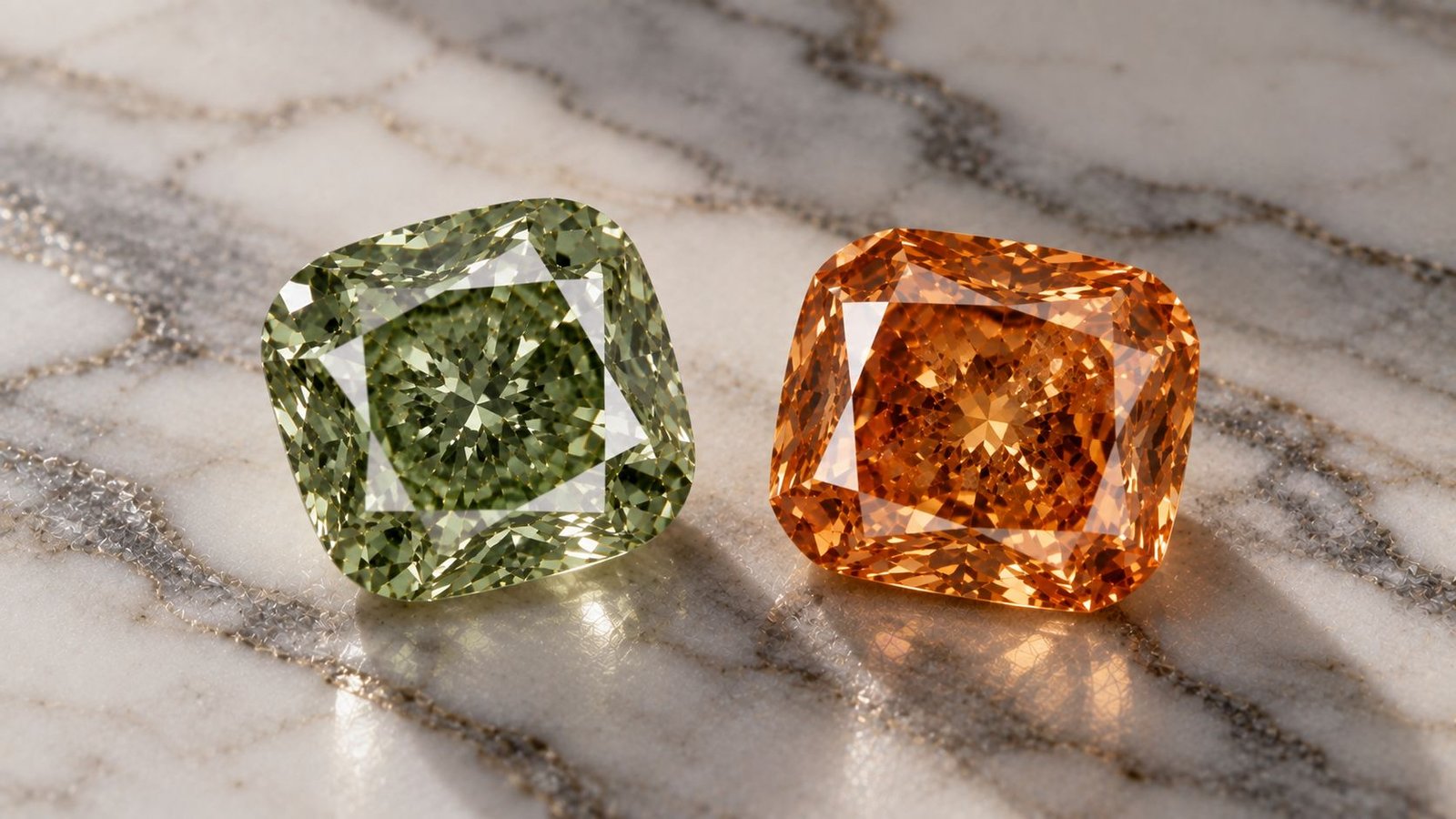
The price gap between lab-grown and natural stones in these two colors is even more dramatic than it is for more common fancy colors like yellow. Because natural supply is so limited, a natural fancy vivid green or orange diamond can sell for many times more per carat than a visually similar lab-grown stone, sometimes reaching prices typically reserved for the rarest pink and blue diamonds.
| Factor | Green & Orange Lab-Grown Diamonds | Natural Green & Orange Diamonds |
| Relative rarity | Reproducible on demand | Among the rarest natural colors |
| Price per carat | Considerably lower | Extremely high, often auction-level |
| Color consistency | Controllable through treatment | Highly variable, often skin-deep |
| Supply availability | Growing steadily | Essentially fixed and shrinking |
| Certification available | Yes (IGI, GIA) | Yes (GIA) |
| Best suited for | Buyers wanting a rare look affordably | Collectors and investment-grade purchases |
For buyers drawn to these unusual colors purely for their look, lab-grown options make it realistic to actually own and wear green or orange diamond jewelry, something that would otherwise sit far outside most budgets in a natural stone.
Green and Orange Diamonds: Quality and Grading Considerations
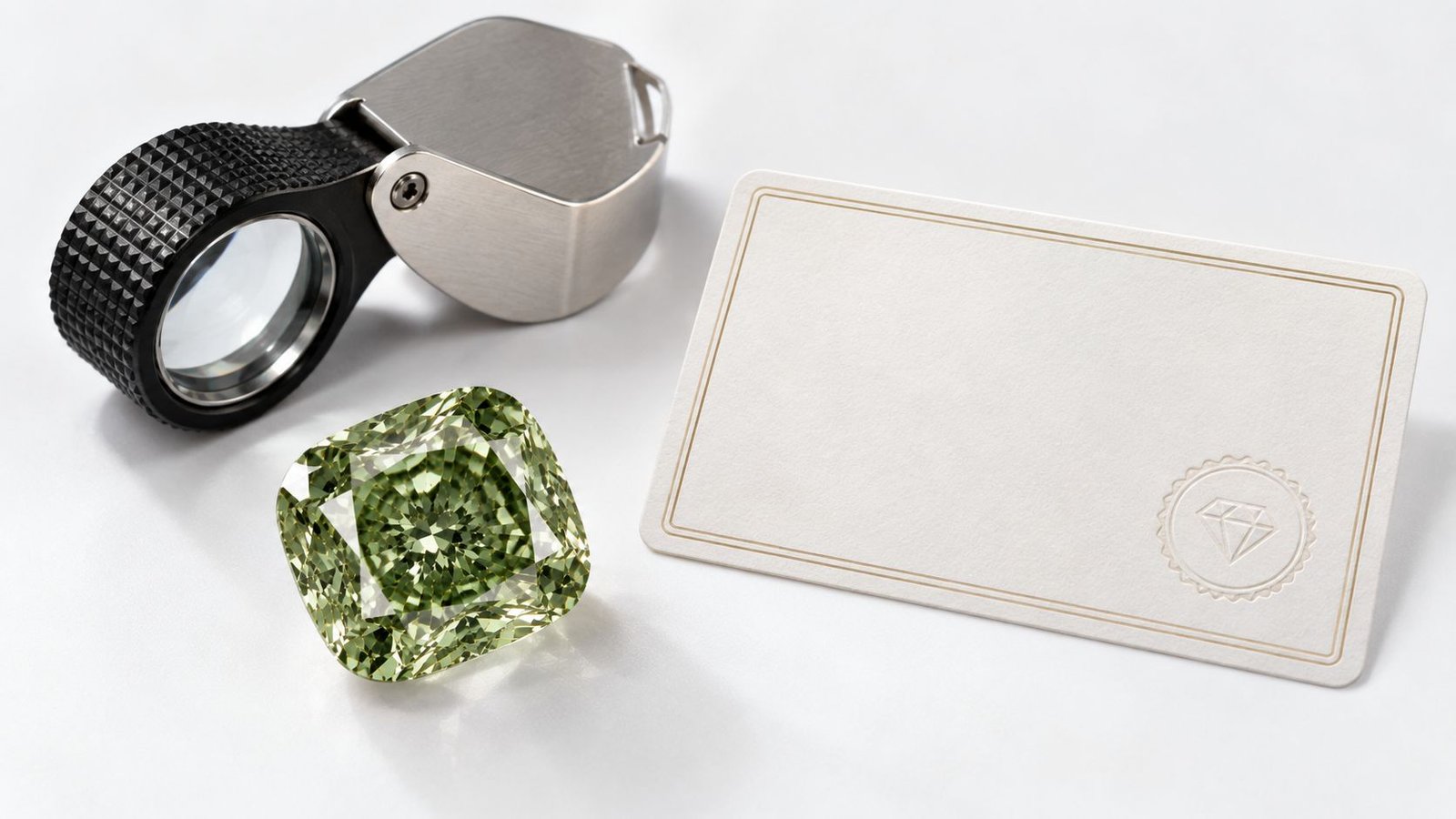
Grading fancy colored diamonds works differently than grading colorless ones. Instead of the standard D-to-Z scale, colored stones are graded on hue, tone, and saturation, then assigned a color intensity ranging from Faint up through Fancy Vivid. For Green and Orange Diamonds specifically, saturation is the single biggest driver of value — a pale, washed-out green or orange is worth dramatically less than a rich, saturated Fancy Vivid grade of the same size.
Origin of color matters just as much as intensity for green diamonds specifically. Because natural green coloring can come from several different mechanisms, and because green color can sometimes be artificially added through treatment even in natural stones, a grading report should always specify whether the color is natural, lab-grown, or the result of treatment applied to an otherwise colorless or lightly tinted stone.
For orange diamonds, clarity and the absence of a secondary tint (brown or yellow undertones) are the details worth paying closest attention to, since these secondary tints are extremely common and significantly affect how vivid and “true orange” the stone actually appears in person. Always request a grading report from a recognized lab, since color-origin claims in these two categories carry more financial weight than in almost any other diamond color.
Common Misconceptions
“All green diamonds are treated, so natural ones don’t really exist.” Untrue. While treated green diamonds are common on the market, genuine natural green diamonds colored by geological radiation exposure do exist — they’re simply extremely rare and expensive.
“Orange diamonds are just brown diamonds that look different in certain lighting.” Not accurate. True orange color comes from a distinct nitrogen-related defect, separate from the structural cause of brown coloring, though the two can sometimes appear visually similar in lower-quality stones.
“Lab-grown green and orange diamonds look artificial compared to natural ones.” In most cases, a well-treated lab-grown stone is visually indistinguishable from a natural one without specialized lab equipment.
“These colors are too unusual to wear as everyday jewelry.” Both Green and Orange Diamonds work beautifully as accent stones or statement centerpieces, and their rarity is exactly what makes them stand out in a market saturated with more common diamond colors.
“There’s no meaningful quality difference between stones sold as green or orange.” Saturation and secondary tint vary enormously even within the same color category, so two stones both labeled “green diamond” can look noticeably different in person depending on grade.
“A GIA report always confirms whether green color is natural.” A report confirms what the lab observed and tested, but buyers should still specifically check that the report states “natural color” rather than assuming this based on price or seller claims alone.
Buying Guide: Choosing Between Green and Orange
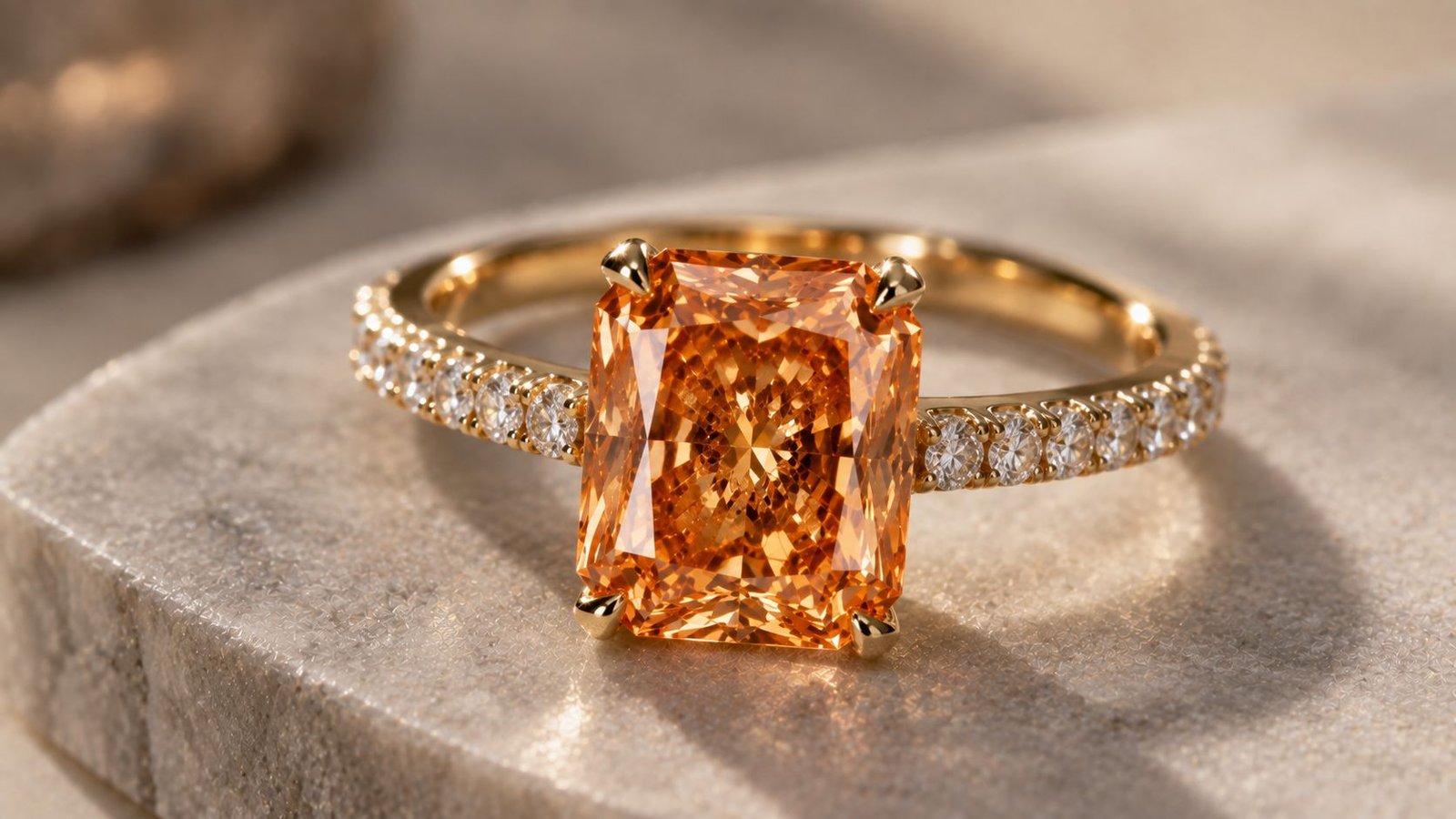
Start by deciding what draws you to these colors in the first place. If it’s the rarity story and long-term value, a certified natural stone is the only way to get that, and you should budget accordingly. If it’s simply the color itself, lab-grown Green and Orange Diamonds deliver the same visual impact at a fraction of the cost.
Always request certification that explicitly states whether the color is natural, lab-grown, or treated, along with the saturation grade. For green diamonds, ask specifically whether the color is confined to a surface layer, since this affects how the stone should be cut, set, and cared for going forward. For orange diamonds, examine the stone in natural daylight if possible, since secondary yellow or brown tints are often more visible outside of warm indoor lighting.
Because both colors are unusual enough that most jewelers won’t have them in regular stock, expect to work with a specialist or custom order the stone, and build in extra time for sourcing and certification compared to a standard colorless diamond purchase. According to GIA’s laboratory-grown diamond grading services, every lab-grown stone should come with documentation confirming carat, cut, color treatment, and grading regardless of how unusual the color itself may be.
It’s also worth thinking ahead about how you’ll wear the finished piece. Because Green and Orange Diamonds draw attention as statement colors rather than blending in the way a colorless stone might, many buyers choose simpler settings and metal tones that let the stone’s color take center stage, rather than competing with additional gemstones or elaborate detailing around it.
Final Thoughts
Green and Orange Diamonds occupy a genuinely fascinating corner of the diamond world, rare enough that many jewelers go entire careers without handling a natural specimen of either color. Lab-grown versions have opened the door for far more buyers to experience these unusual, striking hues firsthand, without needing an auction-house budget. Whether you’re drawn to the geological rarity of a natural stone or simply want distinctive Green and Orange Diamonds that stand apart from anything in a typical jewelry case, understanding how these colors form and how they’re graded will help you buy with confidence.