

Natural vs Lab-Grown Yellow Diamonds: Price, Rarity, and Quality Explained
Sunshine-colored stones have a way of stopping people mid-scroll, and it’s easy to see why buyers keep comparing Yellow Lab Grown Diamonds against their natural counterparts before making a purchase. Both options can look strikingly similar on the surface, yet they differ enormously in origin, pricing, and long-term value. If you’re trying to decide between a lab-created yellow stone and a natural fancy yellow diamond, this guide breaks down exactly what separates the two — from how the color forms to what you’ll actually pay at checkout.
What Are Yellow Lab Grown Diamonds?
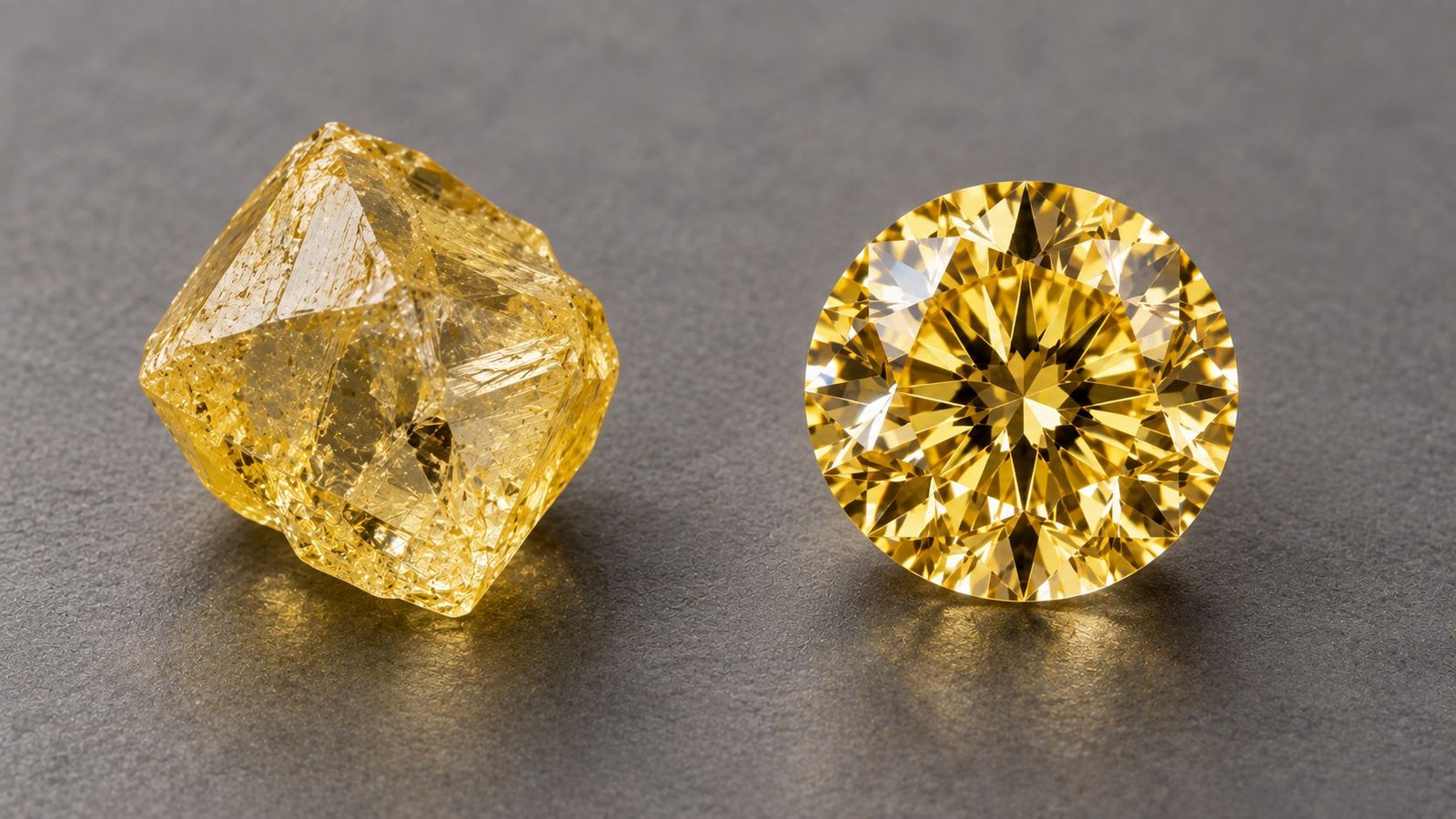
Yellow Lab Grown Diamonds are created inside controlled laboratory environments using either Chemical Vapor Deposition (CVD) or High Pressure High Temperature (HPHT) methods. During growth, trace amounts of nitrogen are introduced into the carbon structure. This nitrogen absorbs blue light and reflects yellow wavelengths back to the eye, producing the same warm, golden hue seen in mined yellow diamonds.
Because scientists can control nitrogen exposure with precision, Yellow Lab Grown Diamonds tend to display remarkably even, saturated color across the entire stone. There’s no waiting on geological luck — the color outcome is engineered rather than discovered, which is one reason production timelines are measured in weeks rather than millions of years.
Put a lab-created stone and a mined one side by side, and a gemologist’s instruments won’t find anything to separate them. Hardness on the Mohs scale, the internal crystal lattice, and the way light bends and scatters through the stone all match exactly. What sets them apart isn’t the diamond itself but its birthplace — one crystallized inside a controlled chamber, the other deep beneath the earth’s crust over unimaginable spans of time.
There are actually two distinct growth methods used to produce Yellow Lab Grown Diamonds, and each shapes the final stone slightly differently. CVD growth builds the diamond layer by layer inside a plasma chamber, which allows growers to introduce nitrogen at precise, controlled intervals. HPHT growth, on the other hand, mimics the earth’s natural pressure-cooker conditions on a compressed timeline, using a small diamond seed as a starting point. Some CVD-grown yellow diamonds are actually treated with a secondary HPHT process afterward specifically to boost and stabilize their yellow saturation, since raw CVD stones can sometimes emerge with a brownish undertone before this step.
This level of process control is what gives these lab-created stones their reputation for reliability. A buyer shopping for a 1-carat stone in a specific shade of yellow can realistically expect to find several options that match closely, because growers can replicate desirable color outcomes on demand. That kind of consistency simply isn’t available when you’re relying on geological chance.
Understanding Natural Fancy Yellow Diamonds
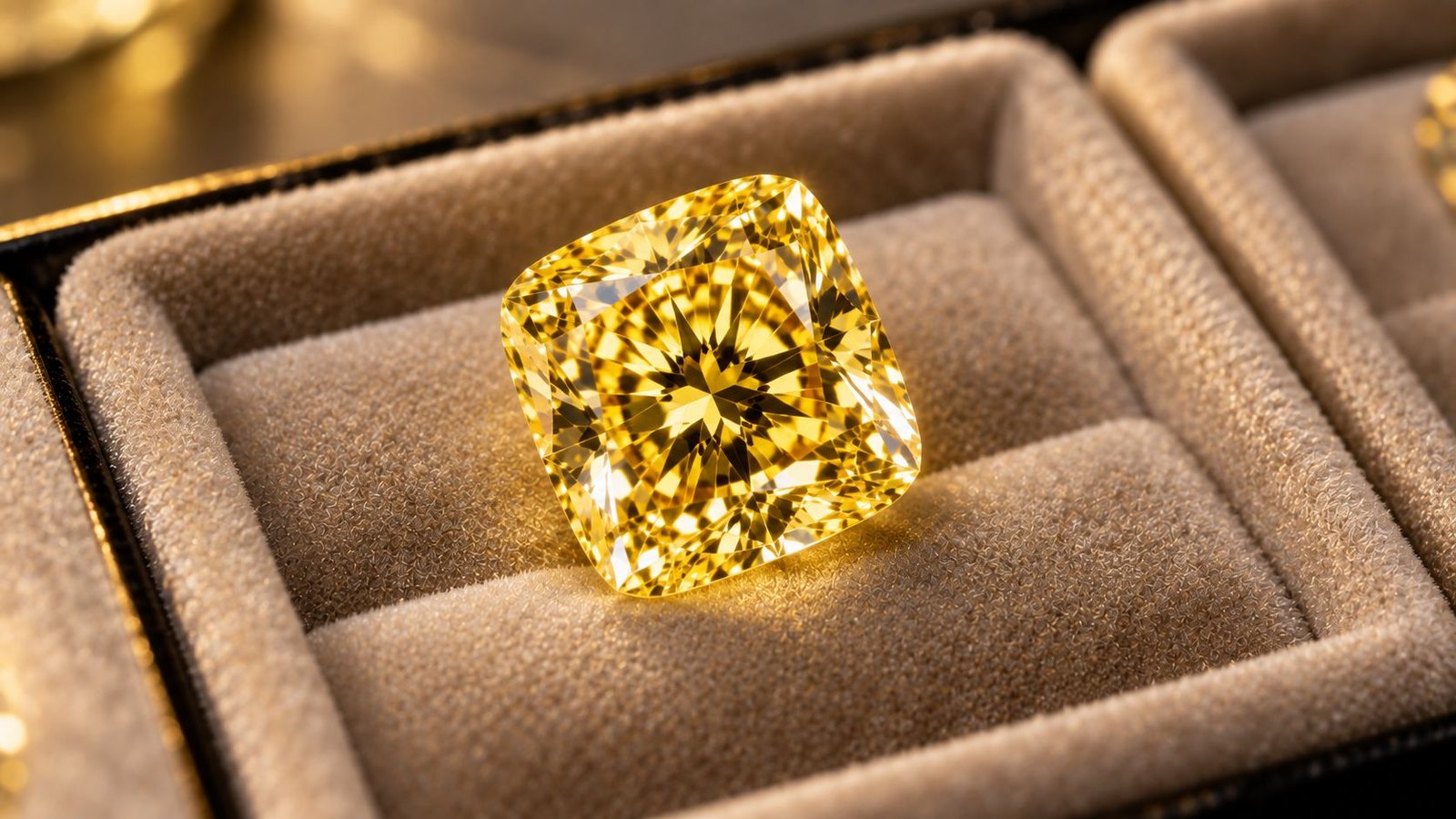
Natural fancy yellow diamonds form the same way as colorless diamonds, buried under intense heat and pressure roughly 100 miles below the earth’s surface. The difference is chance: during crystallization, nitrogen atoms occasionally slip into the carbon lattice in a specific arrangement, producing yellow tones. This process is entirely unpredictable, which is why fancy yellow diamonds represent a small fraction of all natural diamonds ever mined.
Because nature doesn’t distribute nitrogen evenly, natural yellow stones often show color zoning, meaning some parts of the diamond appear more saturated than others. Cutters have to work around this, sometimes sacrificing carat weight to maximize color intensity in the finished stone. This unpredictability, combined with genuine scarcity, is the foundation of their premium pricing.
Natural fancy yellows are graded on a separate color scale from colorless diamonds — ranging from Fancy Light to Fancy Vivid — with Vivid stones commanding the steepest prices due to their rarity.
Geographically, natural yellow diamonds have historically been recovered from a handful of key sources, including mines in South Africa and Central Africa, though supply from any single region can fluctuate year to year. This adds another layer of unpredictability on top of the color rarity itself — even mining companies can’t guarantee a steady output of fancy yellow rough in any given season. Combined with the fact that cutters often need to sacrifice carat weight to preserve color saturation, the finished natural yellow diamonds that reach the retail market represent a genuinely small slice of total diamond production worldwide.
It’s also worth noting that not every yellow-tinted diamond qualifies as a true “fancy” colored stone. Diamonds with faint yellow tints that fall within the standard D-to-Z colorless grading scale are priced and treated very differently from diamonds that cross into the fancy color categories, where the yellow becomes the diamond’s defining characteristic rather than a flaw to be minimized.
Price Comparison: Yellow Lab Grown Diamonds vs Natural Fancy Yellows
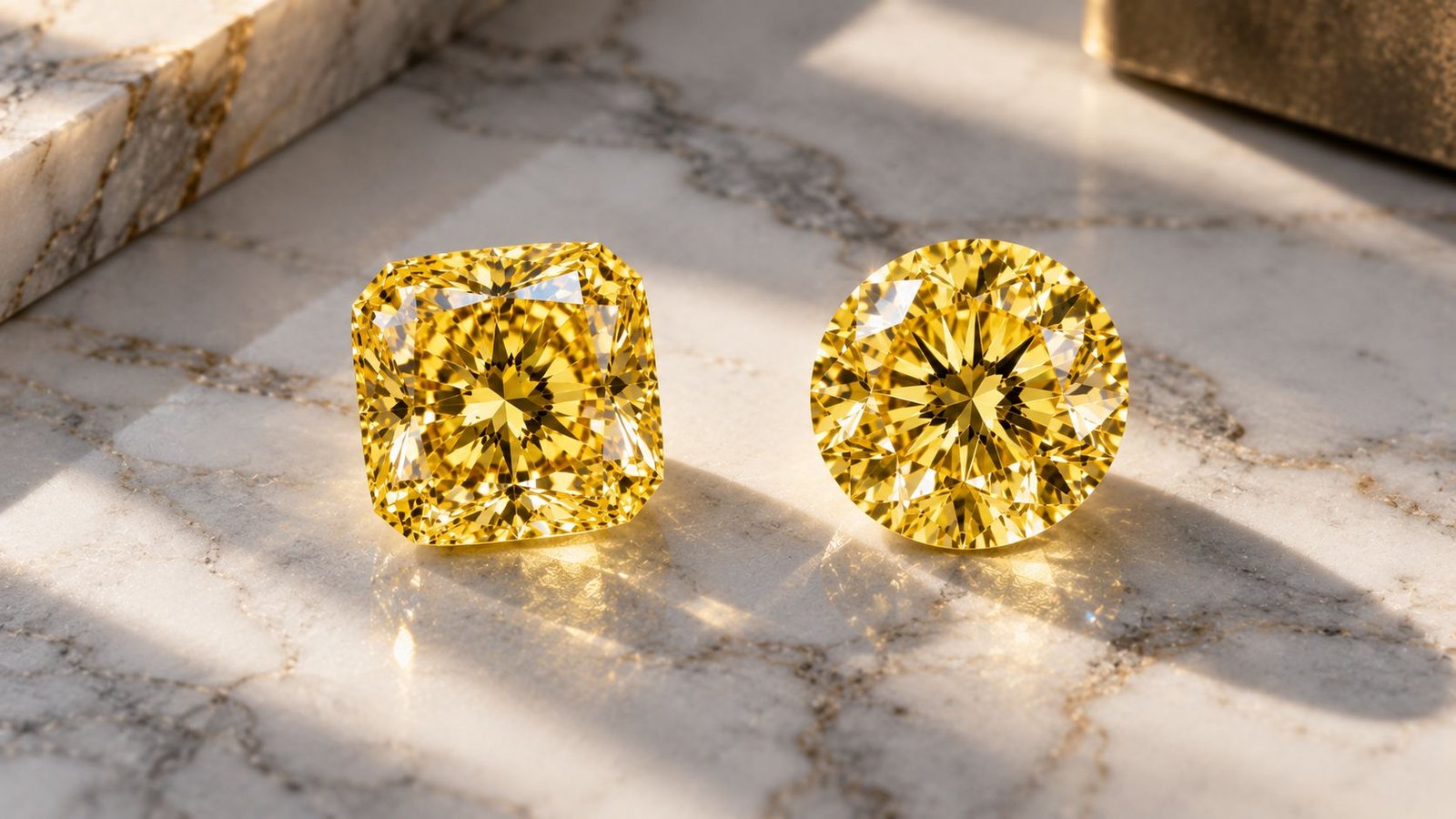
When it comes to pricing, the contrast between these two options is hard to overstate. Natural fancy yellow diamonds are governed by scarcity and geological chance, so their per-carat price rises sharply the moment size or saturation improves. Yellow Lab Grown Diamonds follow a different logic entirely — since growers can produce them on a predictable schedule, supply keeps pace with demand, and pricing stays far steadier and easier to plan around.
On average, a natural fancy yellow diamond can cost 4 to 8 times more than a lab-grown yellow diamond of comparable size, cut, and color intensity. A 1-carat Fancy Vivid natural yellow can range well into five figures, while a visually similar Yellow Lab Grown Diamond often sits in the low-to-mid four-figure range.
| Factor | Yellow Lab Grown Diamonds | Natural Fancy Yellow Diamonds |
| Price per carat (1ct, Fancy Vivid equivalent) | Significantly lower | Significantly higher |
| Price predictability | Stable, market-driven | Volatile, scarcity-driven |
| Color consistency | Even, engineered saturation | Can show zoning |
| Production timeline | Weeks | Millions of years (mined) |
| Certification available | Yes (IGI, GIA) | Yes (GIA) |
| Resale market maturity | Still developing | Established for decades |
For buyers who want a large, vividly colored stone without the five-figure price tag, these lab-grown stones make it possible to get more size and more saturation for the same budget. That said, natural yellow diamonds have decades of established resale infrastructure that lab-grown stones are still building.
Another factor worth understanding is how pricing behaves over time within each category. Natural fancy yellow diamond prices have generally held steady or increased gradually, largely because mining output cannot expand to meet rising demand. These lab-grown stones behave more like a technology product — as production methods become more efficient and more growers enter the market, per-carat prices have tended to soften over the past several years. For a buyer, this cuts both ways: it means today’s price on a lab-grown stone may look different a few years from now, but it also means that lab-grown yellow diamonds are becoming progressively more accessible rather than less.
It’s also useful to separate the cost of the diamond itself from the cost of the finished jewelry piece. Setting, metal choice, and craftsmanship can add a significant amount on top of the stone price regardless of whether the center stone is natural or lab-grown, so when comparing quotes from different sellers, always ask for the diamond price and the setting price broken out separately.
Yellow Lab Grown Diamonds: Quality and Grading Comparison
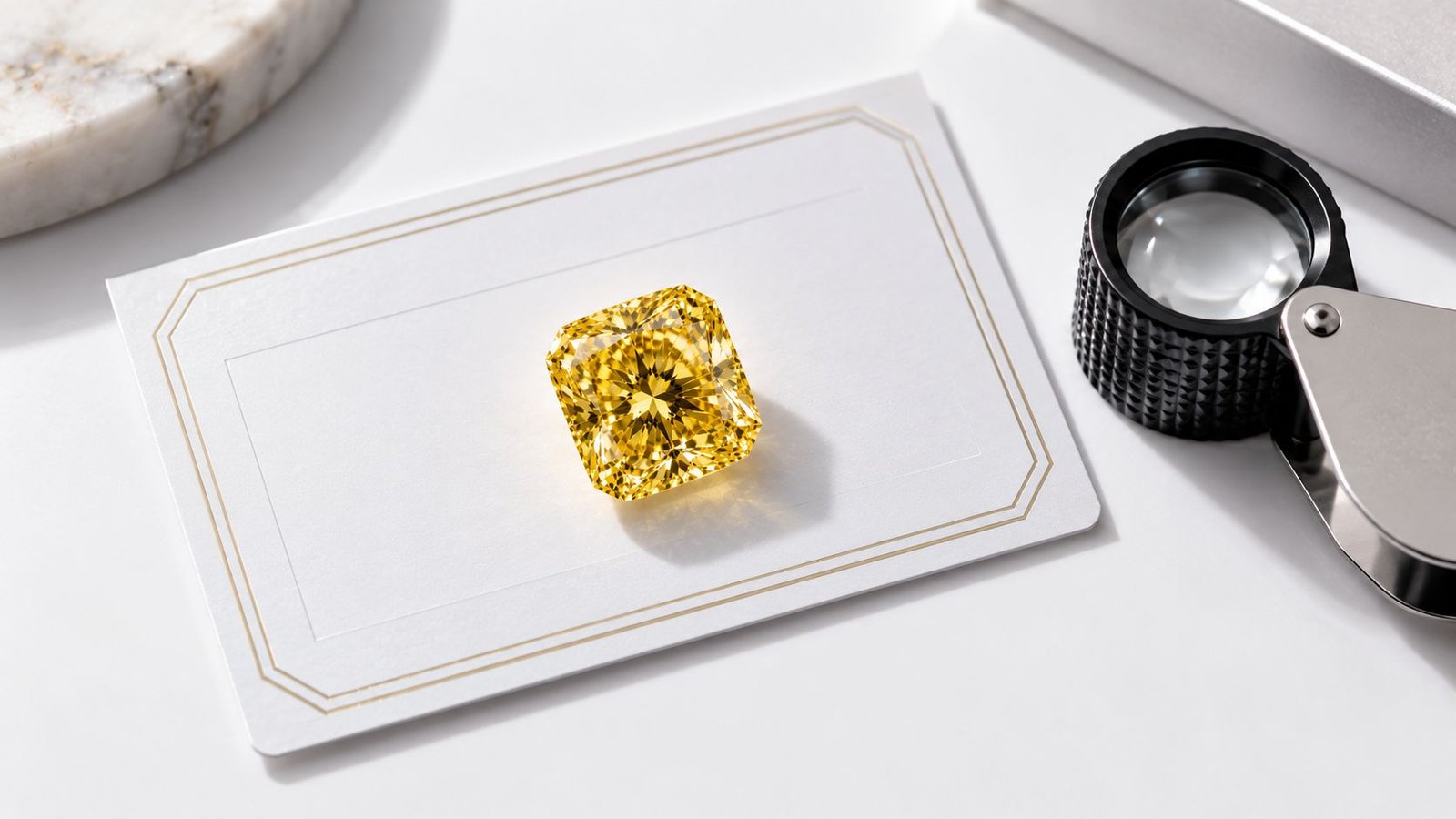
Both natural and lab-grown yellow diamonds are graded using the same fundamentals: color, clarity, cut, and carat weight. Independent labs like GIA and IGI evaluate lab-grown and natural stones with equally rigorous standards, and a diamond’s grading report will always disclose its origin.
Where the two genuinely differ is consistency. Because lab conditions are controllable, these lab-grown stones frequently achieve higher clarity grades and more even color distribution at a given price point than natural stones in the same range. Natural yellow diamonds, on the other hand, often carry more visible inclusions or color zoning simply because nature doesn’t optimize for perfection the way a lab process can.
That doesn’t mean natural stones are lower quality — many natural fancy yellows achieve stunning Vivid grades — but buyers typically have to pay considerably more to secure that same level of consistency naturally. If your priority is maximum color saturation and clarity for your budget, Yellow Lab Grown Diamonds generally offer more room to move up in grade without moving up dramatically in price.
Always request a grading report — GIA’s laboratory-grown diamond grading services confirm carat, cut, color, and clarity independently, whether the stone was mined or created in a lab. This step matters just as much for lab-grown stones as it does for natural ones.
Cut quality deserves special attention with colored diamonds, natural or lab-grown, because cut choices directly affect how saturated the yellow appears. Certain cutting styles, like radiant and cushion cuts, are specifically favored for yellow diamonds because their facet patterns trap and intensify color better than a round brilliant cut would. When comparing two stones of the same carat weight and color grade, the one with a cut style better suited to color retention will often appear noticeably more vivid to the eye, even if the paperwork looks similar on both.
Fluorescence is another detail buyers often overlook. Some yellow diamonds exhibit fluorescence under UV light, which can subtly shift how the color reads in different lighting conditions. This applies to both natural and lab-grown stones, so it’s worth asking your seller whether fluorescence is noted on the grading report and how it might affect the stone’s appearance indoors versus in daylight.
Rarity, Investment Value, and Resale

Rarity is the one area where natural fancy yellow diamonds hold a permanent, structural advantage. There is a finite supply of natural yellow diamonds in the ground, and that supply cannot be replicated. This scarcity is part of why natural fancy colored diamonds have historically retained — and in some cases appreciated — in value over long holding periods.
Lab-grown yellow diamonds, being reproducible, do not carry the same scarcity premium. As production technology becomes more efficient, lab-grown diamond prices have generally trended downward over time, which is good news for buyers seeking value but less favorable for anyone treating the purchase purely as a long-term investment vehicle.
That said, “investment value” means different things to different buyers. If you define investment as guaranteed appreciation, natural fancy yellow diamonds have the stronger historical track record, though even that isn’t guaranteed and depends heavily on the specific stone’s rarity tier. If you define value more practically — as getting the most visual impact, size, and quality per rupee spent today — lab-grown yellow diamonds arguably deliver more immediate value, even if they don’t carry the same long-term scarcity story.
Resale channels also differ between the two categories. Natural fancy yellow diamonds typically move through established auction houses, specialist colored-diamond dealers, and estate jewelry markets that have decades of pricing history to draw on. Lab-grown yellow diamonds are more commonly resold through direct-to-consumer platforms and jewelers who specialize in lab-grown inventory, a market that is expanding quickly but still lacks the long transaction history that natural stones benefit from.
If your primary goal is wearing a beautiful, ethically sourced yellow diamond at an accessible price, Yellow Lab Grown Diamonds are an excellent choice. If your goal includes long-term investment potential or heirloom rarity, a natural fancy yellow diamond remains the stronger candidate — provided you’re comfortable with the higher upfront cost.
There’s also a middle ground worth mentioning for buyers who feel torn between the two. Some collectors choose to build a small collection over time — perhaps starting with a lab-grown yellow diamond piece for everyday wear, while saving toward a natural fancy yellow diamond as a milestone purchase down the line. This approach lets you enjoy the look and versatility of yellow diamonds immediately without committing your entire budget to one stone, and it gives you time to develop a more informed eye for color and cut before making a larger natural diamond investment.
Environmental and ethical sourcing considerations also factor into many buyers’ decisions today. Because Yellow Lab Grown Diamonds don’t require large-scale excavation, they typically carry a smaller environmental footprint and eliminate concerns around mining labor practices. If ethical sourcing is a priority alongside budget, this is often the deciding factor that tips buyers toward lab-grown stones, even when the price difference alone might not have been enough to sway them.
Common Misconceptions
“Lab-grown yellow diamonds are fake diamonds.” This is inaccurate. Yellow Lab Grown Diamonds are real diamonds — same carbon structure, same optical properties, same hardness. “Lab-grown” refers to origin, not authenticity.
“You can tell them apart with the naked eye.” In almost all cases, you cannot. Distinguishing lab-grown from natural yellow diamonds requires specialized equipment used by gemological labs, not a jeweler’s loupe or casual inspection.
“Natural yellow diamonds are always more beautiful.” Beauty is subjective, and because lab-grown stones often achieve more even color saturation, many buyers find Yellow Lab Grown Diamonds visually comparable or even preferable to natural stones in the same price bracket.
“Lab-grown diamonds have no resale value.” They do hold resale value, though the secondary market is younger and less standardized than the natural diamond market, so realistic expectations matter.
“Certification isn’t necessary for lab-grown stones.” Certification is essential for any diamond purchase, lab-grown or natural, to confirm authenticity and grading accuracy.
Which One Should You Choose? A Practical Buying Guide

Start by defining your priority: is this purchase about maximizing visual impact per rupee spent, or about long-term rarity and heirloom value?
If budget-conscious brilliance is the goal, these lab-grown stones let you access larger carat weights and deeper color saturation without stretching your budget to its limit. This makes them a popular choice for engagement rings, statement earrings, and pieces where size and color impact matter more than provenance.
If you’re drawn to the story of a stone formed over geological time, or you want an asset with an established rarity premium, a natural fancy yellow diamond is worth the additional investment — just be prepared to pay significantly more for comparable size and saturation.
Whichever direction you choose, always insist on independent certification, ask specifically whether the stone is natural or lab-grown (reputable sellers will always disclose this), and compare color grade, clarity, and cut side by side rather than relying on carat weight alone. For a deeper look at how these stones are actually produced, see our complete guide to CVD vs HPHT diamond growing methods.
Final Thoughts
Both Yellow Lab Grown Diamonds and natural fancy yellow diamonds offer genuine beauty — the real difference comes down to budget, priorities, and what you value in a stone’s origin story. Lab-grown yellow diamonds have made vivid, high-clarity yellow diamonds accessible to a far wider range of buyers, while natural stones continue to hold their place as rare, geologically formed treasures. Understanding these distinctions ensures you choose a stone that matches not just your taste, but your expectations around price and long-term value.