Should You Switch to Wholesale Lab Created Diamonds in 2026? A Complete Buyer’s Decision Guide

Should you switch to wholesale lab created diamonds? If you have spent any time researching diamonds recently — whether as an individual buyer, a jewellery retailer, or a studio sourcing inventory — you have almost certainly run into the same question from every direction: should you make the switch from natural diamonds to wholesale lab created diamonds?
This is not a small decision, and it deserves more than a marketing pitch from either side of the industry. In 2026, lab-grown diamonds account for 61% of all engagement ring center stones in the United States, a figure that has climbed sharply from 52% just two years earlier. Two-thirds of Gen Z buyers now choose lab-grown by default. That is not a niche trend anymore — it is the new mainstream.
But market momentum alone is not a reason to switch. The right answer depends on what you are actually optimising for: upfront cost, long-term resale value, ethical sourcing, design flexibility, or business margin. This guide breaks the decision down honestly, using real 2026 market data, so you can decide what is genuinely right for your situation rather than following a trend.

What Exactly Are Wholesale Lab Created Diamonds?
Before weighing the decision, it is worth being precise about what you are actually comparing.
Lab-grown diamonds are not imitation stones. They are not cubic zirconia, moissanite, or any other diamond simulant. Strip away the marketing language on both sides and what remains is a simple scientific fact: the carbon atoms inside a lab-grown stone arrange themselves into the exact same crystal lattice as a mined stone, which is why every hardness test, every refraction measurement, and every thermal reading comes back identical. The diamond industry’s own regulatory body no longer separates the two by composition — origin is now the only distinguishing factor recognised under current trade definitions.
The only meaningful difference is how the stone was formed. A natural diamond crystallised roughly 100 miles beneath the Earth’s surface over one to three billion years, under extreme heat and pressure, before being carried to the surface through volcanic kimberlite pipes. A lab-grown diamond is produced by lab grown diamond manufacturers and CVD diamond manufacturers using one of two controlled production methods that replicate those same natural conditions, compressed into a matter of weeks rather than eons.
High-Pressure High-Temperature (HPHT) production recreates the deep-Earth environment using industrial presses capable of generating over 1.5 million pounds per square inch of pressure at temperatures exceeding 2,000°C. Chemical Vapor Deposition (CVD) — the more widely used modern method — ionises a carbon-rich gas into plasma inside a sealed chamber, causing pure carbon to crystallise layer by layer onto a diamond seed plate.
When sourced at scale through established lab grown diamond suppliers, the result is a consistent, certifiable, and dramatically more affordable supply of stones that perform identically to mined diamonds in every measurable way.
The Price Comparison: What the 2026 Numbers Actually Show
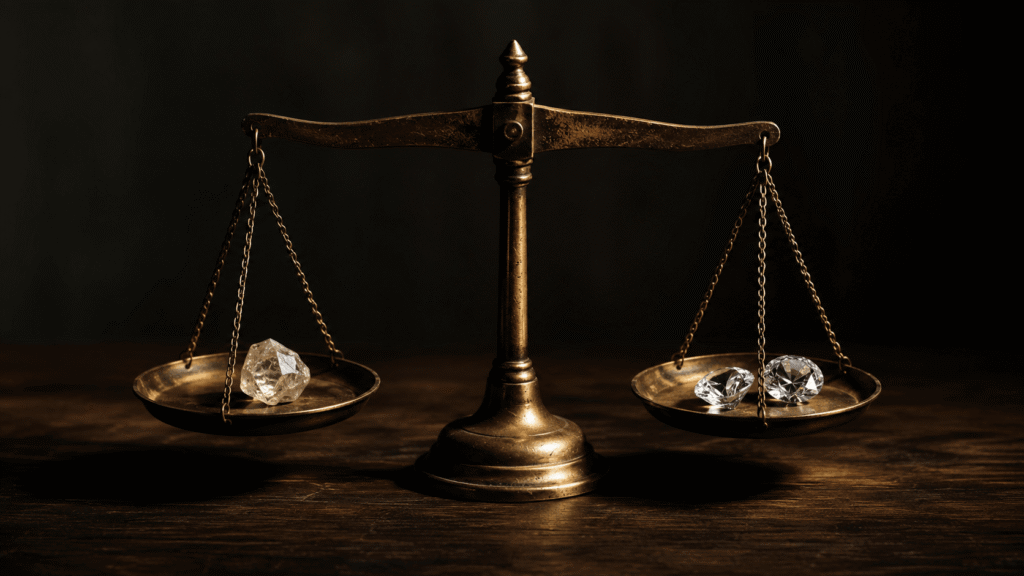
This is where the decision to switch to wholesale lab created diamonds usually starts — and the numbers in 2026 are stark enough that they deserve to be laid out plainly rather than summarised vaguely.
A comparable 2-carat natural diamond currently retails around $18,000 at US retail benchmarks. The equivalent lab-grown stone — same color grade, same clarity, same cut quality — runs roughly $2,500. That is a difference of approximately $15,500 for visually and physically identical results.
This pricing gap has reshaped buying behavior at a structural level. The average lab-grown engagement ring center stone has grown to 2.45 carats in 2026, up 87% from 1.31 carats in 2019. The average natural diamond center stone, by comparison, sits at just 1.16 carats. Buyers are not simply saving money when they choose lab-grown — they are using that savings to dramatically upgrade the size and visual impact of their stone.
For B2B buyers and retailers sourcing wholesale lab created diamonds, the wholesale-level numbers matter even more. A certified 1-carat G/VS1 lab-grown stone is now available wholesale under $1,000, with premium specifications having reached what analysts describe as a functional price floor by late 2025. Wholesale prices for lab-grown stones dropped a further 15–20% through late 2025 alone, driven by continued manufacturing scale-up among global producers.
| Stone | Natural Diamond (Retail) | Lab-Grown Diamond (Retail) | Approximate Savings |
| 1.00ct G/VS1 | $4,000 – $5,500 | $800 – $1,200 | 75–85% |
| 2.00ct G/VS1 | $16,000 – $20,000 | $2,200 – $3,000 | 85–88% |
| 3.00ct D/VVS2 | $40,000 – $70,000 | $1,700 – $2,500* | 93%+ |
*Complete finished ring pricing from direct wholesale sourcing channels
It is worth noting honestly that the era of continuous, dramatic year-over-year price drops appears to be ending for premium specifications. Lab-grown diamond prices have fallen roughly 70–75% since 2020, but industry analysts now expect pricing on top-tier 1-carat stones to stabilise near current levels rather than continue collapsing indefinitely. This matters for anyone sourcing wholesale lab created diamonds as inventory — the aggressive deflation that characterised the early years of the market is moderating into something closer to a mature, stable wholesale pricing structure.
The Resale Value Question: An Honest Look at the Numbers

Anyone planning to switch to wholesale lab created diamonds should understand this trade-off clearly. This is the area where natural diamond advocates have the strongest argument, and it deserves a direct, unvarnished answer rather than a dismissive one.
A GIA-certified natural diamond typically retains 40–60% of its original retail value over a five-year period, depending on the 4Cs and prevailing market demand. Lab-grown diamonds, by contrast, retain only 10–20% of their original value over the same period. On a percentage basis, that gap looks significant — and it is.
But the absolute dollar math tells a more complete story. If you purchase a $10,000 natural diamond and later sell it for $5,000 at a 50% retention rate, you have lost $5,000. If you purchase a $3,000 lab-grown diamond of comparable visual size and sell it for $500 at a 17% retention rate, you have lost $2,500. In raw dollar terms, the lab-grown buyer is still ahead — they simply started with a smaller initial outlay.
For retailers and studios sourcing wholesale lab created diamonds as inventory rather than personal purchases, resale value is largely irrelevant in the same way it would be for any other manufactured retail product. The relevant question is margin on sale, not appreciation over time. Lab-grown diamonds were never positioned as an investment vehicle, and treating them as a depreciating consumption product — similar to electronics or a vehicle — produces a much more accurate and useful financial framework than comparing them directly to natural diamonds on resale percentage alone.
Quality and Consistency: Why Wholesale Buyers Are Switching
Many businesses that switch to wholesale lab created diamonds discover this advantage only after making the change. Beyond pure price, one of the most underrated advantages driving the switch toward wholesale lab created diamonds is the consistency of supply that controlled production environments make possible.
Natural diamond rough varies enormously stone to stone — a product of the chaotic geological conditions under which each crystal formed. Cutting houses work with whatever the Earth produced, optimising each individual stone as best they can. This creates beautiful results, but it also creates inherent variability across a batch of stones, particularly at scale.
CVD diamond manufacturers operate in a fundamentally different paradigm. Because the growth environment is fully controlled — gas composition, plasma intensity, growth duration, seed plate quality — manufacturers can target specific colour grades, clarity ranges, and cut specifications with a degree of precision that mined rough simply cannot match. For a retailer or designer placing a wholesale order of 50 or 100 stones to a specific G/VS2 specification, that consistency is the difference between a smooth, predictable fulfillment process and a frustrating exercise in cherry-picking acceptable stones from inconsistent inventory.
Quality concerns that lingered in the early years of lab-grown production have also been comprehensively resolved. Lab-grown diamonds score 10 on the Mohs hardness scale — identical to natural — meaning they resist scratching and retain brilliance over decades of daily wear with no greater risk of clouding, yellowing, or structural degradation than a mined stone.
The Ethical and Sustainability Case for Switching
For a meaningful and growing segment of buyers — particularly Millennial and Gen Z consumers who now represent the largest share of the engagement ring market — ethical sourcing is not a secondary consideration. It is a primary purchasing criterion.
Natural diamond mining, even where responsibly regulated, carries inherent environmental impact: land disruption, water usage, and the carbon footprint of large-scale earth-moving operations. While the industry has made meaningful progress on conflict-free sourcing and environmental regulation over the past two decades, the fundamental extraction footprint of mining cannot be eliminated entirely.
Diamonds produced by established lab grown diamond manufacturers bypass the most significant of these concerns by design. There is no land disruption, no risk of conflict sourcing, and full supply chain traceability from production facility to finished stone. Leading manufacturers are increasingly powering their CVD and HPHT reactors through renewable energy partnerships and providing third-party verified carbon-neutral certification to wholesale buyers — giving retailers documented evidence to support their own sustainability positioning with end consumers.
For retailers and studios where ethical sourcing is becoming a competitive differentiator in customer acquisition, switching sourcing toward certified lab grown diamond suppliers is increasingly less a values-based decision and more a straightforward commercial one.
What You Lose by Switching: The Honest Trade-Offs
A genuinely useful guide to whether you should switch to wholesale lab created diamonds does not pretend the decision is one-sided. There are real trade-offs to consider before you switch to wholesale lab created diamonds, and they deserve equal weight.
Reduced resale and investment value. As covered above, lab-grown diamonds do not function as a store of value the way natural diamonds historically have, even accounting for the more favorable absolute-dollar math. For buyers or businesses where long-term asset preservation is a genuine priority, this is a legitimate consideration.
Diminished rarity narrative. Part of what natural diamonds have historically sold is scarcity and permanence — geological history compressed into a wearable object. That narrative simply does not exist for a lab-grown stone, and for certain client segments and certain heirloom-positioned product lines, that absence matters commercially.
Price volatility during the transition period. While premium 1-carat specifications appear to have reached a price floor, broader lab-grown pricing across other carat ranges and specifications may continue to soften as global manufacturing capacity keeps expanding. Buyers and retailers should factor this into inventory planning and avoid overpaying relative to where pricing is likely headed.
Some traditional retail margins shrink. Lower wholesale acquisition cost can mean lower absolute profit per stone for retailers used to higher-margin natural diamond sales, even when percentage margins improve. This requires a deliberate pricing and positioning strategy rather than simply swapping inventory and expecting identical financial outcomes.
Who Should Switch to Wholesale Lab Created Diamonds — and Who Shouldn’t
The honest answer to “should I switch” depends entirely on what you are optimising for. Here is a clear framework:
Switch to wholesale lab created diamonds if you:
Serve budget-conscious clients who prioritise size and visual impact over investment value. Run an e-commerce or volume retail model where lower material costs directly improve margin. Target younger demographics who actively prefer lab-grown for ethical and value reasons. Need consistent, specification-matched inventory for bulk or collection production. Want to build a verifiable, transparent, ethically-documented supply chain. These criteria make wholesale lab created diamonds the clear financial choice for a growing share of the market.
Stay with natural diamonds if you:
Serve a luxury or heritage-focused clientele where the rarity narrative is central to your brand positioning. Specialise in heirloom or investment-grade pieces where long-term asset value is the explicit selling proposition. Operate in markets or demographics with strong traditional preferences for natural stones. Work with rare natural fancy colours that command premiums no lab-grown equivalent currently matches at the ultra-high end.
The pragmatic middle path — and the one most successful retailers and studios are actually adopting in 2026 — is offering both. This captures the full spectrum of client budgets and values, allows design flexibility across product lines, and avoids losing clients over a single material preference baked into your business model.
How to Source Wholesale Lab Created Diamonds the Right Way
If the decision leans toward sourcing wholesale lab created diamonds, the quality of your sourcing relationship determines whether the transition is a success or a headache. Follow this framework:
Verify certification on every stone. Only work with lab grown diamond suppliers who provide IGI or GIA grading certificates. You can verify any stone’s certification directly through the GIA report check portal before finalising a wholesale purchase. These are the two internationally recognised bodies, and certification protects both your business and your end customers from disputes over quality or authenticity.
Request sample orders before committing to volume. Before any significant wholesale relationship, order a small batch across your standard specification range. Evaluate cut quality, certificate accuracy, and finish quality firsthand.
Confirm production method transparency. Reputable CVD diamond manufacturers and HPHT producers will clearly disclose their growth method. This matters for certain retail markets where buyers have specific preferences, and for understanding the fluorescence and growth characteristics of the stones you are selling.
Ask for sustainability documentation. Request evidence of renewable energy sourcing and any third-party environmental certification. This documentation becomes a genuine selling point with your own ethically-minded customers.
Negotiate volume-based pricing. Wholesale pricing on lab-grown stones improves meaningfully with committed volume. Once a supplier relationship has been validated through sample orders, negotiate tiered pricing aligned with your projected monthly or quarterly purchasing.
Final Verdict: Should You Switch?
There is no universal right answer to whether you should switch to wholesale lab created diamonds — but there is a clear, data-backed framework for making the decision correctly.
If your priority is maximum visual size and value per dollar, consistent wholesale supply for bulk or collection production, verified ethical sourcing, or capturing the rapidly growing share of younger buyers who actively prefer lab-grown stones, the switch makes clear financial and strategic sense in 2026. The price gap is dramatic, the quality is genuinely identical, and the market momentum is firmly behind this category.
If your business or personal priority is long-term asset preservation, a heritage and rarity-driven brand narrative, or serving a client base with strong traditional preferences, natural diamonds retain real and legitimate advantages that should not be dismissed.
The smartest path for most retailers, studios, and even individual buyers in 2026 is not an all-or-nothing switch — it is building a sourcing strategy flexible enough to offer both, Whether you fully switch to wholesale lab created diamonds or run a hybrid model, success comes down to one thing — backed by reliable, certified lab grown diamond suppliers who can deliver consistent quality at the wholesale scale your business actually needs.

Frequently Asked Questions
Yes, completely. Lab-grown diamonds are chemically, physically, and optically identical to natural diamonds — both are pure crystallised carbon with the same hardness, refractive index, and thermal conductivity. The FTC’s official definition of “diamond” no longer distinguishes by origin. The only difference is how the stone formed: underground over billions of years versus a controlled lab environment over several weeks.
The price gap reflects production economics, not quality differences. Natural diamonds require extensive geological surveying, large-scale mining operations, and a long, costly extraction supply chain. Lab grown diamond manufacturers produce stones through controlled CVD or HPHT processes that have become dramatically more efficient as production has scaled globally, eliminating the extraction-related costs entirely.
Not with standard tools. A trained gemologist using a jeweller’s loupe or standard microscope cannot distinguish the two. Only specialised equipment — spectroscopy analysis or DiamondView imaging that examines atomic-level growth patterns — can identify origin. This is why every certified lab-grown diamond carries a laser inscription referencing its grading certificate.
Not in the way natural diamonds do. Natural diamonds typically retain 40–60% of retail value after five years, while lab-grown diamonds retain roughly 10–20%. However, because the initial purchase price is dramatically lower, the absolute dollar loss is often smaller with lab-grown stones even at a lower retention percentage. Lab-grown diamonds should be viewed as a consumption purchase rather than an investment vehicle.
Both methods produce genuine, high-quality diamonds. CVD has become the dominant method globally due to its scalability and the precision control it offers over clarity and colour grading, making it well suited for wholesale buyers who need consistent specification matching across large orders. HPHT remains an excellent option as well — the more important factor for any wholesale purchase is the certification and cut quality of the finished stone, not the growth method alone.
Always confirm IGI or GIA certification on every stone, request a sample order before committing to volume, verify the supplier’s manufacturing or export registration, and ask for sustainability and energy sourcing documentation. Reputable lab grown diamond suppliers will provide all of this transparently and without hesitation.
It depends on your pricing strategy. Lower wholesale acquisition costs can reduce absolute profit per stone if you simply transfer the savings entirely to customers. However, most successful retailers maintain healthy percentage margins on lab-grown inventory while still offering customers significant savings compared to natural alternatives — and many redirect customer savings toward upselling larger stones, premium settings, or additional pieces, which increases average order value.
Yes, broadly. Lab-grown diamonds eliminate the land disruption and conflict-sourcing risks associated with traditional mining. Leading lab grown diamond manufacturers are increasingly powering production through renewable energy and providing third-party verified carbon-neutral certifications. It is worth noting that production does require significant electricity, so the specific energy source used by your supplier matters for an accurate environmental assessment.
Significantly larger. Current market data shows the average lab-grown engagement ring center stone has grown to 2.45 carats in 2026, compared to an average of 1.16 carats for natural diamond center stones at similar price points. Many buyers and retailers use the savings from switching to dramatically upsize the visual impact of a piece without increasing budget.
For most retailers, yes. Offering both allows you to capture the full range of customer budgets and values without losing sales to a single material preference. It also allows greater design flexibility — using lab-grown stones for larger statement pieces and value-focused designs, while reserving natural diamonds for heirloom, investment-grade, or rarity-narrative-driven product lines.
Disclaimer: This article is intended for informational and educational purposes only. Diamond prices, supplier terms, and market conditions vary and are subject to change. Always conduct due diligence and consult certified gemological professionals before making significant purchasing or sourcing decisions.
Oval
0.82 ct Oval PINK VVS2 IGI Certified Lab Grown Diamond
Cushion
3.81 ct Cushion PINK SI1 IGI Certified Lab Grown Diamond
Cushion
2.05 ct Cushion PINK VVS2 IGI Certified Lab Grown Diamond
Cushion
0.99 ct Cushion YELLOW VVS2 IGI Certified Lab Grown Diamond