
Rewriting the Rules: Lab-Grown Diamonds for Every Kind of Commitment Story
A single knee, a single ring, a surprise moment captured on someone else’s phone: for decades, that was the proposal template most people were handed by default. It’s a template a growing number of couples are quietly, happily setting aside. Non-Traditional Proposals, whether that means two rings instead of one, a private moment at home instead of a public spectacle, or a commitment ceremony that looks nothing like a conventional wedding, have moved from the exception to a genuinely mainstream way couples choose to begin this chapter. Lab-grown diamonds have made that shift easier to act on, since they remove a lot of the budget pressure that used to make anything beyond a single traditional ring feel out of reach. This guide looks at how proposals are actually changing, and how to think about rings and stones for whatever shape your commitment story takes.
Why Non-Traditional Proposals Are Becoming the Norm
The scale of this shift shows up clearly once you look at the data. More than half of all engagement rings now include a lab-grown center stone, up dramatically from roughly one in eight rings back in 2019, according to recent jewelry industry survey data. That shift in material has arrived alongside a broader shift in who proposes, how, and what the resulting ring even looks like.
Among same-sex couples specifically, survey data shows meaningfully different proposal patterns than the traditional template assumes. Roughly 83% of same-sex couples proposed with a ring, compared with the near-universal rate among heterosexual couples, and about 30% of same-sex couples described their proposal as a double proposal, where both partners propose to each other rather than one surprising the other. Over half preferred a private moment over a public one, and roughly 30% skipped the traditional single-knee gesture entirely, opting for something that felt more personally meaningful instead.
Men choosing to wear engagement rings themselves is another part of this shift gaining real traction. One widely cited survey found demand for men’s engagement rings had risen by 69% year over year, with the majority of men surveyed saying they’d genuinely welcome being proposed to rather than always initiating. Industry reporting has also pointed to rising interest in gender-neutral alternatives entirely, including matching engagement watches chosen by some couples specifically because a conventional ring didn’t feel like the right fit for either partner.
Dual and Mutual Proposals
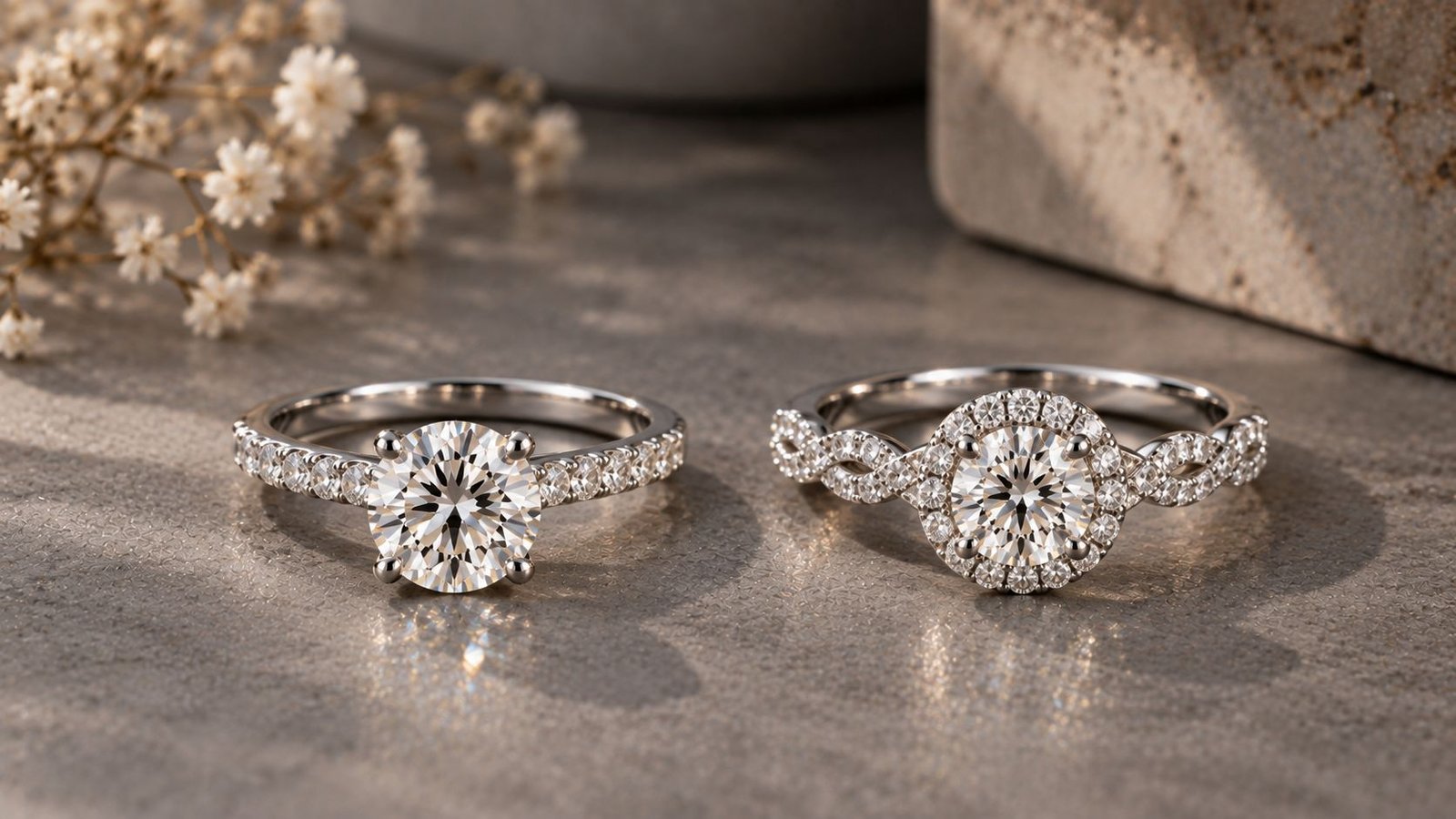
One of the clearest departures from tradition is the dual proposal, where both partners propose to each other, often during the same moment, sometimes exchanging rings simultaneously rather than one person receiving a ring and the other receiving nothing until the wedding. This approach has become particularly common among same-sex couples, partly because the traditional one-proposes-one-receives template was built around a specific gendered assumption that simply doesn’t map onto every relationship.
Dual proposals do come with one practical consideration worth planning for upfront: budgeting for two rings rather than one changes the math considerably. This is exactly where lab-grown diamonds tend to make the biggest practical difference, since the cost savings compared to natural stones apply to both rings rather than just one, making a meaningful, well-made ring for each partner realistic without doubling an already significant budget.
Some couples choose matching or coordinated designs for a dual proposal, using the same metal tone or a shared design element across both rings, while others choose completely different styles that reflect each partner’s individual taste. Neither approach is more correct than the other; the point of a dual proposal is that both people get a ring and a moment that actually feels like theirs, not that the two rings need to match.
Commitment Ceremonies Beyond Marriage
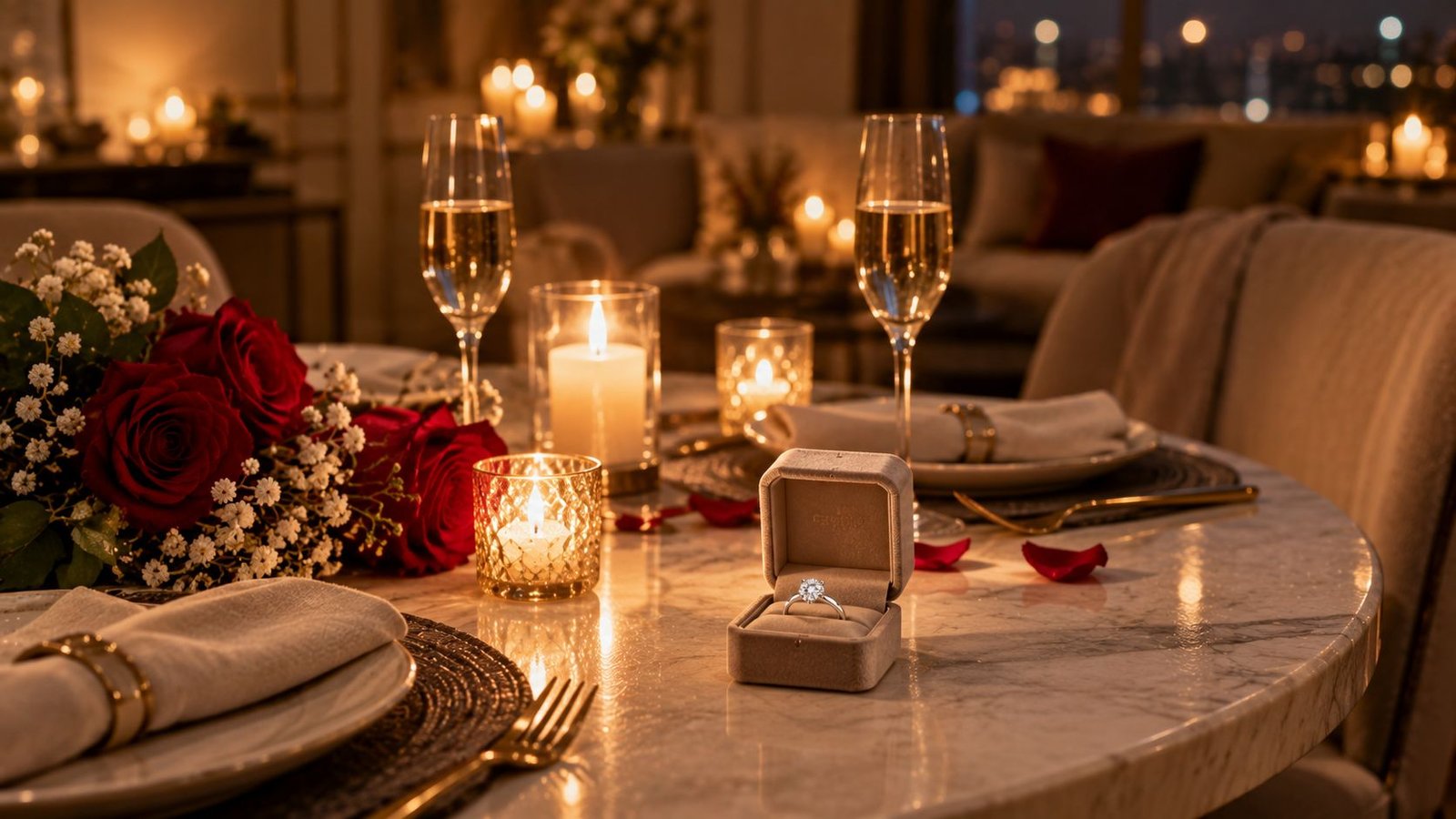
Not every couple choosing to formalize their relationship is pursuing a legally recognized marriage, and that distinction matters more to jewelry choices than people sometimes realize. Commitment ceremonies, chosen for a wide range of personal, cultural, religious, or practical reasons, generally carry the same emotional weight as a wedding without necessarily following its legal or traditional structure, and the rings exchanged often reflect that same freedom from convention.
Because a commitment ceremony isn’t bound by the same expectations a traditional wedding carries, couples planning one often have more flexibility in choosing rings that genuinely reflect their relationship rather than defaulting to what’s expected. This might mean choosing a non-traditional stone shape or color, opting for matching bands worn by both partners rather than a single engagement ring and a separate wedding band, or skipping the ring entirely in favor of another symbolic piece of jewelry that feels more personally meaningful.
Elopements and intimate, witness-only ceremonies have followed a similar pattern, with couples increasingly prioritizing a moment that feels authentic to them over one designed to be photographed or shared widely. This has, in turn, shifted some of the emphasis in ring shopping away from a single dramatic reveal moment and toward a piece of jewelry the couple will simply love wearing every day afterward.
Rings for Every Partner: Moving Beyond “His and Hers”

Traditional engagement ring marketing assumed a fairly narrow set of defaults: a solitaire for one partner, nothing distinctive for the other. That default has loosened considerably as more couples, regardless of gender makeup, look for rings that reflect both partners rather than assuming only one half of the couple needs a statement piece.
For male partners choosing to wear an engagement ring, design options have expanded well beyond a simple plain band. Diamond-set signet styles, brushed metal finishes with a single discreet stone, and wider bands with subtle channel-set diamonds have all become popular choices that read as masculine or gender-neutral depending on styling, without sacrificing the option to include genuine diamond detail.
For couples looking for something that doesn’t read as traditionally gendered at all, gender-neutral band styles with clean lines, mixed metal textures, or a single centered stone rather than a full halo have become a popular middle ground, offering real diamond presence without defaulting to a style historically marketed toward one gender specifically. Stackable bands have also grown in popularity specifically because they let each partner build a ring that evolves over time, adding pieces for anniversaries or milestones rather than committing to one fixed design from the very beginning.
Non-Traditional Settings and Stone Choices
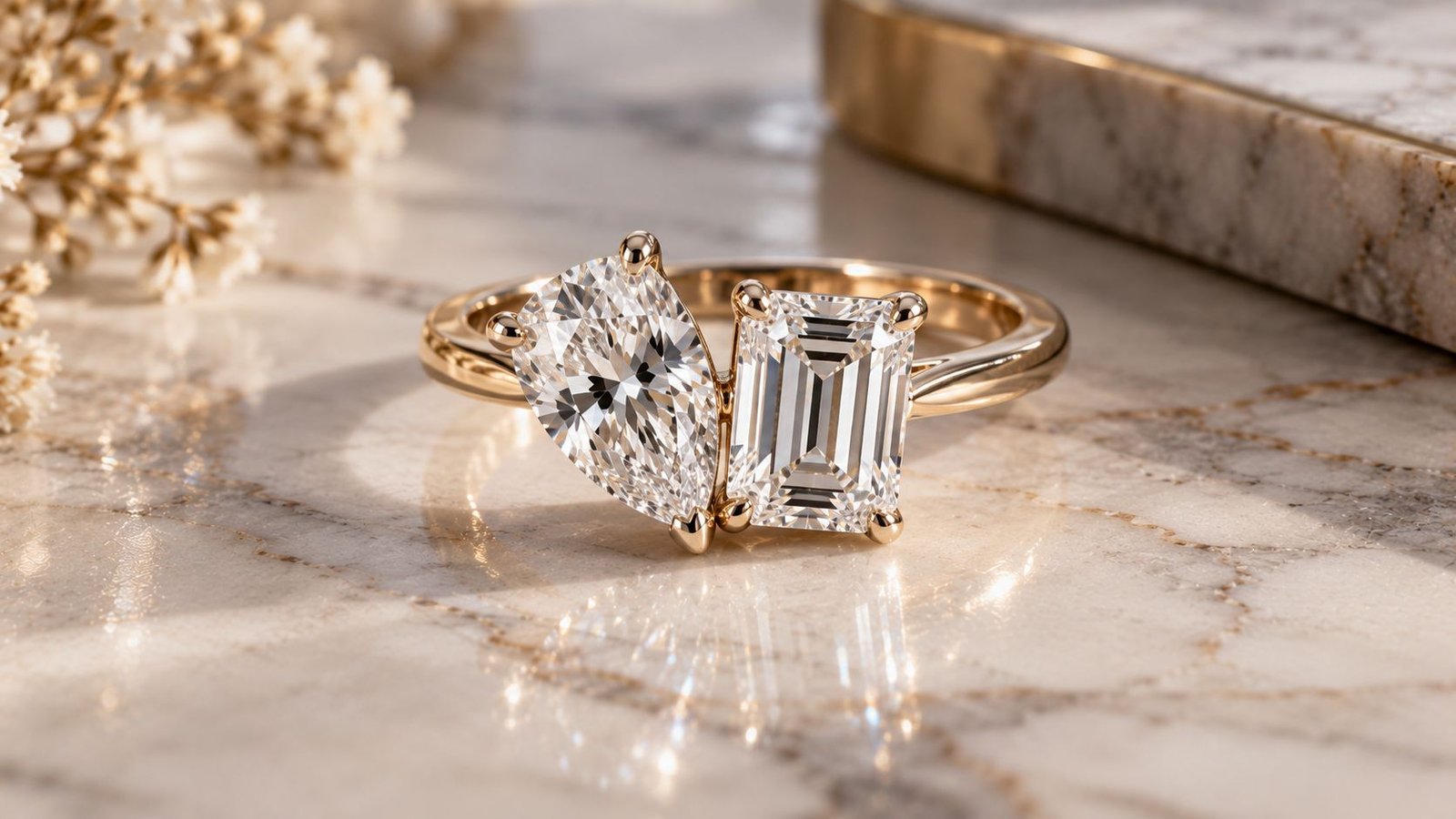
Stone choice has become one of the more personal, expressive parts of a non-traditional proposal. Fancy color lab-grown diamonds, in shades like yellow, pink, or blue, have become realistic options specifically because lab-grown production has made colored stones dramatically more affordable than their natural counterparts, opening up a much wider palette for couples who want a ring that doesn’t look like everyone else’s.
Two-stone designs, sometimes called “toi et moi” settings, placing two different stones side by side in a single ring, have seen renewed popularity among couples looking for a design that visually represents two people coming together rather than a single central stone. This style works particularly well for a dual proposal, since each partner’s ring can incorporate the same two-stone concept while still feeling individually chosen.
Step cuts, rose cuts, and other fancy shapes covered elsewhere in diamond buying guides have also found a natural audience among couples specifically looking to avoid the default round solitaire, using shape as one more way to make a ring feel personally chosen rather than simply expected.
Lab-Grown Diamonds: Why They Fit This Shift So Well
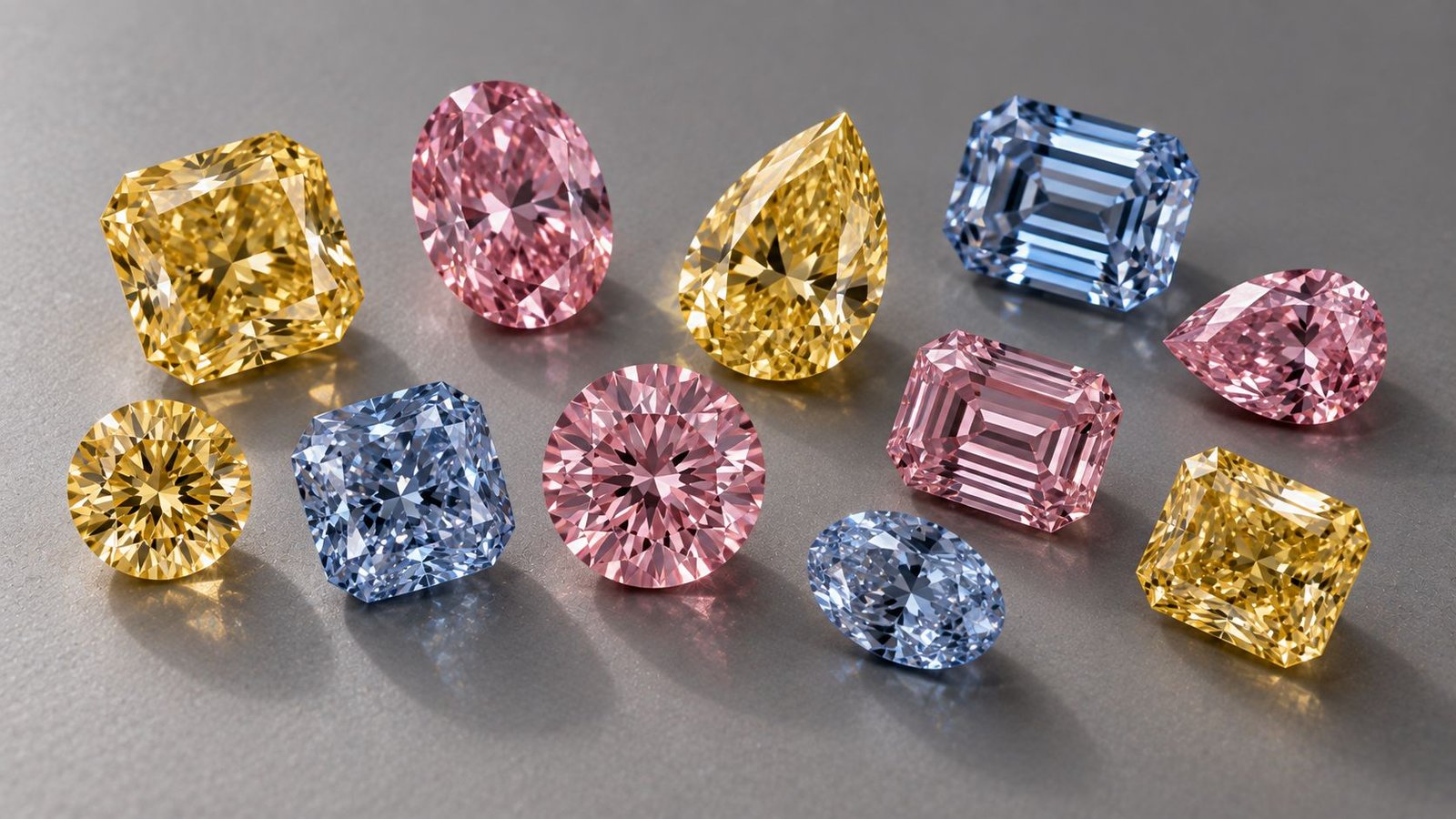
Lab-grown diamonds have become closely associated with this broader move away from convention, and the connection goes beyond price alone. Because lab-grown stones are chemically and physically identical to natural diamonds but cost meaningfully less at equivalent size and clarity, they remove much of the financial pressure that used to make anything beyond a single, modest ring feel unrealistic, whether that’s two full rings for a dual proposal, a larger custom centerpiece, or a fancy color stone that would carry a steep premium in natural form.
There’s also a values-driven dimension to this preference that shows up frequently in survey data and industry commentary: many couples planning a non-traditional proposal are also drawn to transparent, traceable sourcing, something lab-grown diamonds can generally offer more consistently than natural stones with more variable supply chain documentation. For couples who want their ring choice to reflect their values as clearly as it reflects their relationship, that transparency often matters as much as the cost savings.
Budgeting for Multiple Rings or a Shared Proposal
| Scenario | Single Traditional Ring | Dual or Multi-Ring Proposal |
| Typical stone budget | One center stone | Two or more coordinated stones |
| Lab-grown cost advantage | Lowers cost of one ring | Compounds across every additional ring |
| Customization flexibility | Moderate | Higher, since each ring can be individually designed |
| Common styles chosen | Solitaire, halo | Matching bands, toi et moi, gender-neutral designs |
| Planning consideration | Single surprise moment | Often planned jointly between partners |
Couples planning any kind of multi-ring or dual proposal generally find that lab-grown diamonds make the biggest practical difference specifically because the savings scale with every additional ring, rather than being a one-time discount that only matters for a single purchase.
Common Misconceptions
“A non-traditional proposal means skipping rings entirely.” Many non-traditional proposals still include rings; what changes is often who proposes, how many rings are exchanged, or what style those rings take, rather than removing jewelry from the equation altogether.
“Dual proposals are only for same-sex couples.” While dual proposals are particularly common among same-sex couples, plenty of heterosexual couples choose this format too, specifically because it reflects a more mutual, equal approach to the moment.
“Commitment ceremonies are just smaller weddings.” Commitment ceremonies often serve a genuinely different purpose than a wedding, sometimes replacing a legal marriage entirely and sometimes complementing one, and the jewelry chosen often reflects that distinct intention.
“Men’s engagement rings have to look plain and minimal.” Design options for male partners now include diamond-set signet styles, textured bands, and subtle channel settings, offering genuine diamond detail without defaulting to an overly plain look.
“Gender-neutral rings can’t include diamonds.” Gender-neutral designs frequently include diamonds, typically set in cleaner, less gendered styles rather than omitting stones altogether.
Planning Guide: Choosing Rings for Your Own Commitment Story
Start by talking openly with your partner about what the proposal itself should actually look like, rather than defaulting to a single-knee, single-ring template simply because it’s familiar. Whether that means planning a dual proposal, a private moment, or a ceremony that doesn’t follow a traditional wedding structure, naming what actually feels right for both of you first makes every ring decision afterward much easier.
Next, decide on a shared or individual budget before browsing specific rings, particularly if more than one ring is involved. Because lab-grown diamonds meaningfully lower the cost of each individual piece, this is often a good moment to revisit what felt financially out of reach with natural stones alone.
If you’re drawn to a specific symbolic design, like a two-stone toi et moi setting or matching coordinated bands, discuss how literally you want that symbolism carried out between two separate rings, since some couples prefer an identical match while others prefer complementary but distinct designs. Finally, if your proposal or ceremony doesn’t follow a conventional legal marriage path, it’s worth confirming with your jeweler early on what documentation, insurance, or resizing timeline makes sense for your specific plans, since some standard bridal timelines assume a traditional engagement-to-wedding structure that may not match your own.
Final Thoughts
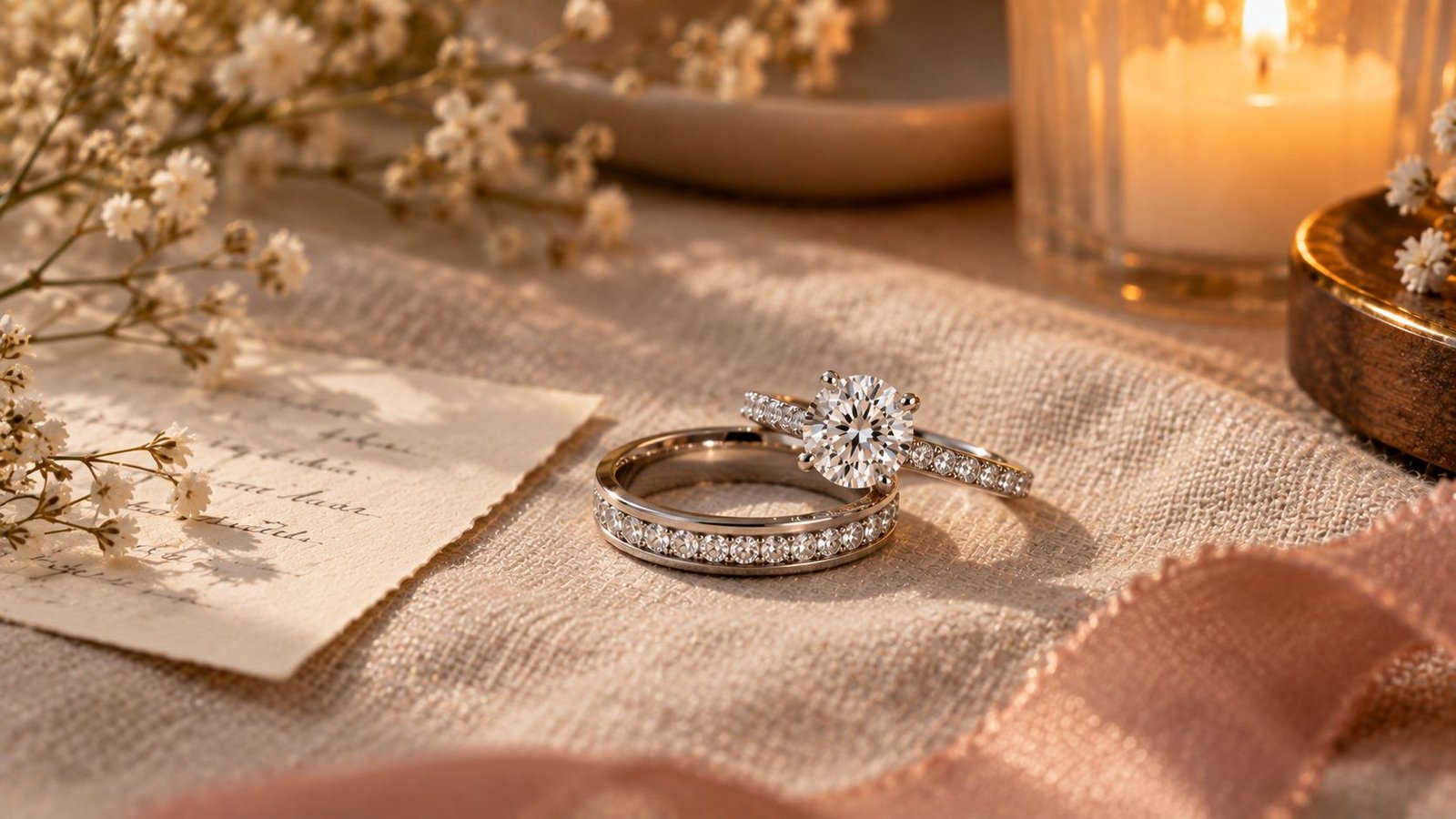
Non-Traditional Proposals aren’t a trend so much as a correction: a growing recognition that the old single template was never really built to fit every couple in the first place. Whether that means two rings instead of one, a private moment at home, a commitment ceremony outside the bounds of legal marriage, or a ring style that doesn’t default to convention, couples today have more room than ever to make this moment look like their own relationship rather than someone else’s expectations. Lab-grown diamonds have made nearly every version of that more financially realistic, letting the actual decision come down to what genuinely fits you both rather than what you can afford to compromise on.
Frequently Asked Questions
Disclaimer: Survey statistics referenced in this article reflect data available at the time of writing and may not represent every couple’s experience. This article is intended for general informational purposes.