

Lab Grown Diamond Certification vs Traditional Diamond Bodies: 7 Key Differences Explained
Ask ten jewellery shoppers who actually certifies a diamond, and most will name a single acronym — GIA — and assume the story ends there. It doesn’t. Behind every diamond report, whether the stone was pulled from the earth or grown in a reactor, sits a web of organisations with very different mandates: some grade stones, some set trade standards, some lobby governments, and some exist purely to market one category of diamond over another.
That web — and lab grown diamond certification in particular — has grown more tangled since lab grown diamonds moved from niche curiosity to a category that now accounts for a majority of engagement ring centre stones in several markets. New bodies were created specifically to represent the lab grown side of the industry, while decades-old institutions built for mined diamonds scrambled to adapt their systems to a product they never originally designed for.
Understanding lab grown diamond certification — and how it differs from the frameworks built around traditional diamond bodies such as the Gemological Institute of America — isn’t just trivia for gemology enthusiasts. It directly affects what a buyer can trust when a jeweller hands over a grading report, why two seemingly identical diamonds may carry different paperwork, and which organisations actually have authority versus which simply have a well-designed website.
Why Two Parallel Lab Grown Diamond Certification Worlds Exist

For most of the twentieth century, diamond certification meant one thing: grading a mined stone against the 4Cs — carat, cut, colour, and clarity — through institutions like the Gemological Institute of America. There was no second category to account for, so there was no need for a second set of rules.
That changed once gem-quality lab grown diamonds became commercially viable, and lab grown diamond certification had to be built essentially from scratch. A stone grown through High-Pressure High-Temperature (HPHT) or Chemical Vapor Deposition (CVD) methods is chemically and optically identical to a mined diamond, but its origin carries different economic, ethical, and regulatory implications. Buyers wanted to know which type they were purchasing. Regulators, led in the United States by the Federal Trade Commission, began requiring clear disclosure of a diamond’s growth method. And the existing diamond establishment — much of it financially tied to mined stones — had every incentive to keep the two categories visibly separate.
Out of that pressure, two different ecosystems around lab grown diamond certification and traditional diamond oversight emerged. One is the long-established network built around natural diamonds. The other is a newer, still-evolving set of organisations built specifically around lab grown production. They frequently overlap, sometimes compete, and occasionally borrow each other’s tools, but they were built to solve different problems.
The Traditional Diamond Bodies: Built for a Mined-Diamond World
The traditional side of diamond oversight is dominated by grading laboratories and trade-promotion councils that predate lab grown diamond certification entirely.
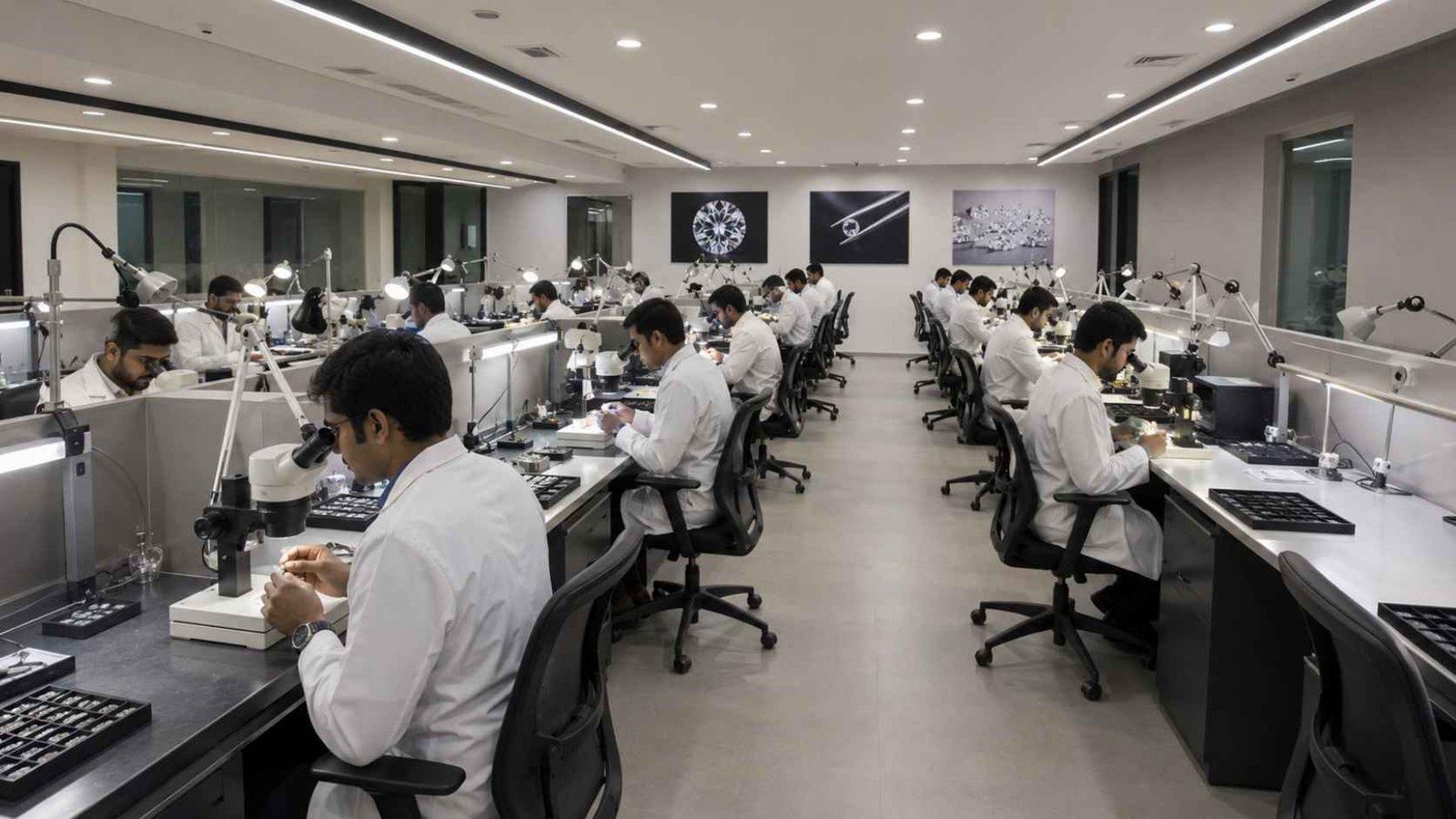
The Gemological Institute of America is the most recognised name in the space, having developed the 4Cs grading system that the entire industry still uses as its common language. The International Gemological Institute operates a similar grading model with a strong global retail footprint, particularly across Asia and the Middle East. Alongside them sit smaller regional laboratories, along with organisations such as the American Gem Society, which combines grading with a code of ethics for member retailers.
Separate from the grading labs are promotional and trade bodies whose job isn’t to grade individual stones but to protect and market the natural diamond category as a whole. The Natural Diamond Council is the clearest example — a not-for-profit funded by major mining interests, whose stated purpose is educating consumers about natural diamonds rather than certifying individual stones. It publishes research, runs consumer campaigns, and has been vocal about scrutinising sustainability claims made by lab grown producers.
In diamond-producing and diamond-processing countries, government-linked trade bodies play a further role. India’s Gem & Jewellery Export Promotion Council, for instance, oversees export standards for both mined and lab grown stones moving through the country’s massive cutting and polishing industry, working alongside national regulators such as the Bureau of Indian Standards.
What unites all of these traditional bodies is history. They were established when “diamond” meant one thing, and their systems, credibility, and consumer trust were built over decades before lab grown diamond certification existed as a category at all.
The Newer Organisations Built Around Lab Grown Diamonds
As lab grown production scaled up, the industry recognised it needed its own advocacy infrastructure rather than relying entirely on institutions historically aligned with mined diamonds.
The International Grown Diamond Association was among the earliest attempts, formed to give lab grown producers a collective voice on trade issues and standardised vocabulary. A separate initiative, the Lab Grown Diamond Council, launched in New York in 2019 with backing from marketing veterans in the jewellery trade. Its founders described a mission built around three pillars: consumer research, industry communications, and — notably — the development of a third-party sustainability standard, which it pursued in partnership with an independent certifier to create a “Sustainably Grown Diamond” mark focused on production transparency.
Trade groups in this space have had an uneven track record. Some initiatives have struggled to gain lasting traction as membership funding and industry consensus proved difficult to sustain, prompting newer entrants to try different structures — including at least one for-profit reporting venture aimed at issuing low-cost sustainability-focused grading reports for retailers. The pattern reflects an industry still working out what durable, self-governing lab grown diamond certification should ultimately look like.
Outside the United States, India has developed its own advocacy structures, including a dedicated Lab Grown Diamond and Jewellery Promotion Council established in 2015 to support the country’s rapidly growing manufacturing base and represent its interests to government and international buyers. As more couples embrace what we’ve called lab grown diamond love, the demand for credible, consistent lab grown diamond certification only continues to grow alongside it.
Unlike the grading laboratories, none of these bodies typically issue the certificate that comes packaged with an individual diamond. Their role is closer to that of an industry association — setting shared standards, lobbying regulators, and shaping how the category is presented to consumers — rather than assessing the specific stone in a specific ring.
Grading Labs vs Trade Councils: A Distinction Worth Understanding
One of the most common points of confusion around lab grown diamond certification is conflating two very different functions: grading and advocacy.
A grading laboratory examines an individual diamond under controlled conditions and issues a report describing its specific characteristics — carat weight, cut quality, colour grade, clarity grade, and, critically for lab grown stones, the growth method and any post-growth treatment applied. This is the document a buyer actually receives with their purchase, and it is what most people mean when they say a diamond is “certified.”
A trade council or advocacy body, by contrast, does not typically touch the individual stone at all. It sets industry-wide positions, funds research, runs consumer education campaigns, and sometimes develops voluntary standards that member companies can choose to adopt. The Natural Diamond Council falls into this category on the mined side; the Lab Grown Diamond Council and similar organisations fall into it on the lab grown side.
Both traditional grading laboratories such as GIA and IGI have adapted to serve both markets — each issues distinct report formats for lab grown diamonds that are clearly labelled as such, using largely the same 4Cs framework applied to natural stones. This means a buyer today can, in many cases, get an internationally recognised grading report — the practical core of any lab grown diamond certification — from the very same institution that grades mined diamonds, even while separate advocacy bodies for each category continue to operate independently.
Where the Missions Genuinely Diverge
Even where the tools overlap, the underlying missions of lab grown and traditional bodies are built around different priorities.
Traditional, mined-diamond-aligned organisations tend to emphasise rarity, heritage, and the economic role natural diamonds play in producing regions — arguments rooted in decades of established trade relationships and, in some cases, direct funding from mining companies with a commercial interest in protecting natural diamond demand. Their communications frequently focus on authenticity and long-term value retention, a theme we explored in more depth in our piece on the diamond rarity myth.
Lab grown-focused organisations tend to emphasise traceability, environmental footprint claims, and cost transparency — arguments aimed at a newer generation of buyers who prioritise documented origin and price accessibility over rarity. Because the lab grown sector is younger and more fragmented, these organisations have also spent considerable energy simply trying to standardise the terminology behind lab grown diamond certification and prevent misleading marketing across a rapidly growing but still-maturing supply chain.
This divergence occasionally produces open disagreement. Natural-diamond-aligned research has publicly challenged some lab grown sustainability marketing, while lab grown advocates have pushed back on claims about natural diamond rarity and ethical sourcing. Buyers navigating this space are, in effect, hearing from two industries that compete for the same purchase but measure success by different standards.
Regulatory Oversight Sits Above Both Systems
Neither the traditional bodies nor the lab grown organisations operate in a vacuum — both are shaped by government regulation that neither side controls.
In the United States, the Federal Trade Commission sets disclosure rules that require sellers to clearly identify a diamond’s origin, and organisations such as the Jewelers Vigilance Committee work to help retailers stay compliant with those rules regardless of which type of diamond they sell. In India, the Bureau of Indian Standards has introduced formal labelling regulations specifically governing how lab grown stones must be described across the export pipeline, closing gaps that industry self-regulation alone had not fully addressed. The European Union similarly requires clear consumer-facing disclosure of synthetic origin.
This layer of government oversight matters because it shapes lab grown diamond certification requirements uniformly, regardless of which trade body a company chooses to align with or fund. A grading report from GIA carries weight partly because of GIA’s reputation, but the disclosure requirement itself exists because of regulation, not because any single trade council mandated it.
What Lab Grown Diamond Certification Means for Someone Actually Buying a Diamond
For a buyer standing in a jewellery store or browsing online, the practical takeaway around lab grown diamond certification is simpler than the organisational landscape suggests. The document that matters most is the individual grading report attached to the specific stone — issued by an internationally recognised laboratory such as GIA or IGI, and clearly stating whether the diamond is natural or lab grown along with its full 4Cs assessment.
Trade councils and advocacy bodies, whether representing mined or lab grown diamonds, are worth understanding as context rather than as certification. They shape industry standards, fund research, and influence marketing narratives, but they are not the entity vouching for the specific carat weight and clarity grade of the diamond a buyer is about to purchase. A well-informed buyer checks both: the grading report for the stone itself, and a basic awareness of which industry interests sit behind the marketing claims accompanying it.
Reading a Certificate: What Actually Shows Up on the Report
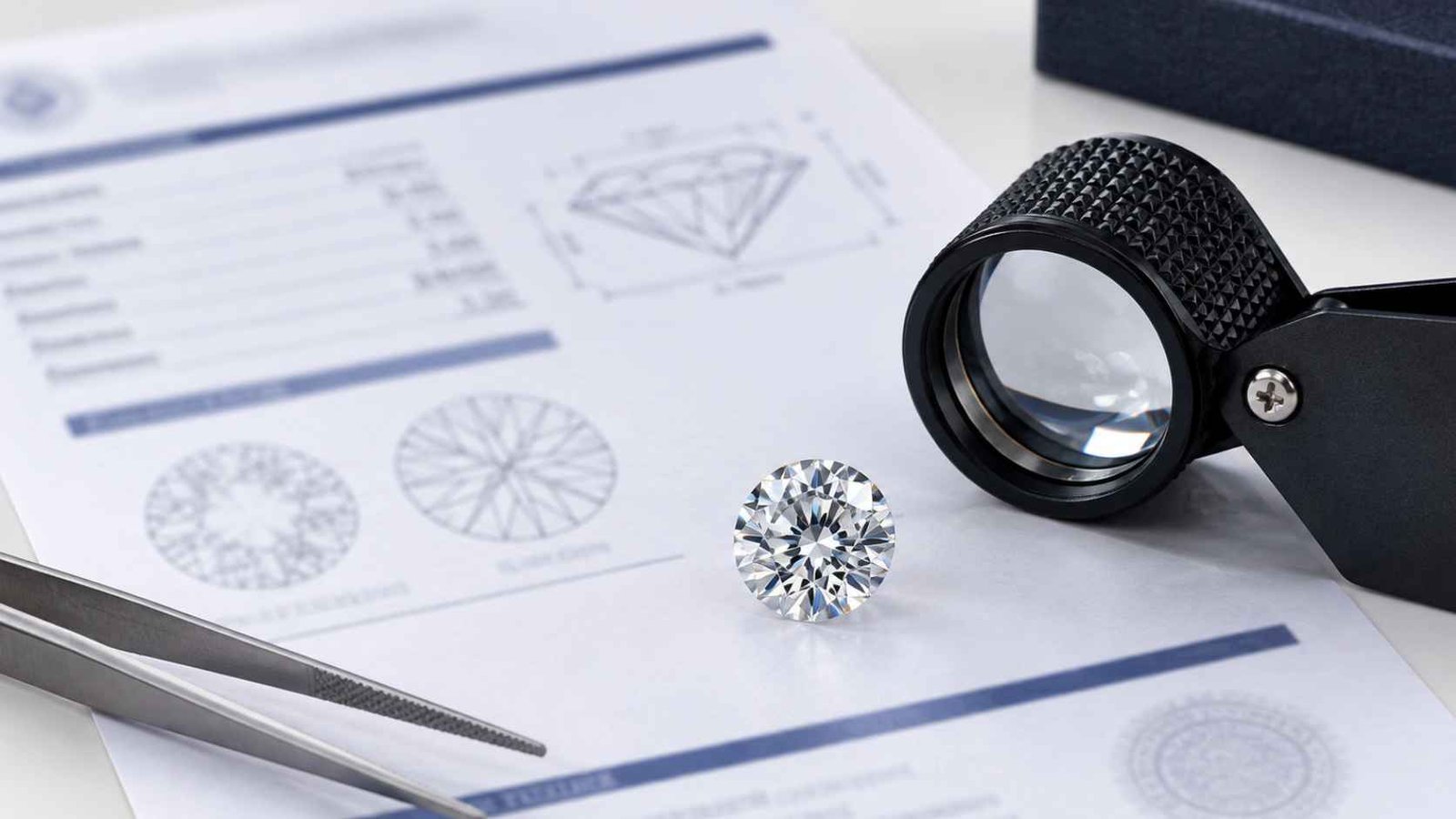
It helps to know exactly what lab grown diamond certification looks like on paper, and what separates that report from a natural diamond report once both land on a jeweller’s counter, because the differences are smaller than most buyers expect.
A standard grading report from GIA or IGI lists the same core information regardless of origin: shape and cutting style, measurements, carat weight, colour grade, clarity grade, cut grade where applicable, polish, symmetry, and fluorescence. For a lab grown stone, the report adds a clear statement of the growth method — HPHT or CVD — and discloses whether any post-growth treatment, such as a secondary HPHT process used to improve colour, has been applied. Natural diamond reports, by contrast, disclose any treatments used to enhance a mined stone, such as laser drilling or fracture filling, which serve a similar transparency function from the opposite direction.
Because lab grown diamond certification reports mirror natural diamond reports so closely in format and rigour, buyers rarely need to learn an entirely separate grading language just to compare the two side by side.
What does not appear on either report is any reference to the trade councils discussed above. A GIA report does not mention the Natural Diamond Council, and an IGI lab grown report does not mention the Lab Grown Diamond Council or any similar advocacy body. The grading laboratory’s job stops at describing the physical stone in front of it. Any messaging about sustainability, ethics, or category-wide value comes from marketing materials, retailer messaging, or the trade organisations’ own consumer-facing publications — not from the certificate itself.
This distinction matters most when a retailer’s marketing leans heavily on a trade body’s branding — a “sustainably grown” seal, for instance, or language borrowed from a natural diamond promotional campaign. Those claims may be accurate and meaningful, but they sit outside the independently verified grading report and are worth evaluating on their own terms rather than assuming they carry the same rigour as a 4Cs assessment.
Sustainability Claims: Where Verification Gets Genuinely Complicated
Grading a diamond’s physical characteristics is a mature, well-standardised science. Verifying sustainability and ethical sourcing claims is a much newer and more contested area, and it is where the split between lab grown diamond certification bodies and traditional diamond bodies becomes most visible.
On the lab grown side, production energy use varies enormously depending on the manufacturing method, the electricity source powering the reactors, and the country of production. Because most lab grown output is currently manufactured in facilities across India and China, sustainability claims often depend heavily on the local energy grid rather than any inherent property of the growth process itself. This is precisely the gap that led lab grown-focused trade bodies to commission independent third-party sustainability standards rather than relying on self-reported marketing language, since a growth method alone does not automatically guarantee a lower environmental footprint.
On the natural diamond side, verification challenges look different — centred on mine-to-market traceability, labour conditions, and the adequacy of existing frameworks such as the Kimberley Process, which was designed specifically to address conflict financing rather than broader environmental or labour standards. Natural diamond advocacy bodies have invested in research and reporting aimed at demonstrating the industry’s economic contributions to producing regions, while also pushing back on blanket assumptions that lab grown stones are automatically the more sustainable choice.
Neither side has landed on a single, universally accepted sustainability standard, and that gap is unlikely to close quickly. For buyers who care specifically about environmental and ethical claims — as opposed to physical grading — the most reliable approach is to look for third-party verification from an organisation independent of the company selling the diamond, rather than accepting a producer’s or a trade body’s own sustainability language at face value.
Common Misconceptions Worth Clearing Up
A few misunderstandings come up repeatedly when buyers try to make sense of this landscape, and clearing them up saves a lot of confusion at the point of purchase.
The first is assuming that a trade council’s name appearing in marketing material means that organisation personally inspected or certified the diamond. It almost never does. Trade bodies set standards and shape industry conversation; they do not typically touch individual stones.
The second is assuming that lab grown diamond certification is somehow less rigorous than natural diamond certification simply because the category is newer. In practice, the same laboratories, the same 4Cs framework, and largely the same equipment are used for both, and reputable labs apply comparable scrutiny regardless of origin.
The third is assuming that every organisation with “diamond council” or “diamond association” in its name carries equivalent authority or longevity. The trade body landscape on both sides has seen organisations launch, merge, rebrand, or quietly wind down over the years, which is normal for a relatively young and still-consolidating advocacy space — but it means a name alone is not a reliable signal of an organisation’s current standing or influence.
A Landscape Still Settling Into Its Final Shape
The organisational structure around lab grown diamond certification is still younger and less settled than the century-old system built around mined stones. New trade bodies have launched, some have faded, and grading laboratories have had to build entirely new report categories from scratch within the space of about two decades — a remarkably short window compared to the traditional diamond trade’s much longer institutional history.
What seems clear is the direction of travel: grading standards for lab grown diamonds are converging with those long used for natural stones, even as advocacy organisations on each side continue to differentiate their messaging. For anyone comparing options — including readers exploring the broader history of lab grown diamonds — lab grown diamond certification is quickly becoming just as rigorous and internationally recognised as the paperwork behind a mined diamond, even while the industries promoting each category continue to make their case in very different ways.
Frequently Asked Questions
1. What is the Lab Grown Diamond Council?
It is a trade organisation launched in 2019 to represent the lab grown diamond industry, focused on consumer research, industry communications, and developing sustainability standards for lab grown production.
2. Does the Lab Grown Diamond Council issue diamond certificates?
No. It functions as an advocacy and standards body rather than a grading laboratory. Individual diamonds are still graded and certified separately by laboratories such as GIA or IGI.
3. What is the difference between a grading lab and a trade council?
A grading lab, like GIA or IGI, examines and certifies specific diamonds using the 4Cs. A trade council sets industry-wide standards, funds research, and promotes a diamond category rather than assessing individual stones.
4. Do GIA and IGI certify lab grown diamonds?
Yes. Both issue dedicated lab grown diamond reports using largely the same 4Cs framework as natural diamonds, with the growth method and any treatment clearly disclosed on the report.
5. What is the Natural Diamond Council?
It is a not-for-profit organisation funded by mining interests that promotes and educates consumers about natural diamonds, serving a role for mined stones similar to what lab grown trade bodies do for synthetic ones.
6. Who regulates lab grown diamond disclosure?
Government bodies do. In the US, the Federal Trade Commission requires clear origin disclosure; in India, the Bureau of Indian Standards enforces specific lab grown labelling rules across exports.
7. Why do lab grown diamonds need separate trade organisations at all?
Because the category’s economics, sustainability claims, and consumer education needs differ from mined diamonds, and much of the traditional diamond infrastructure was built before lab grown diamond certification existed commercially.
8. Is a diamond more trustworthy if it's certified by a well-known trade council?
Not necessarily. Trade councils shape industry standards and messaging, but the report that actually verifies a specific stone’s quality comes from an independent grading laboratory, not an advocacy organisation.
9. What role does India's GJEPC play in lab grown diamond certification?
The Gem & Jewellery Export Promotion Council oversees export standards for India’s diamond industry, including the large volume of lab grown stones now produced and exported from manufacturing hubs like Surat.
10. Should buyers care about the difference between these organisations?
It helps. Recognising which body is grading the specific stone versus which is promoting a broader category allows buyers to separate objective quality documentation from industry marketing.
This article is intended for informational and educational purposes only. Details regarding the Lab Grown Diamond Council, traditional diamond certification bodies, and related trade organisations are based on publicly available information as of 2026 and may change as the industry evolves. Organisational names, mandates, and standards referenced here should be independently verified with the respective bodies before being relied upon for business or purchasing decisions. Buyers should always confirm current certification, grading, and disclosure details directly with the relevant grading laboratory or retailer before making a purchase.
Ask ten jewellery shoppers who actually certifies a diamond, and most will name a single acronym — GIA — and assume the story ends there. It doesn’t. Behind every diamond report, whether the stone was pulled from the earth or grown in a reactor, sits a web of organisations with very different mandates: some grade stones, some set trade standards, some lobby governments, and some exist purely to market one category of diamond over another.
That web — and lab grown diamond certification in particular — has grown more tangled since lab grown diamonds moved from niche curiosity to a category that now accounts for a majority of engagement ring centre stones in several markets. New bodies were created specifically to represent the lab grown side of the industry, while decades-old institutions built for mined diamonds scrambled to adapt their systems to a product they never originally designed for.
Understanding lab grown diamond certification — and how it differs from the frameworks built around traditional diamond bodies such as the Gemological Institute of America — isn’t just trivia for gemology enthusiasts. It directly affects what a buyer can trust when a jeweller hands over a grading report, why two seemingly identical diamonds may carry different paperwork, and which organisations actually have authority versus which simply have a well-designed website.
Why Two Parallel Lab Grown Diamond Certification Worlds Exist

For most of the twentieth century, diamond certification meant one thing: grading a mined stone against the 4Cs — carat, cut, colour, and clarity — through institutions like the Gemological Institute of America. There was no second category to account for, so there was no need for a second set of rules.
That changed once gem-quality lab grown diamonds became commercially viable, and lab grown diamond certification had to be built essentially from scratch. A stone grown through High-Pressure High-Temperature (HPHT) or Chemical Vapor Deposition (CVD) methods is chemically and optically identical to a mined diamond, but its origin carries different economic, ethical, and regulatory implications. Buyers wanted to know which type they were purchasing. Regulators, led in the United States by the Federal Trade Commission, began requiring clear disclosure of a diamond’s growth method. And the existing diamond establishment — much of it financially tied to mined stones — had every incentive to keep the two categories visibly separate.
Out of that pressure, two different ecosystems around lab grown diamond certification and traditional diamond oversight emerged. One is the long-established network built around natural diamonds. The other is a newer, still-evolving set of organisations built specifically around lab grown production. They frequently overlap, sometimes compete, and occasionally borrow each other’s tools, but they were built to solve different problems.
The Traditional Diamond Bodies: Built for a Mined-Diamond World
The traditional side of diamond oversight is dominated by grading laboratories and trade-promotion councils that predate lab grown diamond certification entirely.
The Gemological Institute of America is the most recognised name in the space, having developed the 4Cs grading system that the entire industry still uses as its common language. The International Gemological Institute operates a similar grading model with a strong global retail footprint, particularly across Asia and the Middle East. Alongside them sit smaller regional laboratories, along with organisations such as the American Gem Society, which combines grading with a code of ethics for member retailers.
Separate from the grading labs are promotional and trade bodies whose job isn’t to grade individual stones but to protect and market the natural diamond category as a whole. The Natural Diamond Council is the clearest example — a not-for-profit funded by major mining interests, whose stated purpose is educating consumers about natural diamonds rather than certifying individual stones. It publishes research, runs consumer campaigns, and has been vocal about scrutinising sustainability claims made by lab grown producers.
In diamond-producing and diamond-processing countries, government-linked trade bodies play a further role. India’s Gem & Jewellery Export Promotion Council, for instance, oversees export standards for both mined and lab grown stones moving through the country’s massive cutting and polishing industry, working alongside national regulators such as the Bureau of Indian Standards.
What unites all of these traditional bodies is history. They were established when “diamond” meant one thing, and their systems, credibility, and consumer trust were built over decades before lab grown diamond certification existed as a category at all.
The Newer Organisations Built Around Lab Grown Diamonds
As lab grown production scaled up, the industry recognised it needed its own advocacy infrastructure rather than relying entirely on institutions historically aligned with mined diamonds.
The International Grown Diamond Association was among the earliest attempts, formed to give lab grown producers a collective voice on trade issues and standardised vocabulary. A separate initiative, the Lab Grown Diamond Council, launched in New York in 2019 with backing from marketing veterans in the jewellery trade. Its founders described a mission built around three pillars: consumer research, industry communications, and — notably — the development of a third-party sustainability standard, which it pursued in partnership with an independent certifier to create a “Sustainably Grown Diamond” mark focused on production transparency.

Trade groups in this space have had an uneven track record. Some initiatives have struggled to gain lasting traction as membership funding and industry consensus proved difficult to sustain, prompting newer entrants to try different structures — including at least one for-profit reporting venture aimed at issuing low-cost sustainability-focused grading reports for retailers. The pattern reflects an industry still working out what durable, self-governing lab grown diamond certification should ultimately look like.
Outside the United States, India has developed its own advocacy structures, including a dedicated Lab Grown Diamond and Jewellery Promotion Council established in 2015 to support the country’s rapidly growing manufacturing base and represent its interests to government and international buyers. As more couples embrace what we’ve called lab grown diamond love, the demand for credible, consistent lab grown diamond certification only continues to grow alongside it.
Unlike the grading laboratories, none of these bodies typically issue the certificate that comes packaged with an individual diamond. Their role is closer to that of an industry association — setting shared standards, lobbying regulators, and shaping how the category is presented to consumers — rather than assessing the specific stone in a specific ring.
Grading Labs vs Trade Councils: A Distinction Worth Understanding

One of the most common points of confusion around lab grown diamond certification is conflating two very different functions: grading and advocacy.
A grading laboratory examines an individual diamond under controlled conditions and issues a report describing its specific characteristics — carat weight, cut quality, colour grade, clarity grade, and, critically for lab grown stones, the growth method and any post-growth treatment applied. This is the document a buyer actually receives with their purchase, and it is what most people mean when they say a diamond is “certified.”
A trade council or advocacy body, by contrast, does not typically touch the individual stone at all. It sets industry-wide positions, funds research, runs consumer education campaigns, and sometimes develops voluntary standards that member companies can choose to adopt. The Natural Diamond Council falls into this category on the mined side; the Lab Grown Diamond Council and similar organisations fall into it on the lab grown side.
Both traditional grading laboratories such as GIA and IGI have adapted to serve both markets — each issues distinct report formats for lab grown diamonds that are clearly labelled as such, using largely the same 4Cs framework applied to natural stones. This means a buyer today can, in many cases, get an internationally recognised grading report — the practical core of any lab grown diamond certification — from the very same institution that grades mined diamonds, even while separate advocacy bodies for each category continue to operate independently.
Where the Missions Genuinely Diverge
Even where the tools overlap, the underlying missions of lab grown and traditional bodies are built around different priorities.
Traditional, mined-diamond-aligned organisations tend to emphasise rarity, heritage, and the economic role natural diamonds play in producing regions — arguments rooted in decades of established trade relationships and, in some cases, direct funding from mining companies with a commercial interest in protecting natural diamond demand. Their communications frequently focus on authenticity and long-term value retention, a theme we explored in more depth in our piece on the diamond rarity myth.
Lab grown-focused organisations tend to emphasise traceability, environmental footprint claims, and cost transparency — arguments aimed at a newer generation of buyers who prioritise documented origin and price accessibility over rarity. Because the lab grown sector is younger and more fragmented, these organisations have also spent considerable energy simply trying to standardise the terminology behind lab grown diamond certification and prevent misleading marketing across a rapidly growing but still-maturing supply chain.
This divergence occasionally produces open disagreement. Natural-diamond-aligned research has publicly challenged some lab grown sustainability marketing, while lab grown advocates have pushed back on claims about natural diamond rarity and ethical sourcing. Buyers navigating this space are, in effect, hearing from two industries that compete for the same purchase but measure success by different standards.
Regulatory Oversight Sits Above Both Systems
Neither the traditional bodies nor the lab grown organisations operate in a vacuum — both are shaped by government regulation that neither side controls.
In the United States, the Federal Trade Commission sets disclosure rules that require sellers to clearly identify a diamond’s origin, and organisations such as the Jewelers Vigilance Committee work to help retailers stay compliant with those rules regardless of which type of diamond they sell. In India, the Bureau of Indian Standards has introduced formal labelling regulations specifically governing how lab grown stones must be described across the export pipeline, closing gaps that industry self-regulation alone had not fully addressed. The European Union similarly requires clear consumer-facing disclosure of synthetic origin.

This layer of government oversight matters because it shapes lab grown diamond certification requirements uniformly, regardless of which trade body a company chooses to align with or fund. A grading report from GIA carries weight partly because of GIA’s reputation, but the disclosure requirement itself exists because of regulation, not because any single trade council mandated it.
What Lab Grown Diamond Certification Means for Someone Actually Buying a Diamond
For a buyer standing in a jewellery store or browsing online, the practical takeaway around lab grown diamond certification is simpler than the organisational landscape suggests. The document that matters most is the individual grading report attached to the specific stone — issued by an internationally recognised laboratory such as GIA or IGI, and clearly stating whether the diamond is natural or lab grown along with its full 4Cs assessment.
Trade councils and advocacy bodies, whether representing mined or lab grown diamonds, are worth understanding as context rather than as certification. They shape industry standards, fund research, and influence marketing narratives, but they are not the entity vouching for the specific carat weight and clarity grade of the diamond a buyer is about to purchase. A well-informed buyer checks both: the grading report for the stone itself, and a basic awareness of which industry interests sit behind the marketing claims accompanying it.
Reading a Certificate: What Actually Shows Up on the Report
It helps to know exactly what lab grown diamond certification looks like on paper, and what separates that report from a natural diamond report once both land on a jeweller’s counter, because the differences are smaller than most buyers expect.
A standard grading report from GIA or IGI lists the same core information regardless of origin: shape and cutting style, measurements, carat weight, colour grade, clarity grade, cut grade where applicable, polish, symmetry, and fluorescence. For a lab grown stone, the report adds a clear statement of the growth method — HPHT or CVD — and discloses whether any post-growth treatment, such as a secondary HPHT process used to improve colour, has been applied. Natural diamond reports, by contrast, disclose any treatments used to enhance a mined stone, such as laser drilling or fracture filling, which serve a similar transparency function from the opposite direction.
Because lab grown diamond certification reports mirror natural diamond reports so closely in format and rigour, buyers rarely need to learn an entirely separate grading language just to compare the two side by side.
What does not appear on either report is any reference to the trade councils discussed above. A GIA report does not mention the Natural Diamond Council, and an IGI lab grown report does not mention the Lab Grown Diamond Council or any similar advocacy body. The grading laboratory’s job stops at describing the physical stone in front of it. Any messaging about sustainability, ethics, or category-wide value comes from marketing materials, retailer messaging, or the trade organisations’ own consumer-facing publications — not from the certificate itself.
This distinction matters most when a retailer’s marketing leans heavily on a trade body’s branding — a “sustainably grown” seal, for instance, or language borrowed from a natural diamond promotional campaign. Those claims may be accurate and meaningful, but they sit outside the independently verified grading report and are worth evaluating on their own terms rather than assuming they carry the same rigour as a 4Cs assessment.
Sustainability Claims: Where Verification Gets Genuinely Complicated
Grading a diamond’s physical characteristics is a mature, well-standardised science. Verifying sustainability and ethical sourcing claims is a much newer and more contested area, and it is where the split between lab grown diamond certification bodies and traditional diamond bodies becomes most visible.
On the lab grown side, production energy use varies enormously depending on the manufacturing method, the electricity source powering the reactors, and the country of production. Because most lab grown output is currently manufactured in facilities across India and China, sustainability claims often depend heavily on the local energy grid rather than any inherent property of the growth process itself. This is precisely the gap that led lab grown-focused trade bodies to commission independent third-party sustainability standards rather than relying on self-reported marketing language, since a growth method alone does not automatically guarantee a lower environmental footprint.

On the natural diamond side, verification challenges look different — centred on mine-to-market traceability, labour conditions, and the adequacy of existing frameworks such as the Kimberley Process, which was designed specifically to address conflict financing rather than broader environmental or labour standards. Natural diamond advocacy bodies have invested in research and reporting aimed at demonstrating the industry’s economic contributions to producing regions, while also pushing back on blanket assumptions that lab grown stones are automatically the more sustainable choice.
Neither side has landed on a single, universally accepted sustainability standard, and that gap is unlikely to close quickly. For buyers who care specifically about environmental and ethical claims — as opposed to physical grading — the most reliable approach is to look for third-party verification from an organisation independent of the company selling the diamond, rather than accepting a producer’s or a trade body’s own sustainability language at face value.
Common Misconceptions Worth Clearing Up
A few misunderstandings come up repeatedly when buyers try to make sense of this landscape, and clearing them up saves a lot of confusion at the point of purchase.
The first is assuming that a trade council’s name appearing in marketing material means that organisation personally inspected or certified the diamond. It almost never does. Trade bodies set standards and shape industry conversation; they do not typically touch individual stones.
The second is assuming that lab grown diamond certification is somehow less rigorous than natural diamond certification simply because the category is newer. In practice, the same laboratories, the same 4Cs framework, and largely the same equipment are used for both, and reputable labs apply comparable scrutiny regardless of origin.
The third is assuming that every organisation with “diamond council” or “diamond association” in its name carries equivalent authority or longevity. The trade body landscape on both sides has seen organisations launch, merge, rebrand, or quietly wind down over the years, which is normal for a relatively young and still-consolidating advocacy space — but it means a name alone is not a reliable signal of an organisation’s current standing or influence.
A Landscape Still Settling Into Its Final Shape
The organisational structure around lab grown diamond certification is still younger and less settled than the century-old system built around mined stones. New trade bodies have launched, some have faded, and grading laboratories have had to build entirely new report categories from scratch within the space of about two decades — a remarkably short window compared to the traditional diamond trade’s much longer institutional history.
What seems clear is the direction of travel: grading standards for lab grown diamonds are converging with those long used for natural stones, even as advocacy organisations on each side continue to differentiate their messaging. For anyone comparing options — including readers exploring the broader history of lab grown diamonds — lab grown diamond certification is quickly becoming just as rigorous and internationally recognised as the paperwork behind a mined diamond, even while the industries promoting each category continue to make their case in very different ways.
Frequently Asked Questions
It is a trade organisation launched in 2019 to represent the lab grown diamond industry, focused on consumer research, industry communications, and developing sustainability standards for lab grown production.
No. It functions as an advocacy and standards body rather than a grading laboratory. Individual diamonds are still graded and certified separately by laboratories such as GIA or IGI.
A grading lab, like GIA or IGI, examines and certifies specific diamonds using the 4Cs. A trade council sets industry-wide standards, funds research, and promotes a diamond category rather than assessing individual stones.
Yes. Both issue dedicated lab grown diamond reports using largely the same 4Cs framework as natural diamonds, with the growth method and any treatment clearly disclosed on the report.
It is a not-for-profit organisation funded by mining interests that promotes and educates consumers about natural diamonds, serving a role for mined stones similar to what lab grown trade bodies do for synthetic ones.
Government bodies do. In the US, the Federal Trade Commission requires clear origin disclosure; in India, the Bureau of Indian Standards enforces specific lab grown labelling rules across exports.
Because the category’s economics, sustainability claims, and consumer education needs differ from mined diamonds, and much of the traditional diamond infrastructure was built before lab grown diamond certification existed commercially.
Not necessarily. Trade councils shape industry standards and messaging, but the report that actually verifies a specific stone’s quality comes from an independent grading laboratory, not an advocacy organisation.
The Gem & Jewellery Export Promotion Council oversees export standards for India’s diamond industry, including the large volume of lab grown stones now produced and exported from manufacturing hubs like Surat.
It helps. Recognising which body is grading the specific stone versus which is promoting a broader category allows buyers to separate objective quality documentation from industry marketing.
This article is intended for informational and educational purposes only. Details regarding the Lab Grown Diamond Council, traditional diamond certification bodies, and related trade organisations are based on publicly available information as of 2026 and may change as the industry evolves. Organisational names, mandates, and standards referenced here should be independently verified with the respective bodies before being relied upon for business or purchasing decisions. Buyers should always confirm current certification, grading, and disclosure details directly with the relevant grading laboratory or retailer before making a purchase.