
Engineered Diamonds Explained: The Science Behind Why Lab Created Diamonds Earn That Name
Words matter in the diamond industry. The terms used to describe a stone carry associations, implications, and expectations that shape how buyers understand what they are purchasing. So when the term “engineered diamonds” began appearing alongside “lab created diamonds” and “lab grown diamonds” in industry conversations, it was not an accident of marketing — it was a recognition that this particular word captures something the others do not.
Engineered diamonds are lab created stones, but the word “engineered” carries a precision that “lab created” alone does not fully communicate. Engineering implies deliberate design, controlled variables, specific outcomes produced through the systematic application of scientific knowledge. And that description — more than any other — is exactly what happens when a diamond is grown in a modern CVD or HPHT facility.
This article explains why lab created diamonds earn the name engineered diamonds in full technical detail, from the selection of the seed crystal through the atomic-level control of crystal growth, finishing with the post-growth processing that turns raw rough into a graded gem. Understanding this process gives buyers, designers, and trade professionals a genuinely different perspective on what they are actually acquiring when they choose a lab created stone — and why the engineering behind it is something worth understanding rather than taking for granted.
What Engineering Actually Means — and Why It Applies to Lab Created Diamonds
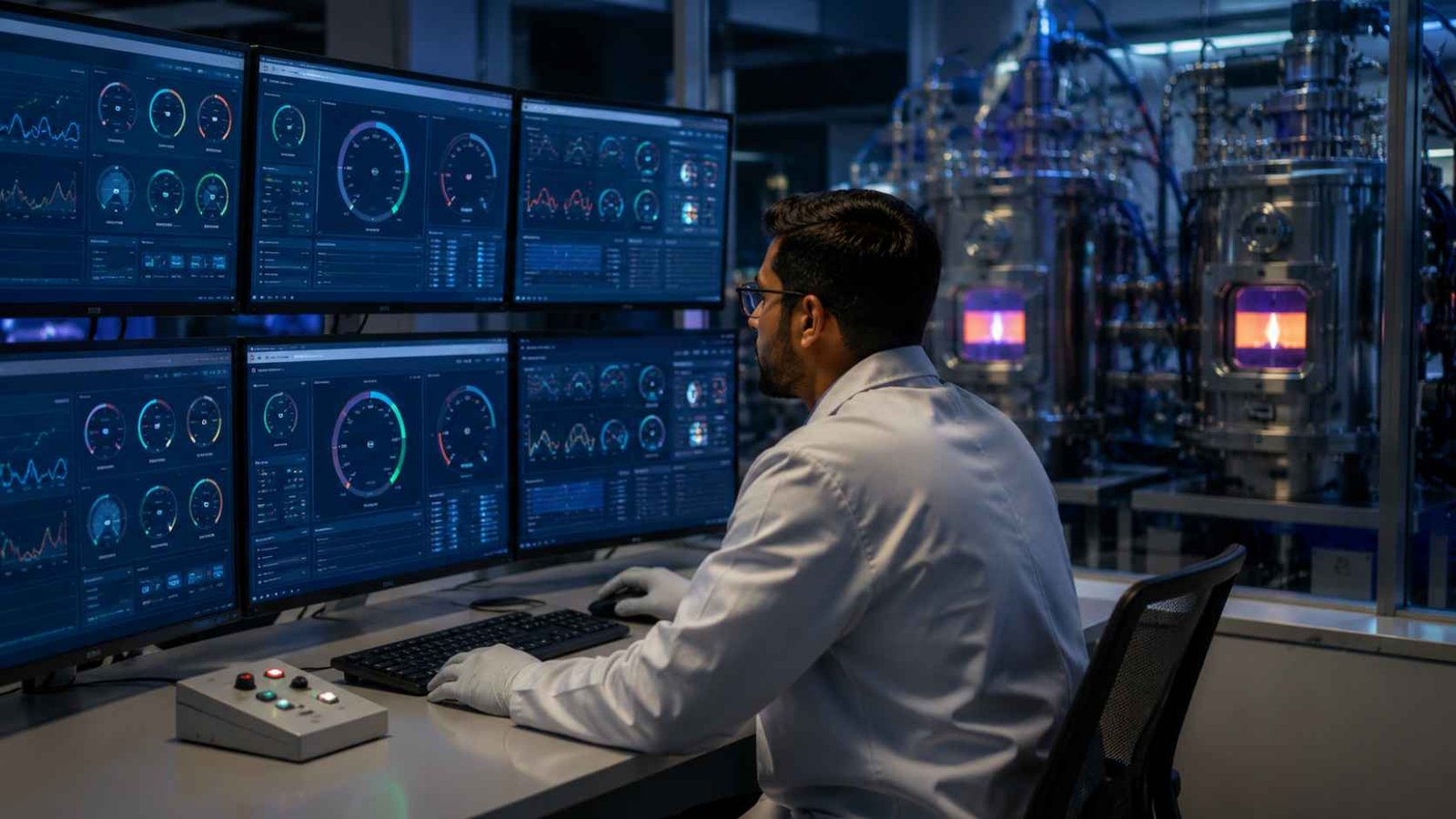
The word “engineered” has a specific meaning in technical and scientific contexts that distinguishes it from words like “made” or “created” or “grown.” Engineering involves the deliberate application of scientific principles to design and construct something that achieves a precise outcome. An engineer does not simply initiate a process and observe the result — an engineer designs the process itself, controls its variables, monitors its progress, and adjusts its parameters to consistently achieve a specified output.
Natural diamonds are not engineered. They are the product of geological processes that operated across billions of years under conditions that no human designed or controlled. The outcome — a diamond crystal — is real and remarkable, but the process that produced it was entirely beyond human intervention or adjustment.
Engineered diamonds are different at every stage. The growth environment is designed by scientists and engineers. The seed crystal is selected, prepared, and positioned according to specific technical criteria. The temperature, pressure, gas composition, plasma energy, and growth duration are all variables that human engineers set, monitor, and adjust throughout the production process. The outcome — a diamond crystal of specified size, colour, and clarity — is not left to chance. It is the result of deliberate, controlled, reproducible engineering.
That is why the term fits. And that is why the scientific community and the broader diamond industry have come to accept “engineered diamonds” as the most technically accurate description of what these stones actually are.
The Foundation: Why the Seed Crystal Is an Engineering Decision
Every engineered diamond begins with a seed crystal — a thin plate or fragment of existing diamond material that serves as the structural template on which a new diamond will grow. The choice and preparation of this seed is itself an engineering act with direct consequences for the quality of the finished stone.
In natural diamond formation, there is no equivalent of seed selection. Carbon atoms bond under geological pressure with no predetermined template guiding the outcome. The result is a crystal whose internal structure reflects the chaotic variability of its formation environment.
In engineered diamonds production, the seed is chosen according to specific technical criteria. Its crystallographic orientation — the direction in which its carbon atoms are aligned — determines how the new diamond crystal will grow on top of it. The wrong orientation produces a crystal that grows with structural defects. The right orientation produces a clean, well-ordered crystal that allows subsequent growth layers to align precisely, building the diamond’s internal architecture from the ground up in the most optically favourable configuration.
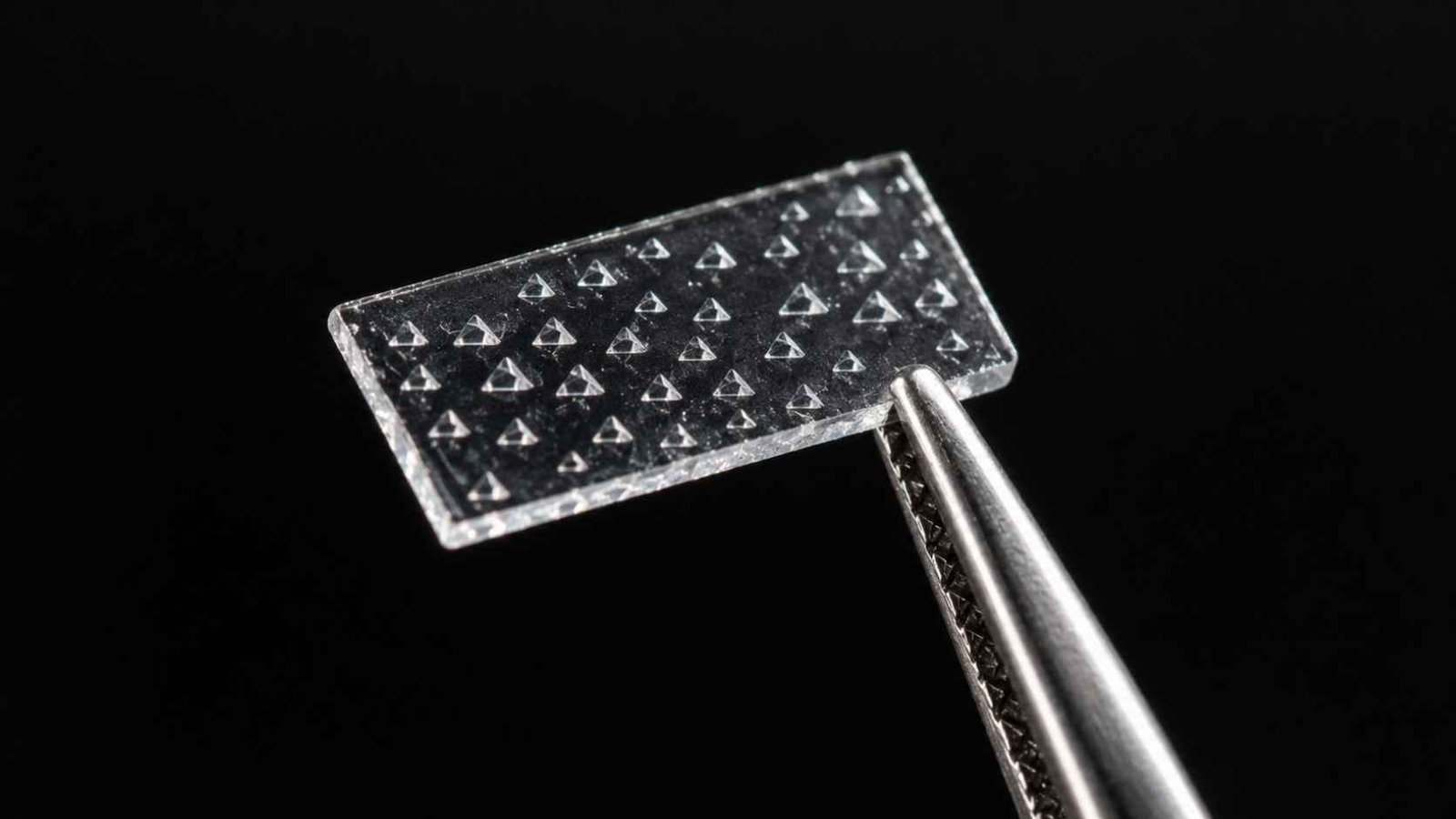
Serious manufacturers laser-cut their seed plates to precise dimensions, run them through advanced imaging to verify their structural integrity and crystallographic alignment, and subject them to surface preparation procedures that remove contamination before the growth process begins. None of this is random. All of it is engineering — deliberate decisions that cascade through every subsequent stage of production.
The seed quality distinction between synthetic and natural seeds is worth noting. While early engineered diamonds producers used crushed natural diamond powder as seed material, most serious modern operations use synthetically produced seed crystals grown specifically for the purpose. Engineered seeds allow producers to control seed quality at a level that naturally sourced powder cannot match, eliminating the variability that comes from using material whose formation history is unknown.
HPHT: Engineering Extreme Conditions
The High-Pressure High-Temperature method was the first approach to produce gem-quality engineered diamonds at commercial scale, and it remains a major production pathway in 2026 — particularly for certain colour categories and larger stones.
The engineering challenge that HPHT addresses is the replication of geological conditions. Natural diamonds form approximately 150 kilometres beneath the Earth’s surface, where pressures reach 5 to 6 gigapascals and temperatures sit between 1,300 and 1,600 degrees Celsius. These conditions cause carbon to crystallise into the diamond structure rather than the graphite structure it would adopt at surface conditions.
HPHT engineers have built machinery capable of reproducing these conditions inside a controlled chamber. The engineering involved is substantial — sustaining pressures exceeding 1.5 million pounds per square inch while simultaneously maintaining temperatures above 1,400 degrees Celsius requires press designs of considerable mechanical complexity, typically using multi-anvil or belt-press configurations that distribute force precisely across the growth cell.
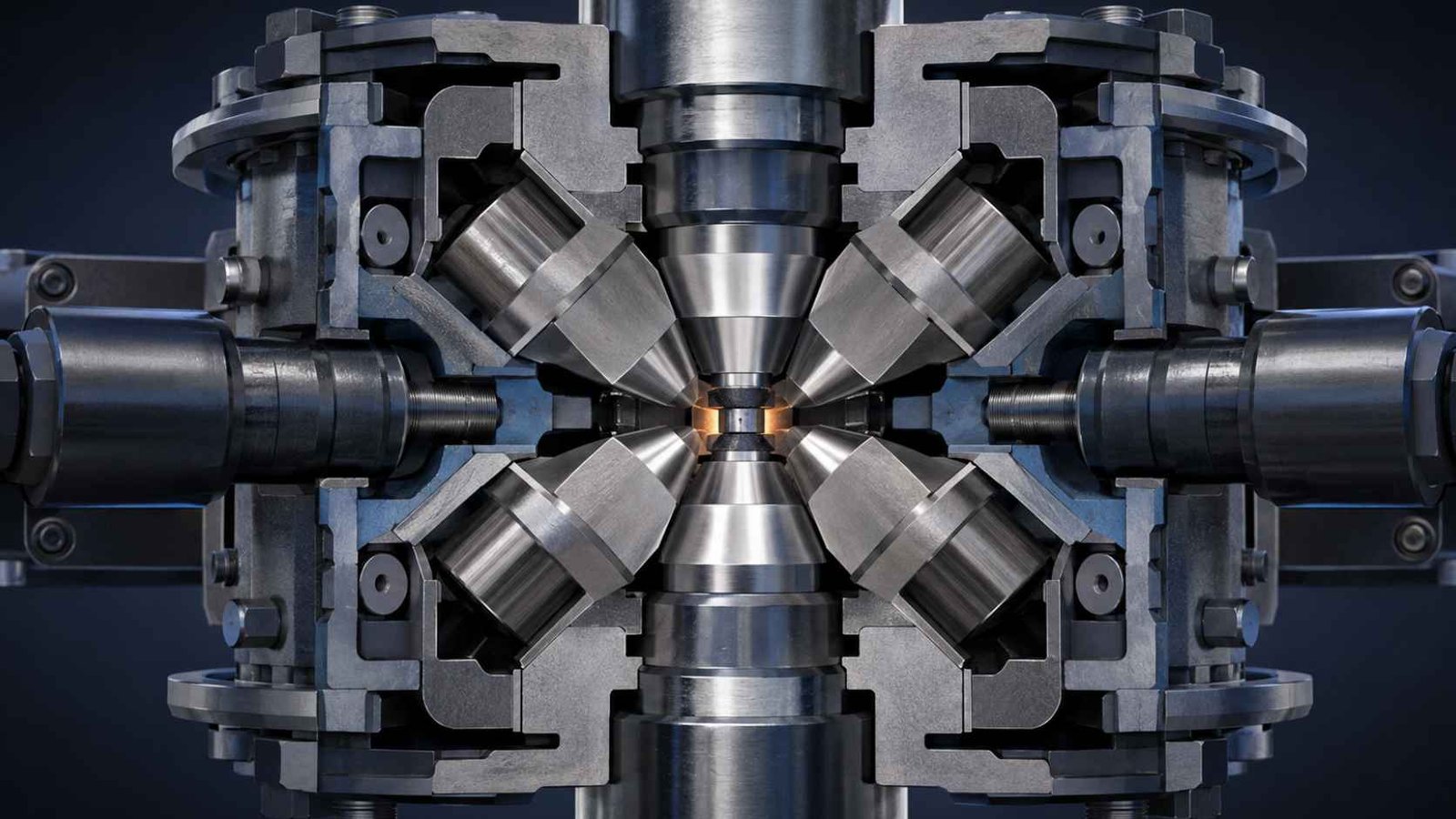
Inside the growth cell, a carbon source — typically a high-purity graphite or another carbon material — is placed alongside the prepared seed crystal within a metallic solvent mixture. The solvent — usually a combination of iron, cobalt, and nickel — serves as the medium through which dissolved carbon migrates from the carbon source onto the seed, where it crystallises into the diamond structure layer by layer.
The engineering precision required at this stage is significant. Temperature gradients within the cell must be managed carefully, because the direction of carbon migration — from source to seed — depends on maintaining a consistent temperature differential between the two components. If the gradient is wrong, carbon deposits unevenly or fails to migrate at all. The entire production run depends on the engineers maintaining precise control over conditions that must remain stable for days or weeks at a time.
What distinguishes engineered diamonds produced by HPHT from any geological process is that these conditions are set deliberately, monitored continuously, and adjusted in response to real-time data from the growth chamber. The diamond that results is not an accident of geology — it is the designed output of an engineered process.
CVD: The Most Precisely Engineered Diamond Production Process
Chemical Vapor Deposition represents an even more direct expression of the engineering philosophy behind engineered diamonds. Where HPHT works by replicating geological conditions, CVD abandons geological analogy entirely and builds diamonds through a process that has no natural equivalent — depositing individual carbon atoms from a controlled gas plasma onto a seed crystal surface, one atomic layer at a time.
The CVD process begins with placing the prepared seed plate inside a sealed vacuum chamber. The chamber is then filled with a carefully formulated mixture of gases — primarily methane as the carbon source, combined with hydrogen in proportions that engineers have determined produce optimal crystal growth. The hydrogen serves a critical engineering function beyond simply providing part of the gas mixture: it selectively etches away non-diamond carbon forms that might otherwise deposit alongside the diamond crystal, acting as a continuous purification mechanism during growth.
Energy is then introduced into the gas mixture — typically through microwave generators that ionise the gas into plasma. At plasma temperatures that can exceed 3,000 degrees Celsius at the point of ionisation, methane molecules break apart. The freed carbon atoms drift downward and settle onto the seed surface, where they bond in the diamond crystal pattern and build the stone upward in layers whose thickness is measured in individual atoms.
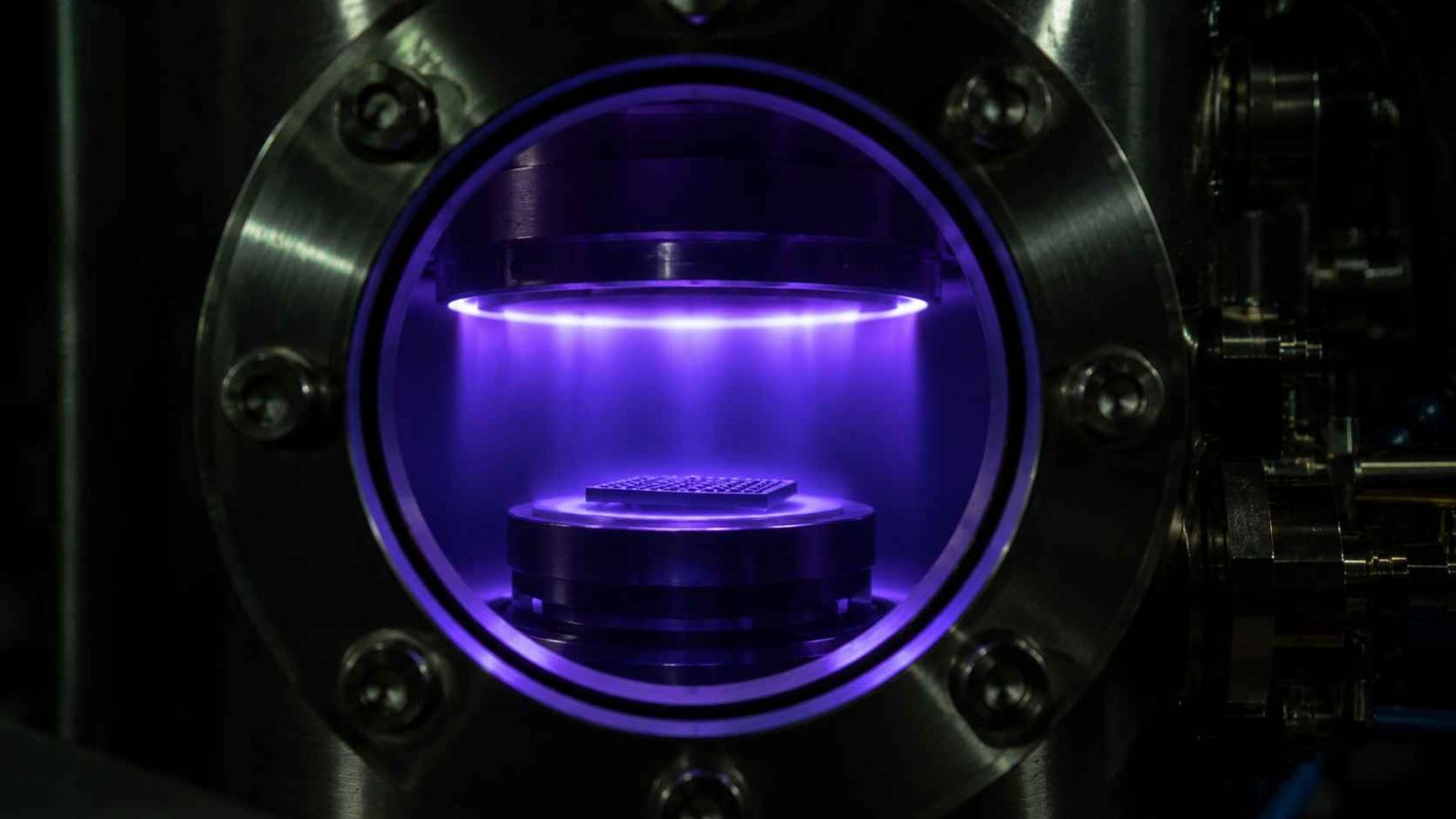
What makes CVD the most sophisticated expression of engineered diamonds production is the level of control engineers maintain over every variable in this process:
Gas composition is adjusted throughout growth to control colour characteristics. Introducing nitrogen into the gas mixture shifts colour toward yellow. Managing the absence of nitrogen produces colourless stones. Introducing boron produces blue colour. The colour of the finished diamond is an engineered outcome, not a geological accident.
Plasma energy levels affect how quickly carbon atoms deposit and how well they organise into the diamond crystal structure. Too much energy drives chaotic deposition. Too little slows growth unacceptably. Engineers maintain the plasma within a precisely defined operating window throughout a growth run that may last several weeks.
Chamber pressure affects the density and behaviour of the plasma. Different pressure levels favour different growth characteristics, and engineers tune chamber pressure according to the specific properties they are targeting in the output stone.

Growth duration determines the final carat weight of the rough crystal. Because CVD growth is consistent and predictable once the process parameters are established, engineers can calculate with good accuracy how long a run needs to last to achieve a target rough weight.
Seed temperature affects the crystal’s structural quality. If the seed gets too hot or too cold during deposition, growth defects accumulate. Temperature management across the seed surface is a continuous engineering task during production.
The result of managing all these variables together is a rough diamond crystal whose properties — size, colour, clarity, internal structure — are the outcome of engineering decisions rather than geological randomness. This is what justifies calling the product engineered diamonds rather than simply lab grown or lab created stones. The word “grown” suggests a biological or natural process. “Engineered” is more accurate: these stones are designed.
Post-Growth Processing: The Engineering Continues After the Reactor
The engineering that produces engineered diamonds does not end when the growth chamber is opened. The rough crystal that emerges from a CVD or HPHT reactor requires several additional steps of technical processing before it becomes a finished gem, and each of those steps involves its own engineering decisions.
Post-growth HPHT treatment for CVD rough is perhaps the most important of these processes. A significant proportion of CVD-grown rough — estimates typically run to around 70-80% of commercial production — carries a brownish or greyish tint when it comes out of the reactor. This tint results from structural strain that accumulates during the layer-by-layer deposition process, creating point defects in the crystal lattice that absorb certain wavelengths of light.
Applying a secondary HPHT treatment to this rough restructures these defect sites at the atomic level, eliminating the strain-related colour and producing the near-colourless material that commercial jewellery markets require. The treatment is permanent, does not affect the diamond’s physical integrity, and is disclosed on grading certificates — it is simply another stage in the engineering process that produces a finished engineered diamond of the required quality.
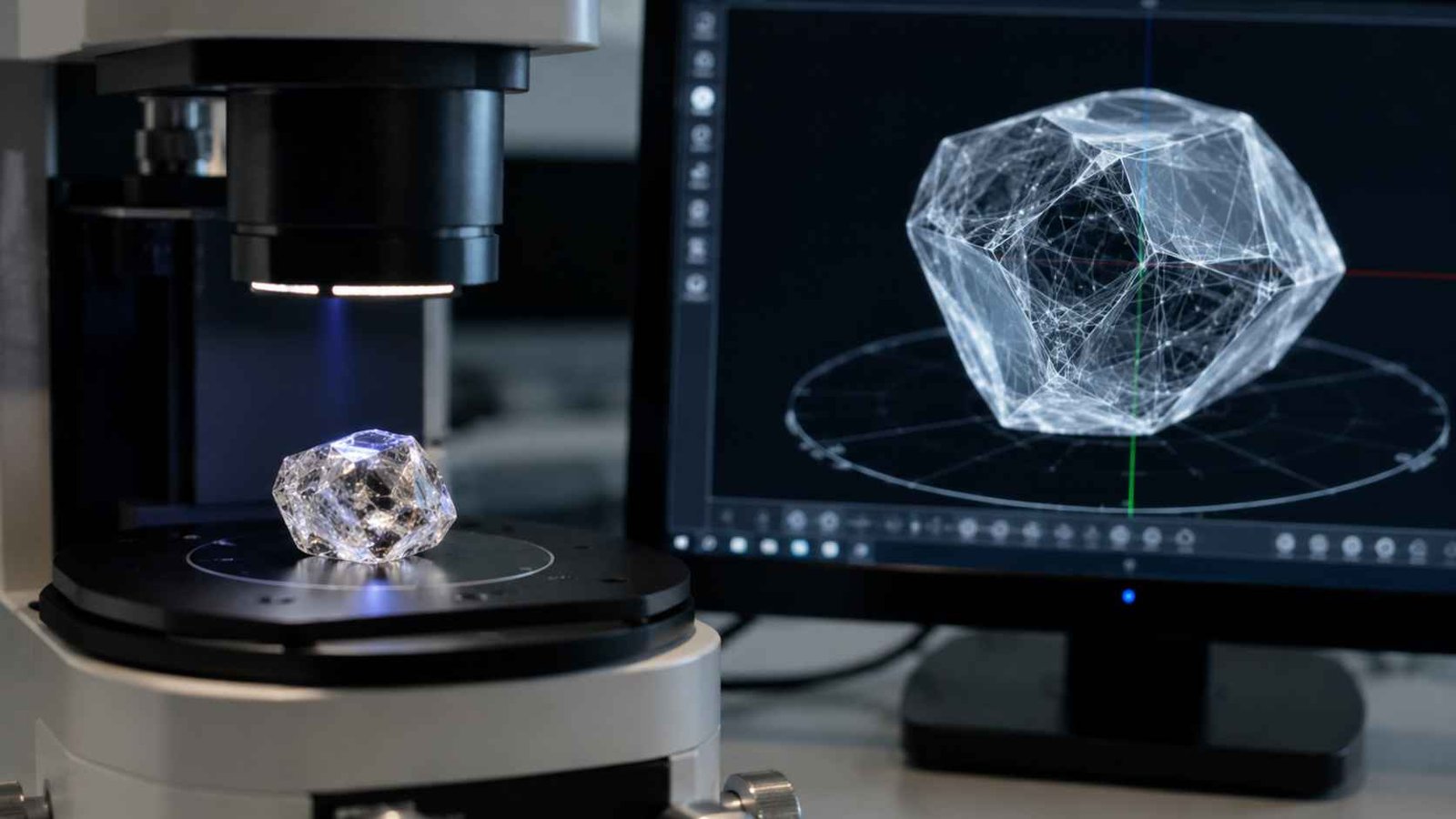
Crystal planning and cutting is the next engineering stage. The rough crystal is scanned in three dimensions using computer imaging technology that maps its internal structure, identifies the location of any inclusions or growth defects, and models the range of possible cutting outcomes. Engineers and diamond planners use this data to select the cutting approach that optimises between carat weight retention, symmetry, and the avoidance of inclusions — a multi-variable optimisation problem that modern planning software approaches systematically.
Polishing brings the engineering of engineered diamonds to its visible conclusion. Each of the 57 or 58 facets of a standard round brilliant must be positioned and finished to within fractions of a degree of its designed angle, because even small deviations from the intended proportions measurably affect how light travels through the finished stone. The cutter’s work here is guided by precise proportion targets established by gemological science — angles and ratios that have been mathematically determined to produce maximum brilliance and fire.
Why “Engineered Diamonds” Is More Accurate Than Alternative Terms

The label “engineered diamonds” is not just a marketing preference — it is a more precise technical description than several alternatives that are commonly used.
“Synthetic diamonds” — a term that diamond industry bodies used for decades — implies a material that is not the same as the genuine article, suggesting an imitation or substitute. This is scientifically inaccurate, as the FTC’s updated Jewelry Guides recognised when they removed “synthetic” as an acceptable descriptor. The carbon crystal structure of a lab created stone is the same as a mined stone, not synthetic in any meaningful sense.
“Lab grown diamonds” is more accurate than “synthetic” but does not capture the degree of human control involved. “Grown” carries biological connotations — plants grow, organisms grow — suggesting a more passive process than what actually occurs. Diamonds grown in CVD and HPHT environments are not simply placed in favourable conditions and left to develop. They are actively engineered at every stage.
“Lab created diamonds” is better still but faces the same limitation — “created” covers everything from accidental formation to carefully designed manufacturing, without specifying the nature or degree of control involved.
“Engineered diamonds” is the most precise descriptor because it specifies not just the origin but the method: systematic, deliberate, controlled application of scientific and technical knowledge to produce a specified outcome. Every variable in the production process is set by engineers. Every outcome is the result of engineering decisions. The diamond is, in the most accurate sense of the word, engineered.
Engineered Diamonds and the Future of Precision Production
The engineering precision behind lab created diamonds is not static — it is advancing rapidly, and the direction of that advancement points toward even greater control over stone characteristics than current production methods achieve.
Research investment is active in areas including larger rough crystal production through improved CVD reactor design, energy efficiency improvements that reduce the electrical consumption of both CVD and HPHT processes, and colour engineering refinements that expand the range of achievable fancy colours and their consistency across production batches.
The designation of engineered diamonds may increasingly include stones produced for applications beyond jewellery — industrial cutting tools, semiconductor substrates, quantum computing components, and optical applications where diamond’s unique physical properties are commercially valuable. In all of these applications, the engineering precision that characterises production is not just a descriptor but a fundamental requirement: the stone must be produced to exact specifications that natural diamonds cannot reliably provide.
For jewellery buyers, the practical relevance of understanding engineered diamonds as a category defined by engineering precision is this: every specification on a grading certificate is the result of deliberate production decisions, not geological luck. The colour grade, the clarity, the structural purity — all of these were engineered outcomes before they became graded characteristics. That understanding changes how you interpret a grading report and how you evaluate the work that went into producing the stone you are considering.
Engineering as the Defining Characteristic
The name engineered diamonds is not a rebranding exercise or a marketing strategy. It is a technically accurate description of what separates these stones from every other product in the jewellery market — the systematic, deliberate, continuously monitored application of scientific and engineering principles to the production of a material that nature took billions of years to develop randomly.
Every engineered diamond that reaches a jewellery counter represents a chain of engineering decisions: the seed crystal that was selected and prepared, the production parameters that were set and managed, the post-growth treatments that were applied, the cutting proportions that were planned and executed. None of it happened accidentally. All of it was designed.
For buyers, understanding that the stone they are considering is genuinely engineered — not merely grown, not merely created, but deliberately designed and produced to specification — changes the terms of the evaluation. The grading report is not just documentation of what a geological process happened to produce. It is a specification sheet for what an engineering process was designed to deliver. That distinction is worth appreciating before making any purchasing decision in this category.
Engineered Diamonds Explained: The Science Behind Why Lab Created Diamonds Earn That Name
Engineered diamonds are lab created diamonds grown through deliberate, controlled scientific processes where every production variable — seed selection, temperature, pressure, gas composition, and growth duration — is set and managed by engineers to produce a specified outcome.
Yes. They are the same product. “Engineered diamonds” is simply the most technically accurate term, reflecting the deliberate design and control behind the production process rather than suggesting a passive natural growth.
Chemically, physically, and optically they are identical — same carbon structure, same hardness, same brilliance, same grading standards. The only difference is origin: natural diamonds formed over billions of years through uncontrolled geology, while engineered diamonds are produced in weeks through a precision-controlled process.
Neither is universally better. CVD excels at larger colourless stones with high clarity. HPHT has advantages for top D-colour grades and certain fancy colours. The finished stone’s quality depends on process control and post-growth finishing more than the method itself.
CVD rough sometimes develops structural strain during deposition that produces brownish tints. A secondary HPHT annealing treatment resolves these defects at the atomic level, restoring colourless appearance. It is permanent, disclosed on certificates, and does not affect hardness or brilliance.
Yes. GIA and IGI issue full grading reports for engineered diamonds using identical 4Cs criteria. The reports note laboratory-grown origin and production method, but the grading scales and standards are exactly the same as for natural stones.
Yes. Introducing boron during growth creates blue, nitrogen creates yellow, and post-growth irradiation produces pink and green. This makes vivid fancy coloured engineered diamonds commercially accessible at price points that natural fancy coloured diamonds cannot match.
Generally not at the same percentage. Lab created diamond resale values have compressed as production capacity expanded. Buyers should treat engineered diamonds as a jewellery purchase rather than a financial investment.
Unlike natural diamond supply, which varies unpredictably, engineered diamonds can be produced to tight specifications across large batches — consistent colour grade, clarity floor, and carat range. This batch consistency is particularly valuable for retailers and designers sourcing matched stones.
Key development areas include larger CVD rough production, reduced energy intensity in both CVD and HPHT processes, expanded fancy colour range, and lower proportions of CVD rough requiring post-growth treatment. The engineering trajectory consistently moves toward greater precision and lower production cost.
Disclaimer: This article is intended for informational and educational purposes only. Production methods, grading standards, and market conditions evolve over time. Always verify certification through the issuing laboratory and consult a certified gemologist before making significant purchasing decisions.