

AI Diamond Grading: 6 Remarkable Ways Automation Is Reshaping the Industry
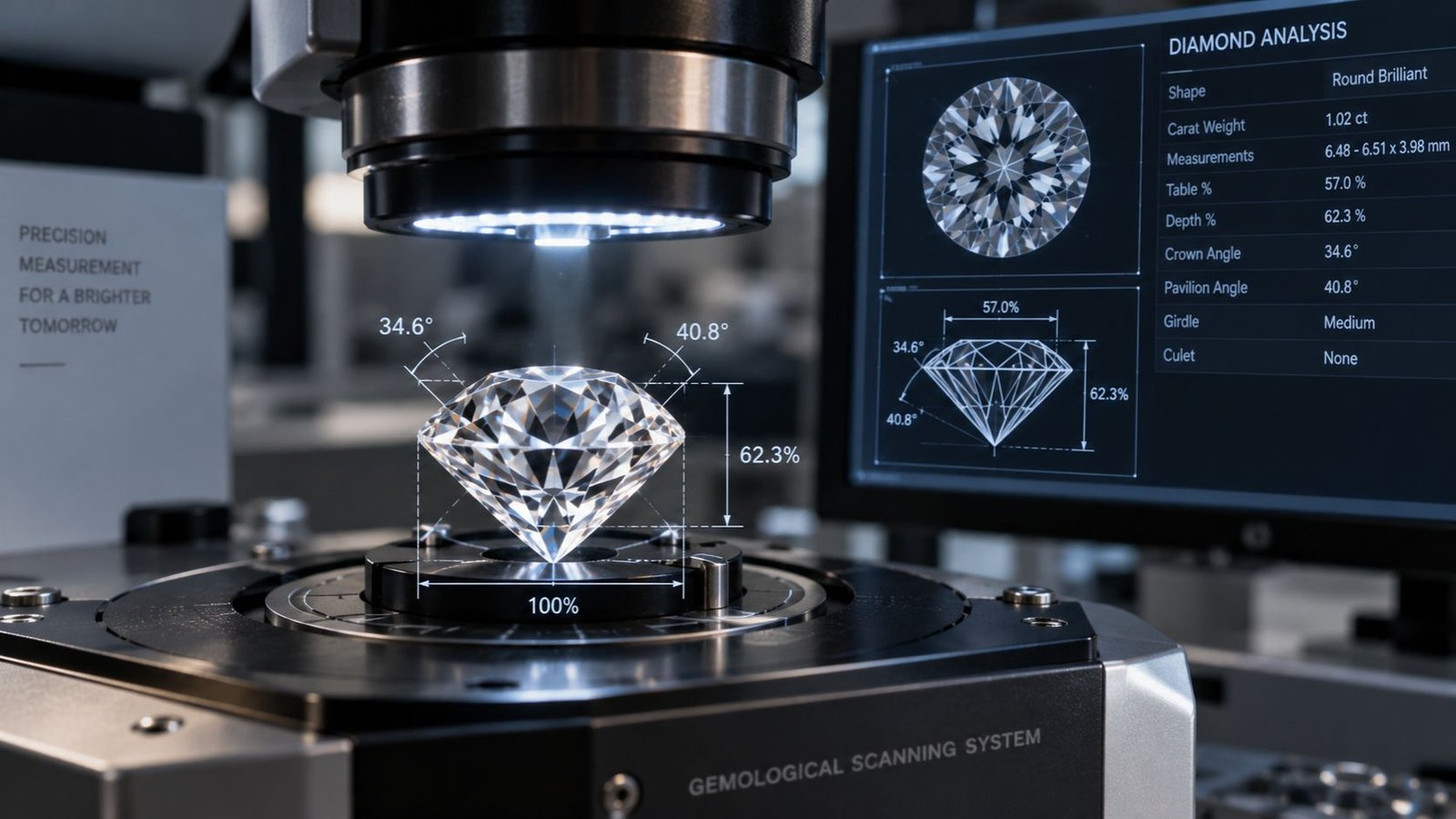
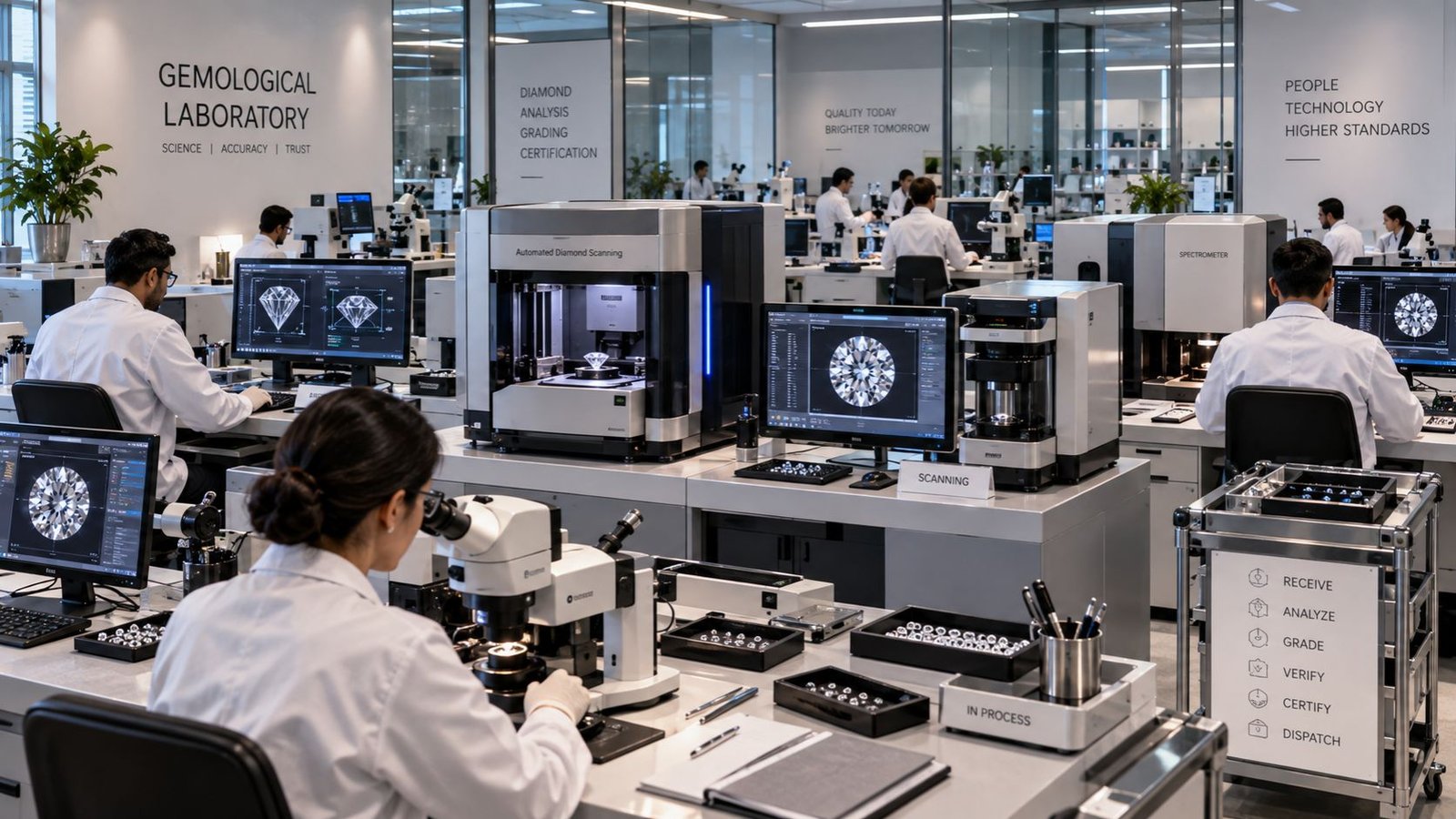
For most of the modern diamond industry’s history, grading a diamond has been an almost entirely human process — a trained gemologist examining a stone under controlled lighting, comparing it against reference masters, and applying years of accumulated expertise to assign carat weight, cut, colour, and clarity grades. That process has produced remarkably consistent results for decades, but it has also always carried an inherent limitation: it depends on individual human judgment, applied one stone at a time, by a finite number of trained specialists. AI diamond grading has emerged as a genuinely significant shift in how that process works, not by replacing human expertise outright, but by introducing computer vision, spectroscopic analysis, and machine learning tools that can measure, map, and analyse diamonds with a level of speed and consistency that manual grading alone cannot match. This shift matters enormously right now, as lab grown diamond production volume has grown so dramatically that grading laboratories face genuinely unprecedented submission numbers, making the efficiency gains from automation increasingly important to the industry’s ability to keep pace with demand. This guide walks through six specific ways AI diamond grading technology is changing how diamonds are evaluated, what this means for accuracy and turnaround times, and what buyers and wholesalers should understand about how much human expertise still remains central to the process. Cut grade has traditionally been one of the more technically complex aspects of diamond grading, requiring precise measurement of proportions, symmetry, and polish quality across dozens of individual facets. AI diamond grading systems using computer vision can now capture and measure these proportions with remarkable precision, analysing facet angles, table size, depth percentage, and symmetry far more consistently than manual measurement alone typically achieves. This automated measurement does not eliminate the need for trained judgment in interpreting results, but it dramatically reduces the measurement variability that can occur between different human graders manually assessing the same stone. For buyers, this translates into more consistent cut grading across submissions, regardless of which specific grader within a laboratory happens to evaluate a particular stone. Clarity grading has traditionally involved a gemologist manually examining a stone under magnification and plotting the location, size, and type of any inclusions by hand — a genuinely time-intensive process requiring significant training and sustained visual concentration. AI diamond grading tools now use high-resolution imaging combined with machine learning models trained to identify and classify inclusions automatically, generating detailed clarity maps in a fraction of the time manual plotting traditionally required. This does not remove the gemologist from the process entirely, since final clarity grade determination still benefits from expert interpretation, particularly for borderline cases where inclusion characteristics require nuanced judgment. What automation provides is a faster, more thorough initial mapping process that gives human graders a more complete starting point, reducing the time-intensive manual plotting work while still preserving expert oversight for the final grading decision. Colour grading has historically been one of the more subjectively challenging aspects of diamond evaluation, since human colour perception can vary meaningfully between individuals and even for the same individual under different lighting or fatigue conditions. AI diamond grading systems paired with spectrophotometer technology can now measure a diamond’s precise light absorption and reflection characteristics objectively, providing a consistent, instrument-based data point that complements traditional visual colour grading. This combination of objective spectrophotometric measurement and trained human visual assessment has meaningfully improved colour grading consistency across different graders and even across different grading sessions for the same stone, addressing one of the more persistent sources of variability in traditional manual grading approaches. Perhaps the most immediately practical benefit of AI diamond grading technology has been its impact on overall grading throughput, particularly as lab grown diamond submission volumes have grown dramatically in recent years. Major grading laboratories have faced genuinely unprecedented submission numbers as lab grown diamond manufacturing capacity has expanded, and automated measurement and analysis tools have become essential for processing this volume without unreasonable turnaround delays. Automation handles the more repetitive, measurement-intensive aspects of grading considerably faster than manual methods alone could sustain at current submission volumes, freeing human gemologists to focus their expertise on final verification, borderline judgment calls, and quality assurance rather than spending the majority of their time on initial measurement and data collection. This has helped grading laboratories manage growing submission backlogs more effectively than would have been possible relying on manual methods alone. AI diamond grading systems have also strengthened laboratories’ ability to detect undisclosed treatments and verify diamond origin accurately. Advanced spectroscopic analysis, increasingly supported by machine learning pattern recognition, can identify subtle indicators of HPHT treatment applied to CVD rough, detect certain types of clarity enhancement, and confirm whether a stone is natural or laboratory-grown with a level of analytical rigour that would be extremely difficult to achieve through visual inspection alone. This capability has become increasingly important as the volume of lab grown diamonds entering the market has grown, since maintaining clear, reliable origin verification protects both consumer trust and the broader integrity of certification systems that the wholesale diamond trade depends on. Laboratories such as GIA have published research on how spectroscopic screening technology supports this kind of verification at scale. Automated detection tools provide an additional, objective layer of verification that complements rather than replaces the trained expertise gemologists bring to interpreting unusual or ambiguous results. A newer but rapidly growing application of AI diamond grading technology involves integration with digital certification systems, including blockchain-backed records that create a tamper-resistant, permanently verifiable link between a specific diamond and its grading data. Rather than relying solely on a physical paper certificate, which can be lost, damaged, or in rare cases fraudulently altered, some laboratories now offer digital certification records that can be instantly verified online using a unique identifier tied to the AI-generated grading data. This development connects directly to broader concerns around certificate loss and verification that matter considerably to buyers and sellers alike, a topic we explored in depth in our guide on what happens when a diamond certificate is lost — a digital, blockchain-backed record provides a more resilient alternative to physical documentation alone, reducing the practical impact of situations where a physical certificate goes missing, since the underlying data remains securely and independently verifiable regardless of what happens to any physical paperwork. A common misconception about AI diamond grading is that it represents a path toward fully replacing trained human gemologists. In practice, the technology functions far more as an enhancement to human expertise than a replacement for it. Automated tools excel at consistent, repetitive measurement tasks — precise angle calculation, inclusion mapping, spectrophotometric analysis — but final grading decisions, particularly for borderline or unusual stones, continue to benefit significantly from trained human judgment that understands context and nuance in ways current automated systems cannot fully replicate. The most effective grading laboratories have adopted a hybrid model, where AI diamond grading tools handle the measurement-intensive, repetitive aspects of evaluation, while human gemologists focus their expertise on interpretation, quality assurance, and the genuinely judgment-dependent aspects of final grading. This combination has generally produced better overall accuracy and consistency than either approach could achieve entirely on its own. For wholesale buyers and retailers, the growth of AI diamond grading technology carries several practical implications worth understanding. Faster grading turnaround times, driven by automated measurement and analysis tools, have helped reduce the certification bottlenecks that previously created longer lead times for finished, certified inventory, particularly during periods of high submission volume. This improved throughput has become increasingly important as overall lab grown diamond production has scaled significantly in recent years. Improved grading consistency across different graders and grading sessions also benefits buyers directly, reducing the frustration that can arise when two seemingly similar stones receive noticeably different grades due to normal human variability alone. And strengthened treatment and origin detection capabilities help protect the overall integrity of the certification system that wholesale transactions depend on, supporting continued buyer confidence as the lab grown diamond market continues its rapid growth. Buyers evaluating grading reports should understand that a report generated using AI-assisted tools alongside human expert review generally represents a more rigorously verified evaluation than either approach could achieve independently, rather than viewing automation as somehow representing a less thorough or less trustworthy grading process. AI diamond grading represents a genuine and rapidly maturing shift in how diamonds are evaluated, bringing meaningful improvements in measurement precision, grading consistency, submission throughput, and treatment detection capability. Rather than replacing the trained human expertise that has defined diamond grading for generations, automation has become a powerful complement to that expertise, allowing gemologists to focus their judgment where it matters most while automated systems handle the increasingly high-volume, measurement-intensive aspects of the grading process. For buyers and wholesalers navigating an industry producing more diamonds, at more price points, than ever before, understanding how AI diamond grading technology actually works — and what it does and does not change about the fundamental reliability of certification — provides genuinely useful context for evaluating the grading reports increasingly shaping every transaction across the modern diamond trade. It refers to the use of computer vision, spectroscopic analysis, and machine learning tools to measure and evaluate diamond characteristics alongside traditional human gemological expertise. No. Most laboratories use a hybrid model where automation handles measurement-intensive tasks while human experts make final judgment calls, especially for borderline cases. AI-assisted imaging can automatically detect and map inclusions much faster than manual plotting, giving gemologists a more complete starting point for final grading. Yes. Advanced spectroscopic analysis supported by machine learning can identify subtle indicators of treatment or verify natural versus lab grown origin more reliably. Rising lab grown diamond production has significantly increased submission volumes at grading labs, making automated tools essential for managing turnaround times. Increasingly, yes. Some labs now pair AI-generated data with digital or blockchain-backed certification that can be verified independently of physical paperwork. No. AI-assisted grading combined with human review generally produces more consistent and thoroughly verified results than manual grading alone. It can, over time, as faster processing and reduced manual workload help laboratories manage higher volumes more efficiently. Interpreting borderline or unusual cases, final grade determination, and quality assurance still rely heavily on trained human gemological judgment. Yes, when issued by a reputable laboratory combining automated tools with human expert review, which is now standard practice at major grading institutions. Disclaimer: This article is intended for general informational purposes only and reflects general industry developments as of 2026. Specific grading technologies and processes vary by laboratory and continue to evolve. Always verify current grading methods directly with the relevant certification body.Way 1: Automated Cut Grade Analysis
Way 2: AI-Assisted Clarity Mapping

Way 3: Colour Grading Consistency Through Spectrophotometry

Way 4: Faster Throughput for High-Volume Lab Grown Submissions
Way 5: Improved Detection of Treatments and Origin Misrepresentation

Way 6: Integration With Digital and Blockchain-Backed Certification

Does This Mean Human Gemologists Are Being Replaced?
What This Means for Buyers and Wholesalers
The Bottom Line
Frequently Asked Questions