

What Does a 1 Carat Lab Grown Diamond Really Cost in India? A 2026 Price Breakdown
Search for the 1 carat lab grown diamond price in india and you’ll find answers that seem to contradict each other: one site says ₹25,000, another says ₹1,20,000, and a third insists on a number somewhere in between. They can all be telling the truth, because a “1 carat lab grown diamond” isn’t a single product with a single price. This guide explains why published figures vary so widely, what each factor actually does to the price, and how to work out a fair number for the stone you want, rather than trusting whichever figure a seller happens to quote first.
The Short Answer: A Realistic 2026 Range
Looking across published 2026 price guides from Indian jewellers and retailers, the 1 carat lab grown diamond price in India for a loose, certified stone most commonly lands between roughly ₹30,000 and ₹90,000, with many well-cut, VS-clarity stones in the G–H colour range clustering around ₹40,000 to ₹70,000. Individual sources quote lower figures at the budget end (some as low as ₹17,000 to ₹25,000 for plain, lower-grade stones) and higher figures at the premium end, where D-colour, near-flawless stones can exceed ₹1,00,000.
That spread is wide, and it’s worth being upfront about it: no single number is “the” price. What follows breaks the range down by quality tier, so you can see which part of it applies to the kind of stone you actually want.
Indicative Price Tiers for a 1 Carat Round Stone

The table below groups the ranges published across Indian retail guides into three practical tiers for a loose, certified, round brilliant. Treat these as indicative retail ranges to help you orient yourself, not as quotes — live pricing moves with the market and varies by seller.
| Quality tier | Typical grades | Mira Art Collection Approx. Wholesale Price Reference (₹) |
|---|---|---|
| Value | G–H colour, VS1–VS2 clarity | ₹11,202 to ₹13,100 |
| Mid-range | F colour, VS1–VS2 clarity | ₹12,531 to ₹14,145 |
| Premium | D–E colour, VS1–VS2 clarity | ₹12,056 to ₹15,284 |
Notice how much of the spread comes from grade choices rather than the carat weight itself. The same one-carat weight can cost double or more depending on where you sit across those columns.
Why Published Prices Vary So Much
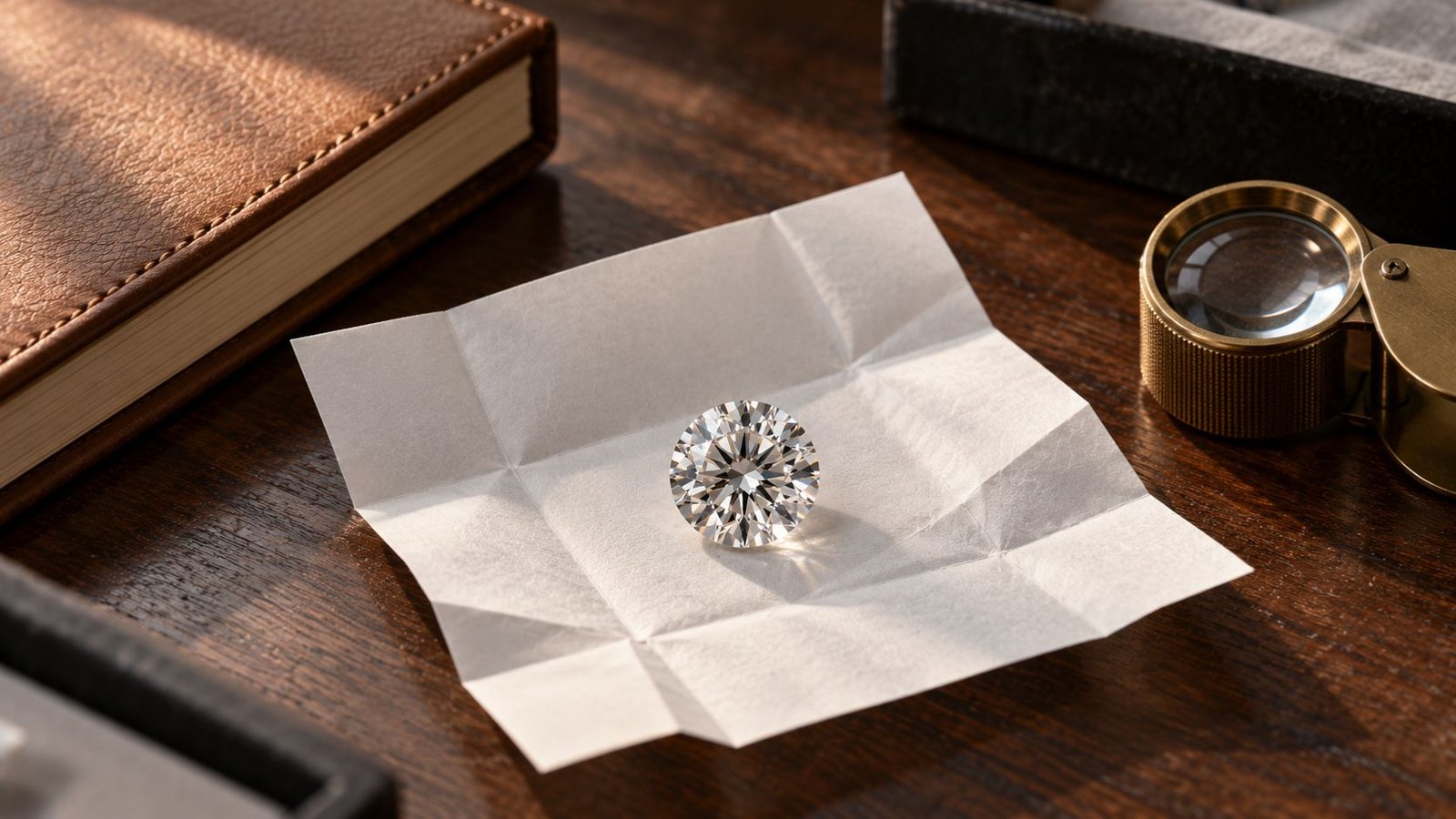
Several things stack on top of each other to explain the gap between quotes for what looks like the same thing.
Retail, marketplace, and wholesale are different price layers. A retailer’s published figure includes their margin, overheads, and often a branded certificate or packaging. A marketplace or trader’s quote may sit lower, and a wholesale price paid by jewellers and manufacturers sits lower still. When you compare the 1 carat lab grown diamond price in India across sellers, check which layer each one actually represents.
“1 carat” is a label, not an exact weight. Stones advertised as one carat often range from about 0.95 to 1.09 carats, and sellers price in steps around these thresholds. A 0.96 carat stone and a 1.01 carat stone can look nearly identical yet cost noticeably different amounts.
Loose stone versus finished ring. Some sources quote the diamond alone; others quote a complete solitaire ring. A finished piece adds metal, labour, and tax, which can easily double the visible number. Always confirm whether a quoted figure is for the stone only.
The quoted grades differ. A listing that doesn’t specify colour, clarity, and cut is almost impossible to compare. A “₹30,000 diamond” in an H colour with SI clarity is a different product from a “₹30,000 diamond” that turns out to be a lower grade than advertised.
Market date matters. Lab grown prices have trended downward as production efficiency has improved, so a figure from a year ago may no longer reflect today’s market. Our shape-by-shape price guide tracks how this has played out across shapes and currencies.
How Each of the 4Cs Moves the Price
Understanding which levers matter most is the quickest way to land a fair number on the 1 carat lab grown diamond price in India without overpaying for details you can’t see.
Cut: The Factor Worth Protecting

Cut determines how a stone handles light, and it’s the factor that most affects how a diamond actually looks. For round brilliants, an Excellent cut grade is the safest target, since a poorly cut stone can look dull even at high colour and clarity grades. If you’re going to economise somewhere, don’t do it here.
Colour: G–H Is Often the Sweet Spot
Lab grown diamonds in the D–F range are graded colourless, while G–H sits in the near-colourless band. Once a stone is mounted, the visual difference between D and G is small for most buyers, but the price difference can be significant. Many buyers find G–H the point where cost and appearance balance best, though anyone planning a white-metal setting with high sensitivity to tint may prefer to step up.
Clarity: Eye-Clean Beats a Higher Grade
VS1 and VS2 stones are typically eye-clean, meaning no inclusions are visible without magnification. Paying extra for VVS or IF grades buys clarity that’s very hard to see at normal viewing distance. A clean-looking VS stone usually delivers the visible result at a lower figure.
Carat Weight: Watch the Thresholds
Because prices step up at round numbers, buying just under a threshold can save money with no visible difference in size. A 0.95 or 0.96 carat stone looks essentially the same as a 1.00 carat stone face-up, yet commonly sits at a lower price. For the full picture of how carat weight is defined, see GIA’s explanation of carat weight.
Shape Changes the Number Too

Round brilliants are generally the most expensive shape per carat, because cutting a round stone from rough wastes more material and demand is highest. Oval, cushion, pear, and princess cuts typically cost less for the same carat weight and grade, and elongated shapes like oval often face up larger than a round of the same weight. Published shape-by-shape guides in India consistently show round at the top of the range and other popular shapes below it.
If you’re flexible on shape, this is one of the most effective ways to lower the 1 carat lab grown diamond price in India without touching quality. Our guide to choosing a lab grown diamond shape for an engagement ring covers how each shape looks and wears, so you can weigh the trade-offs before deciding.
From Loose Stone to Finished Ring: What Else Gets Added

A common source of surprise is the difference between the diamond price and the final bill. Beyond the stone itself, a finished ring typically includes:
Metal. 14K and 18K gold, or platinum, each carry different costs, and the weight of the band and setting changes the total.
Making charges. Labour for crafting and setting the piece is billed separately and varies by design complexity.
Taxes. GST and other applicable charges are added to the final jewellery bill. Rates change, so confirm the current treatment with your seller rather than assuming.
Certification and packaging. Some retailers build a premium into branded packaging or presentation.
When you’re comparing quotes for the 1 carat lab grown diamond price in India, keep the stone and the finished piece separate so you’re always comparing like with like.
Lab Grown vs Natural: How Big Is the Gap?
The saving is large. Published Indian guides generally place a 1 carat natural diamond of comparable quality at several lakh rupees, commonly around ₹2,00,000 to ₹6,00,000 or more depending on grade, while a comparable lab grown stone sits in the tens of thousands. Estimates of the saving usually fall between about 60% and 85%, and the gap tends to widen as carat weight increases.
It’s worth being balanced about what that saving means. A lab grown diamond is chemically, physically, and optically the same material as a natural one, so you’re not compromising on what the stone is or how it looks. The trade-off is resale: lab grown stones typically return less relative to their purchase price than natural ones, since supply keeps expanding and prices have trended down. If you’re buying to wear and enjoy, that matters less; if you’re thinking of it as a store of value, it’s worth factoring in.
Certification: IGI, GIA, and What to Check

In India, most lab grown diamonds in this size range are certified by IGI, while GIA also grades lab grown stones, and since October 2025 has used a simplified Premium and Standard classification for typical colourless lab grown diamonds rather than its old detailed colour scale. Either way, a certificate matters because it converts a seller’s description into an independently verified specification.
Certification isn’t legally mandated for sale in most places, so its value comes from trust rather than compulsion. That makes verification important: confirm the report number directly on the issuing laboratory’s own website rather than relying on a certificate image, and check that the carat weight, shape, colour, and clarity match exactly what you’re being sold. Our guide to lab grown diamond fraud red flags walks through exactly how to do this step by step.
A Note for Jewellers and Wholesale Buyers
If you’re sourcing stones to resell or set rather than buying one for yourself, the relevant number isn’t the retail figure at all. Wholesale and manufacturer pricing sits well below what consumers see, and the gap reflects margin and volume rather than any difference in the stone. India’s position at the centre of lab grown production is part of why: our look at India’s lab grown diamond market and its 2030 outlook covers how rough material, cutting, and trade flows feed into the prices buyers eventually see.
You can browse current certified listings and live pricing on our diamond search page, and if you run a resale business, our dropship programme lets you offer certified stones without holding inventory. For a precise quote against a specific stone, contact us directly rather than relying on a general range.
A Smart-Buyer Formula for 2026
If your goal is the best-looking 1 carat stone for a sensible spend, a combination that works for most budgets looks like this:
Choose an Excellent cut. It protects the sparkle that makes the stone look expensive.
Aim for G–H colour and VS1–VS2 clarity. This is typically eye-clean and visually close to higher grades at a noticeably lower figure.
Consider a slightly under-weight stone. Staying just below one carat can reduce cost with no visible size difference.
Ask for IGI or GIA certification and verify the report number yourself. It’s the difference between a claimed specification and a confirmed one.
Compare total value, not just headline price. A slightly higher quote with a verified certificate and clear return terms is often better value than the cheapest listing with vague details.
Common Mistakes When Pricing a 1 Carat Stone
Comparing quotes with different grades. Without matching colour, clarity, and cut, a price comparison is meaningless.
Paying for grades you can’t see. Chasing D colour and flawless clarity often adds cost with little visible benefit once the stone is set.
Ignoring cut. A bargain price on a poorly cut stone can look dull regardless of its other grades.
Forgetting the setting and taxes. The diamond price is only part of the final bill for a finished ring.
Trusting a certificate image instead of verifying the report. The only reliable check is the report number on the issuing lab’s own website.
Final Thoughts: Pay for What You Can See
The 1 carat lab grown diamond price in India has fallen to a point where a certified, well-cut stone is within reach of far more buyers than it was a few years ago, but the wide spread in published figures means the headline number tells you little without the grades behind it. Protect the cut, be realistic about colour and clarity, watch the weight thresholds, verify the certificate, and compare like with like. Do that and you’ll pay a fair price for a stone that looks as good as it should.
| Shape | Retail Min (₹) | Retail Max (₹) | Blog Display Range (₹) | Mid Point (₹) | Mira Wholesale Ref, from (₹) |
|---|---|---|---|---|---|
| Round Brilliant | 62,179 | 82,209 | 62,179 to 82,209 | 72,147 | 12,341 |
| Oval | 58,097 | 78,222 | 58,097 to 78,222 | 68,160 | 13,385 |
| Pear | 55,154 | 75,185 | 55,154 to 75,185 | 65,122 | 11,487 |
| Heart | 55,154 | 75,185 | 55,154 to 75,185 | 65,122 | 12,341 |
| Emerald | 52,117 | 72,147 | 52,117 to 72,147 | 62,179 | 11,961 |
| Asscher | 52,117 | 72,147 | 52,117 to 72,147 | 62,179 | 12,341* |
| Marquise | 52,117 | 72,147 | 52,117 to 72,147 | 62,179 | 13,385 |
| Cushion | 50,123 | 70,153 | 50,123 to 70,153 | 60,186 | 12,056 |
| Princess | 50,123 | 70,153 | 50,123 to 70,153 | 60,186 | 12,910 |
| Radiant | 50,123 | 70,153 | 50,123 to 70,153 | 60,186 | 13,195 |
Frequently Asked Questions: 1 Carat Lab Grown Diamond Price in India
Disclaimer: This article is intended for informational and educational purposes only. Price ranges referenced here are indicative figures drawn from published 2026 Indian retail guides and general market patterns, not quotations, and they change with the market. Always confirm current pricing, grades, certification, and applicable taxes directly with your seller before purchasing.