

How to Build a Curated Ear with Lab-Grown Diamonds: A Placement-by-Placement Guide
The single stud in each lobe has quietly become the exception rather than the rule. Walk past any jewelry counter today and you’ll see ears layered with three, five, sometimes eight separate pieces, each one chosen for a specific placement rather than picked at random. This styling approach, often called ear curation, has turned buying diamond jewelry into something closer to building a small collection than making a single purchase. Lab-grown diamonds have made that shift far more realistic for most budgets, since Diamond Ear Curation built entirely from natural stones would put a curated ear out of reach for the average buyer. This guide walks through the placements, the jewelry styles that suit each one, and how to build the whole look without it turning into a mismatched pile of separate purchases.
Why Diamond Ear Curation Has Become So Popular

A single pair of stud earrings used to be treated as a once-in-a-while purchase, something bought for an occasion and worn for years without much thought to what sat next to it. Multiple piercings changed that calculation entirely. Once a person has three, four, or more piercings on one ear, each additional piece of jewelry becomes part of a composition rather than a standalone item, and that composition is exactly what Diamond Ear Curation refers to.
Social visibility has driven a lot of this shift. As more people share close-up photos of their piercing setups online, the idea of an ear as a styled, considered arrangement rather than a single accessory point has become mainstream rather than niche. Piercing studios have responded by offering far more placement options than were commonly available a decade ago, and jewelry brands have followed with pieces specifically designed to be worn in combination rather than alone.
Lab-grown diamonds are arguably the single biggest reason this trend became financially realistic for a wide range of buyers. Because lab-grown stones cost meaningfully less than natural diamonds at the same size and clarity, building out four or five pieces of genuine diamond jewelry for one ear is now within reach for buyers who would never have considered it using natural stones. Diamond Ear Curation with lab-grown pieces lets someone build a full, cohesive look gradually, adding one placement at a time, rather than needing to commit to an expensive natural-diamond purchase upfront for every piercing.
The gradual nature of the trend matters too. Because a curated ear is built over time rather than purchased all at once, buyers get to make more considered decisions about metal tone, jewelry style, and placement order, refining the look as new piercings heal and new pieces are added.
What Ear Curation Actually Means
Ear curation refers to the practice of intentionally arranging multiple pieces of jewelry across several piercing placements to create a cohesive, styled look, as opposed to simply accumulating piercings without much thought to how they work together visually. It typically involves a mix of jewelry styles rather than identical pieces repeated at every placement, since variety in size and shape is part of what makes a curated ear look considered rather than cluttered.
A well-curated ear usually balances a few design principles: varying jewelry scale from small to larger as you move from the lower lobe up toward the helix, mixing textures such as smooth polished metal against pieces with pavé diamonds, and leaving some negative space so the arrangement doesn’t feel overcrowded. Diamond Ear Curation specifically leans on the sparkle and brightness of diamond-set pieces to anchor a few key placements, often the lobe and one or two cartilage points, while simpler plain metal pieces fill in around them.
Symmetry is one of the more flexible parts of ear curation, and it’s worth understanding early. Some people curate both ears identically, mirroring every placement and piece. Others deliberately curate each ear differently, treating the two sides as separate compositions. Neither approach is more correct than the other; it comes down to personal preference and how much of a fully matched look a buyer wants.
Piercing Placements Explained
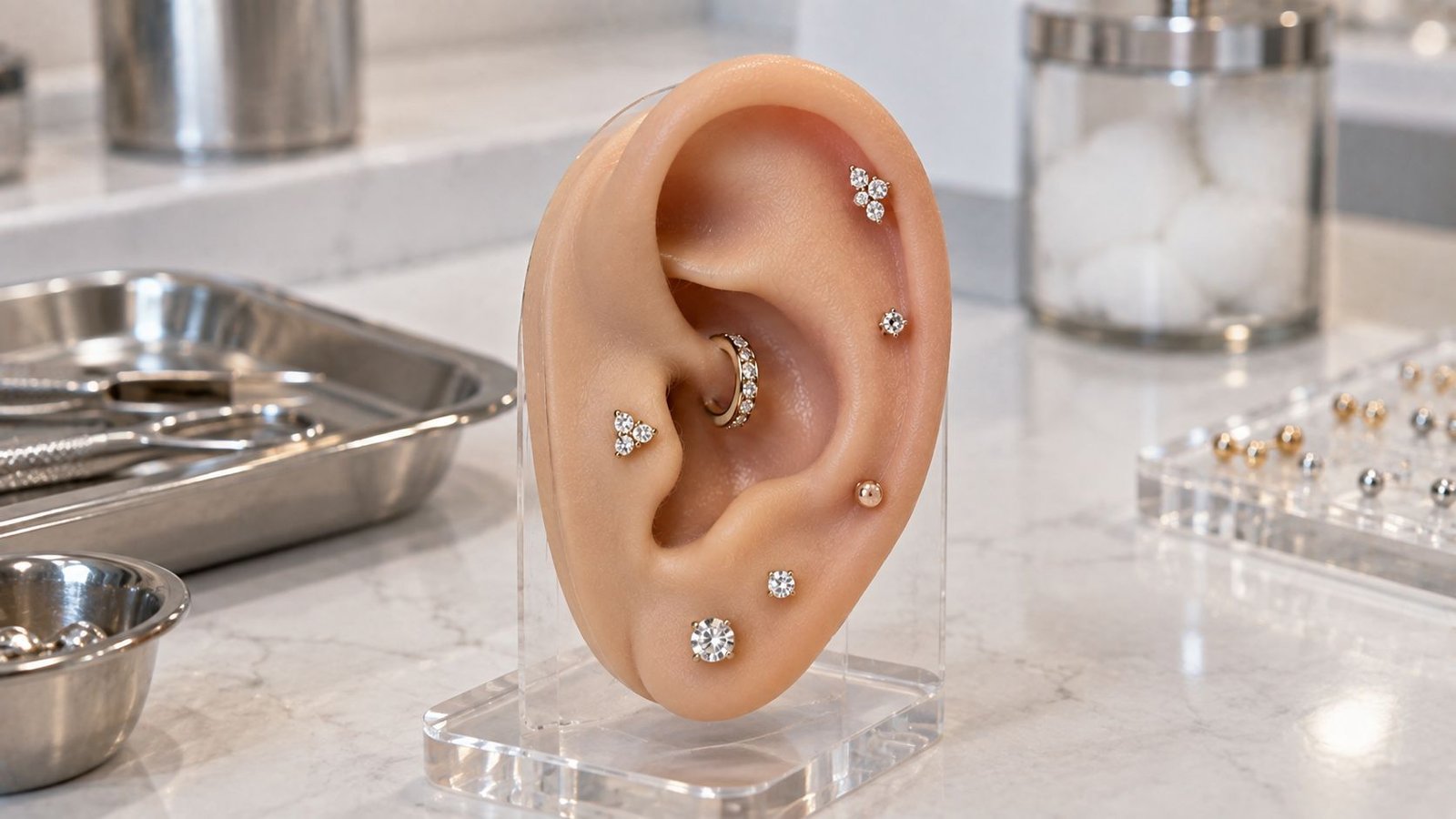
Understanding the standard placements makes it much easier to plan a curated look rather than adding piercings reactively. The lobe is the most familiar and versatile placement, capable of supporting multiple piercings stacked vertically or spaced across the lower ear, and it’s usually the best place to start when building out Diamond Ear Curation since lobe piercings heal fastest and tolerate the widest range of jewelry styles.
The helix, running along the upper outer rim of the ear, is one of the most popular cartilage placements for curated looks, since it can accommodate several small pieces in a row. The tragus, the small flap of cartilage in front of the ear canal, works well for a single statement stud since there’s limited space for more than one piece. The conch, the bowl-shaped area in the middle of the ear, can support either a stud or a hoop and often serves as a visual centerpiece within a curated arrangement.
The rook, a fold of cartilage above the tragus, and the daith, the innermost cartilage fold near the ear canal, are both more advanced placements that typically require a healed ear and a piercer experienced with the specific anatomy involved, since not every ear shape comfortably supports these positions. The flat, the smooth cartilage area at the top of the ear, has become popular for constellation-style clusters of small diamond studs, which pairs particularly well with Diamond Ear Curation since it can showcase several small stones without competing with lobe or helix pieces.
Choosing Lab-Grown Diamond Styles for Each Placement
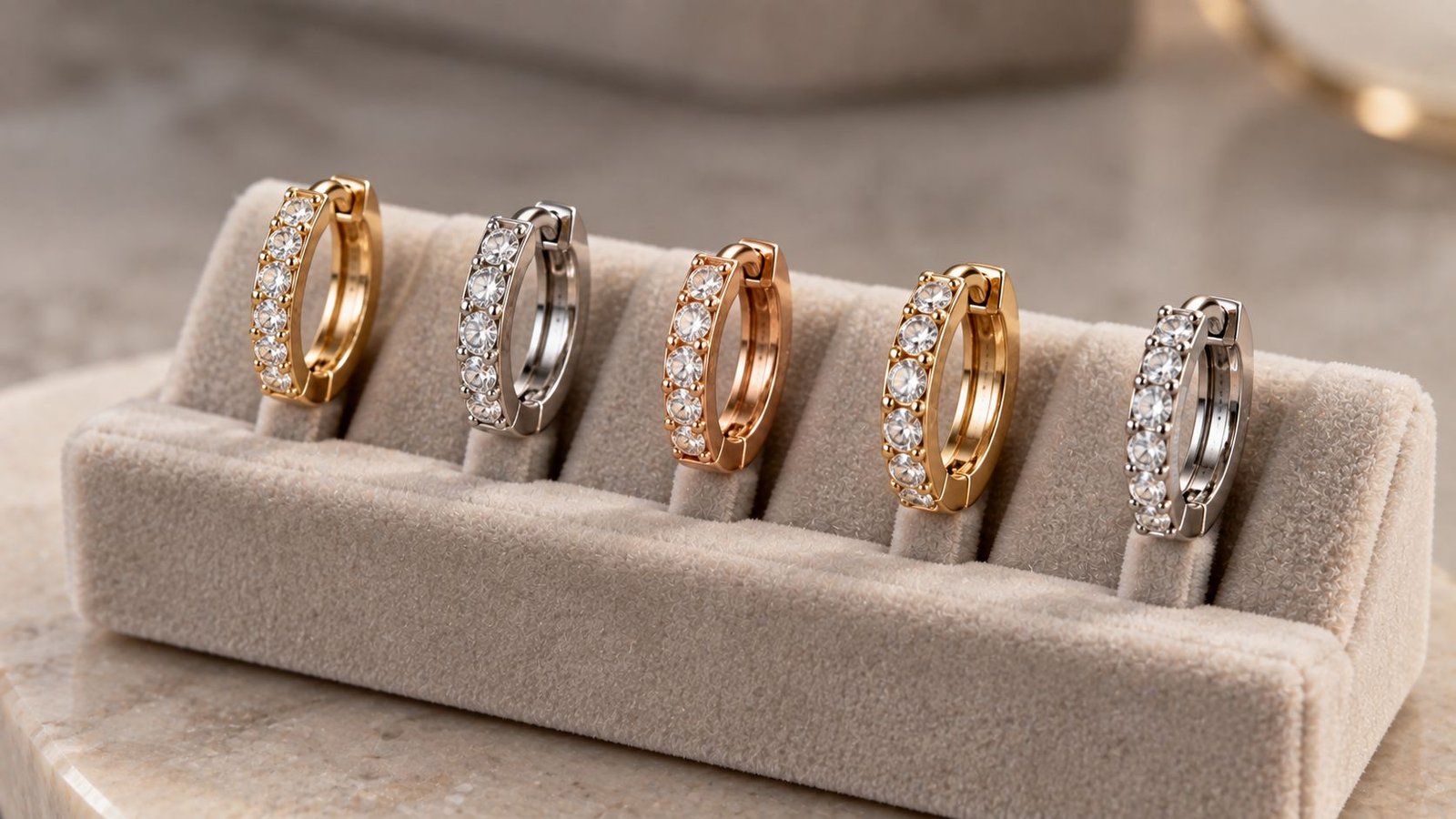
Different placements suit different jewelry styles, and matching the right style to the right spot is one of the more overlooked parts of building a curated look well. Lobe piercings suit almost any style, from classic solitaire studs to small diamond hoops or huggies, making this the placement where buyers have the most freedom to experiment.
Helix and flat placements generally work best with small, low-profile studs, since anything with significant height can catch on hair, clothing, or headphones throughout the day. A row of small lab-grown diamond studs along the helix is one of the most requested looks in curated ear jewelry, largely because the smaller stone sizes involved make lab-grown diamonds especially cost-effective here; a natural-diamond equivalent across three or four helix studs adds up quickly, while the lab-grown version keeps the same sparkle at a fraction of the combined cost.
Tragus and rook placements tend to suit either a small stud or a delicate curved barbell with a single diamond accent, since the limited surface area doesn’t leave room for anything larger. Conch placements offer more flexibility, supporting either a larger single stud as a focal point or a diamond hoop that follows the natural curve of the ear. Daith piercings, given their position, are almost always fitted with a hoop rather than a stud, and a diamond-set daith hoop has become one of the more popular statement pieces within a broader curated arrangement.
Diamond huggie hoops deserve a specific mention, since they’ve become one of the defining pieces in modern ear curation. Sitting close to the ear rather than dangling, huggies work at the lobe, conch, or even helix depending on size, and a diamond-lined huggie offers continuous sparkle around the hoop’s edge rather than a single point of light, which reads as more deliberate and less like a single stray accessory.
Lab-Grown vs Natural Diamonds for Multiple Piercings
The math changes significantly once you’re buying jewelry for four, five, or more placements rather than a single pair of studs. A natural diamond stud pair at a modest size already represents a meaningful purchase for most buyers; multiplying that cost across an entire curated ear using natural stones puts the full look out of reach for the majority of people building one gradually.
Lab-grown diamonds are chemically and physically identical to natural diamonds, so there’s no difference in brilliance, hardness, or day-to-day durability between the two. The primary difference is price, and that price gap compounds significantly across multiple small pieces the way it does with any jewelry using several stones rather than one center diamond. This makes lab-grown the more practical choice for the specific way ear curation actually gets built: gradually, one or two placements at a time, over months or years rather than all at once.
There’s also a practical certification angle worth understanding. Reputable lab-grown diamonds carry the same kind of grading documentation as natural stones, typically from labs like GIA or IGI, confirming carat weight, clarity, and color grade regardless of origin. Buyers assembling a curated ear over time should keep this documentation for each piece, both for insurance purposes and to confirm consistent quality across pieces bought from different retailers or at different points in time.
Cost Comparison: Building a Curated Ear
| Factor | Lab-Grown Diamond Pieces | Natural Diamond Pieces |
| Cost per small stud (helix/flat size) | Significantly lower | Significantly higher |
| Feasibility of 4-6 placement setup | Realistic for most budgets | Often requires prioritizing fewer placements |
| Visual brilliance and hardness | Identical to natural | Identical to lab-grown |
| Certification available | Yes (IGI, GIA) | Yes (GIA) |
| Best suited for | Gradual, multi-placement curation | Buyers prioritizing natural rarity |
| Common jewelry styles used | Studs, huggies, hoops, climbers | Studs, huggies, hoops, climbers |
For most buyers building out a full curated ear over several piercing sessions, the price advantage of lab-grown diamonds is what makes the whole project achievable rather than something reserved for a special occasion budget. Because Diamond Ear Curation typically requires purchasing several separate pieces over time, the savings from choosing lab-grown stones compound with every additional placement added to the arrangement.
Metal Choices and Aftercare for Multiple Piercings
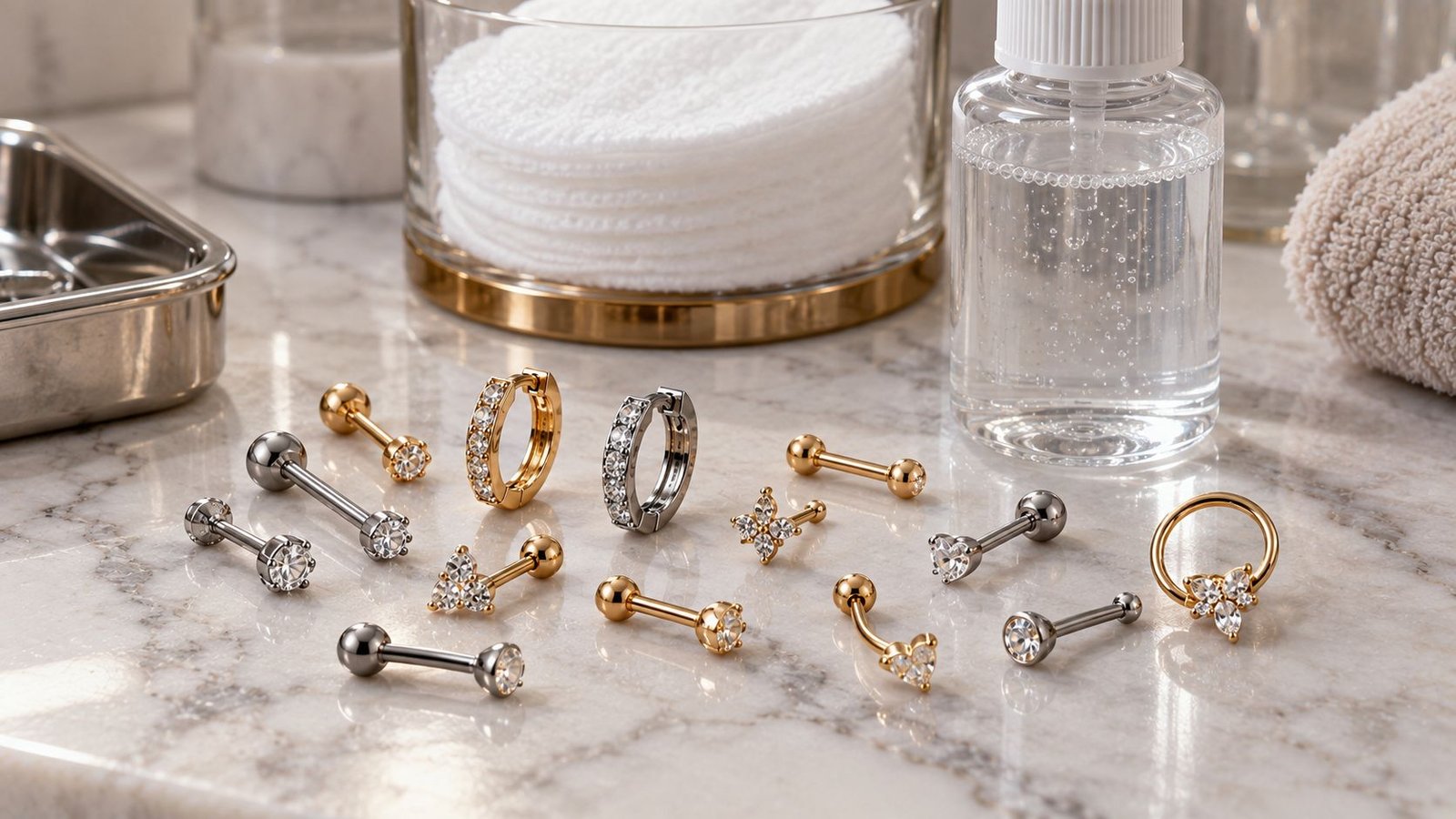
Metal choice matters more in ear curation than in most single-piece jewelry purchases, both for consistency of look and for the practical reality of healing multiple piercings at different stages. For new or healing piercings, biocompatible metals such as titanium, solid 14k or 18k gold, or platinum are strongly recommended, since lower-quality alloys can cause irritation in freshly pierced skin. Diamond-set titanium and gold pieces are both widely available, making it easy to prioritize biocompatibility without sacrificing the diamond-set look across a curated arrangement.
Matching metal tone across all placements isn’t strictly necessary, but it does make a curated ear read as more intentional. Many buyers choose to keep all their pieces in the same metal tone, whether that’s yellow gold, white gold, or rose gold, while allowing variation in jewelry style and diamond placement across the ear. Others deliberately mix tones for a more eclectic look, which has also become popular as ear curation has moved further from a single cohesive standard and further toward personal expression.
Care routines are largely the same across placements: gentle cleaning with saline solution during the healing period, avoiding unnecessary touching or twisting of new piercings, and periodic checks to confirm backs and closures remain secure, particularly on cartilage placements where jewelry sits closer to clothing and hair throughout the day. Healed piercings with diamond-set jewelry require only the light care any diamond jewelry needs: occasional cleaning with warm water and mild soap, along with periodic checks to confirm settings haven’t loosened over time.
Common Misconceptions
“You have to get all your piercings at once to curate an ear properly.” Most curated ears are built gradually over months or years, adding one or two placements at a time as each previous piercing heals.
“Lab-grown diamonds look different from natural diamonds in small stud sizes.” At the small carat sizes typically used in cartilage and helix jewelry, there’s no visible difference between lab-grown and natural diamonds to the naked eye.
“Every placement needs a diamond to look curated.” Many well-curated ears mix diamond-set pieces with plain metal studs and hoops, using diamonds to anchor a few key placements rather than covering every single spot.
“Both ears have to match exactly.” Matching and asymmetric curation are both popular approaches, and neither is more correct than the other; it comes down entirely to personal preference.
“More piercings always look better.” A well-planned arrangement of four or five thoughtfully chosen pieces generally reads as more intentional than a larger number of mismatched or overly similar items.
“You can add jewelry to a fresh piercing immediately after getting it.” Fresh piercings typically need a healing period, often several weeks to several months depending on placement, before switching from the initial jewelry to a new diamond-set piece.
Buying Guide: Building Your Curated Ear

Start with placement order rather than jewelry style. Most piercers recommend beginning with lobe piercings, since they heal fastest and give you experience with how jewelry sits and feels before moving on to cartilage placements, which generally take longer to heal and are more sensitive to irritation from lower-quality metals.
Next, choose one or two “anchor” pieces before filling in the rest of the arrangement. A diamond huggie hoop at the lobe or conch, or a small cluster of diamond studs along the helix, works well as a starting point that the rest of the curated ear can be built around. Adding simpler plain metal pieces after establishing these anchor points tends to produce a more balanced final look than trying to plan the entire arrangement before any piercings are even healed.
Always confirm metal biocompatibility before choosing jewelry for a new or healing piercing, and ask your piercer directly if you’re unsure whether a specific metal is appropriate for a given placement. When shopping for Diamond Ear Curation pieces specifically, request certification for each diamond-set item, even for small stones, since consistent documentation makes it easier to track quality across pieces purchased at different times.
Finally, budget for gradual additions rather than trying to complete the whole look in a single purchase. Because ear curation is meant to evolve as piercings heal, spacing out purchases over several months is not just financially easier, it also gives each new piece a chance to be chosen thoughtfully rather than added in a rush.
Final Thoughts
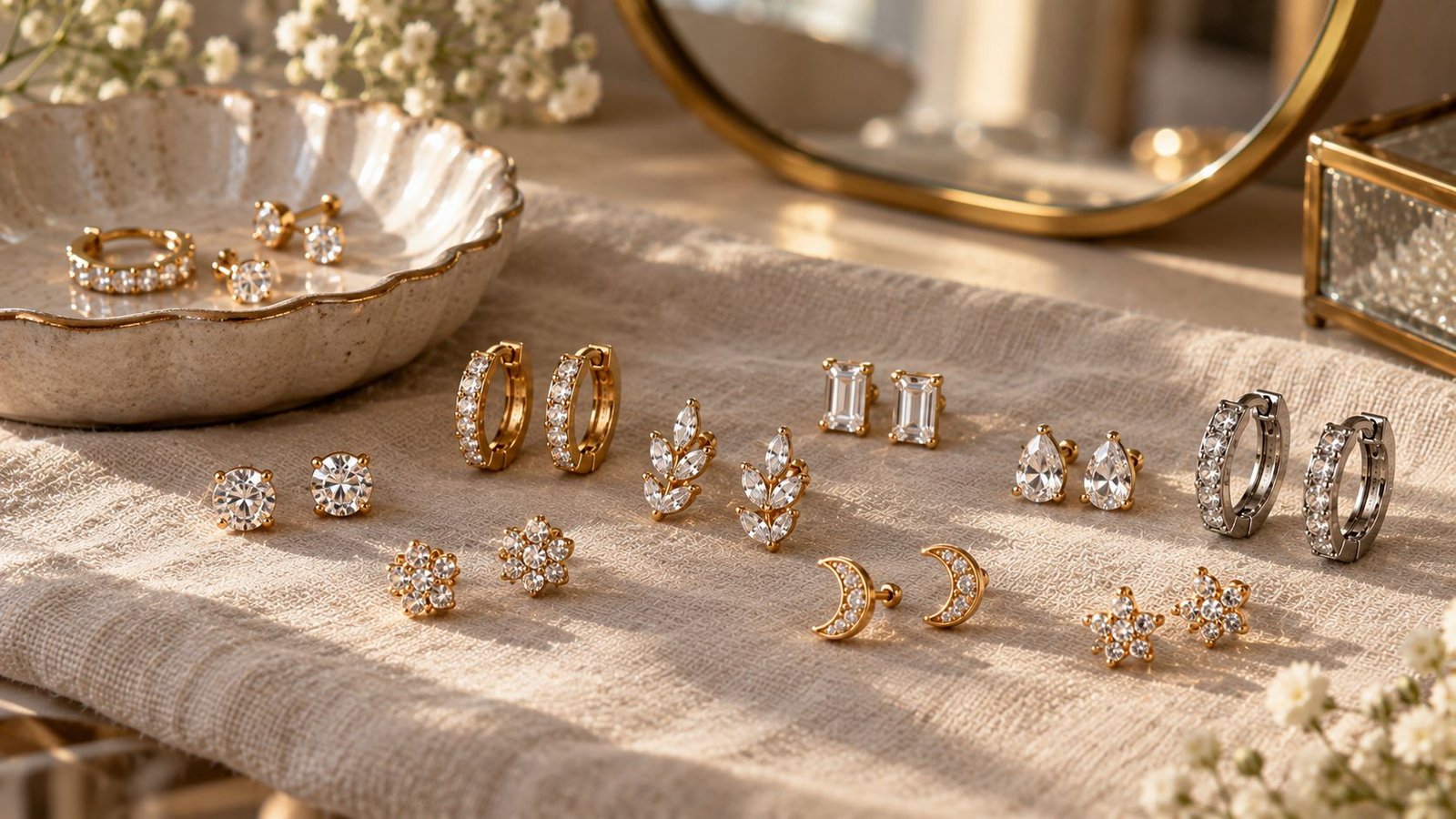
Diamond Ear Curation has turned what used to be a single, occasional jewelry purchase into an ongoing, personal styling project, and lab-grown diamonds are a major reason that project has become accessible to so many more people. By understanding which placements suit which jewelry styles, prioritizing biocompatible metals for healing piercings, and building the arrangement gradually rather than all at once, it’s realistic to put together a genuinely well-considered curated ear without an unrealistic budget. Whether you’re just starting with a second lobe piercing or planning out your fifth cartilage placement, focusing on balance and placement order first will get you to an arrangement that looks intentional rather than accidental.
Frequently Asked Questions
Disclaimer: Piercing healing times, aftercare needs, and jewelry recommendations can vary by individual and by piercing placement. Always consult a licensed professional piercer for guidance specific to your ears and health history.