

Inside GIA’s Process for Grading Fancy Color Diamonds
Ask most people how a diamond is graded and they’ll mention the 4Cs — but that standard framework doesn’t apply the same way once color becomes the star of the stone. Fancy Color Diamond Grading follows an entirely separate methodology from the familiar D-to-Z colorless scale, built around three specific visual properties assessed under tightly controlled conditions. Understanding how this process actually works helps explain why two diamonds that look similar to an untrained eye can carry very different grades, and very different price tags.
What Is Fancy Color Diamond Grading?
Fancy Color Diamond Grading is the process gemological labs use to evaluate and describe the color of diamonds that fall outside the standard colorless-to-light-yellow range. Rather than grading these stones on a letter scale like D through Z, graders assess three distinct properties — hue, tone, and saturation — and combine them into a single descriptive grade that communicates both the diamond’s color and its intensity.
This distinction matters because fancy colored diamonds aren’t valued primarily for brilliance or sparkle the way colorless diamonds are. Instead, color itself is the main event, and Fancy Color Diamond Grading exists specifically to describe how strong, how pure, and how well-distributed that color actually is across the stone.
This system didn’t emerge overnight. As colored diamonds moved from a niche curiosity into a serious collector and investment category, the trade needed a shared, repeatable vocabulary that meant the same thing regardless of which dealer, auction house, or country was describing a stone. Fancy Color Diamond Grading fills that role, giving buyers and sellers a common reference point that removes much of the subjectivity that used to surround colored diamond descriptions.
It’s worth noting that fancy color grading is a specialized skill even within gemology. Graders who work primarily with colorless diamonds often undergo separate, additional training specifically for fancy color work, since the eye has to learn to judge combinations of hue, tone, and saturation together rather than looking for the absence of tint the way colorless grading requires. This specialized expertise is part of why fancy color reports typically take longer to produce and carry additional certification fees compared to a standard colorless grading report.
Hue, Tone, and Saturation: The Three Pillars of Color Grading
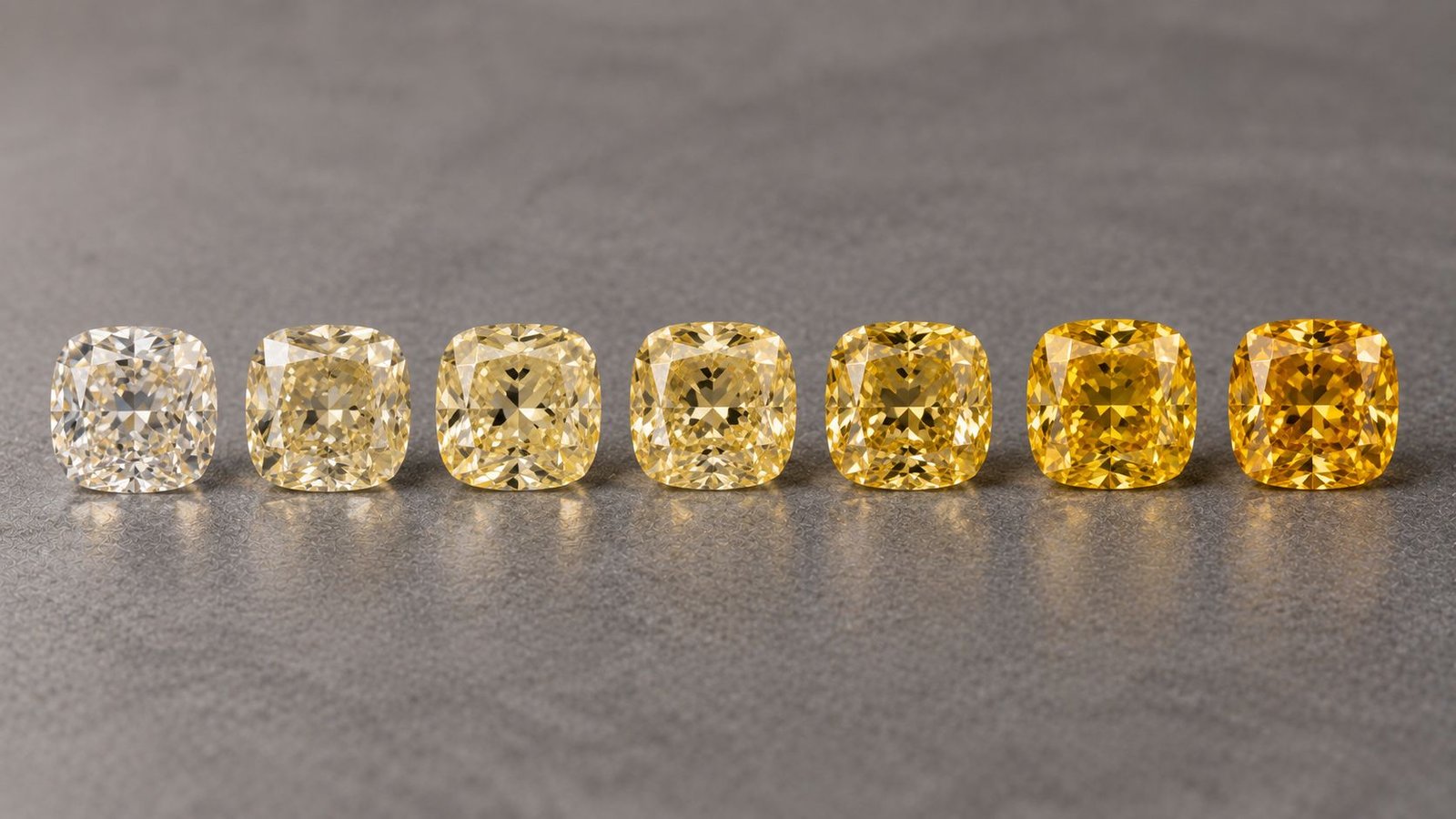
Hue refers to the dominant color a diamond displays, along with any secondary colors that modify it. A stone might be described as simply “yellow,” or as something more specific like “orangy yellow,” where the primary hue is yellow with a secondary orange influence detectable to a trained eye.
Tone describes how light or dark that color appears, independent of how intense or weak it is. Two diamonds can share the exact same hue but sit at completely different points on the tone scale, one appearing pale and airy, the other deep and dark.
Saturation measures the strength or purity of the color itself — essentially, how much of that hue is actually present in the stone. A diamond can have a dark tone but weak saturation, appearing muddy or grayish rather than richly colored, which is why saturation and tone are always assessed together rather than in isolation. Fancy Color Diamond Grading treats all three properties as interconnected rather than independent scores, since a stone’s final grade depends on how they combine rather than any single measurement alone.
Secondary hues add another layer of nuance to this system. Many colored diamonds aren’t a single pure color but show a dominant hue modified by a secondary one, described in a specific order — the secondary hue is named first, followed by the dominant hue, as in “Orangy Yellow” or “Grayish Blue.” This naming convention isn’t arbitrary; it reflects exactly how the human eye perceives the color, with the final named hue representing the strongest, most dominant impression the stone leaves.
Graders also have to account for how lighting conditions can shift the perceived balance between hue, tone, and saturation, which is precisely why standardized viewing environments matter so much in this process. A stone that reads as a pure, saturated yellow under controlled daylight-equivalent lighting might appear to shift toward green or orange under ordinary indoor bulbs, which is one more reason relying on a certified grade rather than casual visual impression matters enormously for colored diamonds specifically.
GIA’s Fancy Color Diamond Grading Scale Explained
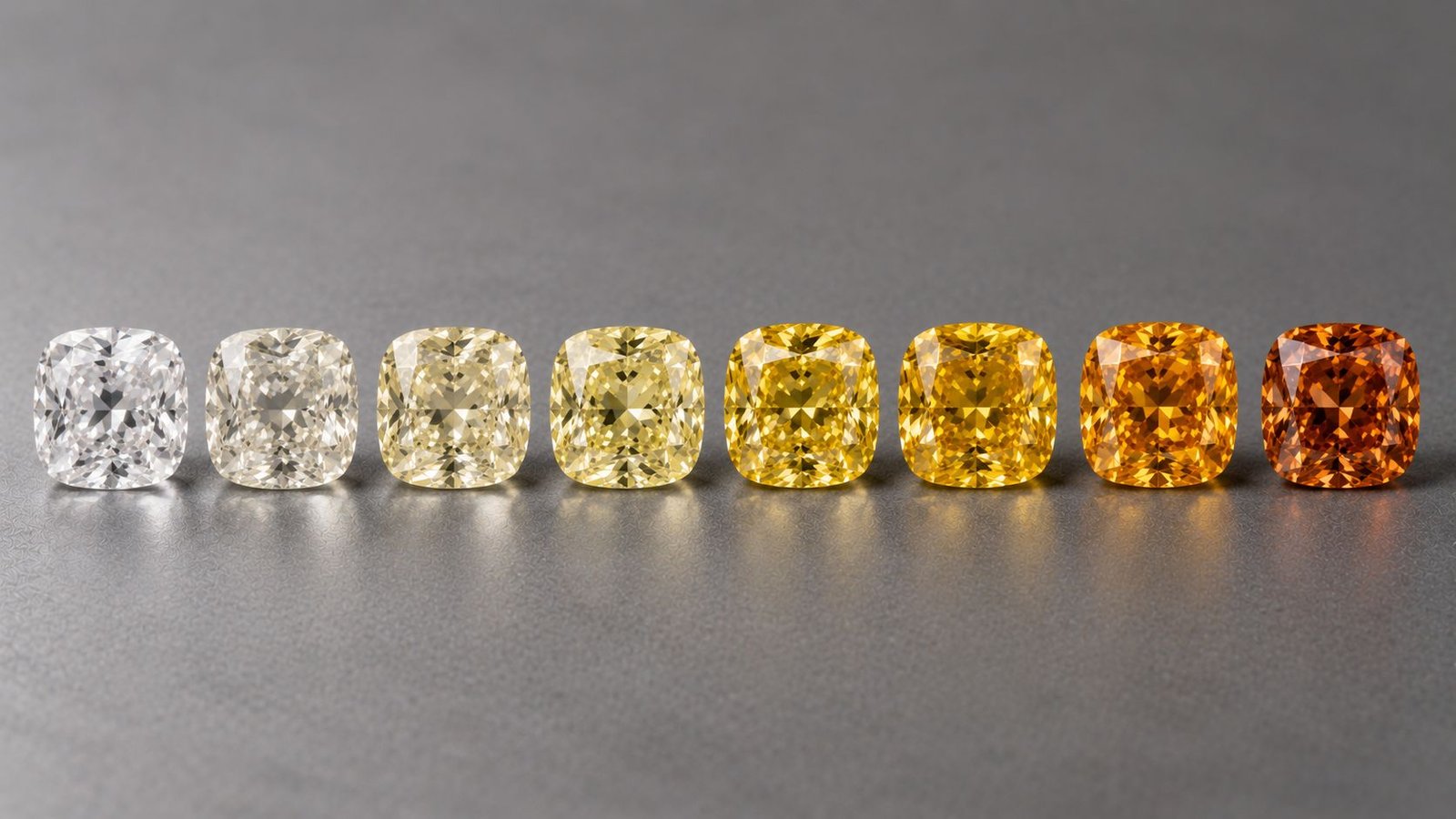
GIA’s fancy color scale runs across nine distinct grades: Faint, Very Light, Light, Fancy Light, Fancy, Fancy Intense, Fancy Vivid, Fancy Deep, and Fancy Dark. The first three grades — Faint, Very Light, and Light — actually correspond to specific letters on the standard D-to-Z colorless scale and aren’t considered true “fancy color” territory yet, since the color present is still relatively weak.
Once a stone crosses into Fancy Light and beyond, it’s officially in fancy color territory, with saturation strengthening steadily through Fancy, then Fancy Intense, up to Fancy Vivid — widely considered the most desirable and valuable grade, since it represents color that reads as bright, pure, and fully alive rather than dark or muted.
Fancy Deep and Fancy Dark occupy the darker end of the scale, and the distinction between them trips up a lot of buyers. Fancy Deep describes a stone where strong saturation persists even at a darker tone, so the color still reads as rich and vivid despite the depth. Fancy Dark, by contrast, describes a stone where the darkness actually suppresses the color, producing a muted or shadowy appearance rather than a bold one. Two stones at a similar tone level can land in either category depending entirely on how much saturation survives that darkness.
Understanding where a specific stone sits on this scale has real financial consequences, not just descriptive ones. The jump from Fancy to Fancy Intense, or from Fancy Intense to Fancy Vivid, can represent a substantial increase in per-carat price even when the size and clarity of two stones are nearly identical, since collectors and investors place enormous weight on reaching that top saturation tier. This is part of why serious buyers of colored diamonds pay such close attention to exactly which grade a stone carries rather than treating “fancy colored” as a single undifferentiated category.
It’s also worth knowing that grade boundaries aren’t drawn along a single fixed measurement. Rather than a hard numeric cutoff, the transition between adjacent grades reflects a trained grader’s holistic assessment of how tone and saturation combine visually, evaluated against the master stone references described later in this guide. This is one reason two stones that seem nearly identical to an untrained eye can occasionally land in different grade categories once formally assessed.
How Fancy Color Diamond Grading Differs From the D-to-Z Scale
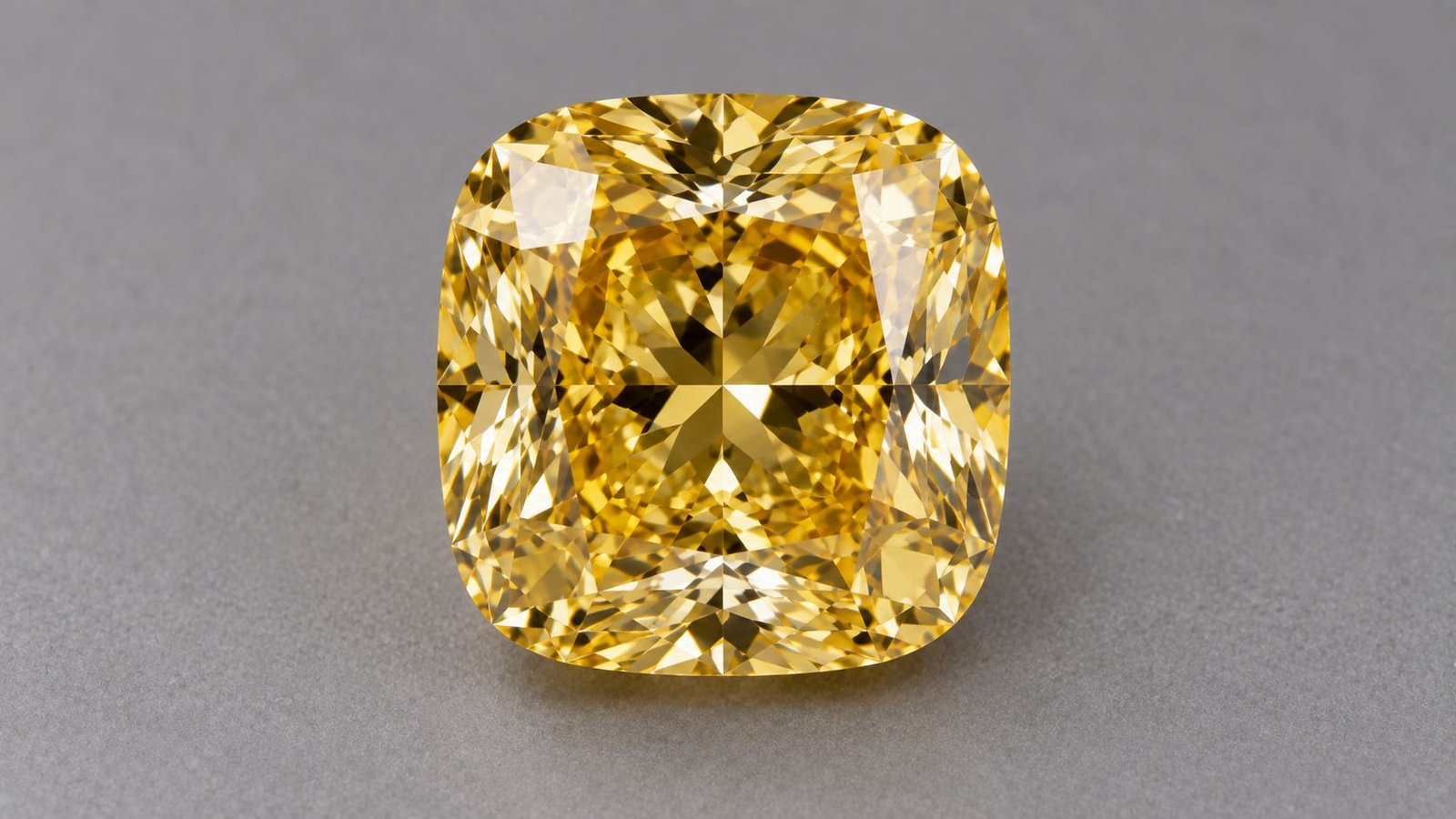
Standard colorless diamonds are graded face-down, viewed through the pavilion where subtle tints are easiest to detect against a controlled white background. Fancy colored diamonds are graded the opposite way — face-up, viewed the way the stone will actually be seen once set in jewelry, since face-up appearance is what determines the practical visual impact of the color.
This face-up approach makes sense once you consider what each scale is actually trying to measure. The colorless scale is hunting for the presence of unwanted tint; fancy color grading is celebrating and precisely describing color that’s meant to be the star of the show. Comparing a diamond face-down would miss exactly the effect that makes a fancy colored stone valuable in the first place.
Another meaningful difference is color distribution, which doesn’t factor into colorless grading at all. Fancy colored diamonds are assessed on whether their color spreads evenly across the entire stone or appears concentrated unevenly in patches, since even distribution is generally viewed as more desirable and can meaningfully affect both grade and price, particularly in stones like some natural greens where color can be confined to a surface layer.
Cut evaluation also works differently for fancy colored diamonds. While colorless stones are cut primarily to maximize brilliance and fire, fancy colored stones are often cut specifically to concentrate and intensify color, sometimes at the expense of the light-return characteristics that would matter most in a colorless diamond. A radiant or cushion cut, for example, is frequently chosen for colored stones precisely because its facet arrangement traps and deepens color more effectively than a round brilliant cut would, even though the round brilliant remains the gold standard for maximizing sparkle in colorless diamonds.
Color Origin: Natural, Treated, and Lab-Grown Distinctions
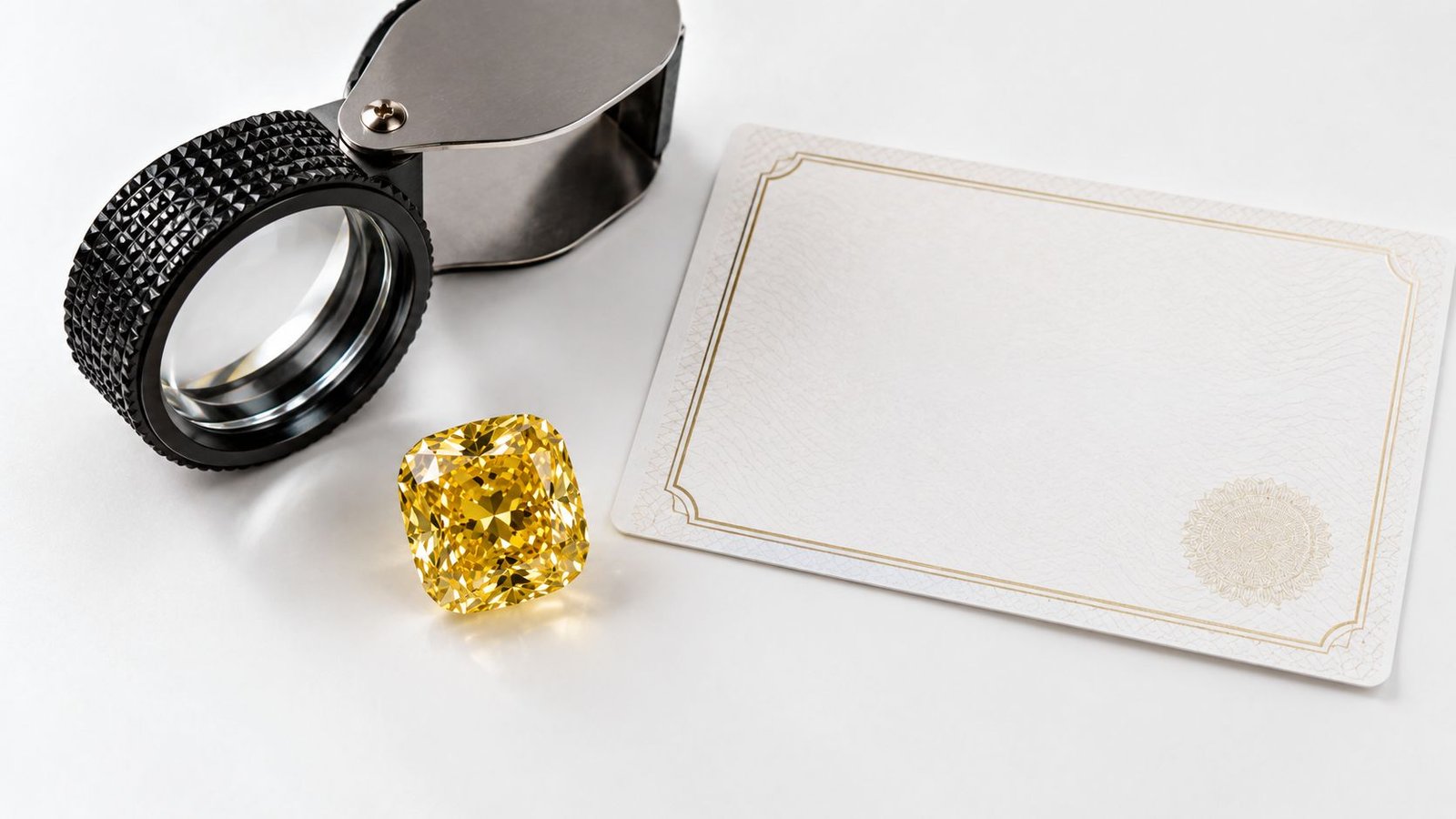
Fancy Color Diamond Grading doesn’t stop at describing hue, tone, and saturation — it also has to determine and disclose where that color actually came from. This is one of the most financially significant parts of the entire process, since natural, treated, and lab-grown color origins carry dramatically different market values even when the finished color looks identical.
Gemological labs offer several distinct report types to address this. A standard colored diamond grading report covers the same core information as a colorless grading report, adjusted for the fancy color scale. A separate origin report goes further, scientifically confirming whether the diamond’s color developed naturally or resulted from treatment, using spectroscopic analysis that can detect telltale signatures left behind by artificial processes like irradiation or high-pressure heat treatment.
For lab-grown stones specifically, reports must also disclose that the diamond itself was grown rather than mined, in addition to describing its color characteristics. This applies regardless of which growth method produced the stone in the first place — see our complete guide to CVD vs HPHT diamond growing methods for more on how that foundational process works. This layered disclosure system exists because color origin can swing a stone’s value dramatically, and buyers deserve to know exactly what they’re paying for at every level, not just the color they see.
Treatment detection has become increasingly sophisticated as more treatment methods have entered the market over the years. Spectroscopic testing can identify specific absorption patterns left behind by irradiation, high-pressure high-temperature treatment, and other color-enhancement processes, patterns that simply don’t exist in diamonds that developed their color entirely through natural geological processes. This scientific approach is what allows labs to make origin determinations with real confidence rather than relying on visual inspection alone, which would be far less reliable given how convincingly some treatments can replicate a natural appearance.
Buyers should also understand that origin determination and color grading are technically separate assessments, even though they’re often bundled into the same report for convenience. A stone can receive a precise Fancy Vivid grade while a separate section of the same report addresses whether that vivid color developed naturally, was enhanced through treatment, or resulted from controlled lab growth — three very different origin stories that can apply to an identically graded color.
How Graders Actually Assess Color
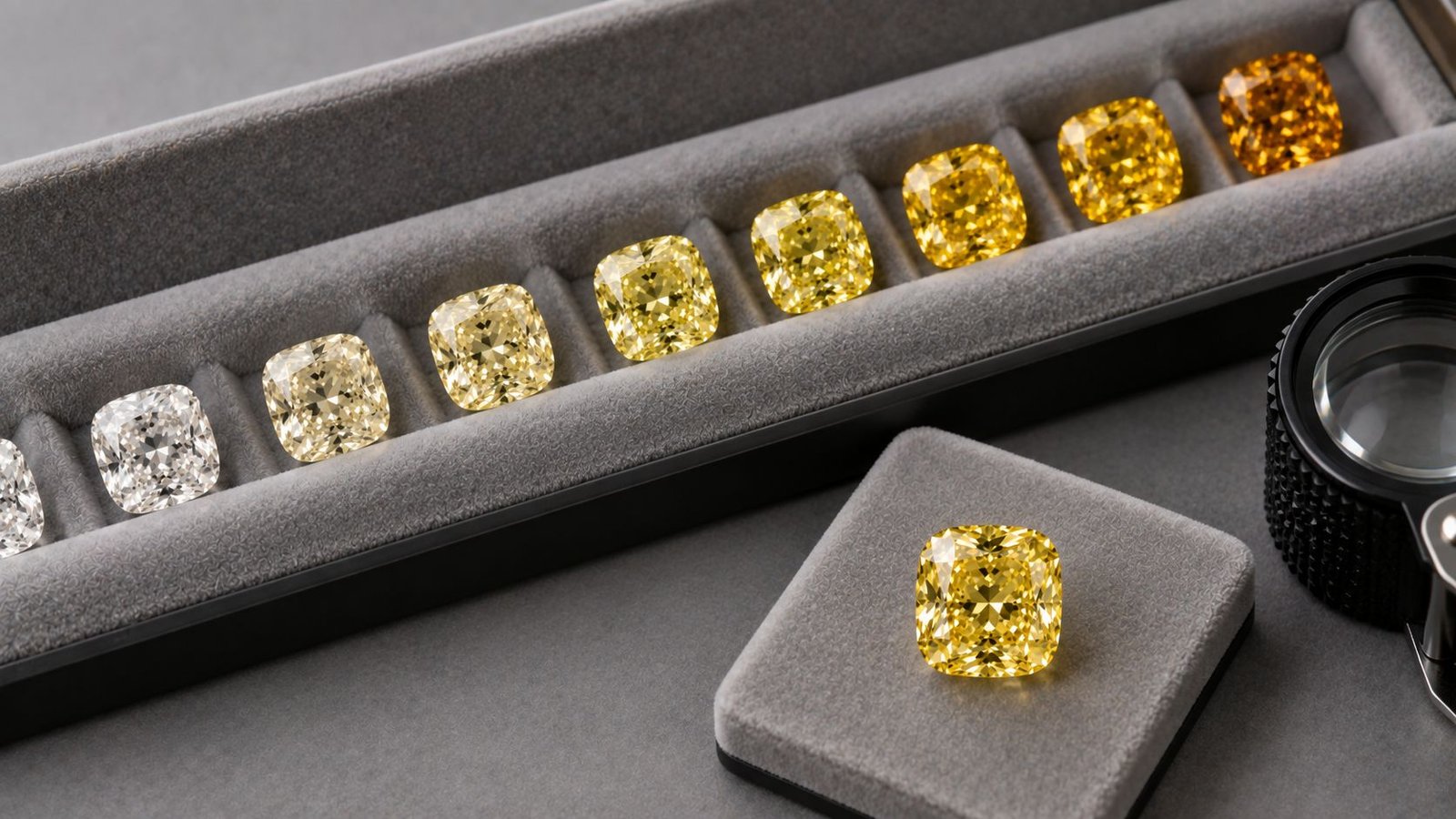
Fancy Color Diamond Grading happens under carefully controlled viewing conditions designed to eliminate variables that could shift how a color appears. Standardized lighting, consistent viewing angles, and a neutral background are all essential, since ordinary indoor lighting or a colored surface nearby can make the same diamond appear noticeably different from one moment to the next.
Trained graders compare each stone against a reference collection of master stones — physical diamonds and color comparators representing specific points along the hue, tone, and saturation scales. The diamond being graded gets placed alongside these references until a matching color category is identified, a process designed specifically so that two different graders performing Fancy Color Diamond Grading on the same stone independently should arrive at the same conclusion.
This master-stone system is what makes Fancy Color Diamond Grading repeatable and trustworthy across the industry. Without a shared physical reference point, color descriptions would be far more subjective, and the same diamond could plausibly receive different grades depending on which lab or grader evaluated it. According to GIA’s colored diamond report documentation, this standardized comparison method has become the reference point the global colored diamond trade relies on for consistent grading terminology.
Common Misconceptions
“Fancy Vivid is just a marketing term, not a real grade.” It’s a genuine, precisely defined grade representing the highest saturation level on the scale, reserved for stones with exceptional color strength at a moderate tone.
“A darker diamond always has a better color grade.” Not necessarily. Tone and saturation work together, and a dark stone with weak saturation can actually rank lower than a lighter stone with strong, pure color.
“Color grading works the same way for every fancy color.” The underlying hue, tone, and saturation framework applies universally, but rarity and value patterns differ significantly between colors, since some hues simply occur far less often in nature than others.
“A GIA report guarantees a stone is natural.” A report states exactly what was tested and observed; buyers should specifically check that it states “natural color” rather than assuming this based on price or seller claims.
“Lab-grown colored diamonds don’t need color grading.” They absolutely do. Fancy Color Diamond Grading applies to lab-grown stones just as rigorously as natural ones, with reports disclosing both the color grade and the diamond’s lab-grown origin.
Why Grading Accuracy Matters for Buyers and Sellers
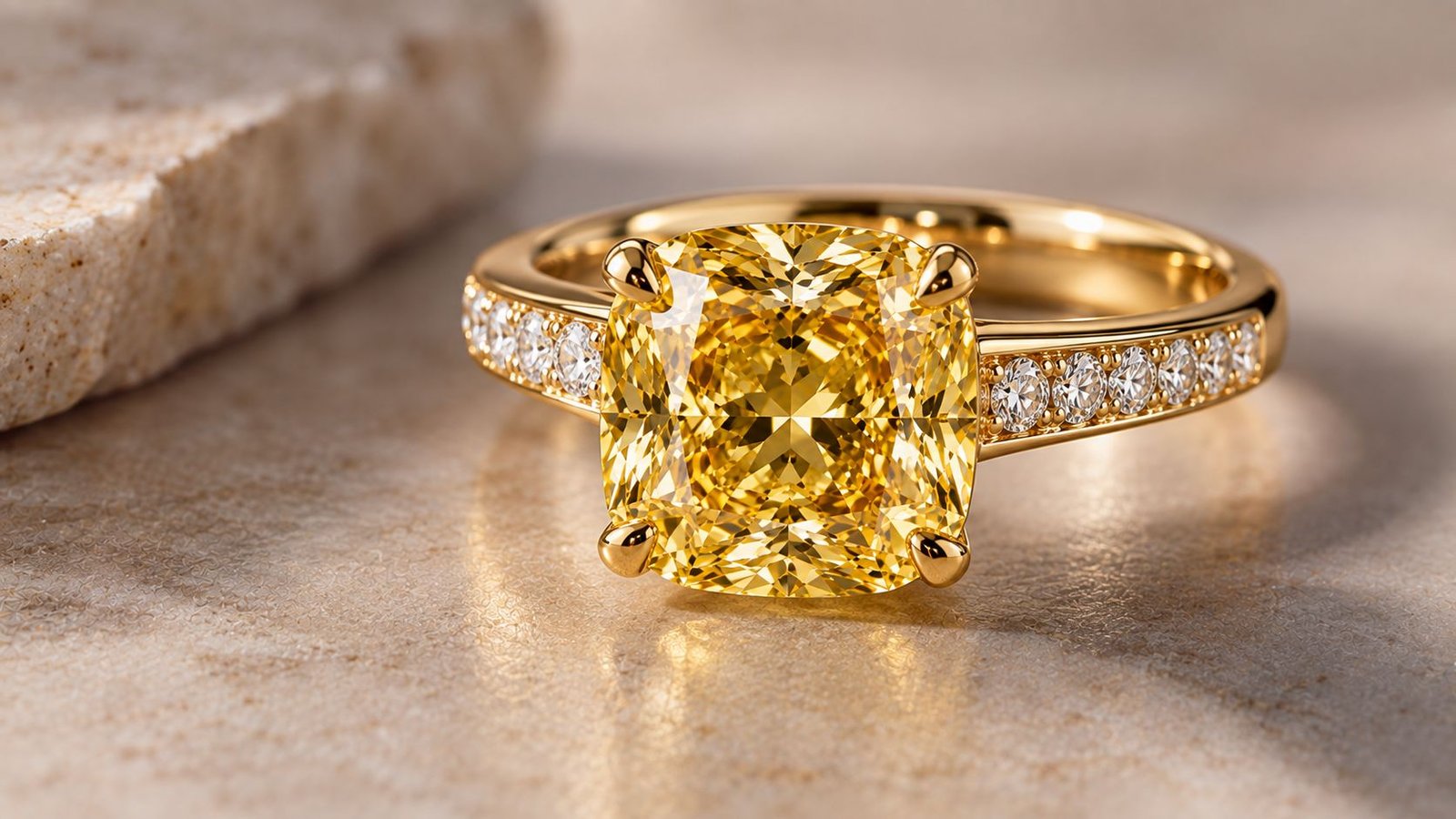
For buyers, an accurate, independently verified color grade is the single most reliable way to compare stones from different sellers on equal footing, since color descriptions alone (“vivid yellow,” “deep blue”) can mean very different things without a standardized grading framework behind them.
For sellers and the broader trade, consistent Fancy Color Diamond Grading is what makes fair pricing and resale even possible. Without a shared, repeatable grading language, colored diamonds would be far harder to value consistently, and buyers would have far less confidence comparing stones sight unseen, which matters enormously for an international trade where stones frequently change hands based on certification alone rather than in-person inspection.
This is also why requesting original, verifiable certification matters so much when buying any fancy colored stone, lab-grown or natural. A grading report isn’t just paperwork — it’s the mechanism that makes the entire colored diamond market function with any real transparency at all.
For anyone building a collection or making a significant purchase, it’s worth understanding that report quality itself can vary between labs, even when the underlying grading language looks similar on paper. Established, internationally recognized labs maintain rigorous internal consistency checks and extensive master stone collections precisely because the value of their grading depends entirely on buyers trusting that a given grade means the same thing regardless of which specific grader happened to evaluate a particular stone. Choosing a well-established lab for certification isn’t just a formality; it directly affects how confidently that stone can be resold or appraised down the line.
Final Thoughts
Fancy Color Diamond Grading might look intimidating at first glance, with its unfamiliar terminology and nine-step scale, but the underlying logic is straightforward once broken down: hue identifies the color, tone measures light versus dark, and saturation captures strength and purity, all assessed under controlled conditions against a standardized set of reference stones. Understanding this framework doesn’t just satisfy curiosity — it gives buyers a genuinely useful tool for comparing colored diamonds accurately and shopping with real confidence.
Frequently Asked Questions