

The Right Way to Clean Diamond Jewelry at Home (and the Habits Quietly Wrecking It)
A dull-looking diamond is almost never a damaged diamond. It’s usually just dirty, coated in a thin film of lotion, soap residue, and the natural oils your skin produces every time you touch it. Thankfully, reversing it takes very little effort. The less good news is that a lot of well-meaning At-Home Diamond Cleaning habits, the ones passed down as common sense or picked up from a quick internet search, do real damage to the metal setting and any other stones involved, even when the diamond itself comes through unscathed. This guide separates what actually works from what quietly wears jewelry down over time.
Why At-Home Diamond Cleaning Needs More Care Than People Assume

Diamond is the hardest naturally occurring material on the planet, which leads a lot of people to assume that means it’s essentially indestructible and safe to clean however they like. That assumption isn’t entirely wrong, but it’s incomplete in a way that causes real problems. The diamond itself can withstand an enormous amount of physical abuse that would destroy almost any other gemstone. The metal setting holding it in place, and any other stones sharing that setting, generally can’t.
This distinction matters enormously for At-Home Diamond Cleaning specifically, because most of the genuine damage that happens during home cleaning isn’t damage to the diamond at all. It’s damage to gold alloys weakened by chemical exposure, loosened prongs that quietly give way after repeated harsh handling, or softer accent stones scratched by an abrasive that would never have scratched the diamond sitting right next to them. Understanding this shifts the whole question from “will this hurt my diamond” to “will this hurt everything around my diamond,” which is a much more useful question to be asking.
The Method That Actually Works

The safest, most consistently recommended at-home cleaning method is also the simplest. Warm water combined with a few drops of mild, ammonia-free dish soap makes an effective cleaning solution for the vast majority of diamond jewelry. Let the piece soak for roughly 20 to 30 minutes to loosen built-up oil and debris, then use a soft, clean toothbrush, ideally one reserved exclusively for jewelry rather than one that’s ever touched your teeth, to gently brush around the stone and setting, paying particular attention to the back of the diamond, where oils and residue tend to collect most heavily.
Rinse thoroughly under warm running water, making sure all soap residue is gone, since leftover soap film can leave its own dull, cloudy appearance behind. Dry with a soft, lint-free cloth rather than a paper towel or regular fabric, both of which can leave fibers caught in the setting or, in the case of paper products, create tiny surface scratches on softer metals over repeated use.
This routine works well for most diamond jewelry set in gold or platinum, roughly every one to two weeks for pieces worn daily, with a lighter rinse-and-wipe in between for pieces exposed to lotion, sunscreen, or cooking oils on a given day. It’s a low-effort habit that makes a genuinely noticeable difference in how a diamond catches light.
What Damages Jewelry: Chemicals to Avoid
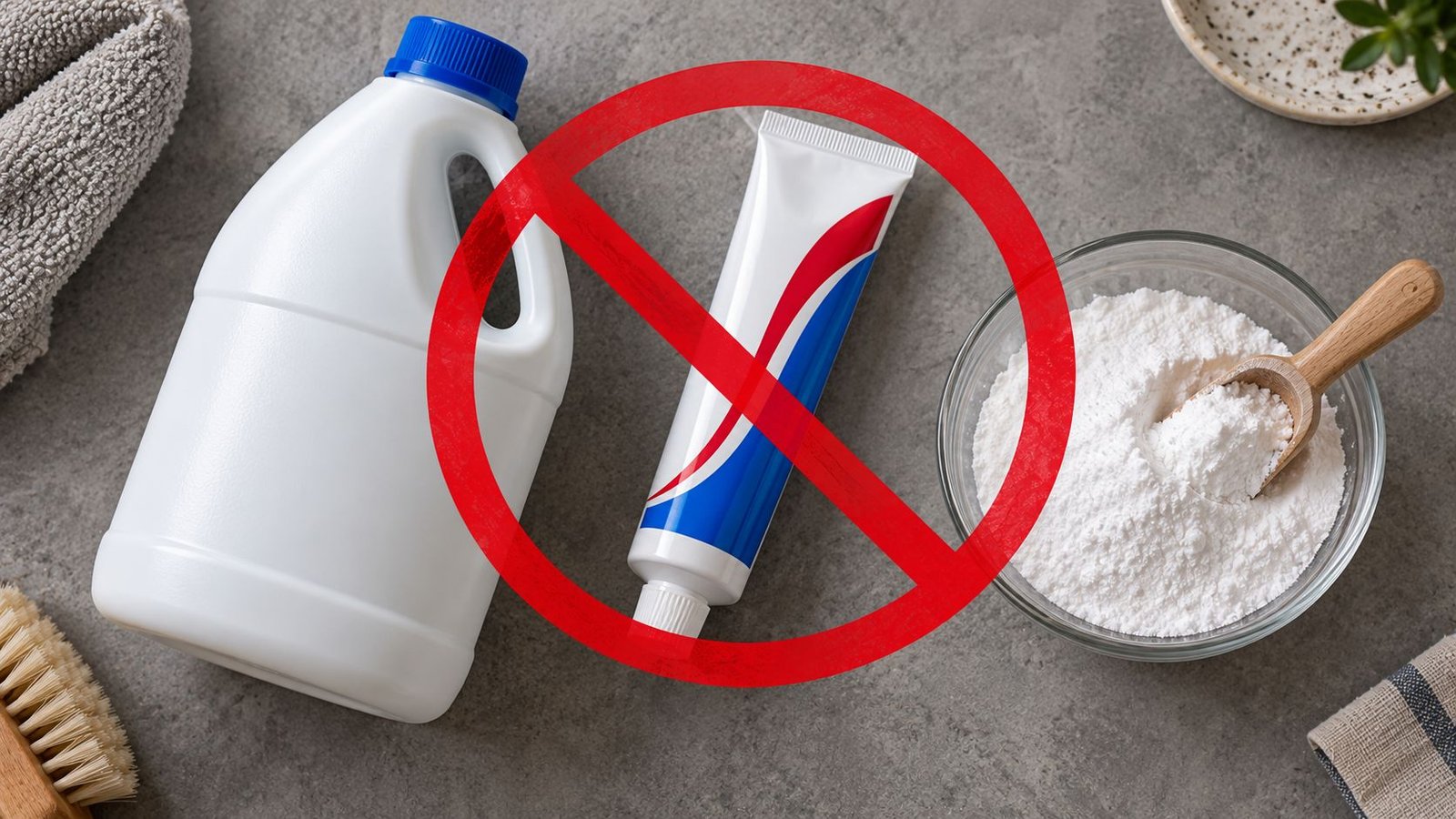
Chlorine is the single most damaging substance commonly found in households and swimming pools, and it’s worth understanding specifically why. Chlorine attacks the grain boundaries within gold alloys at a microscopic level, a process sometimes called stress corrosion, which can progressively weaken the metal structure until a prong snaps, sometimes with no obvious warning beforehand. This is exactly why GIA specifically warns against using chlorine bleach on diamond jewelry, and it’s also the reason jewelry should always come off before swimming in a chlorinated pool or soaking in a hot tub, not just during active cleaning.
Toothpaste and baking soda are two of the most commonly recommended home remedies for cleaning jewelry, and both are genuinely risky choices. While diamonds themselves are far too hard to be scratched by either, the mildly abrasive texture that makes them useful for cleaning teeth or scrubbing a sink can dull and scratch softer metals like gold over repeated use, along with any softer accent gemstones set nearby.
Ammonia-based household cleaners, including many glass and window cleaners, carry more mixed guidance than people often expect. While some older cleaning advice recommended a diluted ammonia soak specifically for diamonds set in sturdy metal, more current guidance treats ammonia-based products with caution, since they can be genuinely damaging to certain gemstones and surface treatments even when they’re reasonably safe for an untreated diamond alone. Given that caution, sticking with plain mild dish soap avoids this ambiguity entirely while still cleaning just as effectively.
Ultrasonic Cleaners: The Fine Print Most People Skip
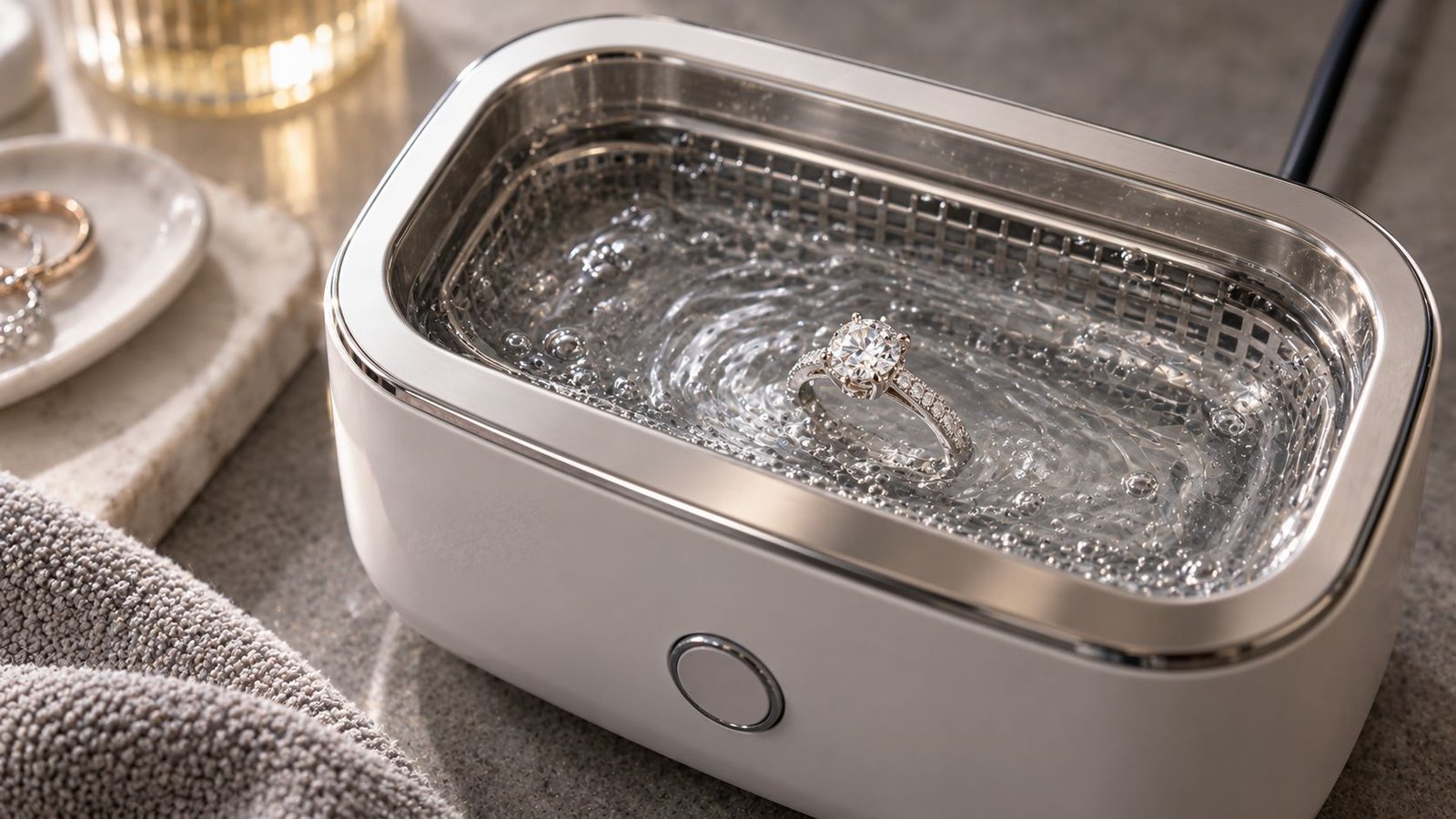
Picture a small tank of water that hums at a frequency too high to hear, rattling loose whatever’s gotten lodged into the tight gap under a prong or tucked behind the stone where bristles can’t follow. That’s the basic mechanism, and it works especially well on a plain, untreated diamond held firmly in a gold or platinum mount — the stone comes out noticeably brighter with none of the scrubbing effort a toothbrush routine takes.
That safety assumption breaks down quickly once treated stones or certain gemstone types enter the picture. Fracture-filled diamonds, where a filling material has been used to make an internal fracture less visible, can suffer real damage if left in an ultrasonic cleaner too long, since the heat and vibration can affect the filling itself. Many colored gemstones carry similar restrictions; emerald in particular should essentially never go in an ultrasonic cleaner, along with opal, turquoise, tanzanite, topaz, and zircon, all of which can be damaged by the combination of heat, vibration, and cleaning chemicals involved.
Before using an ultrasonic cleaner on any piece, it’s worth checking the diamond’s grading report specifically for treatment disclosures, since a report will clearly state whether a stone has been fracture-filled or otherwise treated. It’s also worth confirming the setting itself is secure beforehand, since a loose stone can be dislodged entirely by the vibration an ultrasonic cleaner produces. When in doubt about a specific piece’s durability, skipping the ultrasonic cleaner entirely and sticking with the warm water and mild soap method is the safer default.
Steam Cleaners: A Professional Tool, Not a DIY One
Steam cleaning is another method commonly used by professional jewelers, using pressurized steam to blast away grime without the chemical exposure ultrasonic solutions sometimes involve. It’s generally effective for solid, untreated diamonds, but the high heat involved makes it genuinely risky for fracture-filled diamonds, many colored gemstones, and costume or fashion jewelry using glued-in elements, since the heat can loosen adhesive or damage heat-sensitive treatments.
Because steam cleaning equipment used professionally operates at a controlled intensity most home devices can’t replicate safely, and because identifying treatment status correctly matters so much for this method specifically, it’s generally best left to a jeweler rather than attempted as a home routine, particularly for any piece whose full treatment history isn’t clearly documented.
Cleaning Method Comparison
| Method | Best For | Avoid For | Home-Friendly |
| Warm water + mild dish soap | Nearly all diamond jewelry | Rarely needs avoiding | Yes |
| Soft toothbrush scrub | Everyday buildup, prong areas | Fragile antique or estate settings | Yes |
| Ultrasonic cleaner | Solid, untreated diamonds in secure settings | Fracture-filled diamonds, emerald, opal, loose settings | With caution |
| Steam cleaner | Solid, untreated diamonds | Treated stones, heat-sensitive glued elements | Better left professional |
| Toothpaste or baking soda | Nothing recommended | Metal settings, accent stones | No |
| Chlorine bleach | Nothing recommended | All diamond jewelry | Never |
The safest routine for most people combines the first two rows of this table as a regular habit, reserving ultrasonic or steam cleaning for occasional deeper cleans, ideally handled by a professional jeweler who can confirm treatment status and setting security beforehand.
Caring for Lab-Grown Diamonds Specifically
One common question worth addressing directly: lab-grown diamonds require exactly the same cleaning approach as natural diamonds, with no special adjustments needed. Because lab-grown and natural diamonds are chemically and physically identical, sharing the same hardness, the same vulnerability to chlorine and abrasives, and the same general safety profile around ultrasonic and steam cleaning, every recommendation in this guide applies equally to both.
The one place this distinction becomes genuinely useful is treatment disclosure. Reputable lab-grown diamonds come with full documentation from major grading labs confirming whether any clarity treatment has been applied, the same way a natural diamond’s report would. Checking that documentation before using an ultrasonic or steam cleaner matters just as much for a lab-grown stone as it does for a natural one, so it’s worth keeping your certificate on hand regardless of which type of diamond you’re caring for.
Common Misconceptions
“Diamonds can’t be damaged, so I can clean them however I want.” The diamond itself is extremely hard to scratch, but the metal setting and any other stones sharing that setting are far more vulnerable to chemicals and abrasives.
“Toothpaste is a safe home remedy for cleaning jewelry.” Toothpaste’s mild abrasiveness, useful for teeth, can dull and scratch softer metals and accent stones over repeated use, even though it won’t scratch the diamond itself.
“All jewelry is safe in an ultrasonic cleaner.” Fracture-filled diamonds, several common colored gemstones, and loosely set stones can all be damaged or dislodged by ultrasonic cleaning.
“Lab-grown diamonds need gentler cleaning than natural diamonds.” Lab-grown and natural diamonds share identical hardness and chemical properties, so the same cleaning methods and precautions apply equally to both.
“A quick rinse is just as good as a proper clean.” A rinse removes loose debris, but the oily film that dulls a diamond’s sparkle generally needs soap and gentle brushing to actually lift away.
A Simple At-Home Cleaning Routine

Start by removing the piece before swimming, using household cleaning products, or applying lotion and sunscreen, since prevention does more to keep jewelry looking its best than any cleaning method does after the fact. Making this a consistent habit significantly reduces how often deeper cleaning is even needed.
For regular cleaning, soak the piece in warm water with a few drops of mild, ammonia-free dish soap for 20 to 30 minutes, then gently brush with a soft toothbrush reserved exclusively for jewelry, focusing on the back of the stone and the underside of the setting where buildup collects most. Rinse thoroughly and dry with a soft, lint-free cloth.
Before using an ultrasonic or steam cleaner on any piece, check the grading report for treatment disclosures and confirm the setting feels secure, with no obviously loose stones. If either of those checks raises any doubt, skip the ultrasonic or steam option and either stick with the gentler soap-and-brush method or bring the piece to a professional jeweler instead.
Finally, schedule a professional cleaning and prong inspection roughly once or twice a year, even for jewelry cleaned regularly at home, since a jeweler can catch early signs of a loosening setting long before it becomes a lost stone.
Final Thoughts
At-Home Diamond Cleaning doesn’t need to be complicated, but it does need to account for more than just the diamond itself. Warm water, mild dish soap, a soft dedicated toothbrush, and a lint-free cloth handle the vast majority of regular cleaning needs safely, while chlorine, abrasive pastes, and unchecked ultrasonic or steam cleaning are the habits most likely to cause quiet, cumulative damage to the metal and any accompanying stones. Getting this routine right, and knowing when to hand a piece to a professional instead, keeps diamond jewelry looking the way it did the day you got it for a genuinely long time.
Frequently Asked Questions
Disclaimer: Cleaning recommendations can vary depending on a stone’s specific treatment history and the metal and setting used. When in doubt about a specific piece, consult a professional jeweler before attempting any home cleaning method.